
Who this guide is for
- Owners planning a padel court at home or on a property
- Clubs and operators adding padel to their offer
- Sponsors scoping a single court or several
- Anyone new to how padel courts are put together
Planning diagram
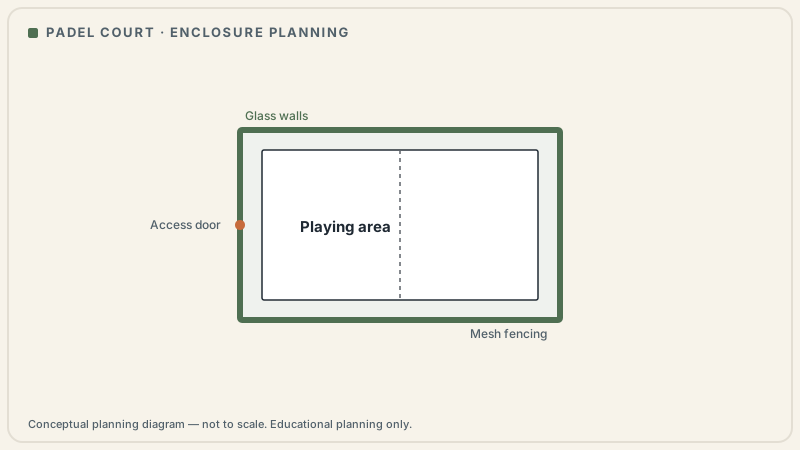
Padel court enclosure-planning concept
Conceptual editorial diagram — not a construction drawing, specification or to-scale plan. Official court dimensions, standards, drainage, structure and lighting requirements vary by sport, site and location and are confirmed with the relevant federation, supplier and qualified professionals.
Site fit and the enclosure
A padel court is an enclosed structure, so it needs space not just for play but for the surrounding glass, mesh and posts, plus access around it. Confirming fit early matters because the enclosure footprint is part of the equation.
Official dimensions vary by sport and should be confirmed with the relevant federation, supplier or designer; at planning stage, focus on whether the overall footprint suits your site.
- Overall footprint including the enclosure
- Access space around the court
- Relationship to boundaries and structures
- Whether the site can stay level and well drained
Base and drainage as a planning topic
The base supports both the surface and the enclosure structure, and drainage keeps the court usable after rain. These are foundational planning topics that influence everything above them.
Base, foundation and drainage are specialist work that should be reviewed and performed by qualified professionals; your role is to understand their importance and ensure they are planned, not to design them.
Glass, fencing, turf and lighting
The visible character of a padel court comes from its glass and mesh enclosure, its artificial turf surface, and its lighting. Each involves trade-offs in feel, durability and appearance that interact with one another.
Glass and structural elements are specialist; coordinate these choices with professionals and suppliers rather than treating them as off-the-shelf decisions.
- Glass and mesh enclosure character and containment
- Artificial turf surface feel and upkeep
- Lighting for the hours you intend to play
- How these elements look together
Noise and the surroundings
Padel can be lively, and the surroundings deserve thought. Noise and light reaching neighbours, and the visual presence of the structure, are planning topics that may require local review and vary by location.
Considering these early, with screening or sensible siting, keeps a court neighbour-friendly.
Padel construction planning checklist
- 1Have you confirmed the overall footprint including the enclosure fits?
- 2Have you allowed access space around the court?
- 3Have you treated base and drainage as core planning topics?
- 4Have you considered glass, mesh and turf choices together?
- 5Have you planned lighting for your intended hours of play?
- 6Have you thought about noise and light reaching neighbours?
- 7Have you considered the visual presence of the structure?
- 8Have you routed specialist work to qualified professionals?
Common mistakes to avoid
- Sizing only the playing area and forgetting the enclosure footprint
- Underplanning base and drainage beneath an enclosed structure
- Choosing glass, turf and lighting in isolation from one another
- Overlooking noise and light reaching neighbours
- Assuming official padel dimensions without confirming them
When to involve a professional
- Base, foundation, drainage, glass, enclosure and lighting work should be reviewed and performed by qualified professionals.
- Official padel court dimensions and standards vary and should be confirmed with the relevant federation, supplier or designer.
- Noise and light impacts may require local review and vary by location.
- Use this guide to prepare questions, not as a substitute for professional design or contractor advice.
Frequently asked questions
Questions readers ask about this topic
What is distinctive about planning a padel court?
Padel courts are enclosed structures, so you plan the glass-and-mesh enclosure and the surface together, and the enclosure footprint is part of the site fit. Base and drainage support both the surface and the structure.
Do I need to know official padel dimensions to plan?
No. At planning stage you confirm whether the overall footprint suits your site. Official dimensions vary and should be confirmed with the relevant federation, supplier or designer before layout is fixed.
How important is the base for a padel court?
Very. The base supports both the surface and the enclosure structure, and drainage keeps the court usable. These are specialist matters that should be reviewed and performed by qualified professionals.
Should I worry about noise from a padel court?
It is worth planning for. Padel can be lively, and noise and light reaching neighbours may require local review and vary by location. Screening and sensible siting help keep a court neighbour-friendly.
Keep reading