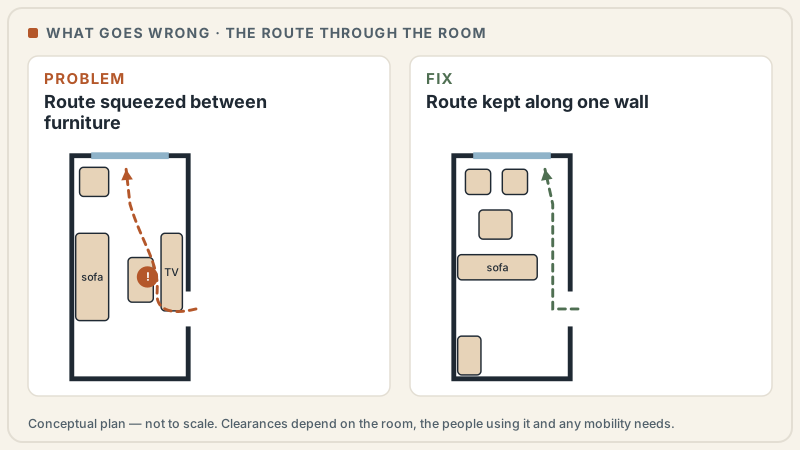
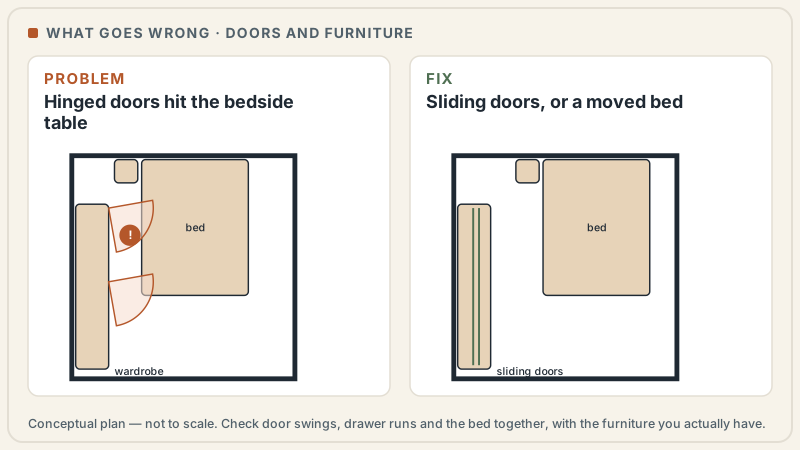
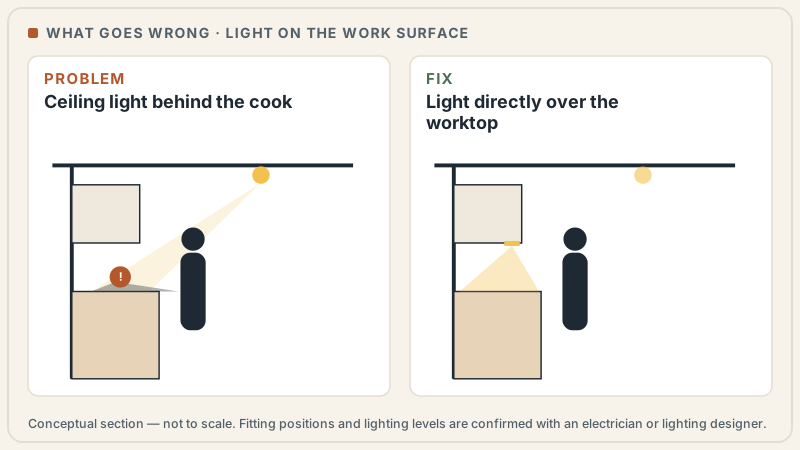
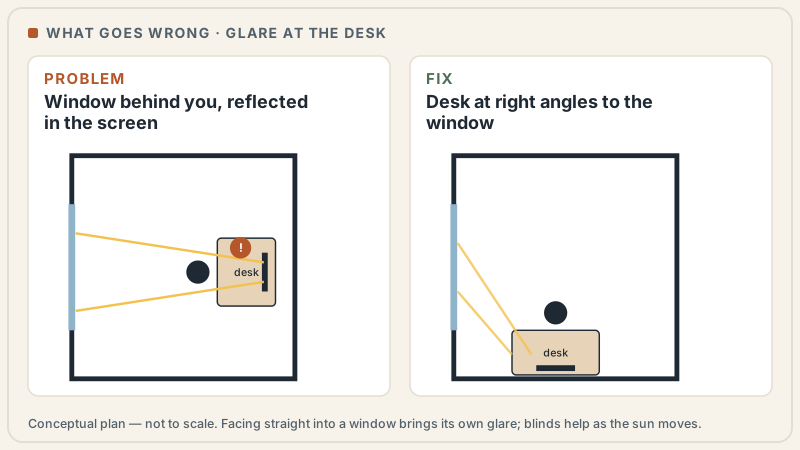
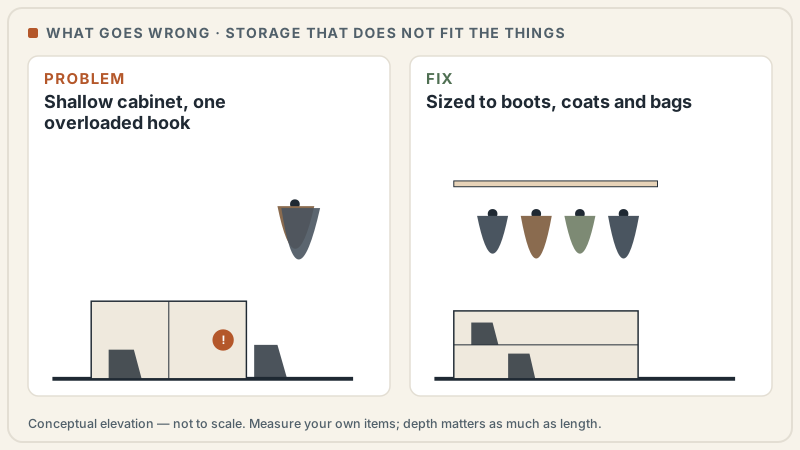
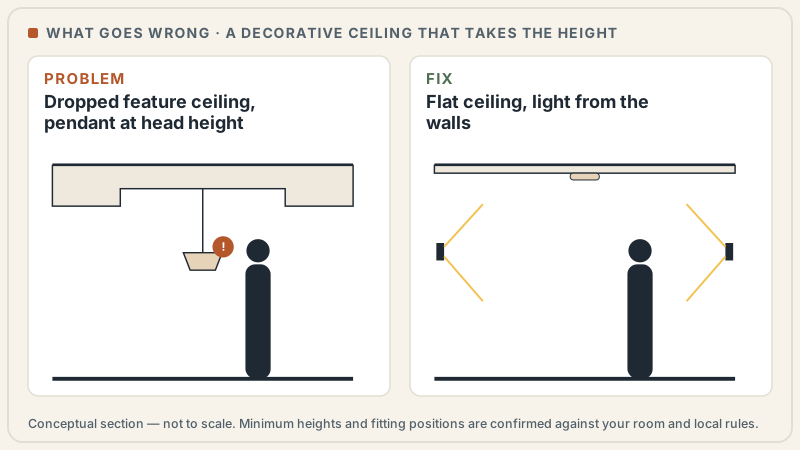
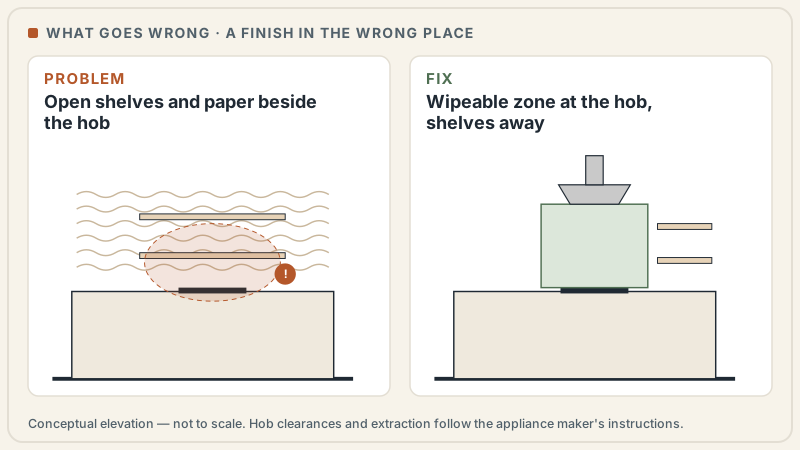
Every room image on these pages is a 3D illustration made by Build Design Hub. Each room is modelled once — walls, window, door, camera and daylight — and each option changes only what is being compared: one element for a problem, a declared set of finishes, furniture and light for a style scheme, or only the colours for a palette. The images are rendered with physically based light, so a gloss ceiling reflects the window and a dark wall absorbs light much as they would in a real room.
The style and palette images use a second, updated version of the same renderer. The leftover grain of the render is removed with an open-source denoiser (Intel Open Image Denoise, a trained filter) guided by the scene’s own surface colours and directions; it smooths noise; it does not add, remove or move objects, though it can soften very fine texture. Close-ups are separate renders of the same scene from a nearer camera, not crops.
They are not photographs, they are not AI-generated, and they do not show any real home, product or project. A render is not evidence that a construction works; that is what the guides, the materials pages and a qualified professional are for. The colours named beside an image are the values it was rendered with — a screen guide, not a paint code or a product match. The diagrams are conceptual and not to scale.
Each image records a fingerprint (a SHA-256 hash) of the scene description it was rendered from, and one of the renderer’s code. A matching scene fingerprint shows that the image belongs to the recorded scene — the room, camera, light and finishes as declared. It does not show that the scene is physically accurate, and on its own it does not prove which run of the renderer made the pixels.
147 illustrations, close-ups included, across 24 rooms, problems and styles, showing 59 options, and 7 diagrams of what goes wrong.