
Who this guide is for
- Owners planning an outdoor or partially exposed padel court
- Operators wanting a court that stays usable after rain
- Sponsors briefing professionals on water management
- Anyone evaluating how a proposal handles drainage
Planning diagram
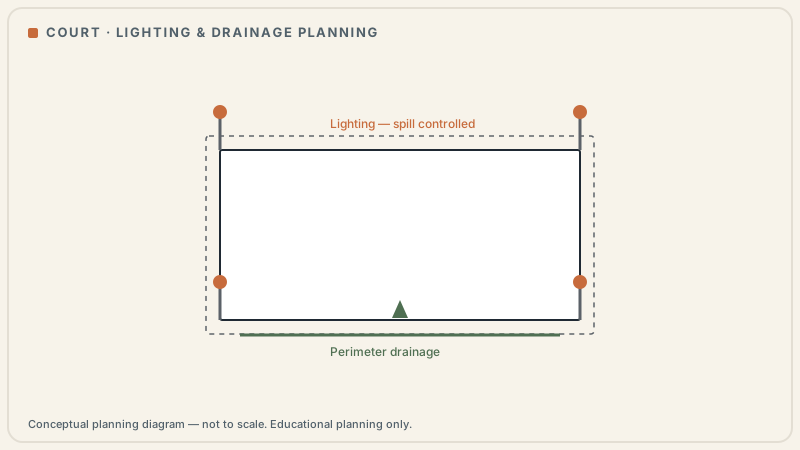
Court lighting and drainage concept
Conceptual editorial diagram — not a construction drawing, specification or to-scale plan. Official court dimensions, standards, drainage, structure and lighting requirements vary by sport, site and location and are confirmed with the relevant federation, supplier and qualified professionals.
Why drainage matters for padel
A padel court needs to shed and manage water so play resumes quickly and the surface and base stay sound. Standing water, poor runoff and waterlogging shorten a court's life and frustrate players.
Because the court is enclosed and hard-surfaced, water has to be guided deliberately. This is a core planning topic, not an optional extra.
What influences drainage planning
How water currently moves across the site, the ground conditions, the surface and the surrounding levels all shape drainage. Where the court sits relative to higher ground and existing drainage also matters.
These inputs interact, so drainage is planned in the context of the whole site. Confirming the right approach is a professional task.
- Where surface water currently collects and flows
- Ground conditions and how they absorb water
- The surface and how it sheds water
- Surrounding levels and existing drainage
Drainage and the surroundings
Drainage does not stop at the court edge. Where water goes after it leaves the court affects the surrounding garden or site, and managing that responsibly avoids creating problems elsewhere.
How runoff is handled may interact with local requirements that vary by location and may require local review.
Recognising good drainage planning
You cannot design the drainage, but you can tell whether it is being taken seriously. A professional who asks about site water, ground conditions and where runoff will go is approaching it properly.
Drainage treated as an afterthought is a warning sign worth questioning.
Padel drainage planning checklist
- 1Do you understand why drainage matters for an enclosed court?
- 2Has it been observed where water currently collects?
- 3Have ground conditions been considered for drainage?
- 4Has the surface's water-shedding been considered?
- 5Have surrounding levels and existing drainage been reviewed?
- 6Has where runoff goes after the court been planned?
- 7Have local requirements affecting runoff been considered?
- 8Is drainage routed to qualified professionals?
Common mistakes to avoid
- Treating drainage as an add-on rather than a core topic
- Ignoring where water currently collects on the site
- Forgetting where runoff goes after it leaves the court
- Overlooking how ground conditions affect drainage
- Accepting a proposal that barely addresses water
When to involve a professional
- Drainage design and construction are specialist work that should be reviewed and performed by qualified professionals.
- How runoff is handled may interact with local requirements that vary by location and may require local review.
- Official padel court dimensions and falls vary and should be confirmed with the relevant federation, supplier or designer.
- Ground investigation should be arranged where ground conditions are uncertain.
Frequently asked questions
Questions readers ask about this topic
Why does padel drainage matter so much?
It decides whether the court is usable soon after rain and whether it lasts. Because the court is enclosed and hard-surfaced, water must be guided deliberately, making drainage a core planning topic.
Can I plan drainage myself?
No. Drainage design is specialist work that should be reviewed and performed by qualified professionals. Your role is to understand its importance and ensure it is properly considered.
Where should runoff from the court go?
Water leaving the court affects the surrounding garden or site, so where it goes must be planned responsibly. How runoff is handled may interact with local requirements that vary by location.
How do I know drainage is being taken seriously?
A professional who asks about site water, ground conditions and where runoff will go is approaching it properly. Drainage treated as an afterthought is a warning sign worth questioning.
Keep reading