
Who this guide is for
- Owners wanting to play after dark
- Clubs scheduling evening sessions across courts
- Facility planners scoping lighting and power
- Anyone preparing questions for a lighting specialist
Planning diagram
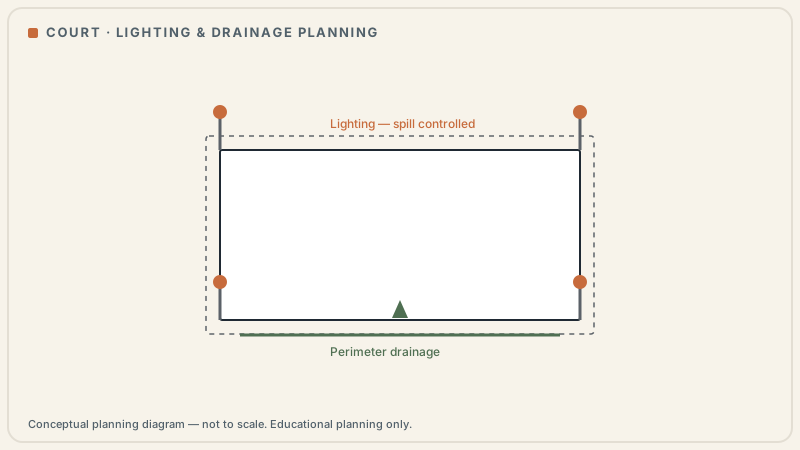
Court lighting and drainage concept
Conceptual editorial diagram — not a construction drawing, specification or to-scale plan. Official court dimensions, standards, drainage, structure and lighting requirements vary by sport, site and location and are confirmed with the relevant federation, supplier and qualified professionals.
Even coverage and player comfort
The goal of court lighting is even illumination across the whole playing area so the ball is easy to track and there are no dark patches. Uneven lighting and glare make play difficult and can be unsafe, which is why coverage and glare control are planned together by a specialist.
Coverage depends on how lights are arranged and aimed, which is a design task rather than a matter of buying brighter fittings. A qualified lighting designer plans the layout to suit the sport and court.
- Even coverage avoids dark patches and aids ball tracking
- Glare control protects player comfort and safety
- Arrangement and aiming matter more than raw brightness
- Indoor and outdoor courts are lit differently
Glare, spill and neighbors
Light that escapes the court as glare or spill affects both players and neighbors. Controlling where light goes is part of responsible lighting design, and it may be subject to local review where it affects surrounding properties.
Because spill and glare are common sources of complaint, plan them deliberately. A qualified designer can advise how to direct and shield light, and you should check whether local review applies for your site.
Mounting, controls and power
Lighting needs supports, a power supply and controls, all of which are engineering and electrical matters. Supports must be designed for the loads and conditions, and controls can manage when and how lights run. These are not DIY tasks.
Plan for the electrical infrastructure early, because it affects the wider project. A qualified electrician and lighting designer handle the design and installation so the system is safe and reliable.
Lighting controls and running the system
How lighting is controlled affects both convenience and nuisance. Controls can manage when lights run, support different uses and limit spill at unsociable hours, which matters for neighbors and energy use alike.
Plan controls alongside the lighting layout so the system suits how the court will actually be used. A qualified professional can specify controls appropriate to your scheme.
Lighting planning checklist
- 1Have you defined the sports and hours the lighting must support?
- 2Have you asked how even coverage will be achieved?
- 3Have you planned glare and spill control for players and neighbors?
- 4Have you checked whether local review applies to lighting?
- 5Have you accounted for supports, power and controls?
- 6Have you considered indoor versus outdoor lighting needs?
- 7Have you confirmed official dimensions and standards with a supplier or federation?
- 8Have you engaged qualified professionals for design and installation?
Common mistakes to avoid
- Equating brighter fittings with better lighting
- Ignoring glare and spill onto neighbors
- Leaving dark patches through poor arrangement
- Treating supports and wiring as simple DIY tasks
- Overlooking whether local review applies to lighting
- Skipping confirmation of official dimensions with the supplier
When to involve a professional
- A qualified lighting designer should plan coverage, glare and spill for your sport and court.
- Electrical work, supports and controls are specialist tasks for qualified professionals.
- Official court dimensions and lighting standards vary and should be confirmed with the relevant federation, supplier or designer.
- Light spill and glare onto neighbors may require local review and requirements vary by location.
Frequently asked questions
Questions readers ask about this topic
Is brighter lighting always better?
No. The goal is even coverage with controlled glare, which depends on how lights are arranged and aimed, not just their brightness. A qualified lighting designer plans the layout to suit your sport and court.
How do I stop light bothering neighbors?
By controlling glare and spill through careful design and shielding, planned by a specialist. Light affecting surrounding properties may require local review, and requirements vary by location.
Do I need an electrician for court lighting?
Yes. Lighting involves power, supports and controls that are electrical and engineering matters. These should be designed and installed by qualified professionals so the system is safe and reliable.
Are indoor and outdoor courts lit the same way?
No. Indoor and outdoor courts have different lighting considerations, from fixtures to mounting and spill. A lighting designer tailors the approach, and dedicated indoor and outdoor lighting guides cover the differences.
Keep reading