
Who this guide is for
- Homeowners weighing surface options for a private or backyard court
- Club committees comparing surfaces across several courts
- Property developers scoping a sports facility at concept stage
- Anyone preparing questions before meeting a court supplier or designer
Planning diagram
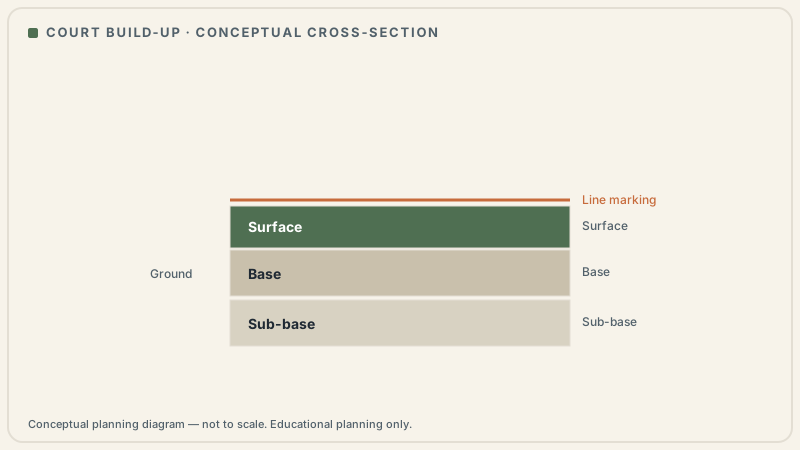
Court build-up — conceptual cross-section
Conceptual editorial diagram — not a construction drawing, specification or to-scale plan. Official court dimensions, standards, drainage, structure and lighting requirements vary by sport, site and location and are confirmed with the relevant federation, supplier and qualified professionals.
How surface families differ
Court surfaces tend to fall into broad families: hard surfaces such as acrylic-coated systems, cushioned or modular synthetic systems, natural surfaces such as clay, and synthetic turf systems often used for padel and some multi-sport courts. Each family carries a different bounce, pace, grip and feel underfoot, and each places different demands on the base and on ongoing maintenance.
There is no universal ranking. The way a surface plays, weathers and ages depends on the product, the climate, the quality of the base beneath it and how it is maintained. Treat any single 'best surface' claim with caution and ask to see how a given system performs for your specific sport and site conditions.
- Hard acrylic systems: firm pace, lower routine upkeep, sensitive to base cracking
- Synthetic turf systems: common for padel, often sand-dressed, needs grooming
- Clay-type surfaces: distinctive feel, higher seasonal and routine maintenance
- Modular/cushioned systems: tile or coated build-ups with their own care needs
Surface choice and the base beneath it
A surface is only as good as what sits under it. Most systems rely on a stable, well-drained base and a prepared sub-base, and the surface choice and base design are decided together rather than in isolation. A surface that tolerates minor movement behaves differently from one that telegraphs every crack.
Because base, sub-base and drainage interact with the surface, it is worth reviewing surface options alongside base planning rather than treating them as separate decisions. A qualified designer can advise how a given surface pairs with concrete, asphalt or other base approaches for your site.
Climate, exposure and maintenance
Local climate shapes surface suitability more than any catalogue. Rainfall, freeze-thaw cycles, shade, leaf litter and sun exposure all affect how a surface drains, dries and ages. A surface that needs frequent grooming or seasonal attention may suit a club with staff but frustrate a private owner.
Be honest about the upkeep you can sustain. Some surfaces reward regular grooming and cleaning with consistent play; others are more forgiving but offer a different feel. Matching maintenance appetite to surface type is a core planning decision, not an afterthought.
Matching surface to how you will use the court
The most useful filter is honest use: a high-traffic club court, a family backyard court and a competition-focused court each pull toward different surface trade-offs. Level of play, frequency of use and who maintains the court all shape which family fits.
Set out your real priorities, whether that is low upkeep, a particular feel, year-round play or a multi-sport layout, and weigh surfaces against them. A designer or supplier can map options to your priorities rather than to a generic ideal.
Surface comparison checklist
- 1Have you confirmed which sports the court must support, now and later?
- 2Have you matched candidate surfaces to your local climate and exposure?
- 3Have you discussed how each surface pairs with the proposed base and drainage?
- 4Have you been realistic about the grooming and cleaning each surface needs?
- 5Have you asked how each surface ages and what resurfacing looks like later?
- 6Have you confirmed official dimensions and standards with the relevant federation or supplier?
- 7Have you compared more than one supplier's system for the same sport?
- 8Have you considered how surface choice affects line marking and color options?
Common mistakes to avoid
- Choosing a surface from a brochure without reviewing the site's climate and drainage
- Assuming one surface is universally 'best' regardless of sport or conditions
- Deciding the surface before the base and sub-base approach is understood
- Underestimating the routine maintenance a surface demands
- Overlooking how surface choice constrains future line marking and conversion
- Skipping confirmation of official dimensions with a supplier or federation
When to involve a professional
- A qualified court designer or supplier should match surface options to your sport, site and climate.
- Base, sub-base and drainage design that supports the surface is specialist work for relevant engineers and contractors.
- Official court dimensions and surface standards vary by sport and should be confirmed with the relevant federation, supplier or designer.
- Maintenance routines differ by product and should be set out by the surface supplier.
Frequently asked questions
Questions readers ask about this topic
Is there one best sports court surface?
No. The most suitable surface depends on the sport, the level of play, your climate, the base beneath it and how much maintenance you can sustain. A designer or supplier can compare options against your specific conditions rather than naming a universal winner.
Does the surface decide the base, or the other way round?
They are decided together. The surface and the base, sub-base and drainage interact, so a designer typically reviews them as a system rather than choosing one in isolation. This is specialist work that should be reviewed by qualified professionals.
How much maintenance does a court surface need?
It varies widely by surface family and product. Some systems need regular grooming or seasonal attention, others less. Ask the supplier for the specific care routine before you choose, and match it to the upkeep you can realistically commit to.
Can I change surface type later?
Often the surface can be renewed or changed, but feasibility depends on the existing base, drainage and condition. A condition assessment by a qualified professional can clarify what a future change would involve for your court.
Keep reading