
Who this guide is for
- Anyone planning a court on a wet or sloping site
- Homeowners worried about garden run-off
- Clubs planning courts that dry quickly after rain
- People comparing drainage approaches in proposals
Planning diagram
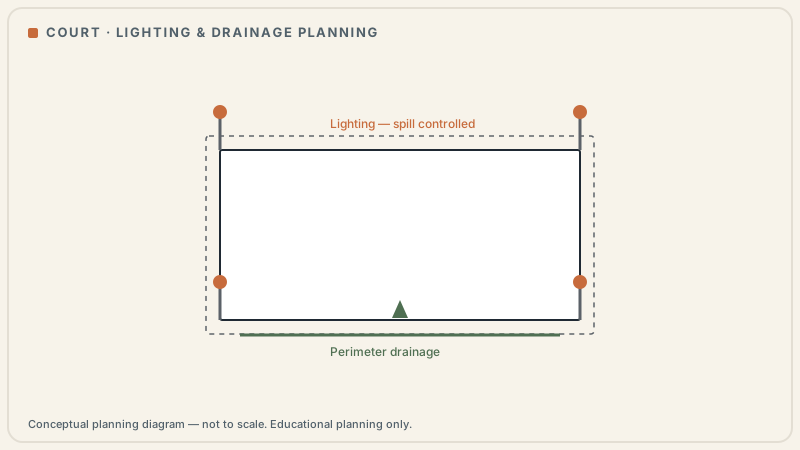
Court lighting and drainage concept
Conceptual editorial diagram — not a construction drawing, specification or to-scale plan. Official court dimensions, standards, drainage, structure and lighting requirements vary by sport, site and location and are confirmed with the relevant federation, supplier and qualified professionals.
Why drainage drives durability
Drainage protects the base, keeps the surface playable and prevents water from migrating where it is not wanted. Because so many later problems trace back to water, drainage is one of the highest-value parts of court planning to get right.
A court that drains well returns to play sooner and ages more gracefully.
Surface shedding and falls
Water first has to leave the playing surface. How the surface sheds water — through fall, permeability or a combination — is a design decision tied to surface choice and confirmed with a supplier or designer.
- How the surface sheds or absorbs water
- The relationship between surface choice and falls
- Avoiding low spots that pond
- How quickly the court returns to play
Perimeter drainage and run-off
Water leaving the surface needs somewhere to go. Perimeter drainage collects it and directs run-off away from the court and toward an appropriate outfall, all of which is site-specific and professionally designed.
Site water and neighbours
Drainage cannot be considered in isolation from the wider site. Where run-off ultimately goes affects neighbours and may require local review, so it is planned with the whole property in mind.
- Where run-off is directed across the site
- Impact on neighbouring land
- Connection to an appropriate outfall
- Why local review may apply
Tennis court drainage planning checklist
- 1Do you understand how your chosen surface sheds or absorbs water?
- 2Has perimeter drainage been planned around the court?
- 3Have low spots that could pond been designed out?
- 4Is there a clear path for run-off away from the court?
- 5Has the impact on neighbouring land been considered?
- 6Has an appropriate outfall been identified by a professional?
- 7Have you asked whether local review applies to run-off?
- 8Has drainage been left to qualified professionals to design?
Common mistakes to avoid
- Treating drainage as a detail rather than a core system
- Ignoring where run-off ends up beyond the court
- Designing the surface without considering how it sheds water
- Creating low spots that collect water
- Overlooking neighbour impact and local review
When to involve a professional
- Drainage design depends on site conditions and should be carried out by qualified professionals
- Surface shedding and falls should be coordinated with the surface supplier or designer
- Run-off destinations and outfalls should be planned by a specialist
- Run-off impacts on neighbouring land may require local review
- Requirements vary by location and project
Frequently asked questions
Questions readers ask about this topic
Why is drainage so important for a tennis court?
Because water causes most long-term court problems, from ponding and slow drying to base damage. Good drainage protects the base, keeps the court playable and prevents water migrating where it is not wanted, making it one of the highest-value planning items.
How does drainage relate to surface choice?
Closely. How a surface sheds or absorbs water shapes the drainage design, so the two are planned together. Confirm the relationship between your chosen surface and falls with a supplier or designer rather than assuming.
Where does court run-off go?
Run-off is collected by perimeter drainage and directed to an appropriate outfall, which is site-specific. Because where it ends up affects neighbours and may require local review, this is planned by a professional with the whole property in mind.
Can drainage affect my neighbours?
Yes. If run-off is pushed onto neighbouring land it can cause disputes and may require local review. Drainage is therefore planned so water is managed responsibly within the site and directed to a suitable outfall.
Keep reading