
Who this guide is for
- Owners planning ongoing care for a new or existing court
- Facility managers organizing a maintenance approach
- Club committees structuring upkeep responsibilities
- Anyone preparing to brief maintenance specialists
Planning diagram
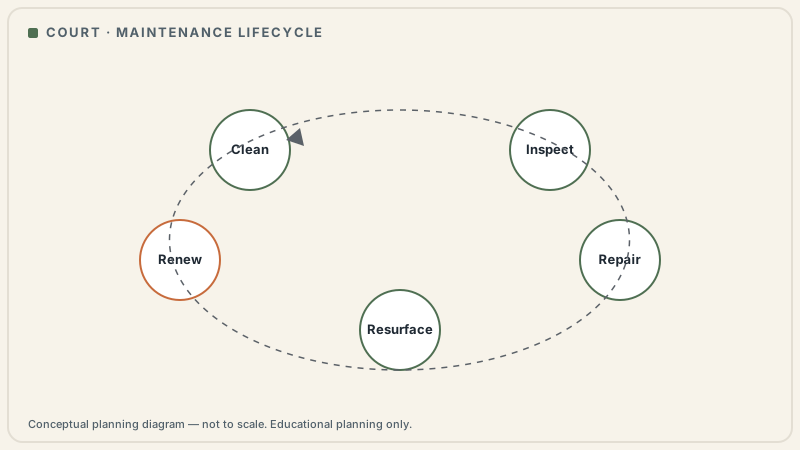
Court maintenance lifecycle concept
Conceptual editorial diagram — not a construction drawing, specification or to-scale plan. Official court dimensions, standards, drainage, structure and lighting requirements vary by sport, site and location and are confirmed with the relevant federation, supplier and qualified professionals.
Knowing what each element needs
Different parts of a court degrade in different ways. The surface responds to use and weather, drainage can silt or block, lighting components age, and fencing or enclosures face wear and impact. Listing each element and its general care theme is the foundation of a maintenance plan.
Understanding these differences helps you avoid both neglect and unnecessary work.
- List the surface, drainage, lighting, fencing and enclosure
- Note how use versus weather affects each
- Separate routine care from specialist intervention
- Record who is responsible for each element
Inspection as the early-warning system
Regular inspection catches small issues before they become expensive. Looking for surface wear, drainage that is slow to clear, fading line markings, and signs of movement or damage gives you time to act. Inspection is low-effort and high-value, and it anchors the rest of the plan.
What to look for varies by court type; specialists can help you build a sensible inspection focus.
- Schedule periodic visual inspections
- Watch for wear, slow drainage and fading markings
- Note signs of movement or impact damage
- Record findings so trends are visible over time
Organizing care into a workable rhythm
Some tasks suit regular intervals, others follow seasons or usage. Grouping care into a rhythm that fits how the court is used keeps maintenance manageable and the court available. Maintenance windows should be coordinated with play so the two do not clash.
Intervals vary by surface and climate and should be confirmed with suppliers rather than assumed.
When to bring in specialists
Routine care can often be handled in-house, but surface refinishing, drainage work, lighting repairs and structural checks usually call for specialists. Knowing where that boundary sits keeps the court safe and avoids well-meant but unsuitable interventions.
Specialist work should be reviewed and performed by qualified professionals, and official court standards confirmed with the relevant federation, supplier or designer.
Maintenance planning checklist
- 1Have you listed every court element that needs care?
- 2Have you noted how use and weather affect each?
- 3Have you scheduled periodic inspections?
- 4Have you decided what to watch for during inspection?
- 5Have you grouped tasks into a workable rhythm?
- 6Have you coordinated maintenance windows with play?
- 7Have you defined where specialist work begins?
- 8Have you set up a record of inspections and care?
Common mistakes to avoid
- Focusing only on the surface and ignoring drainage or lighting
- Skipping inspection until problems are obvious
- Assuming fixed care intervals regardless of surface or climate
- Attempting specialist work without qualified help
- Keeping no record of what care has been done
When to involve a professional
- Route surface refinishing, drainage, lighting and structural work to qualified specialists.
- Confirm appropriate care intervals with suppliers, as they vary by surface, climate and use.
- Confirm local requirements affecting works and disposal with appropriate advisers, since they vary by location.
- Confirm official court dimensions and standards with the relevant federation, supplier or designer when surfaces or markings are renewed.
Frequently asked questions
Questions readers ask about this topic
How often should a court be maintained?
Intervals vary by surface, climate and how heavily the court is used. We do not give fixed frequencies. Confirm appropriate timing with suppliers and qualified specialists for your situation.
What should inspections look for?
Generally, surface wear, slow-clearing drainage, fading markings and signs of movement or damage. The specific focus varies by court type; specialists can help you tailor it.
Can I do maintenance myself?
Routine care is often manageable in-house, but surface refinishing, drainage, lighting and structural work usually need qualified specialists. Knowing where that line sits keeps the court safe.
Why keep maintenance records?
Records reveal trends over time and support decisions about repair, resurfacing or renovation. They also help any specialists you engage understand the court's history and condition.
Keep reading