
Who this guide is for
- Owners testing whether a site can support a court
- Project sponsors gathering information before briefing designers
- Buyers evaluating a property with a court in mind
- Anyone comparing two possible locations on a site
Planning diagram
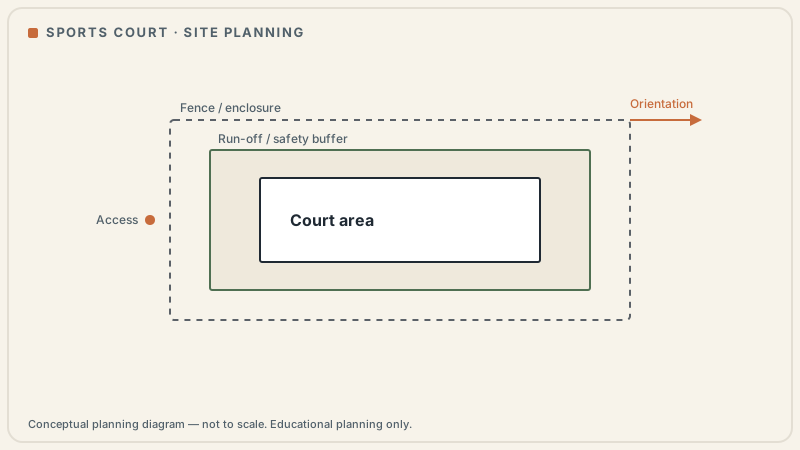
Sports court site-planning concept
Conceptual editorial diagram — not a construction drawing, specification or to-scale plan. Official court dimensions, standards, drainage, structure and lighting requirements vary by sport, site and location and are confirmed with the relevant federation, supplier and qualified professionals.
Slope and levels
How level the ground is shapes the whole project. Significant slope means more groundwork and more careful drainage planning. Walking the area and noting where it rises and falls gives you a first impression to discuss with professionals.
Levelling and the tolerances a court needs are specialist matters that should be reviewed and performed by qualified professionals; your assessment simply flags how much work the levels imply.
Ground conditions
What lies beneath the surface affects the base and how water behaves. Soft, made-up or variable ground complicates a project, and existing buried services or structures can constrain where a court goes.
Ground investigation is a professional task. At assessment stage, note anything you already know about the ground and identify where professional investigation is warranted.
- Visible signs of soft, wet or made-up ground
- Known buried services or old structures
- Existing hard surfaces that might be reused or removed
- Trees and roots that could affect the area
Access and surroundings
Materials and machinery have to reach the site. Narrow access, tight corners or limited working space can drive complexity. The surroundings matter too: proximity to neighbours, boundaries and existing structures all shape what is feasible.
Recording access constraints and neighbouring uses early gives professionals the context they need and helps you anticipate practical challenges.
- Width and condition of access routes
- Working and storage space during construction
- Distance to boundaries and neighbouring properties
- Overhead and underground constraints near the area
Drainage and water
How water currently moves across the site is central. A new hard surface changes runoff, so understanding where water collects and where it goes is a key planning input.
Drainage design is specialist work that should be reviewed and performed by qualified professionals. Your assessment captures observations that inform that work, not solutions.
Site assessment checklist
- 1Have you walked the area and noted how it slopes?
- 2Have you recorded any signs of soft, wet or made-up ground?
- 3Have you identified known buried services or structures?
- 4Have you checked access width and working space?
- 5Have you measured distance to boundaries and neighbours?
- 6Have you observed where surface water currently collects?
- 7Have you noted trees and roots near the proposed area?
- 8Have you flagged where professional investigation is needed?
Common mistakes to avoid
- Judging a site on the playing area alone, ignoring access and surroundings
- Assuming flat-looking ground needs little levelling
- Overlooking buried services or old structures
- Treating drainage observations as optional rather than central
- Skipping professional ground investigation where conditions are uncertain
When to involve a professional
- Ground investigation, levelling, drainage and structural matters should be reviewed and performed by qualified professionals.
- Official court dimensions vary by sport and should be confirmed with the relevant federation, supplier or designer.
- Feasibility depends on site conditions and professional review; a site walk is a starting point, not a conclusion.
- Local requirements affecting the site may vary by location and require local review.
Frequently asked questions
Questions readers ask about this topic
What is a site assessment for a court?
It is the planning step where you read slope, ground conditions, access, drainage and surroundings to judge whether a court is realistic and what building one would involve. It informs, but does not replace, professional investigation.
Can I assess ground conditions myself?
You can note visible signs such as soft or wet ground and known services, but ground investigation is specialist work. Where conditions are uncertain, professional investigation should be arranged.
Why does access matter so much?
Materials and machinery must reach the site. Narrow access, tight corners or limited working space increase complexity, so recording these constraints early helps professionals plan realistically.
How does drainage fit into a site assessment?
A new hard surface changes how water moves, so observing where water collects and flows is a key input. Drainage design itself is specialist work that should be reviewed by qualified professionals.
Keep reading