
Who this guide is for
- Owners trying to understand what drives tennis court cost
- Clubs scoping a tennis project
- Property holders weighing tennis feasibility
- Anyone preparing cost conversations with suppliers
Planning diagram
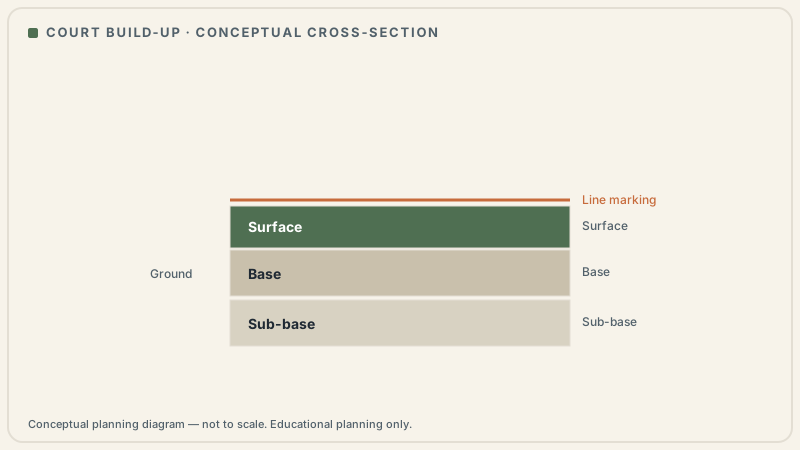
Court build-up — conceptual cross-section
Conceptual editorial diagram — not a construction drawing, specification or to-scale plan. Official court dimensions, standards, drainage, structure and lighting requirements vary by sport, site and location and are confirmed with the relevant federation, supplier and qualified professionals.
Site preparation and base drivers
A large share of cost is set before the court is visible. Site preparation, ground conditions, and the base or sub-base approach shape the work involved. A site needing extensive preparation or a more demanding base naturally carries more, though we do not quantify it.
Ground conditions vary by site and are assessed by professionals; they are a key driver to understand early.
- Extent of site preparation needed
- Ground and slope conditions
- Base or sub-base approach
- Access for construction equipment and materials
Surface, drainage and fencing drivers
The surface category, drainage and fencing are central tennis cost drivers. Surface choice influences both upfront work and future maintenance, drainage scope depends on the site, and fencing varies in extent and specification. Each is worth discussing in detail with suppliers.
Surface choice interacts with maintenance over the court's life, another factor to weigh.
- Surface category and specification
- Drainage and water management scope
- Fencing extent and specification
- How choices affect ongoing maintenance
Lighting, access and professional input
Lighting, which extends usable hours, adds drivers, as does the level of professional design and engineering involved. Access for construction and use affects logistics. These are factors to understand at the planning stage, not to price here.
Professional design, engineering and specialist trades are part of the cost picture and vary by project.
- Lighting scope and approach, if included
- Professional design and engineering input
- Site access and logistics
- Specialist trades required
Local requirements and the long view
Local requirements around drainage, lighting and neighborhood impact can shape a project and vary by location. Maintenance over the court's life is part of the whole-life cost picture. Considering these alongside upfront drivers gives a fuller view.
Costs vary by scope, materials, access, drainage, surface, fencing, lighting, supplier, labor and local requirements, and figures should come from professionals for your specific case.
Tennis cost-factor planning checklist
- 1Have you considered the extent of site preparation needed?
- 2Have you discussed the base or sub-base approach?
- 3Have you discussed the surface category and its maintenance?
- 4Have you scoped drainage and water management?
- 5Have you discussed fencing extent and specification?
- 6Have you considered lighting scope, if included?
- 7Have you accounted for professional design and specialist input?
- 8Have you weighed maintenance and local requirements in the whole-life view?
Common mistakes to avoid
- Focusing only on the surface and ignoring site prep and base
- Underestimating drainage as a cost driver
- Assuming one surface category fits every budget or use
- Ignoring maintenance and whole-life factors
- Expecting a single figure to apply across different projects
When to involve a professional
- Have site, base, surface, drainage, fencing, lighting and structural elements assessed by qualified professionals for figures, since they vary by site.
- Confirm local requirements affecting drainage, lighting and impact with appropriate advisers, as they vary by location.
- Confirm official tennis court dimensions and standards with the relevant federation, supplier or designer.
- Seek figures from suppliers and professionals for your specific scope; this page provides no prices.
Frequently asked questions
Questions readers ask about this topic
How much does a tennis court cost?
We do not provide prices, averages or budgets. Costs vary by scope, materials, access, drainage, surface, fencing, lighting, supplier, labor and local requirements. Suppliers and professionals can give figures for your case.
What drives tennis court cost most?
It varies by project. Site preparation, base, surface, drainage and fencing are all significant. Which dominates depends on your site and choices, best assessed by professionals.
Does surface choice affect cost?
Yes, surface category influences both upfront work and future maintenance. There is no universal best or cheapest surface; the right choice depends on use, site and preferences, discussed with suppliers.
Should I factor in maintenance?
Maintenance is part of the whole-life cost picture, though we do not quantify it. Considering ongoing care alongside upfront drivers gives a fuller view; specialists can advise for your court.
Keep reading