
Who this guide is for
- Clubs and academies weighing a natural-grass pitch against other surfaces
- Municipalities and parks departments planning a community football facility
- Schools and colleges scoping a grass pitch or training ground
- Developers and facility managers preparing a brief for grounds specialists
- Owners trying to understand the long-term maintenance commitment before committing
- Project teams assembling stakeholder input ahead of professional engagement
Planning diagram
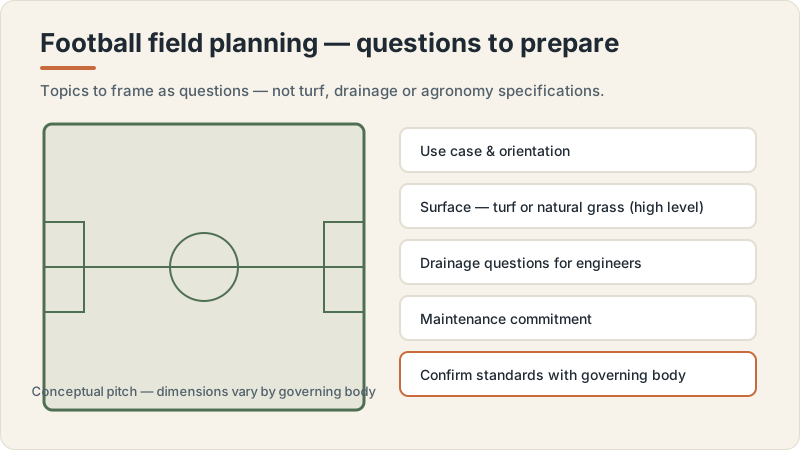
Football field planning concept
Conceptual editorial diagram — not a construction drawing, specification, to-scale plan or proof of a real project. It is not engineering, structural, fire/life-safety, crowd-safety or accessibility-compliance guidance. Capacities, dimensions, standards, requirements and costs vary by facility type, audience, site, use case and governing body, and are confirmed with qualified professionals, relevant authorities and governing bodies. Build Design Hub does not design, build, inspect, certify, recommend or match anyone.
What this guide helps you prepare
This guide helps you prepare for conversations, not to carry out any agronomy or construction work yourself. Choosing natural grass commits a facility to a continuous cycle of mowing, feeding, aeration, irrigation, drainage upkeep and seasonal renovation, and the value of early planning is in understanding that commitment before, not after, the surface is installed. The material here helps you build a brief, map stakeholders, frame risks, and structure the questions you will put to agronomists, grounds specialists and engineers so those expert conversations are productive.
It deliberately stops short of technical direction. You will not find a recommended grass species, a drainage layout, an irrigation programme, a fertiliser plan, or any performance figure presented as fact, because those depend entirely on your site, climate, intended use and governing body, and they are the work of qualified professionals to determine. What you will find is a way to organise your own thinking — what to record, what to ask, and where the boundary sits between owner planning and specialist work — so that the people you eventually engage receive a clear, honest picture of what you are trying to achieve.
- Clarify whether natural grass fits your use intensity, climate and maintenance capacity
- Assemble a brief that describes intended use, audience and site context
- Identify which specialists to involve and at what stage
- Separate questions you can answer in-house from those needing professional input
- Frame drainage, irrigation and maintenance as topics to confirm, not specify
- Set realistic expectations about the ongoing commitment a living surface requires
Understanding the agronomy and maintenance commitment
A natural-grass pitch performs only as well as its ongoing care allows, so the central planning question is honest capacity: can the facility sustain the mowing, feeding, aeration, overseeding, top-dressing, line-marking and recovery time that a grass surface needs across a season? The answer shapes everything else, because a surface that is played beyond its capacity to recover degrades quickly regardless of how well it was established. Usage intensity, the number of teams and matches, training load, and rest periods all feed into whether grass is a realistic choice or whether the commitment exceeds what the budget and staffing can support.
Local climate and site conditions are equally central. Sunlight, shade from stands or surrounding structures, prevailing wind, soil type, and seasonal temperature and rainfall all influence which grass approaches a specialist might discuss and how much intervention the surface will demand. None of this should be assumed from general rules of thumb; an agronomist assesses the specific site. The owner's job at the planning stage is to gather and record the conditions and usage expectations honestly, so the professional advice you receive rests on accurate inputs rather than optimistic guesses.
- Record expected match and training hours per week and per season
- Note who will perform routine maintenance and whether they are resourced for it
- Document site shade, sunlight, wind exposure and surrounding structures
- Describe the climate and seasonal patterns the pitch must cope with
- Ask how recovery and rest periods affect realistic usage limits
- List renovation and reseeding seasons that may take the pitch out of play
Drainage and irrigation topics to raise with specialists
For a natural-grass pitch, water moves in two directions — off the surface and into it — and both are specialist territory. Drainage governs how quickly a pitch sheds rainfall and becomes playable again, while irrigation governs how the surface is kept healthy and consistent during dry periods. These are engineering and agronomy questions, not owner decisions, and this guide does not describe drainage construction, pipe layouts, gradients, or watering schedules. What it does is help you prepare the topics and context so that drainage engineers, irrigation designers and agronomists can do their work with a clear understanding of your site and goals.
The most useful thing an owner can bring to these conversations is good information about the site and honest expectations about use. How the ground currently behaves in heavy rain, where water collects, what the water source and supply situation is, and how the surface is intended to be used all matter to the specialists who will assess them. Local rules on water use, abstraction, runoff and discharge vary by location and must be confirmed with the relevant authorities. Frame drainage and irrigation as questions to explore with professionals, and resist the temptation to pre-decide technical solutions.
- Describe how the site currently behaves in heavy or prolonged rain
- Note where surface water collects or drains slowly today
- Identify the available water source and any supply constraints
- Ask specialists how drainage and irrigation interact for your site
- Flag local rules on water use, runoff and discharge to confirm with authorities
- Discuss how intended usage and climate affect irrigation and drainage needs
Planning questions before speaking with professionals
Before engaging specialists, it helps to answer the questions that are yours to answer — the ones about purpose, capacity and constraints. Being clear on who will use the pitch, how heavily, who will maintain it, and what the facility can realistically sustain turns a vague aspiration into a brief a professional can respond to. Working through these internally also surfaces disagreements among stakeholders early, while they are still cheap to resolve, rather than after a specialist has been engaged on uncertain foundations.
These are planning prompts, not technical ones. None of them ask you to decide a grass type, a drainage design or an irrigation programme; they ask you to describe your situation honestly so the professionals you involve have what they need. Recording your answers in writing gives you a brief you can share, compare against quotes, and revisit as the project develops, and it keeps the eventual conversations focused on confirming feasibility rather than gathering basics.
- What is the primary use — matches, training, community access, or a mix?
- How intensively will the pitch be used, and is that realistic for natural grass?
- Who will be responsible for ongoing maintenance, and are they resourced?
- What does the site currently look like in terms of soil, shade and drainage behaviour?
- What is the water source, and are there known supply or cost concerns?
- Which stakeholders must agree before the project proceeds?
Questions for qualified professionals
When you reach the point of engaging agronomists, grounds specialists, drainage engineers and irrigation designers, the value of your preparation shows in the quality of the questions you can ask. Rather than seeking a single recommendation, use these conversations to understand the trade-offs for your specific site: what natural grass will demand of you, where the risks lie, and how the surface, drainage and irrigation depend on one another. Ask each professional to be explicit about what their assessment covers and what falls outside it, so nothing important sits in a gap between disciplines.
Treat every standard, dimension, figure and interval as something to confirm with the relevant professional and governing body, not something to assume. Requirements vary by location, facility type, audience, site, use case and governing body, and a question that invites a specialist to confirm what applies to you is far safer than a number carried over from another project. Keep a written record of what each professional confirms, because it becomes the basis for comparing proposals and for understanding the long-term commitment you are taking on.
- What does this site specifically require to support healthy natural grass?
- How do drainage and irrigation needs interact for our conditions and intended use?
- What ongoing maintenance regime should we plan for, and what does it demand of staff?
- Which governing-body criteria apply to our facility, and how do we confirm them?
- What are the main risks for natural grass on this site, and how are they managed?
- What does your assessment cover, and which questions should go to another specialist?
What this does not replace
This is an educational project-preparation resource only. It is not a construction manual and not engineering, architectural, structural, civil, fire or life-safety, crowd-safety, accessibility-compliance, permit, zoning, legal, tax or procurement advice. It does not design, specify, certify, inspect or approve anything, and it is not an estimate, quote, price or capacity recommendation. Requirements, standards, capacities and costs vary by location, facility type, audience, site, use case, design team, supplier, contractor and governing body, and are confirmed with qualified professionals, relevant authorities and governing bodies.
Build Design Hub does not design, build, engineer, inspect, certify, recommend, rank, verify, introduce, broker or match suppliers or contractors, and HELPERG LLC is publisher/operator only. Use this resource to prepare your own thinking, then have qualified professionals you engage directly review your project. Decisions about engineering, safety, compliance, procurement and suitability must rest on those professionals, the relevant authorities and the governing bodies for your sport and location.
- Not a construction manual and not engineering, structural or civil design
- Not fire/life-safety, crowd-safety, evacuation or accessibility-compliance advice
- Not permit, zoning, legal, tax or procurement advice
- Not a supplier or contractor recommendation, ranking, directory or matching service
- Not an estimate, quote, price or capacity recommendation — requirements and costs vary
- Qualified professional review is required before any project decision
Natural grass pitch planning worksheet
- 1Record the primary intended use of the pitch (matches, training, community, mixed)
- 2Estimate expected usage hours per week and across each season
- 3Note who will perform routine maintenance and whether they are resourced for it
- 4Document soil type, shade, sunlight and wind exposure on the site
- 5Describe how the site currently behaves in heavy or prolonged rain
- 6Mark where surface water collects or drains slowly today
- 7Record the available water source and any supply or cost concerns
- 8List the seasonal renovation and recovery periods that take the pitch out of play
- 9Note local rules on water use, runoff and discharge to confirm with authorities
- 10Identify which specialists (agronomist, drainage, irrigation) you need and when
- 11Capture which governing-body criteria you must confirm with the relevant body
- 12List the stakeholders who must agree before the project proceeds
- 13Prepare written questions for each professional you plan to engage
- 14Keep a record of what each professional confirms for quote comparison
Common mistakes to avoid
- Choosing natural grass without an honest assessment of the maintenance commitment
- Underestimating recovery time and planning usage beyond what the surface can sustain
- Treating drainage and irrigation as separate problems rather than interacting systems
- Assuming figures, intervals or standards from another project apply to your site
- Pre-deciding a grass species or drainage design before any specialist assessment
- Overlooking shade, soil and water-supply realities when scoping the project
- Failing to confirm local water-use and discharge rules with the relevant authorities
- Engaging specialists with a vague brief that lacks site and usage information
When to involve a professional
- Involve an agronomist or grounds specialist before committing to natural grass for your site and usage
- Bring in a drainage engineer to assess how the site handles water before any decisions are made
- Engage an irrigation specialist to evaluate water source, supply and surface needs together
- Consult the relevant governing body or federation to confirm criteria for your facility type
- Confirm local water-use, runoff and discharge rules with the appropriate authorities before planning works
- Seek professional input whenever usage expectations, climate or site conditions raise doubt about feasibility
Frequently asked questions
Questions readers ask about this topic
Does Build Design Hub recommend a grass type, drainage design, supplier or contractor?
No. Build Design Hub is an educational resource and does not design, build, recommend, rank, verify or match suppliers, contractors or technical solutions. It gives no costs, dimensions or requirements as facts. Decisions about grass type, drainage, irrigation and maintenance belong to qualified professionals assessing your specific site, and any standard should be confirmed with the relevant authority or governing body.
Is natural grass the right choice for our pitch?
That depends on your usage intensity, climate, site conditions, water situation and maintenance capacity, and only a qualified agronomist or grounds specialist assessing your site can advise. This guide helps you prepare the questions and gather the information to make that conversation productive, rather than offering a recommendation.
How much maintenance does a natural-grass pitch need?
It varies by climate, soil, usage and governing body, so this guide does not give intervals or schedules. Natural grass is a continuous commitment involving mowing, feeding, aeration, irrigation, drainage upkeep and seasonal renovation. Confirm the realistic regime for your situation with qualified grounds specialists.
Can we just reuse drainage or irrigation figures from another pitch?
It is safer not to. Drainage performance and irrigation needs depend on your site's soil, climate, water source and intended use, and figures from another project may not apply. Treat such numbers as questions to confirm with drainage and irrigation specialists for your own site.
Keep reading