
Who this guide is for
- Clubs and sports organisations scoping a new, replacement or upgraded stadium who want a structured way to track project risks
- Municipalities and public bodies preparing to brief boards, committees or stakeholders on a venue project
- Schools, colleges and universities considering a stadium or grandstand and needing to organise their concerns before engaging professionals
- Developers and project sponsors who must show a board or partners how project risk is being captured and owned
- Facility managers and operations leads gathering operational and maintenance risks ahead of design and procurement
- Owner representatives and project coordinators who want a neutral framework to collect risks and route them to the right experts
Planning diagram
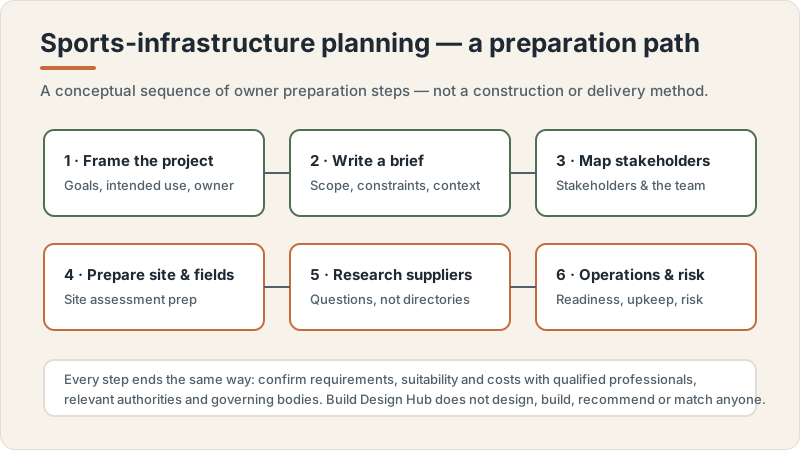
Sports-infrastructure planning path concept
Conceptual editorial diagram — not a construction drawing, specification, to-scale plan or proof of a real project. It is not engineering, structural, fire/life-safety, crowd-safety or accessibility-compliance guidance. Capacities, dimensions, standards, requirements and costs vary by facility type, audience, site, use case and governing body, and are confirmed with qualified professionals, relevant authorities and governing bodies. Build Design Hub does not design, build, inspect, certify, recommend or match anyone.
What this guide helps you prepare
This guide helps you build an owner's own risk register: a simple, ordered list of things that could affect your stadium project, each one logged with enough detail that you can discuss it with the right professional. It is meant to be filled in before and during your engagement with designers, engineers, contractors and authorities, so your earliest conversations start from a shared, written view of your concerns rather than a scatter of half-remembered worries. The aim is organisation and clarity, not technical judgement.
A useful register does not try to decide how dangerous anything is or what the fix should be. It frames each risk, names who is watching it, and records what you plan to ask or do next. By separating what you already understand from what still needs expert input, you give professionals a clear agenda and give yourself a checklist of open items. This guide deliberately leaves likelihood ratings, impact severity, mitigation choices and any acceptance of risk as questions for qualified people, because those depend on your specific project and on rules that vary by location, audience, facility type and governing body.
- A plain-language list of the risks you are aware of, written before you assume how serious they are
- A consistent set of columns so every risk is recorded the same way and stays comparable
- A named owner for each risk so nothing falls between people once professionals are involved
- A record of which risks need expert assessment and which authority or specialist should advise
- A review rhythm so the register stays current as the project moves and new risks appear
- A clear note, against each item, of what is fact you have confirmed versus what is still a question
A likelihood-by-impact way of thinking, and the categories to log
A common way owners organise a register is to think about each risk along two simple lines: how likely it seems to happen, and how much it would affect the project if it did. Plotting risks this way, even informally, helps you see which items deserve early attention and which can sit in the background for now. The value is in the conversation it starts, not in the numbers themselves. Keep your likelihood and impact notes deliberately rough and clearly labelled as your own working view; resist turning them into precise scores that look authoritative, because the real severity of structural, fire, crowd, life-safety and accessibility risks must be assessed by suitably qualified specialists against requirements that vary by location and governing body.
Risks are also easier to manage when they are grouped, because each group tends to route to a different specialist. Owners commonly log categories such as site and ground conditions, planning and approvals, design and scope, procurement and contractor selection, programme and sequencing, budget and funding, stakeholder and community matters, operations and ongoing maintenance, and the broad area of safety and compliance. Naming categories makes sure nothing is forgotten; it does not imply you should resolve any of them yourself. Anything touching structural integrity, fire, crowd movement, evacuation, accessibility or life safety belongs firmly with qualified professionals and the relevant authorities, so log it honestly and treat each entry as a flag for investigation rather than a finding.
- How likely does this seem to me now, in plain terms, and how much would it affect scope, programme, budget, operations or reputation?
- Am I labelling my likelihood and impact notes as a working owner's view rather than a verified assessment?
- Which items feel urgent enough to raise in the very first professional conversations?
- Site and approvals risks: access, surroundings, services, drainage, permits and governing-body requirements to confirm, not assume
- Design and delivery risks: unclear scope, multi-use ambitions, contractor selection, programme and dependencies between trades
- Funding and operations risks: budget uncertainty, stakeholder sensitivities, and how the venue will be run and maintained over its life
Owner, mitigation and review columns for your register
The columns you choose shape how useful the register becomes. A workable starting set is a short description of the risk, its category, your rough likelihood and impact notes, a named owner, a planned response or next step, a status, and a review date. The owner column matters most: every risk should have one person responsible for watching it and chasing the right input, even if that input comes from an external professional. The mitigation column is for the planned next step you intend to take, such as commissioning an assessment or asking a specific question, rather than for any safety solution you have devised yourself.
Treat the mitigation and status columns as a record of actions and conversations, not as decisions about whether a risk is acceptable. As the owner you can note that a structural, fire or crowd-safety concern has been referred to a qualified professional and is awaiting their assessment; you should not record that you have judged it safe, because that determination is theirs and the relevant authority's, against requirements that vary by location and governing body. A regular review keeps the register honest: risks change, new ones appear, and owners and next steps need updating as the project moves through design, procurement and delivery.
- Description and category: what the risk is, in plain words, and which group it belongs to
- Likelihood and impact notes: your rough working view, clearly labelled as unverified
- Owner: the one person responsible for watching the risk and chasing the right input
- Planned next step: the assessment to commission or the question to ask, not a safety solution you invented
- Status and review date: where the item stands and when you will look at it again
- Expert and authority to involve: who needs to assess or confirm this, and at what stage
Planning questions before speaking with professionals
Before you sit down with designers, engineers or contractors, it helps to interrogate your own draft register so you arrive with a clear, honest agenda rather than a vague list. Ask yourself whether each entry is described well enough for someone else to understand, whether you have separated what you know from what you are guessing, and whether every risk has an owner and a sensible next step. This self-review tends to surface gaps, duplicate entries and items you have unconsciously rated as safe when you are not in a position to judge them.
Use these prompts to pressure-test the register before any meeting. The goal is not to answer the technical questions yourself but to make sure you are asking the right people the right things. Keep cost, requirement, capacity, standard and timeline items as questions, because their answers depend on your specific project and on rules that vary by location, facility type, audience and governing body, and must come from qualified professionals and the relevant authorities.
- Have I described each risk clearly enough that a professional could understand it without me explaining?
- Which entries am I treating as facts that should really be questions to confirm with an expert or authority?
- Does every risk have a named owner and a planned next step, even if that step is just asking someone qualified?
- Which safety, structural, fire, crowd or accessibility items must I explicitly hand to professionals rather than rate myself?
- Are there categories, such as operations or maintenance, that I have barely populated and should think harder about?
- How will I keep the register current, and who will remind me to review it as the project moves on?
Questions for qualified professionals
Your register is also a place to gather the questions you will take to the professionals you engage. Capturing them as you build it means you arrive at meetings with a focused agenda and can listen rather than scramble to think of everything on the spot. Keep your questions open and let the professionals provide the assessments, requirements, ratings and methods; your job is to ask well, record what you hear, and update the owner, status and review columns accordingly.
Tailor these prompts to your own project and add to them as new uncertainties surface while you fill in the register. Questions about cost, programme, capacity, standards and compliance belong here as questions, not as numbers or conclusions to assume, because the answers depend on your specific site, scope, intended use and local requirements, all of which must be confirmed with qualified professionals and the relevant authorities and governing bodies.
- Which risks on my register need formal professional assessment before any rating I have drafted can be trusted?
- Which structural, fire, crowd-safety, life-safety or accessibility items should be removed from my judgement entirely and assessed by you?
- Which permits, approvals, governing-body and authority requirements apply to a project like mine, and who confirms them?
- What major risks am I likely to have missed, and which categories do owners most often underestimate?
- Which specialists should own which risks, and at what stage of the project should each be involved?
- What review cadence and documentation would you expect for a project of this type as the register evolves through design and delivery?
What this does not replace
This is an educational project-preparation resource only. It is not a construction manual and not engineering, architectural, structural, civil, fire or life-safety, crowd-safety, accessibility-compliance, permit, zoning, legal, tax or procurement advice. It does not design, specify, certify, inspect or approve anything, and it is not an estimate, quote, price or capacity recommendation. Requirements, standards, capacities and costs vary by location, facility type, audience, site, use case, design team, supplier, contractor and governing body, and are confirmed with qualified professionals, relevant authorities and governing bodies.
Build Design Hub does not design, build, engineer, inspect, certify, recommend, rank, verify, introduce, broker or match suppliers or contractors, and HELPERG LLC is publisher/operator only. Use this resource to prepare your own thinking, then have qualified professionals you engage directly review your project. Decisions about engineering, safety, compliance, procurement and suitability must rest on those professionals, the relevant authorities and the governing bodies for your sport and location.
- Not a construction manual and not engineering, structural or civil design
- Not fire/life-safety, crowd-safety, evacuation or accessibility-compliance advice
- Not permit, zoning, legal, tax or procurement advice
- Not a supplier or contractor recommendation, ranking, directory or matching service
- Not an estimate, quote, price or capacity recommendation — requirements and costs vary
- Qualified professional review is required before any project decision
Stadium risk register worksheet
- 1List the risks you are already aware of, in plain words, before assuming how serious any of them are
- 2Assign each risk a category, such as site, approvals, design, procurement, funding, operations or safety and compliance
- 3Add a rough, clearly labelled likelihood note for each risk as your own working view
- 4Add a rough, clearly labelled impact note covering scope, programme, budget, operations or relationships
- 5Name one owner per risk who is responsible for watching it and chasing the right input
- 6Record a planned next step for each risk, such as an assessment to commission or a question to ask
- 7Flag every structural, fire, crowd-safety, life-safety or accessibility item as one to hand to qualified professionals
- 8Mark every cost, requirement, capacity, standard and timeline as something to confirm, not assume
- 9Note which authority, governing body or specialist should assess or confirm each risk
- 10Add a status and a review date to each entry so the register stays current
- 11Identify thin categories, such as operations or maintenance, that you have barely populated
- 12Capture the open questions to take to qualified professionals against the relevant risks
- 13Review the register for anything you have implicitly judged safe when you are not qualified to do so
- 14Set a recurring review point and decide who will keep the register up to date
Common mistakes to avoid
- Turning rough likelihood and impact notes into precise-looking scores that imply an authority the owner does not have
- Recording a structural, fire or crowd-safety risk as resolved or safe rather than referring it to a qualified professional
- Treating the register as a one-time document instead of reviewing and updating it as the project moves
- Leaving risks without a named owner, so items quietly fall between people once professionals are involved
- Logging costs, capacities, standards or requirements as facts instead of as questions to confirm with experts and authorities
- Crowding the register with site and design risks while ignoring operations, maintenance and stakeholder categories
- Confusing the mitigation column with a safety solution the owner devised, rather than a next step or assessment to commission
- Assuming the register replaces professional risk assessment, certification or sign-off rather than supporting those conversations
When to involve a professional
- When any risk touches structural integrity, fire, crowd movement, evacuation, accessibility or life safety and needs proper assessment
- When you need likelihood or impact judged against requirements that vary by location, audience and governing body
- When permits, approvals or governing-body requirements are uncertain and must be confirmed by the relevant authority
- When site, ground, drainage or services concerns appear and require qualified investigation rather than an owner's guess
- When you are about to record any risk as acceptable, mitigated or closed, since that decision belongs to professionals and authorities
- When operations, maintenance or procurement risks need specialist input to scope, sequence or assess responsibly
Frequently asked questions
Questions readers ask about this topic
Does Build Design Hub assess my risks, recommend suppliers or contractors, or tell me what my project will cost?
No. Build Design Hub is an educational resource and does not assess, accept, mitigate, certify or sign off any risk, and it does not design, build, inspect, verify, rank, recommend, broker or match suppliers or contractors. It gives no costs, requirements, capacities or standards as facts. Those depend on your specific project and on rules that vary by location, facility type, audience and governing body, and must be confirmed with qualified professionals and the relevant authorities. HELPERG LLC is the publisher and operator of this resource only.
Is this risk register a substitute for professional risk assessment or safety engineering?
No. The register is an owner's organising tool for capturing concerns and routing them to the right people. It is not risk assessment, safety engineering, life-safety, crowd-safety or evacuation planning, and it does not decide whether any risk is acceptable. Anything touching structural, fire, crowd, accessibility or life-safety matters must be assessed by suitably qualified professionals and confirmed with the relevant authorities and governing bodies.
How should I rate likelihood and impact if I am not a risk expert?
Keep your ratings rough, plain and clearly labelled as your own working view, and use them only to decide what to raise first and with whom. Do not turn them into precise scores that look authoritative. Expect qualified professionals to revisit and refine any rating, especially for structural, fire, crowd-safety or accessibility risks, where severity must be assessed against requirements that vary by location and governing body.
How often should I review the register?
That depends on your project, so confirm a sensible cadence with the professionals you engage. As a general planning habit, owners tend to revisit the register at key stages such as brief, design, procurement and delivery, and whenever a new risk appears or an owner or next step changes. The aim is to keep it current and honest rather than to follow any fixed rule, and your project team can advise on documentation expectations for a venue of your type.
Keep reading