
Who this guide is for
- Club and venue owners scoping a new, replacement or expanded stand and wanting to organise their thinking first
- Municipalities and public bodies preparing a brief for a community or civic sports facility
- Schools, colleges and universities considering spectator seating for sports grounds
- Developers and project sponsors who need to brief a board or partners before committing
- Facility managers planning a phased upgrade to existing stands and spectator areas
- Project leads gathering questions and constraints ahead of conversations with structural and crowd-safety professionals
Planning diagram
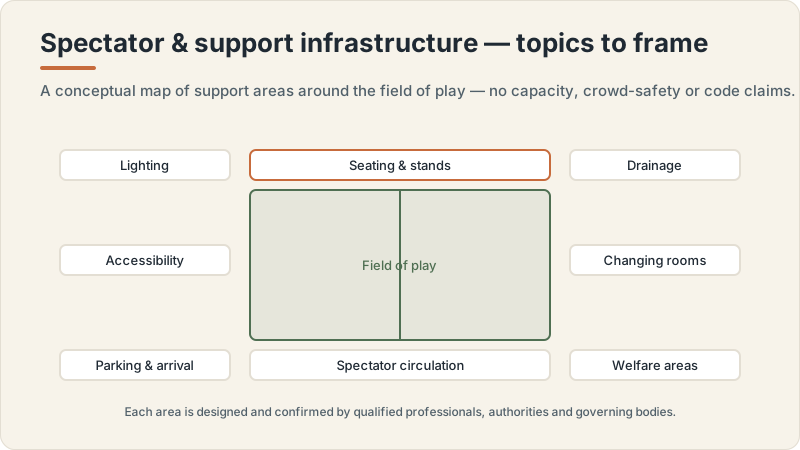
Spectator and support infrastructure concept
Conceptual editorial diagram — not a construction drawing, specification, to-scale plan or proof of a real project. It is not engineering, structural, fire/life-safety, crowd-safety or accessibility-compliance guidance. Capacities, dimensions, standards, requirements and costs vary by facility type, audience, site, use case and governing body, and are confirmed with qualified professionals, relevant authorities and governing bodies. Build Design Hub does not design, build, inspect, certify, recommend or match anyone.
What this guide helps you prepare
This guide helps you build the preparation material that sits in front of a stand project: a plain-language brief describing what you want, who the stand serves, the context around it and the decisions still open. It is designed to be worked through before you engage structural engineers, crowd-safety advisers, designers, suppliers or contractors, so that your earliest conversations are focused and your questions are ready. The aim is not a finished plan but an honest, structured starting point that professionals can build on.
It deliberately stops at the planning boundary. You will not find loadings, capacities, gradients, evacuation arrangements or accessibility-compliance rules here, because those are matters for qualified professionals, relevant authorities and the governing bodies that apply to your venue, and they vary by location, facility type, audience, site and use case. Instead, this guide helps you separate what you already know from what you must confirm, so that the people you engage can give you reliable guidance and you can recognise where expert input is essential.
- A plain-language statement of why the stand is needed and who it serves
- A record of the intended audiences, events and uses you have in mind
- Notes on site context, access and surrounding constraints you are aware of
- Rough scope boundaries: what feels in, out or undecided at this stage
- A list of decision-owners and the open questions to take to professionals
- A structure for organising supplier and contractor research without ranking anyone
Framing the stand brief: audience, events and operations
A useful stand brief starts with people and purpose rather than structure. Describe in your own words who the stand is meant to serve, the kinds of events you anticipate, how often the venue is used and the experience you hope spectators have. Note whether the stand might host more than sport, whether seated and standing areas are both under consideration, and how you imagine families, season-ticket holders, visiting supporters, media or hospitality guests fitting into the picture. This intent-level description is what professionals lean on most, so be honest about ambitions and uncertainties alike.
Operations deserve attention at brief stage too, because how a stand is run shapes what it needs to support. Think about arrival and departure patterns, queuing, stewarding, concessions, toilets, first-aid points and how the stand connects to concourses and the wider site. You are not designing flows or capacities here; those are matters for crowd-safety professionals and the relevant authorities, and they vary by event type, audience and governing body. Your job is to record how you expect the stand to be used so that the right specialists can assess it properly.
- Who the stand primarily serves and which secondary audiences matter
- The range of events and uses you imagine, including non-sport possibilities
- How spectators are expected to arrive, move, queue and leave on event days
- Operational support you anticipate: stewarding, concessions, toilets, first aid
- How the stand should connect to concourses, entrances and the wider site
- Which experience qualities matter most to you, such as sightlines or shelter
Phasing, accessibility and long-term considerations
Stands are rarely a single decision; they are often built, expanded or upgraded in stages, and thinking about phasing early can save confusion later. Consider whether the project might be delivered in one go or in phases, how an interim arrangement would work while building or events continue, and what future expansion you might want to keep open. Record these as intentions and questions rather than commitments, because what is feasible, sequenced and safe to phase depends on the site, the use and requirements that vary by location and governing body, and must be confirmed with qualified professionals.
Accessibility belongs in the brief from the start, not as an afterthought, but it belongs as a topic to plan around rather than a set of rules to apply yourself. Capture your intentions for accessible seating, sightlines, routes, parking, sanitary provision and the experience of spectators with a range of needs, and treat the specifics as questions for accessibility specialists and the relevant authorities. The same applies to long-term thinking: durability, weather exposure, cleaning, maintenance access and how the stand will be operated and renewed over its life are all worth flagging now so the people you engage can address them properly.
- Whether delivery in phases or in one stage is being considered, and why
- How events and existing facilities would operate during any building work
- Future expansion or change of use you want to keep possible
- Accessibility intentions to raise with specialists: seating, routes, sightlines, provision
- Durability, weather exposure and maintenance access as long-term flags
- How the stand will be operated, cleaned and renewed across its life
Planning questions before speaking with professionals
Before you reach out to anyone, it helps to interrogate your own brief so you arrive at meetings with clarity rather than gaps. Work through what you genuinely know about the venue, the audiences and the events, and mark honestly where you are guessing. The questions below are prompts to ask yourself and your own team or stakeholders; they are about readiness and shared understanding, not about technical answers, which belong to the professionals you will engage.
Treat anything touching capacity, structure, safety, evacuation, accessibility specifics, cost or programme as a question to confirm later, not a number to assume now. Requirements vary by location, facility type, audience, site, use case and governing body, and must be confirmed with qualified professionals and the relevant authorities. The value of this stage is recognising what you still need to learn and who needs to be part of the conversation.
- Have we agreed, internally, what the stand is for and who it must serve?
- Do our stakeholders share the same understanding of scope and ambition?
- What do we genuinely know about the site, and what are we assuming?
- Which decisions are ours, and which clearly need professional or authority input?
- Have we identified the governing bodies and authorities likely to be involved?
- What information should we gather before the first professional conversation?
Questions for qualified professionals
Your brief is also where you collect the questions to take to the professionals you engage, including structural engineers, crowd-safety advisers, accessibility specialists, designers and, later, suppliers and contractors. Keeping these questions ready means your meetings have a clear agenda and you can listen rather than improvise. Keep your questions open and let the professionals provide the figures, requirements, methods and assessments; your role is to ask well and to understand the answers.
Tailor these prompts to your project and add to them as new uncertainties surface. Cost, programme, capacity and safety questions belong here as questions, never as assumptions, because the answers depend on your specific venue, audience, scope and the requirements that vary by location and governing body. Build Design Hub does not provide these answers, recommend who should, or verify anyone; these are conversations to have with the qualified professionals and authorities you choose to involve.
- What on our site needs proper assessment before any design or costing can be relied on?
- Which governing-body and authority requirements apply to a stand like ours, and who confirms them?
- What structural, crowd-safety and evacuation considerations should shape our thinking, and who is responsible for them?
- How should accessibility be planned for, and which specialists and authorities should we involve?
- What factors could make a project like this cost more, take longer or change in scope?
- If we phase the work, what does that mean for safety, operations and approvals, and who must sign off?
What this does not replace
This is an educational project-preparation resource only. It is not a construction manual and not engineering, architectural, structural, civil, fire or life-safety, crowd-safety, accessibility-compliance, permit, zoning, legal, tax or procurement advice. It does not design, specify, certify, inspect or approve anything, and it is not an estimate, quote, price or capacity recommendation. Requirements, standards, capacities and costs vary by location, facility type, audience, site, use case, design team, supplier, contractor and governing body, and are confirmed with qualified professionals, relevant authorities and governing bodies.
Build Design Hub does not design, build, engineer, inspect, certify, recommend, rank, verify, introduce, broker or match suppliers or contractors, and HELPERG LLC is publisher/operator only. Use this resource to prepare your own thinking, then have qualified professionals you engage directly review your project. Decisions about engineering, safety, compliance, procurement and suitability must rest on those professionals, the relevant authorities and the governing bodies for your sport and location.
- Not a construction manual and not engineering, structural or civil design
- Not fire/life-safety, crowd-safety, evacuation or accessibility-compliance advice
- Not permit, zoning, legal, tax or procurement advice
- Not a supplier or contractor recommendation, ranking, directory or matching service
- Not an estimate, quote, price or capacity recommendation — requirements and costs vary
- Qualified professional review is required before any project decision
Stadium stands planning preparation worksheet
- 1Write a plain-language statement of why the stand is needed and what success looks like
- 2Record the primary audiences and any secondary groups the stand must serve
- 3List the range of events and uses you anticipate, including non-sport possibilities
- 4Note how often the venue is expected to be used and at what scale
- 5Describe the site context: location on the ground, what is there now, and surroundings
- 6Capture how spectators are expected to arrive, move, queue and leave on event days
- 7Record operational support you anticipate, such as stewarding, concessions and facilities
- 8Note your intentions for accessible seating, routes, sightlines and provision as topics to confirm
- 9Sketch rough scope boundaries: what feels in, out or still undecided
- 10Document whether phased or single-stage delivery is being considered, and the reasons
- 11Flag durability, weather exposure and maintenance-access concerns for later assessment
- 12Name the decision-owners for budget, design sign-off and final approval
- 13Identify the governing bodies, authorities and professional disciplines likely to be involved
- 14Gather your open questions and mark each as one to confirm with qualified professionals
Common mistakes to avoid
- Treating capacities, dimensions, loadings or evacuation arrangements as things to decide yourself instead of matters for qualified professionals and authorities
- Leaving accessibility until late rather than capturing intentions early as a topic to plan around with specialists
- Writing the brief around the structure first instead of the audiences, events and operations the stand must support
- Assuming costs, timelines or requirements from memory or other venues rather than treating them as questions to confirm
- Overlooking phasing and interim operations, then discovering events or facilities cannot continue during the work
- Not naming decision-owners, so approvals stall and stakeholders pull in different directions
- Treating supplier and contractor research as a ranking exercise rather than organised, neutral comparison of your own questions
- Forgetting to identify which governing bodies and authorities apply before conversations with professionals begin
When to involve a professional
- Involve qualified professionals before relying on any assumption about structure, capacity, crowd safety or evacuation for a stand
- Engage an accessibility specialist when planning accessible seating, routes, sightlines and provision, so intentions are assessed properly
- Bring in crowd-safety advisers and the relevant authorities when considering how spectators arrive, move and leave on event days
- Consult professionals when phasing is on the table, since sequencing, interim operations and approvals carry safety and regulatory implications
- Seek expert and authority input to confirm which governing-body requirements apply before scope or costing decisions are made
- Involve qualified professionals whenever a planning question touches loads, gradients, occupancy, life safety or compliance specifics
Frequently asked questions
Questions readers ask about this topic
Does this guide tell me how big a stand to build or what capacity it should have?
No. It does not provide capacities, dimensions, loadings, gradients or any structural or safety figures. Those vary by location, facility type, audience, site, use case and governing body, and must be confirmed with qualified professionals and the relevant authorities. This guide only helps you prepare your brief and questions.
Can Build Design Hub recommend, rank or connect me with engineers, suppliers or contractors?
No. Build Design Hub does not design, build, engineer, inspect, certify, recommend, rank, verify, introduce, broker or match any professional, supplier or contractor, and it does not provide costs or requirements. This guide is educational preparation material to help you organise your own research and conversations with the qualified professionals and authorities you choose to involve.
Does this cover evacuation, crowd safety or accessibility compliance?
No. It deliberately stops short of structural, loading, evacuation and accessibility-compliance design or instructions. It helps you frame these as topics and questions to raise with crowd-safety professionals, accessibility specialists and the relevant authorities, who are responsible for the actual requirements and assessments.
How should I treat anything about cost, timelines or requirements?
Treat all of them as questions to confirm, never as facts. Cost, programme and requirements depend on your specific venue, audience, scope and the governing bodies that apply, and they vary by location. Record them as open items for the qualified professionals and authorities you engage.
Keep reading