
Who this guide is for
- Owners preparing to assemble a team for a court project
- Sponsors who want to understand which roles a project may involve
- First-time court owners unsure who does what
- Operators planning a new, replacement or expanded court
- Project managers coordinating designers, engineers and contractors
- Anyone scoping a brief before approaching professionals
Planning diagram
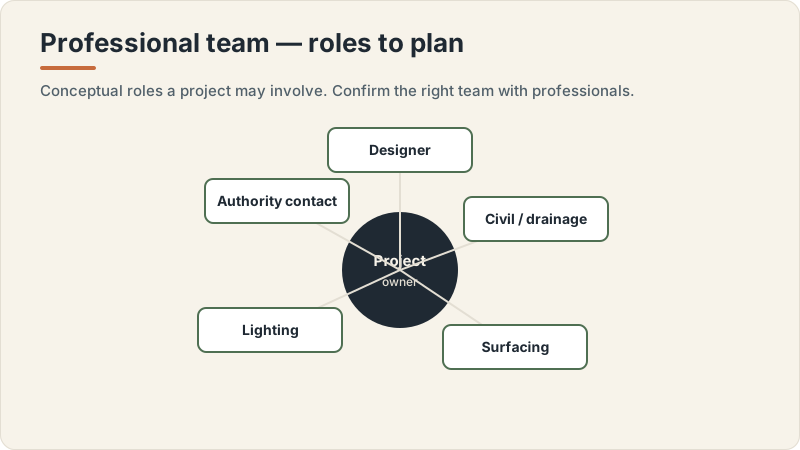
Professional team roles concept
Conceptual editorial diagram — not a construction drawing, specification or to-scale plan. Official court dimensions, standards, drainage, structure and lighting requirements vary by sport, site and location and are confirmed with the relevant federation, supplier and qualified professionals.
What this resource helps you prepare
This resource helps you think through the professional roles a sports court project may involve and how they fit together, so you can approach the right people with clearer questions. It is a planning aid, not an instruction manual and not a hiring service.
Working through it, you can sketch which kinds of expertise your project might call for, how those roles depend on one another, and where one professional's decisions feed into another's. That preparation makes your conversations with qualified professionals more productive and helps you avoid gaps no single role would catch.
The roles relevant to your project vary with sport, site conditions, surface, drainage, lighting, enclosure and overall scope. Use this as a starting framework and confirm the actual team you need with qualified professionals.
- Map the kinds of roles a court project can involve
- Understand how those roles relate and hand off to one another
- Prepare clearer questions before engaging anyone
- Spot where coordination between roles matters most
Common professional roles a court project may involve
Different parts of a court project tend to call for different expertise, though the exact mix varies and some roles may be combined or unnecessary depending on the project. At a planning level it helps to think in terms of the function each role performs rather than a fixed list.
A designer or architect often shapes the overall layout and how the court fits its setting. Civil, geotechnical or drainage specialists may address ground conditions, levels and how water is managed. A surfacing specialist focuses on the playing surface and its preparation. A lighting specialist may address illumination, and on enclosed or glazed courts structural or glazing input can become relevant. Local authority and federation contacts sit alongside these as sources of requirements rather than as part of the build team.
Which of these apply, and whether some are handled by a single provider, varies by project. Confirm the roles your project genuinely needs with qualified professionals rather than assuming a standard team.
- Design and layout: a designer or architect
- Ground, levels and water: civil, geotechnical or drainage specialists
- Playing surface: a surfacing specialist
- Illumination: a lighting specialist where relevant
- Enclosure and glazing: structural or glazing input on some courts
- Requirements: local authority and relevant federation contacts
How the roles fit together
The roles on a court project are interconnected, and decisions in one area often shape another. Site and drainage findings can influence layout and surface choices; surface decisions can affect maintenance planning; lighting and enclosure choices can interact with neighbours, the site and the structure. Thinking about these handoffs early helps you see where coordination matters.
Some projects are delivered by a single provider who coordinates several disciplines, while others bring together separate specialists. Neither is inherently better; what matters is that the necessary expertise is present and that someone is clearly responsible for coordinating it. How responsibilities are divided varies, so clarify it with the professionals you engage.
Build Design Hub does not coordinate teams, match you with providers or recommend who should fill any role. This section is to help you understand the relationships so you can ask qualified professionals how they propose to cover and coordinate the work.
Confirming the right team for your project
The right team depends on your sport, site, scope and ambitions, and on what local authorities and the relevant federation require. Rather than copying a generic structure, work from your own brief: list what your project involves, then consider which kinds of expertise each part might call for.
Requirements that influence the team, such as permitting, accessibility, drainage, lighting and federation standards, vary by location and project and should be confirmed with the relevant authority, federation and qualified professionals. The team you assemble should reflect those confirmed requirements, not assumptions.
Use this stage to prepare questions and to understand gaps, then let qualified professionals confirm the roles, division of responsibility and coordination that suit your specific project.
Questions to ask qualified professionals
When you speak with qualified professionals, it helps to ask how they see the roles on your project and how the work would be coordinated. The aim is to understand who is responsible for what, where specialist input is needed, and how the pieces connect, rather than to obtain technical instructions.
Use the prompts below to frame those conversations. Adapt them to your sport, site and scope, and treat the answers as a basis for understanding rather than as advice to act on without further professional confirmation.
- Which professional roles do you think a project like this involves?
- Which parts would you handle, and which would need other specialists?
- How are site, drainage and surface decisions coordinated between roles?
- Who takes responsibility for coordinating the overall team?
- How do lighting, enclosure or structural considerations enter the plan, if at all?
- Which requirements should be confirmed with the local authority or federation?
- How are decisions and responsibilities recorded across the team?
- Where would you suggest involving an independent professional for review?
What this does not replace
This resource is educational preparation only. It is not an estimate, not a recommendation, not contractor matching, and not legal, engineering, architectural, design, inspection or safety advice. It does not tell you who to hire or which roles your project definitely needs.
The professional roles, requirements and coordination a court project calls for vary by location, site, sport, surface, drainage, lighting, enclosure, access and scope, and any costs or timelines involved vary too and should be confirmed through quotes and professional review. Confirm official sport and federation requirements with the relevant bodies, and consult qualified designers, engineers, contractors, lighting and drainage specialists, local authorities and legal or professional advisors as appropriate.
Build Design Hub does not provide contractor matching or professional recommendations, and does not design, engineer, build, inspect, certify or endorse any provider. HELPERG LLC is the publisher and operator of this resource only.
Professional team planning worksheet
- 1Have you listed what your project involves, part by part?
- 2Have you considered which kind of expertise each part might call for?
- 3Have you noted where one role's decisions feed into another's?
- 4Have you identified where coordination between roles matters most?
- 5Have you considered which requirements need confirming with the authority or federation?
- 6Have you prepared questions about how the work would be coordinated?
- 7Have you considered whether a single provider or separate specialists suits your project?
- 8Have you planned to confirm the actual roles needed with qualified professionals?
- 9Have you noted where an independent review might be useful?
- 10Have you recorded who would be responsible for what once the team is set?
Common mistakes to avoid
- Assuming one provider covers every role without confirming what is included
- Copying a generic team structure instead of working from your own project
- Overlooking how site and drainage decisions shape layout and surface choices
- Leaving coordination responsibility unclear between separate specialists
- Treating local authority or federation requirements as fixed without confirming them
- Engaging people before understanding which roles the project actually needs
- Assuming Build Design Hub matches or recommends professionals for any role
When to involve a professional
- Engage qualified designers, engineers and specialists to confirm which roles your specific project needs and how they should be coordinated.
- Involve civil, geotechnical, drainage, surfacing, lighting and, where relevant, structural or glazing professionals for the parts of the work that fall within their expertise.
- Confirm permitting, accessibility, drainage, lighting and federation requirements with the relevant local authority and governing body, as these vary by location and project.
- Consider an independent professional review where roles overlap, responsibilities are unclear or a single provider covers many disciplines.
- Seek legal or professional advice when agreeing how responsibilities and coordination are divided across the team.
Frequently asked questions
Questions readers ask about this topic
Which professionals does a sports court project need?
It varies. Many projects involve some combination of a designer, civil or drainage specialist, surfacing specialist and lighting specialist, with structural or glazing input on some courts, plus local authority and federation contacts for requirements. The roles your project actually needs depend on your sport, site and scope and should be confirmed with qualified professionals.
Can one company handle every role?
Sometimes a single provider coordinates several disciplines, and sometimes separate specialists are brought together. Neither is inherently better. What matters is that the necessary expertise is present and that coordination is clear. Confirm how responsibilities are divided with the professionals you engage.
Does Build Design Hub help me find or choose these professionals?
No. This is educational preparation only. Build Design Hub does not provide contractor matching, recommendations or endorsements, and does not rate or rank any provider. Selecting and verifying professionals is your responsibility, ideally with professional support.
How do I know how the roles should be coordinated?
Ask qualified professionals how they propose to cover and coordinate the work, and how decisions in one area feed into another. This resource helps you understand the relationships so you can ask better questions, but the actual coordination should be confirmed with the people you engage.
Keep reading