
Who this guide is for
- Club and academy owners scoping a new or expanded training ground who want to organise their thinking before commissioning professional advice.
- Football academy and youth development directors mapping how multiple pitches and support spaces need to work together for daily sessions.
- Schools and colleges considering a shared multi-pitch facility for curriculum, club and community use.
- Municipalities and local authorities preparing a brief for a community training site serving several teams and age groups.
- Property developers and landowners exploring a sports-led scheme who need a structured set of planning questions.
- Facility managers and operations leads responsible for scheduling, maintenance planning and day-to-day coordination across pitches.
Planning diagram
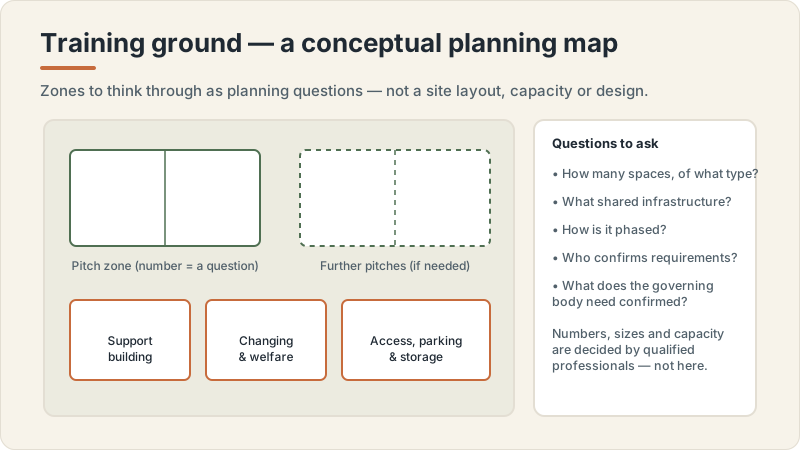
Training ground planning map concept
Conceptual editorial diagram — not a construction drawing, specification, to-scale plan or proof of a real project. It is not engineering, structural, fire/life-safety, crowd-safety or accessibility-compliance guidance. Capacities, dimensions, standards, requirements and costs vary by facility type, audience, site, use case and governing body, and are confirmed with qualified professionals, relevant authorities and governing bodies. Build Design Hub does not design, build, inspect, certify, recommend or match anyone.
What this guide helps you prepare
This guide helps you turn a broad ambition such as "we want several pitches and a place to train" into a structured set of questions, notes and discussion points you can take to qualified professionals. It is designed to support the preparation stage: clarifying who the facility serves, listing the activities you expect to take place, recording site characteristics you have observed, and noting the open questions that only specialists, authorities and governing bodies can resolve. The aim is to help you arrive at those conversations organised, rather than to give you answers the professionals are there to provide.
It also helps you prepare the supporting work around the project: drafting a brief that stakeholders can react to, structuring your research into potential suppliers and contractors, and building a consistent framework for comparing the quotes and proposals you eventually receive. Throughout, treat every figure, layout idea, surface choice and standard as something to confirm rather than assume. Requirements vary by location, use case, governing body, owner, site, surface system, maintenance plan, climate, authority and professional team; confirm with qualified professionals.
- Write a plain-language statement of who the training ground is for and what activities it must support across a typical week.
- List the open questions you cannot answer yourself, so professionals can see where their input is needed first.
- Record observed site characteristics (access, orientation, neighbours, existing features) as notes to verify, not conclusions.
- Capture the stakeholders who should be consulted and what each of them cares about most.
- Draft a brief outline you can circulate for feedback before any design or procurement begins.
- Note assumptions you are making so they can be challenged or confirmed by the right specialists.
Zoning multiple pitches and shared areas as planning questions
When more than one pitch sits on a single site, the relationships between them become a central planning topic. Rather than deciding a layout yourself, it helps to frame zoning as a set of questions: how should playing areas, warm-up and support zones, circulation routes and quieter spaces relate to one another for the way your facility will actually be used? Different user groups, age ranges and session types may have very different needs, and the way those needs overlap or conflict is exactly the kind of thing a qualified design and planning team is there to assess. Your job at the preparation stage is to describe the uses clearly and surface the tensions you anticipate.
It also helps to think about how zoning interacts with the rest of the project without trying to resolve it. Considerations such as orientation, separation between groups, routes for players and any deliveries, and how spectators or parents might move around are all worth noting as questions rather than as fixed positions. Do not assume any spacing, orientation, surface arrangement or boundary treatment is correct; these depend on the site, the surface systems chosen, the relevant authorities and the governing bodies involved. Requirements vary by location, use case, governing body, owner, site, surface system, maintenance plan, climate, authority and professional team; confirm with qualified professionals.
- What activities and user groups will each area need to support, and how often might they run at the same time?
- Which pitches or zones might conflict if used simultaneously, and what separation questions does that raise for professionals?
- How should people move between car access, support buildings and the playing areas, and who should advise on those routes?
- What questions about orientation, neighbouring uses and site features should be confirmed before any layout is considered?
- How might different age groups or session types need to be kept apart, and who decides what is appropriate?
- What flexibility do you want for future changes of use, and how should that be raised with the design team?
Shared infrastructure and scheduling considerations
A multi-pitch site usually relies on infrastructure that several pitches draw on at once, and how that sharing is planned shapes everything from daily operations to long-term maintenance. Rather than specifying anything, it is useful to list the shared elements you expect the facility to need, such as changing and welfare facilities, storage, access and parking, lighting provision and utilities, and to note the questions each raises. The key preparation task is to describe how heavily these shared elements might be used at peak times, so that professionals can assess what your particular pattern of use implies. Avoid assuming any capacity, provision or arrangement is sufficient or required; these are matters for qualified assessment.
Scheduling is closely tied to shared infrastructure, because a timetable that loads several pitches and the same support areas simultaneously creates different demands from one that spreads activity out. At the preparation stage you can sketch the kinds of sessions, age groups and peak periods you anticipate, and record where you expect pressure points, without trying to design an operating model. These observations feed directly into conversations with designers, operators and maintenance specialists. Again, do not treat any maintenance interval, usage pattern, lighting arrangement or scheduling rule as fixed; requirements vary by location, use case, governing body, owner, site, surface system, maintenance plan, climate, authority and professional team; confirm with qualified professionals.
- Which facilities (changing, welfare, storage, access, parking, lighting, utilities) might be shared across pitches, and what questions does that raise?
- When do you expect the busiest periods, and how might several pitches and shared areas be in demand at once?
- How should maintenance time and access be considered alongside the playing timetable, and who should advise on that?
- What seasonal or weather-related patterns might affect how the site is used, and how should those be confirmed?
- How will you record the realistic mix of sessions and user groups so professionals can assess shared-infrastructure pressure?
- What questions about phasing, future expansion or staged opening should be put to the professional team early?
Planning questions before speaking with professionals
Before you bring in specialists, it is worth working through a set of questions on your own so that your brief and your conversations are focused. These are not questions you answer with technical certainty; they are prompts to clarify intent, gather what you already know, and identify the gaps. Thinking through purpose, users, site context, operations and constraints in advance helps you describe the project accurately and makes the professionals' early input far more useful. It also helps stakeholders align on what success looks like before money is committed to design or procurement.
Use this preparation to separate what you have decided from what is still open, and to be honest about what you do not yet know. Where a question touches on layout, surfaces, capacities, standards or anything else technical, the answer is to ask the appropriate professional, authority or governing body, not to settle it yourself. Requirements vary by location, use case, governing body, owner, site, surface system, maintenance plan, climate, authority and professional team; confirm with qualified professionals.
- What is the core purpose of this training ground, and which user groups must it serve first?
- What does a realistic week of use look like across all the pitches and shared spaces?
- What do we already know about the site, and which observations still need professional verification?
- Which stakeholders must be consulted, and what outcomes matter most to each of them?
- What constraints (access, neighbours, existing features, intended phasing) should we flag early?
- What is our decision-making and approval process, and who needs to sign off at each stage?
Questions for qualified professionals
Once your brief is ready, the value of professional input comes from asking clear, well-scoped questions. The prompts below are starting points to adapt for the specialists, authorities and governing bodies relevant to your project. They are framed to help you understand what applies to your specific site and use case, rather than to extract generic figures. Treat the professionals' answers as the authoritative guidance for your project, and use your preparation notes to make sure nothing important is overlooked in those discussions.
Because so much depends on circumstances, expect different professionals to need to coordinate, and expect some answers to change as the project develops. Ask who is responsible for confirming each element, and how decisions about zoning, shared infrastructure and scheduling will be documented. Requirements vary by location, use case, governing body, owner, site, surface system, maintenance plan, climate, authority and professional team; confirm with qualified professionals.
- What approvals, permissions and governing-body considerations apply to a multi-pitch facility on this site, and who confirms them?
- How should the relationships between pitches, support areas and circulation be assessed for our specific uses?
- What questions should we be asking about surface systems, drainage and maintenance for our climate and usage pattern?
- How should shared infrastructure and peak-time demand be evaluated for the way we intend to operate?
- What scheduling, phasing or operational considerations would you raise based on our brief?
- Which other professionals, authorities or governing bodies should be involved, and how should their input be coordinated?
What this does not replace
This is an educational project-preparation resource only. It is not a construction manual and not engineering, architectural, turf-installation, drainage-engineering, sports-surface-specification, structural, fire or life-safety, crowd-safety, accessibility-compliance, permit, zoning, legal, tax or procurement advice. It does not design, specify, install, certify, inspect or approve anything, and it is not an estimate, quote, price, capacity recommendation or performance or lifespan guarantee. Requirements, standards, dimensions, surface systems and costs vary by location, use case, governing body, owner, site, climate, maintenance plan, authority and professional team, and are confirmed with qualified professionals, relevant authorities and the sport governing body.
Build Design Hub does not design, build, install, engineer, inspect, certify, recommend, rank, verify, introduce, broker or match suppliers or contractors, and HELPERG LLC is publisher/operator only. Use this resource to prepare your own thinking, then have qualified professionals you engage directly review your project. Decisions about engineering, surface specification, drainage, safety, compliance, procurement and suitability must rest on those professionals, the relevant authorities and the governing body for your sport and location.
- Not a construction manual and not engineering, turf-installation or drainage-engineering instructions
- Not sports-surface specification, structural, fire/life-safety, crowd-safety or accessibility-compliance advice
- Not permit, zoning, legal, tax or procurement advice
- Not a supplier or contractor recommendation, ranking, directory or matching service
- Not an estimate, price, capacity recommendation or performance/lifespan guarantee — requirements and costs vary
- Qualified professional review is required before any project decision
Multi-pitch training ground preparation worksheet
- 1Record a plain-language purpose statement: who the facility serves and what it must support.
- 2List every activity, user group and session type you expect across a typical week.
- 3Note the peak periods when multiple pitches and shared areas might be in demand at once.
- 4Write down observed site characteristics (access, orientation, neighbours, existing features) as items to verify.
- 5Capture the open questions you cannot answer yourself and want professionals to address.
- 6List the shared infrastructure elements you anticipate (changing, welfare, storage, parking, lighting, utilities) as topics to confirm.
- 7Map your stakeholders and note what each one cares about most.
- 8Draft a brief outline you can circulate for feedback before any design or procurement.
- 9Record the constraints and any intended phasing you want flagged early to the professional team.
- 10Note your decision-making and approval process, including who signs off at each stage.
- 11Prepare a consistent question set so suppliers and contractors can be researched on a like-for-like basis.
- 12Build a comparison framework for quotes and proposals that records scope, assumptions and exclusions rather than just totals.
- 13List which authorities and sport governing bodies may need to be consulted and what you will ask them.
- 14Keep a running log of assumptions so they can be challenged or confirmed by the right specialists.
Common mistakes to avoid
- Deciding a pitch layout or zoning arrangement yourself instead of describing the uses and letting qualified professionals assess them.
- Assuming a number, capacity, surface type or standard applies without confirming it with the relevant professionals, authorities or governing bodies.
- Underestimating peak-time demand on shared infrastructure by planning around average rather than busiest use.
- Treating scheduling as an afterthought rather than something that shapes infrastructure and maintenance from the start.
- Skipping stakeholder consultation early, then discovering conflicting expectations after design or procurement has begun.
- Comparing supplier or contractor quotes on headline totals alone, without recording differing scopes, assumptions and exclusions.
- Leaving maintenance access and time out of the use plan, so the timetable and upkeep collide later.
- Locking in a single fixed brief with no room for the phasing or future-use questions that professionals may raise.
When to involve a professional
- When questions about pitch zoning, layout or how playing areas relate to one another go beyond describing intended uses.
- When any matter touches surfaces, drainage, lighting, utilities, capacities, dimensions or standards that must be confirmed for your site.
- When you need to understand which approvals, permissions or sport governing-body considerations apply to a multi-pitch facility.
- When shared infrastructure and peak-time demand need to be assessed against how you actually intend to operate.
- When stakeholder requirements conflict and you need impartial professional input to resolve trade-offs.
- When you are ready to translate a brief into design, procurement or an operating model and need specialists to lead.
Frequently asked questions
Questions readers ask about this topic
Does Build Design Hub design, build or project-manage a training ground for me?
No. Build Design Hub is a publisher of educational planning material. It does not design, build, install, engineer, inspect, certify or project-manage facilities. This guide helps you prepare to work with the qualified professionals who do that work.
Can this guide tell me how many pitches I need, the right surface, or what it will cost?
No. It deliberately contains no capacities, dimensions, surface specifications, standards, timelines or costs. Those depend on your location, site, use case, surface system, maintenance plan, climate, authority and professional team, and only qualified professionals can confirm what applies to your project.
Will Build Design Hub recommend, rank or connect me with suppliers or contractors?
No. Build Design Hub does not recommend, rank, verify, introduce, broker or match suppliers or contractors, and it does not provide quotes. This guide only helps you structure your own research and prepare consistent questions to take to the providers and professionals you choose to approach.
How should I use this guide before contacting professionals?
Use it to clarify your purpose and users, record what you know about the site as items to verify, list your open questions, draft a brief, and build a consistent framework for comparing proposals. Then take that preparation to qualified professionals, relevant authorities and sport governing bodies for the actual advice.
Keep reading