
Who this guide is for
- Clubs and youth football organisations preparing a new or upgraded training ground
- Academies scoping a facility intended for several age groups and squads
- Schools and colleges planning a football field for teaching, training and matches
- Municipalities and public bodies developing a community football facility
- Developers evaluating a youth football facility within a wider site or scheme
- Facility managers preparing an operations and use brief for professional advisers
Planning diagram
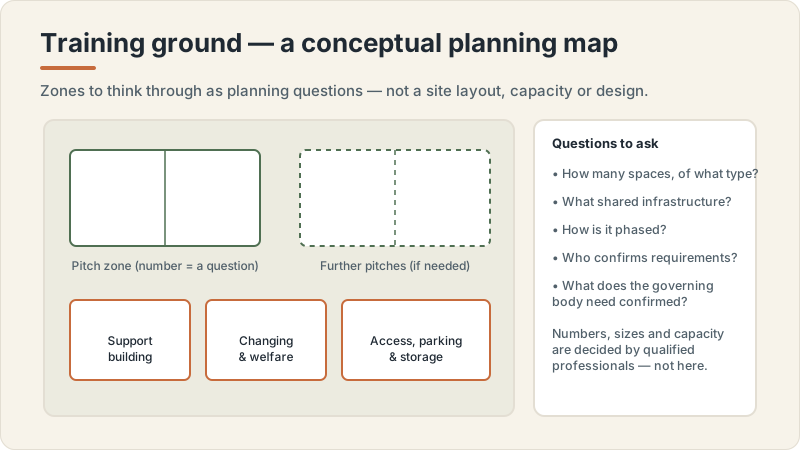
Training ground planning map concept
Conceptual editorial diagram — not a construction drawing, specification, to-scale plan or proof of a real project. It is not engineering, structural, fire/life-safety, crowd-safety or accessibility-compliance guidance. Capacities, dimensions, standards, requirements and costs vary by facility type, audience, site, use case and governing body, and are confirmed with qualified professionals, relevant authorities and governing bodies. Build Design Hub does not design, build, inspect, certify, recommend or match anyone.
What this guide helps you prepare
This guide helps you assemble the raw material a youth football facility needs before you engage a professional team: a plain statement of why the facility exists, an honest description of which age groups will use it and how, the welfare and changing considerations you want to raise, and a clear picture of community use and day-to-day operations. These are preparation artefacts you create and refine, not technical decisions you make alone. The clearer they are, the more productive your conversations with qualified professionals, authorities and governing bodies will be, and the easier it is to compare what different parties propose.
It is equally important to be clear about what this guide does not do. It does not tell you how large a pitch should be, what surface or drainage to use, what lighting or fencing applies, what anything should cost, or how to satisfy any code, standard, safeguarding rule or approval. All of those are determined by your professional team, the relevant authorities and the governing body for youth football in your area, and they vary by location, use case, site, surface system, maintenance plan, climate and the people you engage. Your role at this stage is to prepare good questions and good briefs, not to supply answers that belong to qualified professionals.
- Write a short, plain statement of why the facility exists and what success would look like
- Describe the age groups, squads and activities the facility is intended to serve
- List the welfare and changing topics you want qualified professionals to address
- Note the community, school or public use the ground may need to accommodate
- Record the constraints you already know about, such as site, ownership or seasonal use
- Capture assumptions and open questions explicitly so they can be tested, not carried forward unchecked
Framing age-group use as questions
Age-group use is the foundation that shapes almost everything else about a youth football facility, yet it is easy to under-describe. A ground used by a single junior age band, a facility serving everything from the youngest mini-soccer groups to older youth squads, a mixed school and club arrangement, or a multi-use site shared with other sports are very different projects and should be described as such before any concept work begins. The most useful thing you can do at this stage is frame age-group use as questions rather than as fixed answers, because how pitch arrangements, markings, equipment, access and scheduling relate to different ages is something to confirm with qualified professionals and the governing body for youth football, not something to assume from general knowledge.
Be specific about who will use the ground, in what numbers, in which seasons, and alongside what other activities, because these usage patterns inform later conversations far more than any single figure would. Resist the urge to fix dimensions, surface choices, capacities or layouts at this stage; treat each of those as a question to raise with professionals once your intended age-group use is clear. Recording how use may change over time, for example if the club grows or new age bands are added, also helps your advisers understand whether you are planning for today's squads or for a facility that needs to flex.
- Which age groups and squads is the facility intended to serve, and might that change over time?
- How do different ages affect pitch arrangement, equipment and scheduling, and who confirms that?
- Are mini-soccer, junior and youth formats all in scope, or only some of them?
- How many users, sessions and concurrent groups do you anticipate across a typical week?
- Will the facility be shared with schools, other clubs or other sports, and how does that interact with age groups?
- Which governing-body or league considerations for youth football should you confirm rather than assume?
Welfare, changing and community-use considerations
Welfare and changing arrangements are sensitive topics for any youth football facility, and the right approach is to identify the questions you want qualified professionals and the relevant governing body to address rather than to decide anything yourself. Considerations such as how changing and welfare spaces relate to different age groups, how parents, carers and officials move around the site, how separate user groups are accommodated, and how the facility supports supervision are all matters that depend on your specific use case, site and the bodies with jurisdiction. This guide raises them as topics for discussion; it does not provide safeguarding rules, welfare requirements or compliance guidance, and it makes no safeguarding-compliance claims. Those belong to the governing body, the relevant authorities and the qualified professionals and advisers you engage.
Community use and operations sit alongside welfare in the early brief. A youth football ground is often used by more than one group, and how it is scheduled, accessed, supervised and maintained shapes whether it works in practice. Thinking early about who books and opens the facility, how different users share it, how parking and arrival work, and how the ground is looked after across seasons gives your professional team a realistic picture to advise against. You are not setting policies, capacities or schedules here; you are gathering the operational realities and the open questions so the right professionals, authorities and governing bodies can help you resolve them.
- What welfare and changing topics do you want professionals and the governing body to address for your age groups?
- How will parents, carers, coaches and officials move around and use the site?
- How might separate user groups and arrival or pick-up patterns be accommodated?
- Who will book, open, supervise and close the facility, and how is community use scheduled?
- How will access, parking and arrival work for families and visiting teams?
- How will the ground be maintained across seasons, and who is responsible for day-to-day operations?
Planning questions before speaking with professionals
Before you engage architects, engineers, planners or advisers, it pays to organise what you already know and what you still need to learn. Working through your own questions first means the professional conversations begin further along and stay focused on substance. Capture your goals, your description of age-group use, your welfare and changing topics, and your community-use and operations realities in writing, and be candid about the assumptions you are making so they can be tested rather than quietly accepted. This preparation also makes it far easier to compare proposals later, because everyone is responding to the same clearly stated brief.
These questions are prompts to clarify your own thinking, not a checklist to satisfy or a source of answers. None of them should be resolved with a fixed dimension, surface specification, capacity, cost or standard at this stage. Anything touching pitch sizing, surfaces, drainage, lighting, fencing, changing arrangements, welfare, safeguarding, accessibility or approvals is something to confirm with qualified professionals, the relevant authorities and the governing body for youth football, all of which vary by location, use case, site, surface system, climate and the team you engage.
- Can you state the facility's purpose and intended age-group use in a few plain sentences?
- Have you written down which welfare and changing topics you want professionals to address?
- Have you described the community, school or shared use the ground must accommodate?
- Have you recorded the site, ownership and seasonal constraints you already know about?
- Have you captured your assumptions and open questions to test with qualified professionals?
- Have you noted which authorities and governing bodies you will consult, without assuming their answers?
Questions for qualified professionals
When you reach the point of engaging a professional team, the most valuable thing you can bring is good questions framed against a clear brief. The questions below are examples of what owners and clubs commonly need professionals, authorities and governing bodies to confirm for a youth football facility; they are deliberately open, because the answers depend entirely on your location, site, intended age groups, use case and the bodies that have jurisdiction. Asking them helps you understand what your facility genuinely requires rather than guessing, and it surfaces issues early, while they are still inexpensive to address.
Use the responses to inform your planning, not as a substitute for formal advice or approval. This guide does not provide requirements, dimensions, surface specifications, capacities, costs, standards, welfare rules or safeguarding-compliance guidance, and it does not recommend, rank, verify, introduce or match any supplier or contractor. Confirm everything that matters with qualified professionals and the relevant authorities and governing bodies for your project, and keep a record of what you are told so your brief stays accurate as the project develops.
- What approvals, consultations or governing-body engagements is this intended youth use likely to require?
- How should age-group use shape pitch arrangements, equipment, access and scheduling for our site?
- What welfare, changing and supervision considerations should we plan for, and who advises on them?
- Which professional disciplines should be involved, and at what point in the project?
- What community-use, operations and maintenance factors should shape our scope and brief?
- What information should we gather now so proposals can be compared on a consistent basis?
What this does not replace
This is an educational project-preparation resource only. It is not a construction manual and not engineering, architectural, turf-installation, drainage-engineering, sports-surface-specification, structural, fire or life-safety, crowd-safety, accessibility-compliance, permit, zoning, legal, tax or procurement advice. It does not design, specify, install, certify, inspect or approve anything, and it is not an estimate, quote, price, capacity recommendation or performance or lifespan guarantee. Requirements, standards, dimensions, surface systems and costs vary by location, use case, governing body, owner, site, climate, maintenance plan, authority and professional team, and are confirmed with qualified professionals, relevant authorities and the sport governing body.
Build Design Hub does not design, build, install, engineer, inspect, certify, recommend, rank, verify, introduce, broker or match suppliers or contractors, and HELPERG LLC is publisher/operator only. Use this resource to prepare your own thinking, then have qualified professionals you engage directly review your project. Decisions about engineering, surface specification, drainage, safety, compliance, procurement and suitability must rest on those professionals, the relevant authorities and the governing body for your sport and location.
- Not a construction manual and not engineering, turf-installation or drainage-engineering instructions
- Not sports-surface specification, structural, fire/life-safety, crowd-safety or accessibility-compliance advice
- Not permit, zoning, legal, tax or procurement advice
- Not a supplier or contractor recommendation, ranking, directory or matching service
- Not an estimate, price, capacity recommendation or performance/lifespan guarantee — requirements and costs vary
- Qualified professional review is required before any project decision
Youth football facility preparation worksheet
- 1Write a plain statement of the facility's purpose and what success would look like
- 2List the age groups and squads the facility is intended to serve, and how that may change
- 3Describe the activities, formats and session patterns expected across a typical week
- 4Record the community, school or shared use the ground may need to accommodate
- 5Note the welfare and changing topics you want professionals and the governing body to address
- 6Map how parents, carers, coaches, officials and visiting teams will use the site
- 7Record the site, ownership, access and seasonal constraints you already know about
- 8Identify the governing-body and league considerations for youth football to confirm
- 9List who will book, open, supervise, close and maintain the facility
- 10Outline how access, parking and arrival are expected to work for families and visitors
- 11Capture assumptions and open questions to test with qualified professionals
- 12Note the professional disciplines the project may involve and roughly when each is needed
- 13Record the authorities and consultations you anticipate, without assuming their answers
- 14Decide who will coordinate the project and how scope changes will be recorded
Common mistakes to avoid
- Starting concept work before the intended age-group use is clearly written down
- Fixing pitch sizes, surfaces, capacities or costs as facts before professionals have been consulted
- Treating welfare and changing as settled rather than as topics to raise with the governing body and professionals
- Assuming safeguarding or welfare requirements instead of confirming them with the relevant bodies
- Planning only for today's squads and overlooking how community and shared use will work
- Leaving operations, scheduling and maintenance until after the facility has been designed
- Engaging professionals without a brief, so conversations stay unfocused and hard to compare
- Assuming what an authority or governing body will require rather than confirming it directly
When to involve a professional
- Involve qualified professionals as soon as goals and intended age-group use point toward a real project, before any figures are fixed
- Consult the governing body or league for youth football early, since welfare, age-group and format considerations vary by location and jurisdiction
- Engage planning, access and licensing advisers early, since approvals and consultations differ by site and authority
- Bring in the relevant engineers and specialists for anything touching the playing surface, drainage, lighting or fencing
- Involve welfare, safeguarding and operations advisers when planning changing, supervision and community-use arrangements
- Route every question about requirements, dimensions, surfaces, capacities, costs, welfare or approvals to qualified professionals and authorities
Frequently asked questions
Questions readers ask about this topic
Does this guide tell me how big a youth pitch should be or what surface to use?
No. This guide is educational and does not state any dimension, surface specification, capacity, cost or standard as fact. Those depend on your location, use case, site, surface system, climate and governing body, and must be confirmed with qualified professionals and the relevant authorities.
Will Build Design Hub recommend, rank or connect me with suppliers or contractors?
No. Build Design Hub does not design, build, engineer, inspect, certify, recommend, rank, verify, introduce, broker or match any supplier or contractor, and it provides no costs, requirements or turf specifications. This guide only helps you prepare your own briefs and questions for qualified professionals you select.
Does this guide cover safeguarding or welfare rules for youth football?
No. This guide raises welfare and changing topics only as questions to discuss with the governing body and qualified professionals. It makes no safeguarding-compliance claims and provides no welfare requirements; those belong to the relevant governing body, authorities and advisers you engage directly.
What should I do before contacting architects, engineers or advisers?
Organise your goals, intended age-group use, welfare and changing topics, community-use realities and open questions in writing, and be explicit about your assumptions. Arriving with a clear brief makes professional conversations more focused and lets you compare proposals on a consistent basis.
Who confirms what my youth football facility actually requires?
Qualified professionals, the relevant local authorities, and the governing body for youth football in your area. Requirements vary by location, use case, site and age-group use, so confirm everything that matters with them rather than relying on general figures.
Keep reading