
Who this guide is for
- Stadium or arena owners and owner's representatives organising early-stage stakeholder discussions
- Sports clubs or teams scoping a new, expanded or renovated home venue
- Municipal, school, university or community organisations considering a public-facing facility
- Developers and project sponsors preparing a brief before engaging design and engineering professionals
- Facility managers and operators who will run events and want their needs represented early
- Project coordinators assembling a stakeholder map and engagement plan for a feasibility stage
Planning diagram
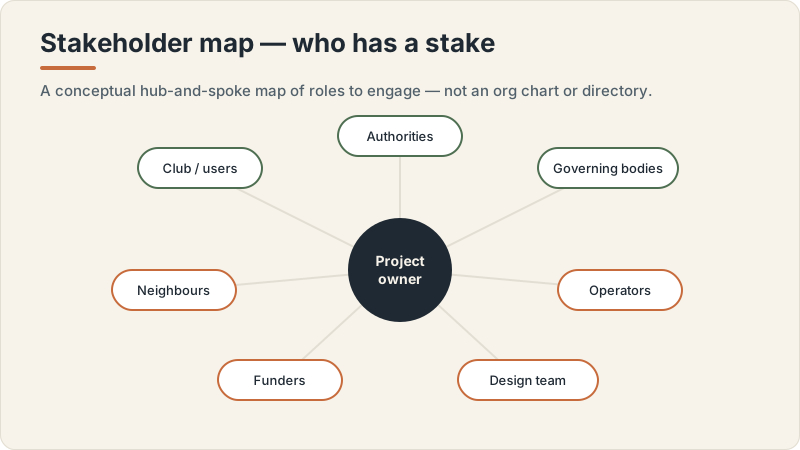
Sports-facility stakeholder map concept
Conceptual editorial diagram — not a construction drawing, specification, to-scale plan or proof of a real project. It is not engineering, structural, fire/life-safety, crowd-safety or accessibility-compliance guidance. Capacities, dimensions, standards, requirements and costs vary by facility type, audience, site, use case and governing body, and are confirmed with qualified professionals, relevant authorities and governing bodies. Build Design Hub does not design, build, inspect, certify, recommend or match anyone.
What this guide helps you prepare
This guide helps you build a working stakeholder map for a stadium project and plan how you might engage each party. It supports the preparation tasks that sit before technical work: drafting a project brief, listing the people and organisations with a legitimate interest, clarifying who decides what, and structuring early conversations so that the right questions reach the right professionals, authorities and governing bodies. The aim is a clearer, calmer starting point, not a set of answers about how the venue should be built or run.
It is deliberately scoped to preparation and engagement planning. It does not cover engineering, structural, fire-safety, crowd-safety, accessibility-compliance, turf, drainage or electrical matters, and it does not state requirements, capacities, dimensions, standards, costs or timelines, because those are determined case by case by qualified professionals, relevant authorities and the applicable governing bodies. Treat everything here as prompts to organise discussions, not as guidance on what your project must do.
- A reusable stakeholder list grouped by role: owner, club, community, authorities, governing bodies, neighbours, operators and funders
- A simple way to record each stakeholder's likely interests, influence and preferred way of being kept informed
- A set of neutral questions you can take into early conversations without pre-judging outcomes
- A structure for noting which topics belong to professionals, authorities or governing bodies rather than to internal discussion
- A way to capture open questions and assumptions so they are not lost between meetings
- A starting point for an engagement plan you can refine with qualified advisors
Mapping the stakeholders in a stadium project
Stakeholders in a stadium project tend to cluster into recognisable roles, though the exact mix depends on your situation. The owner holds the asset and ultimate accountability; a resident club or team may be a primary user with strong views on play and matchday experience; the community and local neighbours live with the venue's day-to-day presence; local authorities and relevant governing bodies set the frameworks the project must work within; operators run events and maintenance; and funders, whether public, private or mixed, shape what is feasible. Listing these roles first, before naming individuals, helps you see the full picture rather than only the loudest voices.
For each role it helps to record three things in plain language: what this party is likely to care about, how much influence they may have over decisions, and how they prefer to be engaged. A neighbour may care most about noise, traffic and overlooking, with limited formal influence but strong local standing. A governing body may care about how the facility fits its competition or sanctioning frameworks, with significant influence but a defined process you must confirm directly with them. Capturing these differences early keeps engagement proportionate and reduces the chance that a key party is consulted too late. Remember that questions about rules, approvals or technical fit belong with the relevant authorities, governing bodies and qualified professionals, not with assumptions made internally.
- Owner and owner's representative: accountability, long-term value, brief ownership and decision authority
- Resident club or team: matchday use, training needs, identity and supporter experience as primary user
- Community and neighbours: noise, traffic, parking, overlooking, local amenity and sense of consultation
- Local authorities and governing bodies: the frameworks, processes and approvals to confirm directly with them
- Operators and facility managers: events, scheduling, maintenance, staffing and day-to-day running needs
- Funders and sponsors: feasibility, accountability, reporting expectations and conditions attached to support
Planning engagement with each stakeholder group
Once the map exists, engagement planning is about sequence, message and ownership. Decide who should hear from you first and why, what each group genuinely needs to know at this stage, and who on your side owns the relationship. Early, honest conversations tend to work better than late presentations of finished decisions, especially with neighbours and community groups who value being asked rather than informed. Keep the message consistent: this is a preparation and listening stage, not a commitment to a particular design, capacity or operating model, all of which depend on professional input and confirmation with authorities and governing bodies.
Different groups call for different formats and cadences. A funder may expect structured written updates; a community group may respond better to an open conversation; a governing body will have its own defined channels you should confirm with them directly. Plan how you will record what you hear, how you will close the loop so people know their input was noted, and where unresolved questions go next. Crucially, route any question about requirements, safety, approvals, capacities, costs or technical feasibility to qualified professionals, relevant authorities or the applicable governing bodies rather than answering it within the engagement process itself.
- Decide a sensible engagement order and who owns each stakeholder relationship internally
- Agree a consistent, honest message that this is a preparation and listening stage
- Match the format to the audience: written updates, open conversations or a body's own defined channels
- Record what each party raises and close the loop so contributors know their input was noted
- Separate listening from deciding: capture views without promising outcomes that depend on professional input
- Route requirement, safety, approval, capacity, cost or feasibility questions to the right professionals and authorities
Planning questions before speaking with professionals
Before you bring in design, engineering, legal or other qualified professionals, it pays to have your own house in order. Work through what you actually know, what you are assuming, and what only a professional, authority or governing body can confirm. Clear internal answers about purpose, primary users, the parties you must engage and your open questions will make those later conversations shorter and more productive. The goal is to arrive prepared with good questions, not to pre-decide technical or regulatory matters that are not yours to settle.
These planning questions are for your own reflection and stakeholder discussions. They are not a substitute for advice, and they deliberately avoid asking you to determine anything about requirements, safety, approvals, capacities or feasibility. Where a question touches those areas, note it as something to confirm with qualified professionals, relevant authorities or the applicable governing bodies, and move on.
- Who are the primary, secondary and one-off users we expect this facility to serve?
- Have we listed every stakeholder group and named who owns each relationship internally?
- Which decisions are genuinely ours, and which belong to authorities, governing bodies or professionals?
- What are we assuming about the project that we have not yet confirmed with anyone qualified?
- How will we engage neighbours and the community, and what are we prepared to listen to?
- What open questions, constraints and concerns should we carry into professional conversations?
Questions for qualified professionals
When you do engage qualified professionals, relevant authorities and governing bodies, frame your questions to learn what applies to your specific project rather than to confirm assumptions. The right professionals can help you understand process, scope, feasibility and the constraints that apply to your site and use case. Because requirements vary by location, facility type, audience, site, use case and governing body, the most useful questions ask what applies here, what they would need from you, and where other specialists or bodies should be involved.
Use these prompts to open structured conversations, and adapt them to whoever you are speaking with, since a planning authority, a structural engineer, a governing body and a venue operator will each answer a different slice. Keep a written record of what you are told, who told you, and what remains to be confirmed elsewhere, so your stakeholder map stays current as professional input arrives.
- Which approvals, processes and frameworks apply to a project like this, and who confirms each?
- Which stakeholders and authorities should be engaged at which stage, and through what channels?
- What information would you need from us to advise properly, and what is outside your scope?
- Which other professionals, governing bodies or specialists should we involve, and when?
- How should we document stakeholder input and decisions so it supports later professional review?
- What are the main risks or open questions you would want resolved before the next stage?
What this does not replace
This is an educational project-preparation resource only. It is not a construction manual and not engineering, architectural, structural, civil, fire or life-safety, crowd-safety, accessibility-compliance, permit, zoning, legal, tax or procurement advice. It does not design, specify, certify, inspect or approve anything, and it is not an estimate, quote, price or capacity recommendation. Requirements, standards, capacities and costs vary by location, facility type, audience, site, use case, design team, supplier, contractor and governing body, and are confirmed with qualified professionals, relevant authorities and governing bodies.
Build Design Hub does not design, build, engineer, inspect, certify, recommend, rank, verify, introduce, broker or match suppliers or contractors, and HELPERG LLC is publisher/operator only. Use this resource to prepare your own thinking, then have qualified professionals you engage directly review your project. Decisions about engineering, safety, compliance, procurement and suitability must rest on those professionals, the relevant authorities and the governing bodies for your sport and location.
- Not a construction manual and not engineering, structural or civil design
- Not fire/life-safety, crowd-safety, evacuation or accessibility-compliance advice
- Not permit, zoning, legal, tax or procurement advice
- Not a supplier or contractor recommendation, ranking, directory or matching service
- Not an estimate, quote, price or capacity recommendation — requirements and costs vary
- Qualified professional review is required before any project decision
Stadium stakeholder map and engagement worksheet
- 1List every stakeholder group: owner, club, community, authorities, governing bodies, neighbours, operators, funders
- 2Name a relationship owner on your side for each stakeholder group
- 3Record what each stakeholder is likely to care about in plain language
- 4Note each stakeholder's likely level of influence over decisions
- 5Capture each stakeholder's preferred way of being engaged and updated
- 6Draft a sensible engagement order and the reason behind it
- 7Write a consistent, honest message describing this as a preparation and listening stage
- 8List the questions you want to take to neighbours and community groups
- 9Mark which topics must be confirmed with professionals, authorities or governing bodies
- 10Record all current assumptions you have not yet confirmed with anyone qualified
- 11Keep a running log of input received and how you closed the loop with contributors
- 12Maintain an open-questions list that travels with you into professional conversations
- 13Note which governing bodies have their own defined engagement channels to confirm directly
- 14Keep a record of who advised what and what remains outstanding as the map evolves
Common mistakes to avoid
- Mapping only the obvious parties and forgetting neighbours, operators or governing bodies until late
- Treating engagement as a one-way announcement instead of genuine, early listening
- Assuming internal opinions answer questions that belong to authorities, governing bodies or professionals
- Promising outcomes during engagement that actually depend on professional input and confirmation
- Confusing influence with formality—dismissing a low-power group that holds strong local standing
- Failing to record what stakeholders raised, so the same concerns resurface unresolved later
- Leaving assumptions about requirements, capacities or feasibility unchallenged and unconfirmed
- Engaging everyone in the same format instead of matching channel and cadence to each group
When to involve a professional
- When questions arise about approvals, processes or which frameworks apply to your specific project
- When any topic touches safety, capacity, accessibility, structure or other technical matters
- When a governing body's rules or sanctioning frameworks may affect what the facility must accommodate
- When funding conditions, contracts or formal agreements need to be understood before commitments
- When community or neighbour concerns raise issues that need a qualified planning or technical view
- When you are unsure who should be consulted, in what order, or where a question belongs
Frequently asked questions
Questions readers ask about this topic
Does Build Design Hub recommend, rank or match suppliers or contractors for stadium projects?
No. Build Design Hub does not recommend, rank, introduce, broker or match suppliers or contractors, and it does not assess or endorse any party. This guide is educational only. It also gives no costs, prices, requirements, capacities or standards, because those vary by location, facility type, audience, site, use case and governing body and must be confirmed with qualified professionals and the relevant authorities and governing bodies.
Can this guide tell me which approvals or governing-body rules apply to my stadium?
No. It cannot tell you which approvals, rules, capacities, dimensions, standards or timelines apply, and it does not provide legal, lobbying or planning-approval advice. Those depend entirely on your location, site and use case. Use the guide to prepare your questions, then confirm what applies directly with qualified professionals, the relevant authorities and the applicable governing bodies.
How early should I start mapping stakeholders?
Generally as early as the idea takes shape, before design or technical decisions, so that community, neighbours, operators, authorities and governing bodies are considered rather than consulted late. This guide helps you organise that mapping, but it does not decide outcomes; questions about requirements or feasibility still belong with qualified professionals and the relevant authorities.
Is a stakeholder map a substitute for professional or legal advice?
No. A stakeholder map is a planning aid that organises who is involved and what they may care about. It does not replace advice from qualified professionals, authorities or governing bodies, and it should not be used to settle technical, regulatory, legal or safety questions, which must be confirmed with the appropriate experts and bodies.
Keep reading