
Who this guide is for
- Prospective court owners who want to approach the market in an organized way rather than reacting to whoever responds first
- Operators expanding or renovating an existing facility who need to refresh their list of potential suppliers
- Project leads who want a consistent set of criteria defined before they begin outreach
- Owners coordinating multiple disciplines who want to keep supplier research structured and comparable
- Anyone who wants a calm preparation framework before requesting quotes or shortlisting candidates
Planning diagram
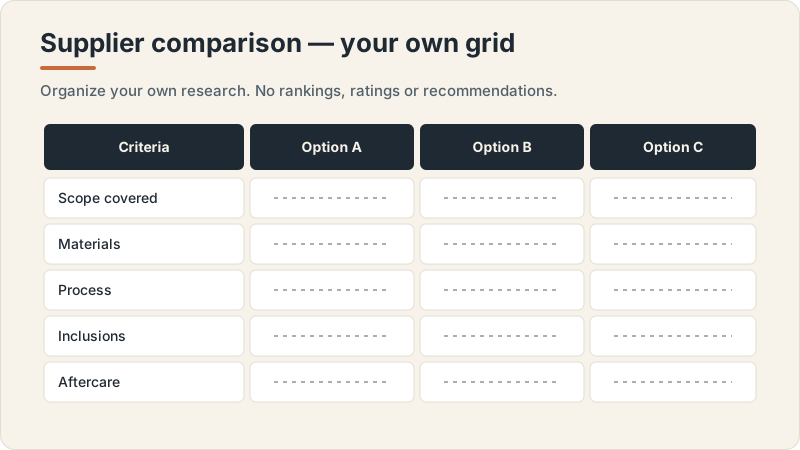
Supplier comparison grid concept
Conceptual editorial diagram — not a construction drawing, specification or to-scale plan. Official court dimensions, standards, drainage, structure and lighting requirements vary by sport, site and location and are confirmed with the relevant federation, supplier and qualified professionals.
What this resource helps you prepare
This page helps you build your own shortlist of potential suppliers to approach. It focuses on the thinking that comes before outreach: defining the criteria that matter for your project, deciding how you will organize and compare candidates, and identifying the kinds of information you intend to research or request.
The aim is to give you a repeatable, written framework so that every candidate is considered against the same questions. That consistency makes later conversations clearer and helps you notice gaps. It does not tell you which supplier to choose, and it does not provide a list of suppliers.
- A clear set of selection criteria written in your own words
- A simple, consistent structure for comparing candidates
- A list of the information you plan to gather or request
- An awareness of what to confirm with professionals and authorities later
Defining your own selection criteria
A shortlist is only as useful as the criteria behind it. Before researching candidates, it helps to write down what genuinely matters for your particular project, since priorities differ by sport, surface, site, and scope. Vague criteria tend to produce a list that is hard to compare; specific, written criteria make differences visible.
Think about the dimensions that are relevant to you rather than copying a generic checklist. Some owners weight certain criteria more heavily than others, and that weighting is a personal planning decision. Whatever you choose, record it so the same lens is applied to every candidate.
- Relevant experience with the sport, surface type, and project scale you have in mind
- Scope of services offered, and where their work hands off to other disciplines
- Geographic coverage, travel, and willingness to work at your site location
- Capacity and availability relative to your intended timeframe, which varies
- How they handle drainage, lighting, enclosures, or specialist elements your project may involve
- Documentation, references, and the way they communicate during early conversations
Organizing a like-for-like comparison
Once your criteria are set, the next step is deciding how to record and compare candidates. A simple shared table or worksheet, with one row per candidate and one column per criterion, keeps everything visible and consistent. The goal is to compare like with like, not to produce a score that implies a verdict.
Keep notes factual and dated, and capture the source of each piece of information so you can revisit it. Be cautious about comparing figures across candidates until scopes are genuinely aligned, because differences in what is included can make numbers misleading. Where cost or timing comes up, treat it as something that varies and must be confirmed in formal quotes and professional review.
- One consistent record per candidate, using the same criteria for each
- A note of what is and is not included in any indicative information
- The source and date of each detail you record
- Open questions or gaps flagged for follow-up
- A separation between researched facts and your own impressions
Researching candidates before outreach
Research helps you decide who is worth approaching before you spend time on detailed conversations. Useful research is publicly available and verifiable: a supplier's own published information, professional or trade associations they reference, and any registration or licensing relevant to your jurisdiction, which you would confirm with the appropriate authority.
Approach reviews, testimonials, and self-reported claims with healthy caution, and plan to verify anything that influences your decision through your own checks and qualified professional review. Research narrows a long list; it does not replace the formal due diligence, references, and credential confirmation you would carry out before engaging anyone.
- Publicly available, verifiable information rather than unverified claims
- Relevant registrations, licensing, or insurance to confirm with the proper authority
- Membership of recognized professional or trade bodies, confirmed independently
- Whether their stated scope aligns with the work your project actually needs
- Items you cannot verify yourself and will need a professional to assess
Questions to ask qualified professionals
As your shortlist takes shape, qualified professionals can help you sanity-check your criteria and interpret what you find. The questions below are prompts to raise with designers, engineers, contractors, specialists, and your legal or professional advisors. They are not requirements, and answers will depend on your location, site, and scope.
- Are my selection criteria appropriate for this sport, surface, and site, or am I missing something?
- What credentials, registrations, or insurances should I confirm, and with which authority?
- Which parts of the work are likely to involve separate disciplines or specialists?
- What questions would help me tell whether a candidate's stated scope is complete?
- How should I treat any indicative costs or timeframes I encounter during research?
- What due diligence would you recommend before engaging any supplier?
What this does not replace
This resource is for educational planning only. It is not an estimate, not a quote, not a recommendation, not a ranking, and not contractor matching. It does not name or endorse any supplier, and it does not provide a directory. It is not legal, engineering, architectural, design, inspection, or safety advice.
Requirements and costs vary by location, site, scope, surface, drainage, lighting, access, and supplier, and official sport or federation requirements must be confirmed with the relevant bodies. Consult qualified designers, engineers, contractors, lighting and drainage specialists, local authorities, and legal or professional advisors before making decisions. Build Design Hub does not provide contractor matching or professional recommendations, and HELPERG LLC is publisher and operator only.
Supplier shortlist worksheet
- 1Write down the project basics a supplier would need to understand your scope
- 2List the selection criteria that genuinely matter for your project, in your own words
- 3Note which criteria you weight most heavily and why
- 4Decide on a simple, consistent format for recording each candidate
- 5Identify the publicly available information you intend to research for each candidate
- 6List the credentials, registrations, or insurances you will plan to confirm with authorities
- 7Record the source and date for every detail you capture
- 8Flag any claims, reviews, or figures you will need to verify independently
- 9Note open questions to raise with qualified professionals
- 10Mark which scope elements may require separate specialists or disciplines
- 11Set a point at which you will pause to seek professional review before engaging anyone
- 12Keep researched facts separate from your own impressions in your notes
Common mistakes to avoid
- Starting outreach before defining clear, written selection criteria
- Treating self-reported claims, reviews, or testimonials as verified fact
- Comparing indicative figures across candidates before scopes are genuinely aligned
- Assuming a longer shortlist is better, rather than a well-defined one
- Recording impressions and researched facts together so they become hard to separate
- Overlooking which parts of the work belong to separate disciplines or specialists
- Forgetting to confirm credentials, licensing, or insurance with the proper authority
- Treating a shortlist as a final decision rather than a starting point for due diligence
When to involve a professional
- When you are unsure whether your selection criteria suit your sport, surface, and site
- When you need to confirm which credentials, registrations, or insurances are relevant in your jurisdiction
- When a candidate's stated scope may leave gaps that another discipline must cover
- When you encounter indicative costs or timeframes you cannot interpret with confidence
- When you are ready to move from a shortlist toward formal due diligence and references
- Whenever a decision could carry regulatory, contractual, safety, or financial consequences
Frequently asked questions
Questions readers ask about this topic
Does this page recommend or list specific suppliers?
No. This is an educational planning resource only. It does not name, rank, rate, recommend, or endorse any supplier or brand, and it is not a directory or a matching service. It helps you build and organize your own shortlist using criteria you define.
How many suppliers should be on a shortlist?
There is no single right number, and it varies by project, scope, and location. The aim is a manageable set of candidates that you have considered against the same criteria, rather than a particular quantity. A qualified professional can help you judge what is workable for your situation.
Can I compare quotes or costs across candidates using this guide?
This guide does not provide figures and does not estimate costs, which vary by site, scope, surface, supplier, and many other factors. Be cautious comparing indicative numbers until scopes truly match, and confirm anything financial through formal quotes and qualified professional review.
What should I verify before engaging a supplier?
Plan to verify credentials, registrations, insurance, references, and the completeness of stated scope, confirming relevant items with the appropriate authority and qualified professionals. A shortlist is a starting point for due diligence, not a substitute for it.
Keep reading