
Who this guide is for
- Club and academy directors preparing a brief for a new or expanded training ground
- Owners and project sponsors who want an organised brief before engaging a design team
- Municipal and community sport teams scoping a multi-pitch facility for club or public use
- School and college estates leads planning training pitches alongside other facilities
- Developers coordinating several stakeholders who need a neutral way to capture competing needs
- Facility managers gathering operational and maintenance considerations into the early brief
Planning diagram
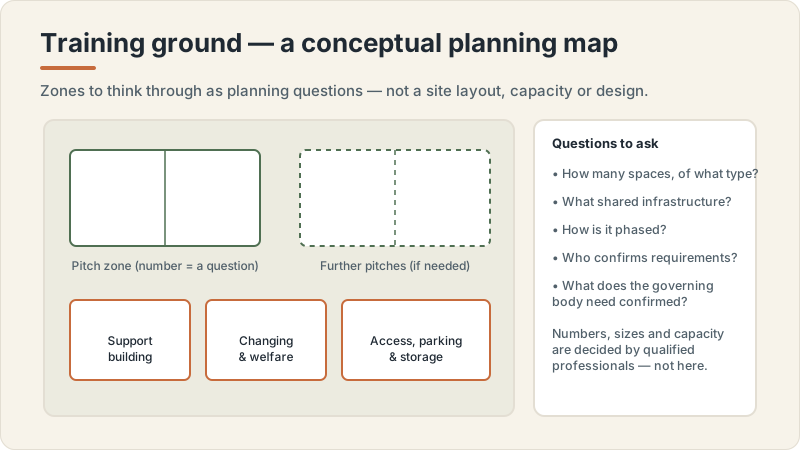
Training ground planning map concept
Conceptual editorial diagram — not a construction drawing, specification, to-scale plan or proof of a real project. It is not engineering, structural, fire/life-safety, crowd-safety or accessibility-compliance guidance. Capacities, dimensions, standards, requirements and costs vary by facility type, audience, site, use case and governing body, and are confirmed with qualified professionals, relevant authorities and governing bodies. Build Design Hub does not design, build, inspect, certify, recommend or match anyone.
What this guide helps you prepare
This guide helps you assemble the thinking behind a football club training-ground project before you brief a design team or approach any supplier or contractor. A training ground often combines multiple pitches, support buildings, parking and access, and a programme delivered in stages, so the preparation is as much about reconciling different needs as it is about any single element. The aim is to reach professional conversations with an organised brief, a clear picture of what the squad and the wider club need, and an honest record of what is still unknown.
It does not try to settle technical, regulatory or commercial questions. It frames them so you can take them to the right people. Pitch counts, surface choices, building sizes, capacities, drainage, lighting, costs and timelines are left as questions here because they vary by location, use case, governing body, owner, site, surface system, maintenance plan, climate, authority and professional team, and must be confirmed with qualified professionals, the relevant authorities and the appropriate football governing bodies. What you can do now is gather requirements, capture squad and stakeholder priorities, and identify the open risks worth flagging early.
- A working brief that records the project's purpose, its users and intended uses
- A picture of what the squad, academy and wider club need from the facility
- An early view of how many pitches and what support spaces are being discussed
- A record of constraints, assumptions and open questions to confirm later
- A structure for organising phasing and operational thinking before design begins
- A clear separation between what you know, what you assume and what needs professional input
Framing squad and club needs as questions
A useful brief starts from the people who will use the training ground, not from a fixed list of facilities. Rather than deciding what the squad gets, it helps to ask what the squad, the academy, the women's and youth programmes, the medical and performance staff and the groundstaff each say they need, and to write those needs as open questions. How many groups train at once? What kinds of session do they describe? What do support staff say they need nearby, and what do they only assume is expected? Capturing needs as questions keeps the brief honest and surfaces disagreement early, instead of letting one strong voice quietly set the scope.
Squad needs also change with the seasons, with age groups and with how intensively the facility is used, so it helps to describe patterns rather than snapshots. Note where different users want different things from the same space, where a need is firm and where it is an aspiration, and where you are simply guessing. Whether any particular arrangement, surface, count or facility can actually meet those needs depends on the site, the audience, the climate and the governing body, and is a matter for qualified professionals and the relevant authorities to confirm rather than for the brief to decide.
- What does each squad and group say it needs to train as intended, framed as a question?
- How many groups expect to train at once, and how does that vary across the week and season?
- What do medical, performance, coaching and groundstaff say they need close at hand?
- Which needs are firm, which are aspirations, and who is asking for each?
- How do age groups, intensity and shared access change what users expect?
- Which squad-need assumptions should a professional and governing body test before they drive design?
Multiple pitches, support buildings and phasing
A training ground rarely comes down to one decision. It is usually a set of related ones: how many pitches are being discussed, what surfaces and uses they are intended for, what support buildings sit alongside them, and how parking, access and circulation tie the site together. At the preparation stage your job is not to fix any of these but to describe the needs behind them clearly, so the design team and relevant authorities can advise on what is feasible and appropriate. Treat every number, surface type and building size as a question rather than a given, and record how pitches, changing and welfare space, storage, medical and meeting areas and parking are expected to relate to one another, because the boundaries between elements are often where confusion starts.
Many training grounds are built or expanded in stages, with some elements delivered first and others added later as funding, demand or approvals allow. Preparing for phasing means describing what the facility must do at each stage and what must remain usable while later work happens, rather than committing to a sequence. Capturing this early gives the design team and relevant authorities the context to advise on a sensible, compliant approach for your site instead of discovering constraints late. Keep any sequence, milestone or timeline you sketch as a question to test, not a plan to rely on, and confirm what must stay usable, accessible and safe during later phases with qualified professionals.
- What pitches are being discussed, and what uses, ages and standards are they intended for?
- What support spaces (changing, welfare, storage, medical, meeting) do different users expect?
- How are parking, access, deliveries and pedestrian movement imagined working together?
- Which elements are needed first, and which could follow in later phases?
- What must remain usable, accessible and safe while later phases proceed (confirm with professionals)?
- Which counts, surfaces, sizes and milestones are assumptions to confirm rather than decisions made?
Planning questions before speaking with professionals
Before you brief a design team, it helps to work through what you already know and what you are still guessing. The questions below are prompts to answer for yourself, your squad staff and your stakeholders, not requirements to meet. Writing down the project's purpose, its intended users, the uses you imagine and the constraints you are aware of gives any professional a stronger starting point and helps you notice where opinions inside your own club diverge.
Be honest about gaps. Marking something as unknown or assumed is more valuable than guessing, because it tells the design team and relevant authorities exactly where their input is needed. The goal of this stage is not to answer technical or regulatory questions but to organise them, so the people you engage can focus on what genuinely needs professional judgement, governing-body confirmation or authority approval.
- What is the purpose of this training ground, and who are its primary and secondary users?
- What do the squad, academy and support staff say they need, framed as questions to test?
- How many pitches and what support spaces are being discussed, and on what assumptions?
- What site, access, neighbour, environmental or ownership constraints are already known?
- Which elements are needed first, and where do stakeholder needs compete or stay unresolved?
- What is genuinely confirmed, and what is currently assumption that a professional should test?
Questions for qualified professionals
This preparation helps you reach professional conversations organised, but it does not replace them. A qualified design team, alongside the relevant authorities and the appropriate football governing bodies, can advise on what is feasible, appropriate and permitted for your specific site, users and ambitions in a way that no general guide can. The prompts below are questions to take to them, using the brief, squad-need notes and open questions you have gathered.
Bring your assumptions as well as your facts, and ask the professionals to test them. The most useful thing you can offer is an honest record of what the squad and club need, what you are unsure about and where stakeholders disagree, so their input lands where it matters. Decisions about pitch numbers, surfaces, support buildings, phasing, requirements, compliance and operation should rest on qualified professional review, governing-body confirmation and authority approval, not on a preparation worksheet.
- Given our site and users, what is realistic for pitch numbers, surfaces and support spaces?
- Which governing-body, regulatory and local-authority requirements apply, and who confirms them?
- What site investigations or assessments would you recommend before any design begins?
- How might this project sensibly be phased, and what does each phase depend on?
- Where are the biggest risks or constraints around our squad needs we should understand early?
- What information or documentation do you need from us to advise properly?
What this does not replace
This is an educational project-preparation resource only. It is not a construction manual and not engineering, architectural, turf-installation, drainage-engineering, sports-surface-specification, structural, fire or life-safety, crowd-safety, accessibility-compliance, permit, zoning, legal, tax or procurement advice. It does not design, specify, install, certify, inspect or approve anything, and it is not an estimate, quote, price, capacity recommendation or performance or lifespan guarantee. Requirements, standards, dimensions, surface systems and costs vary by location, use case, governing body, owner, site, climate, maintenance plan, authority and professional team, and are confirmed with qualified professionals, relevant authorities and the sport governing body.
Build Design Hub does not design, build, install, engineer, inspect, certify, recommend, rank, verify, introduce, broker or match suppliers or contractors, and HELPERG LLC is publisher/operator only. Use this resource to prepare your own thinking, then have qualified professionals you engage directly review your project. Decisions about engineering, surface specification, drainage, safety, compliance, procurement and suitability must rest on those professionals, the relevant authorities and the governing body for your sport and location.
- Not a construction manual and not engineering, turf-installation or drainage-engineering instructions
- Not sports-surface specification, structural, fire/life-safety, crowd-safety or accessibility-compliance advice
- Not permit, zoning, legal, tax or procurement advice
- Not a supplier or contractor recommendation, ranking, directory or matching service
- Not an estimate, price, capacity recommendation or performance/lifespan guarantee — requirements and costs vary
- Qualified professional review is required before any project decision
Club training-ground preparation worksheet
- 1Record the project's purpose and the primary and secondary user groups it must serve
- 2List every stakeholder (first team, academy, women's and youth programmes, staff, community, neighbours, funders) and what each needs
- 3Write the squad and support-staff needs as open questions rather than fixed requirements
- 4Note the uses, sports, age groups and standards stakeholders expect the facility to support
- 5Capture how many pitches are being discussed and the assumptions behind that number
- 6Capture which support buildings and spaces (changing, welfare, storage, medical, meeting) are expected
- 7Gather what is known about the site: access, neighbours, ownership, environment and existing constraints
- 8Record how parking, deliveries and pedestrian movement are imagined working across the site
- 9List which elements are needed first and which could follow in later phases
- 10Note what must remain usable, accessible and safe while later phases proceed (to confirm with professionals)
- 11Mark every count, surface, size, capacity, cost and timeline as an assumption to confirm, not a fact
- 12Document where squad and stakeholder needs compete and which trade-offs are still unresolved
- 13Identify open risks, gaps and unknowns to raise early with the design team
- 14Prepare the questions and documentation to take to qualified professionals and relevant authorities
Common mistakes to avoid
- Treating pitch counts, surfaces, sizes or capacities as decided before any professional or governing-body input
- Setting the brief around one squad or user group and discovering competing stakeholder needs late
- Recording squad needs as fixed facilities instead of as questions to test with professionals
- Assuming the whole facility must be built at once instead of exploring sensible phasing
- Carrying timelines, costs or milestones into the brief as fixed figures rather than open questions
- Overlooking support buildings, parking, access and circulation while focusing only on the pitches
- Assuming a surface, layout or arrangement is suitable or permitted without confirming with authorities and governing bodies
- Leaving operational and maintenance considerations out of the early brief until they force redesign
When to involve a professional
- When you need to know what pitch numbers, surfaces or support spaces are feasible and appropriate for your specific site and squad
- When governing-body, regulatory or local-authority requirements may apply and need confirming for your facility type and audience
- When site conditions, access, drainage, neighbours or climate could materially constrain what is possible
- When phasing decisions affect what stays usable, accessible or compliant during construction
- When competing squad and stakeholder needs require trade-offs that carry technical, regulatory or safety implications
- When you are ready to move from a prepared brief toward design, specification, procurement or approval
Frequently asked questions
Questions readers ask about this topic
Does Build Design Hub recommend suppliers, contractors or design teams, or tell me how many pitches my squad needs?
No. Build Design Hub is an educational planning resource and does not recommend, rank, introduce, broker or match suppliers, contractors or professionals, and it does not design, build, engineer, inspect or certify anything. This guide also gives no costs, dimensions, capacities, turf specifications or requirements as facts. Pitch numbers, surfaces, building sizes and requirements vary by location, use case, governing body, owner, site, surface system, maintenance plan, climate, authority and professional team, and must be confirmed with qualified professionals, the relevant authorities and the appropriate football governing bodies.
Can this guide tell me how much a club training ground costs or how long it will take?
No. This guide does not provide costs, budgets, return figures or timelines, because they depend on the site, scope, audience, phasing, surfaces, support buildings, climate and local conditions, and any figure should be treated as a question to confirm. The preparation here is about organising your brief and open questions so qualified professionals can advise on cost, programme and feasibility for your specific project.
How do I turn squad needs into a brief without overstepping?
Capture what each squad, group and support team says it needs as open questions, note where needs are firm, aspirational or assumed, and record where they compete. Keep every count, surface and facility as a question to test rather than a decision. Whether those needs can be met on your site, and how, is something to work through with qualified professionals and the relevant authorities, not to settle in the brief alone.
How should I handle a project that may be built in phases?
Use the preparation stage to describe what the facility must do at each stage and what must remain usable while later work happens, then take that to qualified professionals. Treat any sequence or milestone you sketch as a question to test, not a plan. Whether a phasing approach is feasible, safe and compliant for your site is a matter for the design team and the relevant authorities to confirm.
Keep reading