
Who this guide is for
- Club or facility owners weighing whether and why a perimeter enclosure is needed before a build or upgrade is scoped
- School, college and university estate teams preparing a brief for fencing around a shared or community playing field
- Municipal and parks managers balancing access, security and neighbour considerations across one or several public pitches
- Academies and training-ground operators preparing fencing and enclosure questions for qualified professionals
- Developers and project sponsors who must understand enclosure obligations attached to a sports facility they are delivering
- Facility and operations managers structuring scope, documentation and quote comparisons for perimeter and gate works
Planning diagram
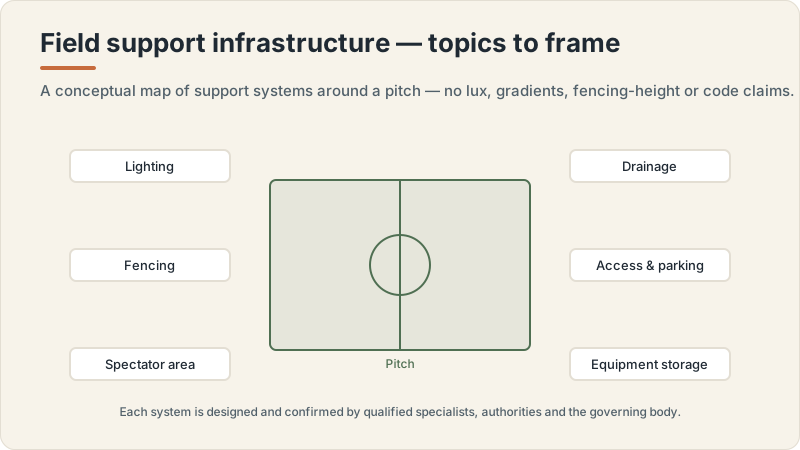
Football field support infrastructure concept
Conceptual editorial diagram — not a construction drawing, specification, to-scale plan or proof of a real project. It is not engineering, structural, fire/life-safety, crowd-safety or accessibility-compliance guidance. Capacities, dimensions, standards, requirements and costs vary by facility type, audience, site, use case and governing body, and are confirmed with qualified professionals, relevant authorities and governing bodies. Build Design Hub does not design, build, inspect, certify, recommend or match anyone.
What this guide helps you prepare
This guide helps you build the thinking and the paperwork that should precede any serious conversation about a football field's fencing and enclosure. That means a clear statement of why an enclosure is being considered at all, what it must achieve, who and what it must work alongside, and which constraints (site boundaries, neighbours, access routes, existing infrastructure, governing-body affiliation, operating calendar) frame the brief. With those defined, you can brief qualified professionals accurately and compare their advice on a like-for-like basis, rather than reacting to whichever proposal arrives first or copying a layout from another site whose context differs from yours.
It also helps you keep fencing in its proper place: as one part of a wider field and field-support system, not an isolated line on a plan. An enclosure interacts with access and circulation, with safety and supervision expectations you must confirm with professionals, with maintenance and groundskeeping needs, with any spectator or parking arrangements, and with how the facility is opened, closed and secured day to day. Preparing means surfacing those relationships early so the right specialists, authorities and governing bodies can advise on what is appropriate for your specific situation, instead of treating the fence as a commodity bought in isolation.
- A plain statement of why an enclosure is being considered and what outcomes it is meant to support
- A note of how the field is used, by whom, when, and how that shapes access and security questions
- A list of stakeholders and decision-makers who must agree the enclosure approach and who holds the budget
- Known site and boundary constraints to raise with professionals, such as neighbours, access routes and existing structures
- A record of any governing-body, league, school, insurer or authority affiliations whose expectations you will need to confirm
- A first draft of the purpose, context and documentation questions you want qualified professionals to address
Clarifying the purpose and context of the enclosure
A useful first step is to separate the purpose of an enclosure from its eventual form. People often jump to "we need a fence" before articulating what the enclosure is actually for, and different purposes point toward very different conversations with professionals. An enclosure may be considered for managing who can enter and when, for keeping balls and play within a boundary, for separating the field from roads, car parks or neighbouring land, for supporting supervision of younger players, for protecting a newly laid surface, or simply for defining a site that is currently open. Writing down which of these matter to you, and in what priority, gives professionals the context they need and helps you notice when a proposal is solving a problem you do not actually have.
Context matters as much as purpose. The same stated goal can lead to entirely different recommendations depending on the surrounding environment, who the neighbours are, how the field sits within a larger site, what access and circulation are required, and what any relevant authority or governing body expects. This guide does not tell you what the right response is to any of these, because that is exactly what qualified professionals, relevant authorities and governing bodies determine for your specific location, use case and site. Your task at this stage is to capture purpose and context clearly and honestly, flag your assumptions, and treat every height, material or layout idea you have in mind as provisional until a professional confirms what is appropriate for you.
- Which purposes the enclosure is meant to serve (access control, boundary definition, ball containment, surface protection, neighbour separation), in priority order
- How the field sits within its surroundings: adjacent roads, car parks, paths, buildings or neighbouring land to discuss with professionals
- Who needs to enter and exit, when, and how circulation and access should work for users, staff, maintenance and any visitors
- Whether supervision of younger or vulnerable users is a factor you should raise for professional and safeguarding input
- Any governing-body, league, school, insurer or authority context you will need to confirm rather than assume
- What you are assuming about purpose or form that should be explicitly flagged for professional confirmation
Scoping documentation, responsibilities and quote comparison
Once purpose and context are clear, preparing means deciding what documentation you should gather and request, and who is responsible for what. An enclosure conversation is far more productive when a professional can see the relevant site information, boundary records and existing plans, and when responsibilities between owner, operator, club, neighbours and any contractor are written down rather than assumed. Documenting what you hold, what you need to obtain, and where boundaries of responsibility lie helps you write a clearer scope and avoid gaps where everyone assumes someone else is handling access, security, gates or upkeep. It also helps you research the kinds of professionals and providers that exist, so your conversations are informed rather than cold.
When you do speak with providers, a structured way to capture and compare their proposals is far more useful than informal notes. Build a simple comparison framework that records each proposal's stated scope, assumptions, exclusions, responsibilities, and how gates, access and ongoing upkeep are handled, so differences are visible side by side. Build Design Hub does not recommend, rank, verify or introduce any supplier or contractor and provides no pricing, dimensions or specifications; this is purely about organising your own documentation, questions and apples-to-apples comparison before you take advice from qualified professionals, relevant authorities and governing bodies.
- Which site documents to gather or request: boundary and ownership records, site plans, surveys and any existing as-built information
- What records of existing infrastructure (drainage runs, services, lighting, structures) a professional may need to be aware of, confirmed independently
- A clear split of which responsibilities sit with owner, operator, club, neighbours or contractor for access, gates, security and upkeep
- The categories of provider or professional you may need to research, without ranking or selecting any
- A comparison structure capturing each proposal's scope, assumptions, exclusions and how gates, access and maintenance are addressed
- A record of references, qualifications and insurances you will ask providers to evidence, verified independently of this guide
Planning questions before speaking with professionals
Before you contact qualified professionals, authorities or governing bodies, work through the questions you can answer yourself, because the clarity of your brief shapes the quality of advice you receive. These are questions about your purpose, your context, your stakeholders, your budget posture and your decision-making process, not technical questions about fencing design, heights or materials. Getting your own house in order first means professionals spend their time advising rather than extracting basic facts, and you can recognise when a proposal does not actually fit your stated purpose or your site.
It also helps to be honest about what you do not yet know and where your assumptions are soft. Distinguish what you have decided from what is still open, and resist presenting guesses as fixed requirements. Treat every dimension, material, layout or standard you have in mind as provisional until a qualified professional confirms it for your location, use case, site, surface system, maintenance plan, climate, authority and governing body. The goal of this stage is a clear, considered brief that a professional can respond to, not a finished specification.
- Why are we considering an enclosure, and what would success look like for it over the life of the facility?
- Who holds the budget, who approves the approach, and what is our decision timeline?
- How is the field really used, by whom and when, and how does that shape access and security needs?
- Which neighbours, authorities, governing bodies or affiliations have an interest we must confirm rather than assume?
- What site constraints (boundaries, access routes, existing services and structures, surroundings) must any approach work within?
- What do we currently assume about purpose, form or requirements that we should explicitly flag for professional confirmation?
Questions for qualified professionals
When you reach qualified professionals, relevant authorities and governing bodies, your aim is to convert your prepared brief into specific, confirmable advice for your site. Ask them to assess your purpose, context, surroundings and constraints, and to explain options and trade-offs in terms of your facility rather than generic rules. Because requirements and what is appropriate vary by location, use case, governing body, owner, site, surface system, maintenance plan, climate and authority, ask every professional to confirm what applies to you, to identify what they would need to investigate, and to flag where their advice is conditional or where another specialist, authority or governing body should be consulted.
Use these conversations to test your assumptions, not just to collect quotes. Ask professionals what they would need to see, what could go wrong, how access, gates and security would work day to day, how the enclosure interacts with maintenance and the surface, and what records or approvals may apply. Where any question touches safety, safeguarding, compliance, certification, insurance, permits or governing-body rules, treat the professional's and the authority's confirmation as the authoritative answer, never this guide. Ask each professional to be explicit about the limits of their remit and where other specialists are needed.
- Given our stated purpose, site and surroundings, what would a responsible approach to enclosure need to consider, and what varies for us?
- What documentation, surveys, records or access would you need from us before you could advise responsibly?
- How would access, gates, circulation and security work day to day, and how does that interact with maintenance and the surface?
- Which requirements or expectations come from an authority, governing body, league, insurer or neighbour, and how do we confirm them directly?
- What permits, approvals or governance steps might apply, who confirms them, and who else should we involve?
- What does your advice cover, what falls outside your remit, and how should we structure proposals so we can compare approaches fairly?
What this does not replace
This is an educational project-preparation resource only. It is not a construction manual and not engineering, architectural, turf-installation, drainage-engineering, sports-surface-specification, structural, fire or life-safety, crowd-safety, accessibility-compliance, permit, zoning, legal, tax or procurement advice. It does not design, specify, install, certify, inspect or approve anything, and it is not an estimate, quote, price, capacity recommendation or performance or lifespan guarantee. Requirements, standards, dimensions, surface systems and costs vary by location, use case, governing body, owner, site, climate, maintenance plan, authority and professional team, and are confirmed with qualified professionals, relevant authorities and the sport governing body.
Build Design Hub does not design, build, install, engineer, inspect, certify, recommend, rank, verify, introduce, broker or match suppliers or contractors, and HELPERG LLC is publisher/operator only. Use this resource to prepare your own thinking, then have qualified professionals you engage directly review your project. Decisions about engineering, surface specification, drainage, safety, compliance, procurement and suitability must rest on those professionals, the relevant authorities and the governing body for your sport and location.
- Not a construction manual and not engineering, turf-installation or drainage-engineering instructions
- Not sports-surface specification, structural, fire/life-safety, crowd-safety or accessibility-compliance advice
- Not permit, zoning, legal, tax or procurement advice
- Not a supplier or contractor recommendation, ranking, directory or matching service
- Not an estimate, price, capacity recommendation or performance/lifespan guarantee — requirements and costs vary
- Qualified professional review is required before any project decision
Football field fencing and enclosure planning worksheet
- 1Record why an enclosure is being considered and the outcomes it is meant to support, in priority order.
- 2Describe how the field is used, by whom, and when, and note how that shapes access and security questions.
- 3List every stakeholder and decision-maker, and note who holds and approves the budget for enclosure works.
- 4Map the site's surroundings: adjacent roads, car parks, paths, buildings and neighbouring land to raise with professionals.
- 5Note the access and circulation needs for users, staff, maintenance and any visitors, as questions for professionals.
- 6Gather or request site documentation: boundary and ownership records, site plans, surveys and any existing as-built information.
- 7Note existing infrastructure a professional should be aware of (drainage, services, lighting, structures), to confirm independently.
- 8Record any governing-body, league, school, insurer or authority affiliations whose expectations you must confirm directly.
- 9Flag whether supervision or safeguarding of younger or vulnerable users is a factor for professional input.
- 10Define which responsibilities sit with owner, operator, club, neighbours or contractor for access, gates, security and upkeep.
- 11List the categories of provider or professional you need to research, without ranking or selecting any.
- 12Prepare a quote-comparison structure capturing each proposal's scope, assumptions, exclusions and gate, access and maintenance handling.
- 13Separate what you have decided from what is still open or assumed, and flag assumptions for professional confirmation.
- 14Write the specific purpose, context and documentation questions you want each professional, authority or governing body to answer.
Common mistakes to avoid
- Treating the enclosure as a commodity bought in isolation, instead of part of a wider field and field-support system to plan with professionals.
- Jumping to "we need a fence" before articulating what purpose the enclosure actually serves and in what priority.
- Assuming a height, material, gate type, layout or standard is fixed when it varies by site, use case, authority and governing body and must be confirmed.
- Copying another site's enclosure without recognising that its surroundings, neighbours, use and governing-body context differ from yours.
- Leaving responsibilities undefined between owner, operator, club, neighbours and contractor, creating gaps in access, security or upkeep.
- Approaching professionals without gathering boundary records, site plans and surveys, so basic facts have to be extracted before any advice.
- Comparing provider proposals informally, so differences in scope, assumptions, exclusions and gate or access handling stay hidden until problems appear.
- Skipping confirmation of neighbour, authority, insurer or governing-body expectations and treating online guidance as authoritative.
When to involve a professional
- When any decision touches safety, safeguarding, access control, certification, insurance or governing-body rules, involve qualified professionals and the relevant authority before acting.
- Before committing budget to an enclosure approach, have a qualified professional assess your specific site, surroundings and purpose.
- When the field borders roads, car parks, public land or sensitive neighbours, seek professional and authority input on the approach rather than deciding alone.
- When proposals diverge significantly or you cannot tell why, ask a qualified professional to review scope, assumptions and exclusions with you.
- When permits, planning, zoning or boundary questions may apply, confirm them with the relevant authority and qualified professionals rather than assuming.
- Whenever you are unsure whether a requirement, dimension or standard applies to you, confirm it directly with a qualified professional or governing body.
Frequently asked questions
Questions readers ask about this topic
Does this guide tell me what fence height, material or layout my football field needs?
No. It is an educational planning resource that helps you prepare purpose, context, documentation and questions. It does not provide heights, materials, gate types, layouts, dimensions or specifications. What is appropriate is determined by qualified professionals, relevant authorities and governing bodies who can assess your specific site, use case and context.
Can Build Design Hub recommend, rank or connect me with a fencing supplier or contractor?
No. Build Design Hub does not recommend, rank, verify, introduce, broker or match suppliers or contractors, and it provides no costs, prices, requirements or specifications. This guide only helps you organise your own documentation, questions and comparisons so you can approach and compare providers yourself, then take advice from qualified professionals.
Why doesn't this guide give fencing heights, costs or standards?
Because those genuinely vary by location, use case, governing body, owner, site, surface system, maintenance plan, climate and authority. Stating them as facts would be misleading. The guide instead frames them as questions to confirm with qualified professionals, relevant authorities and governing bodies for your specific situation.
What documentation should I have ready before contacting a professional about enclosure works?
Useful items often include boundary and ownership records, site plans, surveys, any existing as-built information, and notes on surroundings, access and existing infrastructure. The worksheet in this guide is structured to help you gather and request that material, but the professional you engage will confirm exactly what they need for your site.
Is fencing a safety or safeguarding measure I can plan myself from this guide?
No. Any safety, supervision or safeguarding role an enclosure might play must be assessed by qualified professionals and the relevant authorities or governing bodies for your specific facility and users. This guide only helps you flag those considerations as questions to raise, never as conclusions to act on.
Keep reading