
Who this guide is for
- Club and academy owners exploring whether and how to add or upgrade a spectator area at a football field or training ground
- Schools and colleges scoping viewing arrangements for a sports field they manage or plan to develop
- Municipalities and parks departments preparing briefs for a community football facility with public viewing
- Property developers evaluating spectator-area considerations as part of a wider site or mixed-use scheme
- Facility and grounds managers organizing stakeholder discussions, operations questions and maintenance planning
- Project sponsors and committee members who need a structured way to brief and compare qualified professionals
Planning diagram
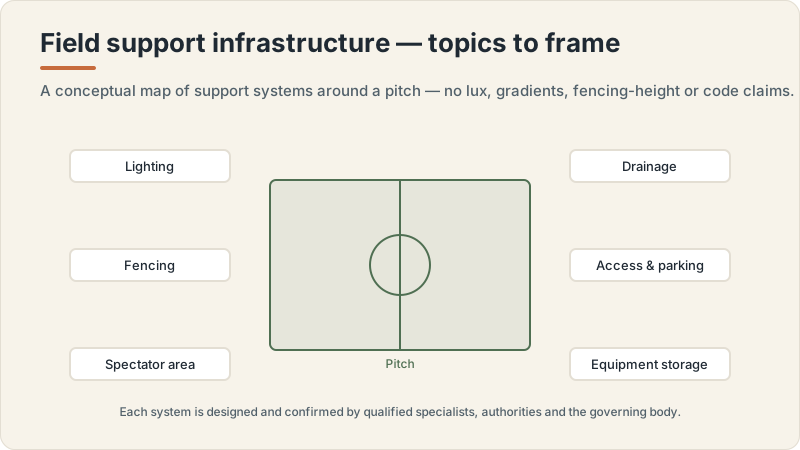
Football field support infrastructure concept
Conceptual editorial diagram — not a construction drawing, specification, to-scale plan or proof of a real project. It is not engineering, structural, fire/life-safety, crowd-safety or accessibility-compliance guidance. Capacities, dimensions, standards, requirements and costs vary by facility type, audience, site, use case and governing body, and are confirmed with qualified professionals, relevant authorities and governing bodies. Build Design Hub does not design, build, inspect, certify, recommend or match anyone.
What this guide helps you prepare
This guide helps you turn a vague intention, such as wanting somewhere for people to watch matches and training, into an organized set of inputs that qualified professionals can work from. It focuses on preparation: clarifying who the spectator area is for, what activities it needs to support, what your site constraints might be, and what questions you still cannot answer yourself. By doing this groundwork before you engage specialists, you make their assessments more efficient and your eventual decisions better informed. The guide does not tell you what to build or how; it helps you describe what you are trying to achieve and surface the unknowns.
It also helps you structure stakeholder conversations and supplier or contractor research in a disciplined way. Spectator-area projects often involve multiple voices, including the people running matches, those responsible for safety, neighbours and the eventual budget holders. Preparing a shared brief and a consistent list of questions reduces misunderstandings and makes it easier to compare the responses you receive. Remember that Build Design Hub does not design, build, assess, recommend, rank, verify or match suppliers or contractors; this guide simply helps you prepare for conversations you will have with qualified professionals you select independently.
- Write a plain-language statement of why a spectator area is being considered and who would use it
- List the activities the area might need to support, from casual viewing to organized fixtures
- Capture site facts you already know, and flag the ones you are unsure about for professional confirmation
- Draft an initial brief you can share consistently with every professional you approach
- Note which decisions are firm, which are open and which depend on answers you do not yet have
- Keep a record of assumptions so they can be tested rather than treated as settled facts
Spectator-area considerations to map out before you start
A useful early step is to map out, at a planning level, the different aspects of a spectator area that professionals will eventually need to assess, without trying to resolve any of them yourself. These typically include where viewing might sit relative to the pitch and the sun, how people would arrive and move around the wider site, how the area relates to existing buildings and boundaries, and what services or facilities spectators might expect. Treating these as topics to discuss, rather than problems to solve, keeps you out of design territory while still giving you a thorough brief. Each topic raises questions that only qualified professionals, authorities and your governing body can answer for your situation.
It also helps to separate the field of play from the spectator area in your thinking, because they involve different specialists and different considerations. The pitch surface, drainage and markings are their own subject; the spectator area sits alongside them and interacts with them. By keeping a clear boundary in your notes, you avoid conflating questions and you make it easier for the right professional to take ownership of each topic. Wherever a topic touches safety, accessibility or anything that affects the public, treat it as a flag to involve the appropriate qualified professional early rather than forming your own conclusions.
- Note the general relationship between viewing positions, the pitch and orientation, as a question for designers
- List existing site features such as boundaries, paths, parking and buildings that a spectator area would relate to
- Identify which neighbouring uses or sensitivities should be raised with professionals and authorities
- Record what spectator facilities people may expect, framing each as a topic to discuss rather than a decision
- Distinguish field-of-play topics from spectator-area topics so the right specialist owns each
- Capture climate and weather factors locally as questions about comfort and durability for professionals
Operations and maintenance questions to raise early
Spectator areas do not end at construction; they need to be opened, supervised, cleaned and maintained over time, and these realities are easier to plan for when raised early. At the preparation stage you cannot and should not decide maintenance regimes or operating procedures, but you can list the operational questions that will shape later professional advice. Who would open and supervise the area on event days, how it would be kept clean and safe between uses, and how wear over time might be monitored are all examples of questions worth recording now. Framing them early helps professionals understand how the area will actually be used, which can influence the options they present.
Maintenance and lifecycle thinking also affects how you compare professionals and suppliers later, because a proposal that looks attractive on day one may carry very different ongoing implications. Without stating any figures, lifespans or performance claims, you can still ask each professional to explain the ongoing care, inspection and review considerations associated with the approaches they discuss. Keep these answers in your records so you can compare like with like. As always, treat maintenance intervals, durability and any performance statements as matters to confirm with qualified professionals rather than assumptions you make yourself.
- List who would be responsible for opening, supervising and closing a spectator area on event days
- Record routine cleaning and upkeep as questions for professionals rather than fixed plans
- Ask how wear, weathering and condition would be monitored over time, without assuming any intervals
- Note storage, waste and seasonal considerations that operations staff may need to plan for
- Prepare to ask each professional to explain ongoing care implications of the options they discuss
- Keep operational answers in a consistent format so different proposals can be compared fairly
Planning questions before speaking with professionals
Before you contact crowd-safety, design or engineering professionals, it is worth answering as many internal questions as you reasonably can, because clearer inputs lead to clearer advice. These are questions about your own intentions, constraints and decision-making, not technical questions about the spectator area itself. Knowing who the ultimate decision makers are, what your rough boundaries and priorities are, and what information you can readily provide will make every later conversation more productive. This section helps you interrogate your own brief so that gaps are visible before, rather than after, you start spending time and money on professional input.
Working through these questions also helps you decide what kind of professionals you may need and in what order. Some projects start with a site or planning conversation, others with a safety or design discussion; the right sequence depends entirely on your circumstances. By being honest about what you do and do not know, you can ask professionals to help you map the path rather than assuming you already understand it. Treat any uncertainty here as a normal and useful signal that a qualified professional should be involved sooner rather than later.
- Who are the decision makers and stakeholders whose input must be reflected in the brief?
- What problem is the spectator area meant to solve, and how would you know it succeeded?
- What site information, drawings or records can you provide, and what is missing or unverified?
- What constraints, such as boundaries, neighbours or existing commitments, should professionals know about up front?
- Which decisions are already fixed, and which remain genuinely open to professional input?
- What approvals, consultations or governing-body discussions might apply, as questions to confirm rather than assume?
Questions for qualified professionals
Once you engage qualified professionals, your prepared brief becomes a tool for asking focused, comparable questions. The goal is not to extract a free design or to push for numbers, but to understand how each professional would approach your situation, what they would need from you, and what they see as the key uncertainties. Good questions invite professionals to explain their reasoning, their scope and the assessments they would carry out, so you can judge whether their approach fits your project. Keep your questions consistent across everyone you speak with, so that differences in their answers reflect their approach rather than differences in how you asked.
It is equally important to ask about scope boundaries, responsibilities and what falls outside any one professional's remit, because spectator-area projects often involve several disciplines. Asking who would be responsible for safety considerations, who confirms applicable requirements with authorities and governing bodies, and how the various professionals would coordinate helps you avoid gaps and overlaps. Throughout, remember that this guide does not select, rank, verify or introduce professionals, and that any requirements, specifications, capacities or performance matters must be confirmed by the qualified professionals and authorities responsible for your project.
- How would you approach a spectator-area assessment for a site and brief like ours, and what would you need from us?
- Which aspects fall within your scope, and which would require other specialists or authorities to confirm?
- How would applicable requirements, approvals and governing-body considerations be identified and confirmed for our location?
- Who would be responsible for crowd-safety and accessibility considerations, and how would that work be coordinated?
- What are the main uncertainties or risks you would want resolved before any decisions are made?
- How do you structure your scope, deliverables and assumptions so we can compare proposals consistently?
What this does not replace
This is an educational project-preparation resource only. It is not a construction manual and not engineering, architectural, turf-installation, drainage-engineering, sports-surface-specification, structural, fire or life-safety, crowd-safety, accessibility-compliance, permit, zoning, legal, tax or procurement advice. It does not design, specify, install, certify, inspect or approve anything, and it is not an estimate, quote, price, capacity recommendation or performance or lifespan guarantee. Requirements, standards, dimensions, surface systems and costs vary by location, use case, governing body, owner, site, climate, maintenance plan, authority and professional team, and are confirmed with qualified professionals, relevant authorities and the sport governing body.
Build Design Hub does not design, build, install, engineer, inspect, certify, recommend, rank, verify, introduce, broker or match suppliers or contractors, and HELPERG LLC is publisher/operator only. Use this resource to prepare your own thinking, then have qualified professionals you engage directly review your project. Decisions about engineering, surface specification, drainage, safety, compliance, procurement and suitability must rest on those professionals, the relevant authorities and the governing body for your sport and location.
- Not a construction manual and not engineering, turf-installation or drainage-engineering instructions
- Not sports-surface specification, structural, fire/life-safety, crowd-safety or accessibility-compliance advice
- Not permit, zoning, legal, tax or procurement advice
- Not a supplier or contractor recommendation, ranking, directory or matching service
- Not an estimate, price, capacity recommendation or performance/lifespan guarantee — requirements and costs vary
- Qualified professional review is required before any project decision
Spectator-area preparation worksheet: what to record, ask and gather
- 1Record a plain-language statement of why a spectator area is being considered and who would use it
- 2List every stakeholder and decision maker whose input must shape the brief
- 3Gather any existing site drawings, surveys, photos or records, and note what is missing
- 4Write down site facts you are confident about and flag those that need professional confirmation
- 5List the activities and uses the area might need to support, from casual viewing to fixtures
- 6Note neighbouring uses, boundaries and sensitivities to raise with professionals and authorities
- 7Capture local climate and weather factors as comfort and durability questions to confirm
- 8Record operational questions about who would open, supervise, clean and monitor the area
- 9List the approvals, consultations or governing-body discussions you suspect may apply, as questions
- 10Prepare a consistent set of questions to ask every professional you approach
- 11Set up a simple format to record and compare professional and supplier responses
- 12Note which decisions are fixed and which remain open to professional input
- 13Keep a running list of assumptions to be tested rather than treated as facts
- 14Document who is responsible for tracking unresolved questions through the project
Common mistakes to avoid
- Trying to fix dimensions, capacities or specifications yourself instead of confirming them with qualified professionals
- Treating online figures, standards or numbers as settled facts rather than questions for authorities and governing bodies
- Conflating field-of-play topics with spectator-area topics, so the wrong specialist is asked the wrong question
- Engaging professionals before preparing a clear brief, leading to vague advice and wasted time
- Asking each professional different questions, making their proposals impossible to compare fairly
- Overlooking operations and maintenance considerations until after key decisions have already been made
- Assuming one professional covers safety, accessibility, design and approvals when these may need different specialists
- Expecting a website or guide to recommend, rank or introduce suppliers, rather than selecting professionals independently
When to involve a professional
- When any consideration touches crowd safety, public access or anything affecting people's wellbeing, involve qualified professionals early
- When you need to know which requirements, approvals or governing-body rules apply to your specific location and use
- When site constraints, boundaries or neighbouring uses raise questions you cannot resolve from your own knowledge
- When the project moves from general intentions toward decisions that have safety, accessibility or compliance implications
- When you cannot tell which discipline owns a particular question, ask professionals to help map scope and responsibilities
- When proposals involve specifications, capacities, durability or performance claims that must be verified by responsible professionals
Frequently asked questions
Questions readers ask about this topic
Does this guide tell me how big a spectator area should be or how many people it can hold?
No. This guide does not state any capacities, dimensions, specifications or requirements, because these vary by location, use case, governing body, owner, site, surface system, maintenance plan, climate, authority and professional team. It helps you prepare the questions to ask so that qualified professionals and the relevant authorities can give you accurate, site-specific answers.
Will Build Design Hub recommend, rank or connect me with suppliers or contractors for my spectator area?
No. Build Design Hub does not design, build, assess, recommend, rank, verify, introduce, broker or match suppliers or contractors, and it does not provide costs, requirements or turf specifications. This guide is purely educational. You select and engage qualified professionals independently, and you confirm all requirements and specifications with them and with the relevant authorities.
Can I use this guide instead of hiring professionals?
No. This guide only helps you prepare briefs, questions and information so that conversations with qualified professionals are more productive. It does not design, engineer, certify, permit or assess anything. Crowd-safety, design, engineering and other specialists must be engaged to assess your specific site and confirm what applies to you.
Why does this guide avoid giving numbers, standards or costs?
Because spectator-area considerations depend on many factors that differ from project to project, and because stating them as facts could be misleading or unsafe. The responsible approach at the planning stage is to frame these as questions to confirm with qualified professionals, the relevant authorities and your sport's governing body, rather than treating any figure as universal.
Keep reading