
Who this guide is for
- Club, academy and school facility owners preparing to take responsibility for a newly built or refurbished field
- Municipal and parks teams accepting a publicly funded football facility into ongoing operation
- Developers and project sponsors coordinating handover between a contractor and an end user or operator
- Facility and grounds managers who will run day-to-day operations and maintenance after handover
- Volunteer committees and trustees who need a structured way to organise handover documentation
- Owners' representatives and project coordinators assembling questions before speaking with qualified professionals
Planning diagram
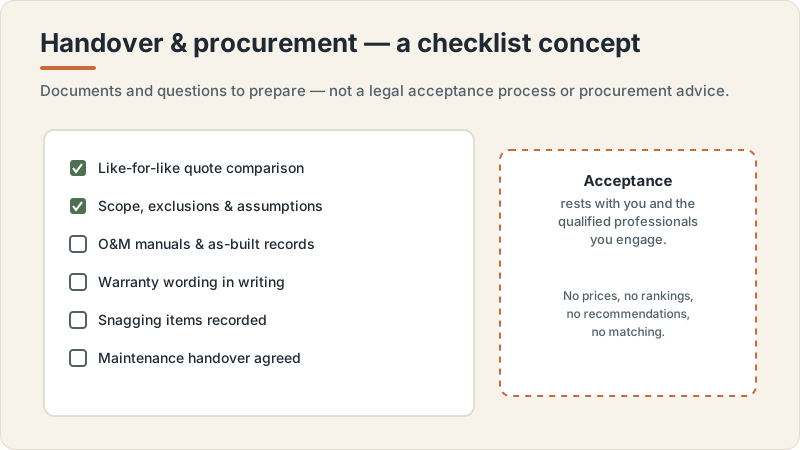
Football field handover checklist concept
Conceptual editorial diagram — not a construction drawing, specification, to-scale plan or proof of a real project. It is not engineering, structural, fire/life-safety, crowd-safety or accessibility-compliance guidance. Capacities, dimensions, standards, requirements and costs vary by facility type, audience, site, use case and governing body, and are confirmed with qualified professionals, relevant authorities and governing bodies. Build Design Hub does not design, build, inspect, certify, recommend or match anyone.
What this guide helps you prepare
This guide helps you organise the preparation around a football field handover so that, when the time comes, you know what to ask for and what to keep. Handover is more than a handshake on a finished surface: it is the transfer of the records, manuals, warranties and operating knowledge that let you run, maintain and eventually renew the facility. Preparing in advance means you can request these items as a structured package rather than chasing fragments afterwards, and it means you can frame snagging and acceptance as informed conversations with the people who designed, built and will support the field.
The aim here is to help you build three things before handover day: a list of the documentation and as-built records to request, a way to frame snagging so observations are captured and tracked rather than forgotten, and a set of questions to confirm with qualified professionals about what acceptance should involve in your situation. This guide does not tell you what is complete, what is compliant, what to sign, or whether work meets any standard. Those judgements belong to qualified professionals, the relevant authorities and the governing body for your level of play. What counts as a satisfactory handover varies by location, use case, governing body, owner, site, surface system, maintenance plan, climate, authority and professional team; confirm with qualified professionals.
- Clarify who is handing over, who is receiving, and which parties need to be involved in the conversation
- List the categories of documentation you expect to receive so gaps are visible before acceptance
- Frame snagging as a logged, trackable conversation rather than an informal walk-around
- Separate what you can prepare and record yourself from what only qualified professionals can confirm
- Identify which questions belong to the contractor, which to designers, and which to the governing body or authority
- Plan how handover records will be stored so future operations and renewal teams can find them
Documentation, O&M manuals and as-built records to request
A central part of handover preparation is knowing which documents to ask for and why each one matters to the people who will operate the field. As-built records describe what was actually installed, which may differ from the original design, and they become the reference for any future maintenance, repair or renewal. Operations and maintenance (O&M) manuals describe how the contractor and suppliers expect the surface, drainage, lighting, fencing and any equipment to be looked after. Warranty and guarantee paperwork sets out what is covered and the conditions attached. Preparing a request list in advance helps you receive these as an organised package and notice if anything is missing, rather than discovering gaps months later.
This guide does not specify what these documents must contain, how a system should be maintained, or what any warranty should cover, because all of that varies by location, use case, governing body, owner, site, surface system, maintenance plan, climate, authority and professional team. Your role in preparation is to ask for the records, ask who produced them, ask what conditions are attached, and then have qualified professionals confirm whether the package is complete and appropriate for your facility. Keep the focus on requesting and organising documentation, not on interpreting technical content yourself or treating any manual as a substitute for professional advice.
- Ask which as-built drawings and records the project team will provide and what they cover
- Ask for the O&M manuals supplied for the surface, drainage, lighting, fencing and any equipment
- Ask which warranties and guarantees apply, who issues them, and what conditions are attached to each
- Ask for supplier and product information, including contact routes for support and spares
- Ask how test, commissioning or inspection records (if any) will be supplied and by whom
- Ask qualified professionals to review whether the documentation package looks complete for your use case
Framing snagging and what to confirm before acceptance
Snagging is the process of recording observations about items that appear incomplete, unfinished or not as expected, so they can be discussed and resolved before or shortly after handover. For preparation purposes, the most useful thing you can do is decide in advance how observations will be captured: where they are written down, how each item is described, who reviews them, and how their resolution is tracked. A clear, logged approach turns a vague walk-around into a record everyone can refer to. This guide does not tell you what counts as a defect, what is acceptable, or whether the field is fit for use, because those are judgements for qualified professionals, the relevant authority and the governing body, not for an educational checklist.
Before acceptance, it helps to understand what acceptance means in your situation and who is responsible for confirming it. Acceptance can carry contractual and legal weight, so this guide is preparation only and is not a legal acceptance process. Use your preparation to assemble questions about what should be confirmed, who confirms it, what documentation should be in hand, and what happens to outstanding snagging items after acceptance. Then take those questions to qualified professionals and your own advisers. Requirements and expectations vary by location, use case, governing body, owner, site, surface system, maintenance plan, climate, authority and professional team; confirm with qualified professionals before accepting any work.
- Decide how snagging observations will be recorded, described and tracked to resolution
- Clarify who reviews snagging items and who decides when each is resolved
- Ask what acceptance means in your contract and what it commits you to
- Ask what documentation should be in hand before acceptance is considered
- Ask how outstanding snagging items are handled after acceptance and within what timeframe
- Confirm with qualified professionals and your own advisers before treating any work as accepted
Planning questions before speaking with professionals
Before you involve qualified professionals, it is worth organising your own thinking so those conversations are focused and productive. Handover touches several parties at once: the contractor, suppliers, designers, the operations team who will run the field, and sometimes the funding body or governing body for your level of play. Mapping who holds which records and who you expect to hear from helps you avoid duplicated requests and missing items. It also helps to think about how the field will actually be used and maintained, because that shapes which manuals, warranties and operating information matter most to you.
These planning questions are not technical questions and they do not require you to assess any work yourself. They are about scope, roles, documentation and follow-up, so that when you speak with qualified professionals you can ask precise questions rather than open-ended ones. Write your answers down, note where you are unsure, and bring both the answers and the uncertainties to your professional conversations. Nothing here implies a required outcome; it simply helps you arrive prepared, with the relevant questions and records gathered in one place.
- Who are the parties to the handover, and which records does each one hold?
- How will the field be used and maintained, and which manuals and warranties matter most as a result?
- What documentation do you already have, and what do you still need to request?
- How will handover records be stored so operations and future renewal teams can find them later?
- Which questions are yours to resolve, and which clearly need a qualified professional?
- What is your timeline for handover, and where do you expect bottlenecks or missing information?
Questions for qualified professionals
Once your own preparation is organised, the next step is to take specific questions to the qualified professionals involved in your project, the relevant authorities and the appropriate sport governing body. They are the people who can tell you what handover should include in your situation, what acceptance commits you to, and whether the documentation package is complete and appropriate. Build Design Hub does not provide these answers, does not review your project, and does not recommend, rank, verify, introduce or match anyone to do so. The questions below are prompts to raise in those conversations, not requirements or conclusions.
Use these prompts to open a structured discussion, and ask follow-up questions until you understand who is responsible for what. Every answer should come from qualified professionals familiar with your location, use case, governing body, owner, site, surface system, maintenance plan, climate, authority and professional team. Treat this guide as a way to prepare for that conversation, never as a replacement for it, and confirm everything before you accept any work or take the facility into operation.
- What should a complete handover package include for a field of this type and use?
- Which documents, manuals, warranties and as-built records should I expect, and who produces each?
- What does acceptance mean here, what does it commit me to, and who is responsible for confirming it?
- How should snagging be recorded, reviewed and tracked, and how are outstanding items handled?
- Which records do I need to keep for future maintenance, operations and eventual renewal?
- Which authorities or governing bodies need to be involved, and at what point in handover?
What this does not replace
This is an educational project-preparation resource only. It is not a construction manual and not engineering, architectural, turf-installation, drainage-engineering, sports-surface-specification, structural, fire or life-safety, crowd-safety, accessibility-compliance, permit, zoning, legal, tax or procurement advice. It does not design, specify, install, certify, inspect or approve anything, and it is not an estimate, quote, price, capacity recommendation or performance or lifespan guarantee. Requirements, standards, dimensions, surface systems and costs vary by location, use case, governing body, owner, site, climate, maintenance plan, authority and professional team, and are confirmed with qualified professionals, relevant authorities and the sport governing body.
Build Design Hub does not design, build, install, engineer, inspect, certify, recommend, rank, verify, introduce, broker or match suppliers or contractors, and HELPERG LLC is publisher/operator only. Use this resource to prepare your own thinking, then have qualified professionals you engage directly review your project. Decisions about engineering, surface specification, drainage, safety, compliance, procurement and suitability must rest on those professionals, the relevant authorities and the governing body for your sport and location.
- Not a construction manual and not engineering, turf-installation or drainage-engineering instructions
- Not sports-surface specification, structural, fire/life-safety, crowd-safety or accessibility-compliance advice
- Not permit, zoning, legal, tax or procurement advice
- Not a supplier or contractor recommendation, ranking, directory or matching service
- Not an estimate, price, capacity recommendation or performance/lifespan guarantee — requirements and costs vary
- Qualified professional review is required before any project decision
Football field handover preparation worksheet
- 1Record the parties to the handover and which documents or records each one holds
- 2List every category of documentation you expect to receive and mark which are still outstanding
- 3Note the as-built drawings and records you will request and ask what each one covers
- 4Record which O&M manuals you expect for the surface, drainage, lighting, fencing and equipment
- 5Capture which warranties and guarantees apply, who issues them, and the conditions attached
- 6Gather supplier and product information, including support contacts and routes for spares
- 7Write down how test, commissioning or inspection records (if any) will be supplied and by whom
- 8Decide and document how snagging observations will be recorded, described and tracked to resolution
- 9Note who reviews snagging items and who decides when each is resolved
- 10Record the questions you want to ask about what acceptance means and what it commits you to
- 11List the documentation you believe should be in hand before acceptance is considered
- 12Plan where and how handover records will be stored for operations and future renewal teams
- 13Separate the items you can resolve yourself from those that need qualified professionals
- 14Prepare a dated list of questions to raise with professionals, authorities and the governing body
Common mistakes to avoid
- Treating handover as an informal walk-around instead of organising the records and manuals you will need to run the field
- Accepting work before confirming with qualified professionals what acceptance commits you to
- Assuming as-built records match the original design rather than asking what was actually installed
- Collecting documents without checking who produced them, what they cover, or what conditions are attached
- Capturing snagging observations informally so items are forgotten and never tracked to resolution
- Overlooking where handover records will be stored, leaving future operations and renewal teams without them
- Interpreting technical manuals or warranties yourself instead of having qualified professionals review them
- Leaving warranty conditions and support contacts unconfirmed until a problem has already appeared
When to involve a professional
- When you need to understand what a complete handover package should include for your field type and use
- When acceptance carries contractual or legal weight and you need advice on what it commits you to
- When you are unsure whether the documentation, manuals or as-built records you received are complete or appropriate
- When snagging items are disputed or you need help deciding when an item is resolved
- When a relevant authority or sport governing body needs to be involved in handover or sign-off
- When warranty conditions, support arrangements or maintenance obligations are unclear and need professional interpretation
Frequently asked questions
Questions readers ask about this topic
Does Build Design Hub recommend handover companies, contractors or suppliers, or tell me what handover should cost?
No. Build Design Hub is an educational planning resource. It does not recommend, rank, verify, introduce, broker or match suppliers or contractors, and it does not provide costs, prices, requirements or turf specifications. It also does not state what handover must include as fact, because that varies by location, use case, governing body, owner, site, surface system, maintenance plan, climate, authority and professional team. This guide only helps you prepare questions and a documentation list to take to qualified professionals.
Is this a legal acceptance process I can rely on to accept the work?
No. This is preparation only, not a legal acceptance process. Acceptance can carry contractual and legal weight, and what it commits you to depends on your agreement and your situation. Use this guide to organise your questions and records, then confirm with qualified professionals and your own advisers before accepting any work or taking the facility into operation.
What documents should I expect at handover?
This guide cannot tell you exactly which documents are required, because that varies by your project, surface system, governing body, authority and professional team. It can help you prepare to request common categories such as as-built records, O&M manuals, warranties and supplier information, and then ask qualified professionals to confirm whether the package is complete and appropriate for your field.
How should I handle snagging items before acceptance?
This guide helps you frame snagging as a recorded, trackable conversation: deciding how observations are captured, who reviews them, and how their resolution is tracked. It does not tell you what counts as a defect or whether the field is fit for use. Those judgements belong to qualified professionals, the relevant authority and the governing body, so confirm with them before accepting any work.
Keep reading