
Who this guide is for
- Club and academy owners or committees comparing what different surface suppliers and contractors say they cover
- Schools and municipalities that need a clear written record of guarantees for public accountability
- Developers and project sponsors assembling procurement documents before going to market
- Facility and grounds managers who will live with the surface and components and need to know who to contact when something fails
- Project leads preparing a structured, consistent question list before meeting suppliers or qualified professionals
- Volunteer or first-time project teams who want to avoid relying on verbal assurances about the pitch alone
Planning diagram
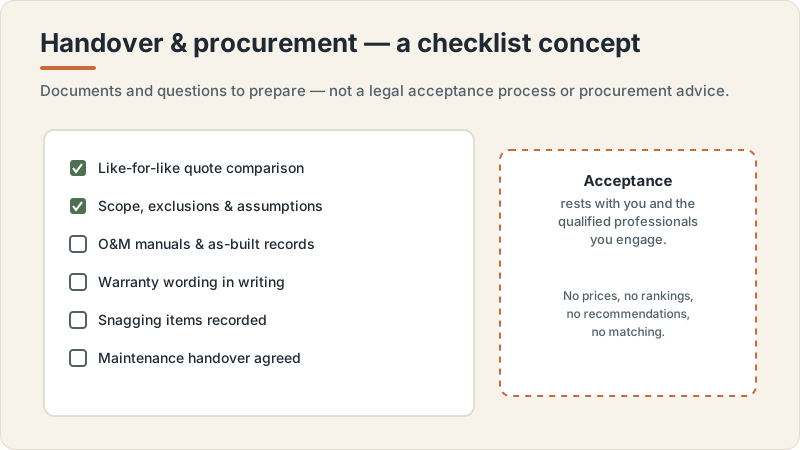
Football field handover checklist concept
Conceptual editorial diagram — not a construction drawing, specification, to-scale plan or proof of a real project. It is not engineering, structural, fire/life-safety, crowd-safety or accessibility-compliance guidance. Capacities, dimensions, standards, requirements and costs vary by facility type, audience, site, use case and governing body, and are confirmed with qualified professionals, relevant authorities and governing bodies. Build Design Hub does not design, build, inspect, certify, recommend or match anyone.
What this guide helps you prepare
This guide helps you assemble an organised set of warranty and guarantee questions before you commit to anyone or sign anything for a football field or training ground. A pitch project brings together many separate parts -- the playing surface, any base or drainage works beneath it, line markings, perimeter fencing, floodlighting, goals and pitch equipment, and the construction works that join them -- and each part may carry its own warranty or guarantee, issued by a different party on different terms. The goal here is preparation: knowing what to ask, what to capture in writing, and how to keep it all in one place so qualified professionals can review it properly.
It does not tell you what coverage is appropriate, how long any surface or component guarantee should last, or what any condition means, because those depend on the specifics of your project and must be confirmed with qualified professionals, the supplier or manufacturer, and any relevant authority or governing body. What this guide offers is a structure for the conversation -- a way to make sure nothing important is left as an unrecorded verbal promise about the pitch, and that every claim about coverage can later be checked against a written document.
- A consolidated list of every surface element and component that might carry a separate warranty or guarantee
- Question prompts that separate what is verbally claimed from what is provided in writing
- A way to record who issues each warranty and who you contact if a component or the surface fails
- Prompts to identify gaps where no warranty or guarantee appears to exist at all
- A structure that lets qualified professionals and any legal advisor review the documents efficiently
Mapping which surface elements and components carry their own warranties
The first practical step is to break the pitch project into its parts and ask, for each one, who would stand behind it and on what basis. Some warranties come from a manufacturer or product supplier and relate to the component itself -- for example a surface system, a fencing product or a floodlight fitting; others are guarantees on workmanship offered by the contractor who carried out the installation. A single element, such as the playing surface, may involve both a product warranty held by the surface supplier and an installation guarantee held by the contractor who laid it. Listing surface elements and work packages side by side helps you see where coverage might overlap, where it might be split between parties, and where it may be missing entirely.
As you build this map, treat the boundaries between packages as a particular area to ask about, because that is where misunderstandings commonly arise on field projects. A surface supplier and a groundworks or drainage contractor, for instance, may each assume the other is responsible for the layers beneath the surface. Rather than assuming how these fit together, record the question for the relevant parties and for qualified professionals to confirm. Keep the map factual: list the item, the party who would issue any warranty, and the documentation you have or still need -- not your own view on whether the coverage is sufficient.
- Which components carry a manufacturer or product warranty -- surface system, fencing, lighting, goals -- and from whom?
- Which works carry a workmanship or installation guarantee, and from which contractor?
- Where the playing surface involves several parties, who covers the surface itself and who covers the base or drainage works?
- Are there elements or works -- line markings, anchors, ancillary equipment -- where no warranty appears to be offered?
- How are the boundaries between adjoining packages described in the written documents?
- Which items remain unconfirmed and need to be raised with qualified professionals?
What to capture in writing and how to keep the record
Verbal assurances about a pitch are easy to give and hard to rely on later, so a core theme of warranty preparation is converting what is said into what is documented. For each warranty or guarantee, it is reasonable to ask for the actual wording, the party who issues it, what it covers and excludes, the conditions attached to keeping it valid, who to contact to make a claim, and how long it is stated to last. You are not assessing whether these are good or bad, and you are not judging whether a stated surface lifespan is realistic -- you are making sure the terms exist in a form a qualified professional or legal advisor can read and that you can store and retrieve when needed.
Keeping a single, organised record matters as much as collecting the documents. Note the date each document was provided, the version or reference, and any conditions that link to your future operations -- for instance, expectations a supplier states about maintenance, grooming, infill top-ups, drainage upkeep or usage hours that they say must be met for a guarantee to remain valid. Do not interpret those conditions yourself; record them and flag them for confirmation. A tidy, complete file is what lets the right professionals advise you, and what your grounds and facility team will rely on long after the project closes.
- Ask for the full written wording of each warranty or guarantee, not a verbal summary
- Record who issues it, what it covers, what it excludes, and how long it is stated to last
- Capture any conditions said to keep coverage valid, including maintenance, grooming or usage expectations, without interpreting them
- Note the claim process: who to contact, how, and what evidence is said to be required
- Log the date, version and reference for every document so the file stays auditable
- Flag anything ambiguous or unwritten for qualified professionals and any legal advisor to review
Planning questions before speaking with professionals
Before you sit down with surface suppliers, contractors or advisors, it helps to settle some internal questions so your requests are clear and consistent. Decide who on your side owns the warranty record, how documents will be stored and shared, and which stakeholders -- a club board, a council, a school governing body, an academy management team -- need to see the final paperwork. Agreeing this early means every supplier and contractor is asked for the same things in the same way, which makes their responses far easier to compare and review.
It also helps to think about your own context: how the field will be used, how many hours of play it must absorb, who will operate and maintain it, and what your grounds team can realistically keep up with after handover. These factors shape the questions you will want answered, but they are not things to decide alone where they touch on technical, legal or compliance matters. Use this internal preparation to frame questions, not to draw conclusions, and carry anything uncertain forward to qualified professionals.
- Who on our side owns and maintains the warranty and guarantee record for the field?
- Which stakeholders or authorities need to see the final documentation, and in what form?
- What are we asking every surface supplier and contractor to provide, so responses are comparable?
- How will we store, version and retrieve these documents over the field's operating life?
- Which conditions about maintenance, grooming or usage hours might affect us, and who confirms them?
- What questions are beyond our expertise and must be carried to qualified professionals?
Questions for qualified professionals
When you meet qualified professionals -- which may include a legal or contract advisor, a quantity surveyor, an architect or engineer, a surface or sports-turf specialist, and the relevant suppliers and contractors -- your prepared questions help them give you focused guidance. Because warranty and guarantee terms vary by location, surface system, use case, climate and governing body, the right people to interpret wording, confirm whether coverage aligns with your needs, and advise on anything contractual are these professionals, not this guide. Bring your component map and documentation file so the review is grounded in the actual papers rather than recollection.
Frame your questions to surface gaps, conditions and responsibilities rather than to seek a verdict you then act on alone. Ask who should review which documents, what additional wording or evidence is worth requesting, and how the guarantees connect to your maintenance and operations planning for the pitch. Record their answers alongside the documents so the file remains a single, trustworthy source for whoever manages the field in the years ahead.
- Which of these warranty and guarantee documents should a legal or contract advisor review?
- Do the written terms match what suppliers and contractors described verbally, and where do they differ?
- Are there gaps in coverage between the surface, the base or drainage works, and other components we should be aware of?
- What conditions in these documents connect to our future maintenance, grooming and operations?
- What additional documentation or wording is it reasonable to request before we proceed?
- Who should we contact, and how, if the surface or a covered component later fails?
What this does not replace
This is an educational project-preparation resource only. It is not a construction manual and not engineering, architectural, turf-installation, drainage-engineering, sports-surface-specification, structural, fire or life-safety, crowd-safety, accessibility-compliance, permit, zoning, legal, tax or procurement advice. It does not design, specify, install, certify, inspect or approve anything, and it is not an estimate, quote, price, capacity recommendation or performance or lifespan guarantee. Requirements, standards, dimensions, surface systems and costs vary by location, use case, governing body, owner, site, climate, maintenance plan, authority and professional team, and are confirmed with qualified professionals, relevant authorities and the sport governing body.
Build Design Hub does not design, build, install, engineer, inspect, certify, recommend, rank, verify, introduce, broker or match suppliers or contractors, and HELPERG LLC is publisher/operator only. Use this resource to prepare your own thinking, then have qualified professionals you engage directly review your project. Decisions about engineering, surface specification, drainage, safety, compliance, procurement and suitability must rest on those professionals, the relevant authorities and the governing body for your sport and location.
- Not a construction manual and not engineering, turf-installation or drainage-engineering instructions
- Not sports-surface specification, structural, fire/life-safety, crowd-safety or accessibility-compliance advice
- Not permit, zoning, legal, tax or procurement advice
- Not a supplier or contractor recommendation, ranking, directory or matching service
- Not an estimate, price, capacity recommendation or performance/lifespan guarantee — requirements and costs vary
- Qualified professional review is required before any project decision
Football field warranty & guarantee preparation worksheet
- 1List every surface element, component and work package, and note who would issue any warranty or guarantee for each
- 2Record, for each item, whether coverage is a product warranty, a workmanship guarantee, or both
- 3Request the full written wording for every warranty and guarantee, not a verbal summary
- 4Note who issues each document and the named contact for making a claim
- 5Record what each warranty states it covers and what it states it excludes
- 6Capture the stated duration of each warranty or guarantee exactly as provided in writing
- 7Log any conditions said to keep coverage valid, including maintenance, grooming or usage-hour expectations
- 8Identify elements or works -- such as line markings, anchors or drainage layers -- where no warranty appears to be offered
- 9Note the boundaries between the surface, base and drainage packages and the responsibility questions they raise
- 10Record the date, version and reference for each document received
- 11Mark every claim that is currently verbal and not yet provided in writing
- 12List the questions and ambiguities to carry to qualified professionals and any legal advisor
- 13Note which stakeholders or authorities need to see the final documentation
- 14Confirm where the complete warranty record will be stored and who maintains it after handover
Common mistakes to avoid
- Relying on verbal assurances about surface or component coverage instead of asking for the warranty wording in writing
- Assuming one warranty covers the whole pitch when the surface, base, drainage, fencing and lighting may carry separate, different terms
- Overlooking the boundary between the surface and the works beneath it, where parties may each assume the other is responsible
- Treating duration, coverage or conditions as standard rather than confirming them for your specific field and use case
- Storing documents in scattered places so no single, complete record exists at handover
- Ignoring conditions that tie a surface guarantee to maintenance, grooming or usage limits, then discovering them too late
- Trying to interpret legal or contractual wording internally instead of routing it to qualified professionals
- Closing the project without a named owner for the warranty record going forward
When to involve a professional
- When any warranty or guarantee wording for the surface or a component needs to be interpreted, a legal or contract advisor should review it
- When coverage appears to overlap or fall between several parties -- such as surface supplier, base contractor and drainage works -- and responsibility is unclear
- When conditions tied to maintenance, grooming or usage hours could affect whether a surface guarantee remains valid
- When a component or work package appears to have no warranty and you need to understand the implications
- When the written documentation conflicts with what suppliers or contractors described verbally and the difference matters
- When stakeholders, funders or authorities require formal assurance that the documentation meets relevant requirements
Frequently asked questions
Questions readers ask about this topic
Does Build Design Hub recommend suppliers or tell me what a football field warranty should cover?
No. Build Design Hub is an educational resource and does not recommend, rank, verify, introduce or match suppliers or contractors, and it does not state what coverage, durations, surface lifespans, conditions or costs you should expect. Those vary by location, surface system, use case, climate and governing body, and must be confirmed with the supplier, qualified professionals and any relevant authority. This guide only helps you prepare questions and gather documentation.
Is this guide legal advice about my warranty terms?
No. This guide does not give legal advice or interpret any warranty or guarantee wording for a field, surface or component. It helps you organise the questions to ask and the documents to request so a legal or contract advisor and other qualified professionals can review them. Any judgement about what a term means or whether it is adequate should come from a suitably qualified professional, not from this guide.
Why should I ask for surface and component warranties in writing rather than relying on what I am told?
Verbal assurances about a pitch are difficult to compare or rely on later. Asking for the written wording gives you a concrete record that qualified professionals can review, that you can store and retrieve, and that whoever manages the field can use if the surface or a component later fails. This guide does not tell you whether any written terms are sufficient -- only that capturing them in writing is a sound preparation step.
How do I know which parts of the pitch even have separate warranties?
Start by mapping the project into its surface elements, components and work packages and asking, for each, who would stand behind it and on what basis. Some parts carry manufacturer or product warranties, others carry workmanship guarantees from the installing contractor, and the surface may carry both from different parties. This guide helps you build that map and the questions around it; the parties involved and qualified professionals confirm the specifics.
Keep reading