
Who this guide is for
- Owners taking a multi-year view of a sports facility rather than a season-by-season one
- Club committees and trustees coordinating maintenance, renewal and reporting over time
- Municipality and school estates teams responsible for a facility within a wider portfolio
- Developers handing over a facility who want a clear asset baseline established
- Facility managers building or inheriting an asset register and renewal cycle
- Anyone preparing structured questions for surveyors, engineers and specialist suppliers
Planning diagram
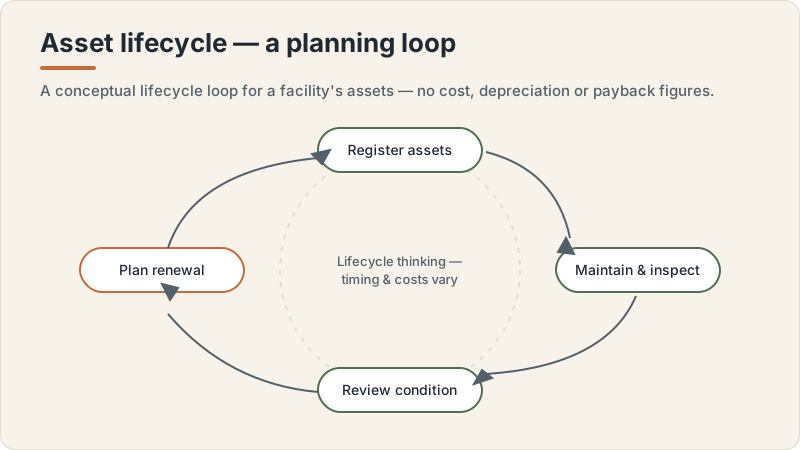
Sports-facility asset lifecycle concept
Conceptual editorial diagram — not a construction drawing, specification, to-scale plan or proof of a real project. It is not engineering, structural, fire/life-safety, crowd-safety or accessibility-compliance guidance. Capacities, dimensions, standards, requirements and costs vary by facility type, audience, site, use case and governing body, and are confirmed with qualified professionals, relevant authorities and governing bodies. Build Design Hub does not design, build, inspect, certify, recommend or match anyone.
What this guide helps you prepare
This guide helps you prepare the thinking and the documentation behind long-term asset and lifecycle planning before you commit to anything or speak with professionals. It walks through how to start an asset register that lists what your facility is actually made of, how to view those components across their whole life rather than as one-off repairs, and how to frame the renewal questions that recur as a facility ages. The aim is preparation: a clearer brief, better questions and an organised record, so that conversations with qualified professionals are efficient and grounded in your own situation.
It deliberately stays at the planning level. It does not tell you how long a surface lasts, when a system must be replaced, what condition assessments should conclude or what any of it should cost, because those answers vary by component, climate, use, site and governing body and belong with qualified professionals, suppliers and relevant authorities. Treat every specific here as a question to confirm, not a fact to act on. The value is in arriving at those conversations with a structured view rather than a blank page.
- Understand what an asset register is and why a structured inventory supports better long-term decisions
- Learn to view components across a whole life of build, use, care, renewal and replacement
- Identify which renewal questions tend to recur and when to raise them with professionals
- Organise existing documents, warranties and handover records into one referenceable place
- Prepare a consistent set of questions to take to surveyors, engineers and suppliers
- Recognise where requirements, lifespans and costs must be confirmed rather than assumed
Building an asset register as a planning baseline
An asset register is simply an organised list of the components that make up a facility, recorded in enough detail to support decisions over time. At a planning level, the point is not precision engineering data but coverage: surfaces, lighting, mechanical and electrical systems, drainage, fencing and enclosures, seating and spectator infrastructure, access and circulation elements, and the structure itself can each be listed as a distinct asset. For each, you can note what it is, where it sits, what you know about its history, and where the supporting paperwork lives. Building this baseline early turns scattered knowledge held by different people into a shared, durable record.
The register works best when it captures provenance and condition observations without overstating them. Handover documents, warranty terms, supplier names, installation dates and any past works are all worth recording, with gaps marked honestly as unknowns to confirm later. Resist the temptation to invent expected lifespans, condition grades or replacement dates; those are matters for qualified professionals to assess and for suppliers to confirm against the specific products installed. A good register makes it obvious what you know, what you assume and what still needs a professional answer.
- Have you listed the major asset categories: surfaces, lighting, M&E, drainage, structure, enclosures, seating and access?
- For each asset, have you recorded location, what is known of its history and where its documents are held?
- Have you gathered handover packs, warranties, manuals and supplier details into one referenceable place?
- Have you marked unknowns honestly rather than filling them with assumed lifespans or grades?
- Have you noted who currently holds knowledge about each asset so it is not lost on staff changes?
- Have you flagged which condition or lifespan questions need a qualified professional to answer?
Lifecycle thinking and renewal questions over time
Lifecycle thinking connects build, use, routine care, periodic renewal and eventual replacement into one continuous view of an asset rather than a series of disconnected events. Different components age at different rates and on different drivers: some respond to intensity of use, some to weather and climate, some to maintenance quality and some simply to time. Holding all of this in a single long-term view helps you anticipate when attention is likely to be needed, coordinate works that overlap, and avoid being surprised by a renewal that was always coming. It also clarifies how a decision made today, at build or refurbishment, will shape the upkeep and renewal questions of tomorrow.
Renewal questions are the recurring decisions a lifecycle view surfaces: whether a component is approaching the point where renewal or replacement should be assessed, whether to refurbish or replace, and how several ageing elements might be sequenced sensibly. These are not questions this guide can answer with figures or timelines, because the right renewal points vary widely and must be confirmed by qualified professionals who can assess the actual condition of the actual asset. What you can prepare is the framing: a record that shows how each asset has aged, the observations that prompt a renewal conversation, and a clear list of the elements you want a professional to evaluate.
- Have you grouped assets by what drives their ageing — use, weather, maintenance or time — to anticipate attention?
- Have you considered how today's build or refurbishment choices affect future upkeep and renewal questions?
- Have you identified which elements may need renewal assessed, framed as questions for professionals rather than dates?
- Have you thought about how overlapping renewals might be sequenced to reduce disruption?
- Have you recorded the observations that would prompt a renewal-or-replacement conversation?
- Have you planned to confirm appropriate renewal points and lifespans with qualified professionals and suppliers?
Planning questions before speaking with professionals
Before you involve surveyors, engineers or specialist suppliers, work through what you can answer yourself so that those conversations start from a clear baseline. Much of this is about scope and ownership: which assets matter most to your facility's purpose, who is responsible for the register, how often it should be reviewed, and what decisions the long-term view is meant to support. Settling these internally first prevents professional time being spent untangling questions your own team is better placed to answer, and it helps you brief consistently if you intend to speak with more than one.
It is equally useful to be honest about the boundaries of your own knowledge. Noting where records are missing, where assumptions have crept in and where opinions differ among stakeholders turns vague unease into specific questions. The clearer you are about what you already know and what you need confirmed, the more focused and comparable the professional input you receive will be. None of this preparation substitutes for professional assessment; it simply makes that assessment more productive.
- Which assets are most critical to how this facility is used, and why?
- Who owns the asset register, and how often will it be reviewed and updated?
- What decisions is this long-term view meant to support over the coming years?
- Where are records, warranties or handover documents missing or incomplete?
- Which assumptions about condition or longevity have we made that need testing?
- Where do stakeholders disagree, so those differences can be raised explicitly?
Questions for qualified professionals
When you do engage qualified professionals, frame your questions around confirmation and assessment rather than asking this guide's structure to stand in for their judgement. The asset register and lifecycle view you have prepared become the agenda: you can ask professionals to assess the actual condition of specific assets, to explain how the components installed in your facility tend to age, and to advise on appropriate renewal points for your particular surfaces, systems and site. Because answers vary by location, facility type, audience, site, use case and governing body, ask each professional to relate their advice to your specific circumstances rather than to generic norms.
Use these conversations to fill the unknowns you flagged and to validate or correct the assumptions in your register. Ask which matters fall to which discipline, what standards or requirements apply to any planned renewal and which authority or governing body confirms them, and what condition assessment would involve for the assets you are most concerned about. Keep your questions consistent across professionals and suppliers so the answers are comparable, and record their responses back into the register so the long-term view stays current.
- For our specific assets, how do these components typically age, and what would a condition assessment involve?
- What renewal or replacement points are appropriate here, given our surface, systems, climate and use?
- Which requirements or standards apply to any planned renewal, and which authority or governing body confirms them?
- Which questions fall to which discipline, and where should we engage a different specialist?
- Where do our recorded assumptions about condition or longevity need correcting?
- How should assessment findings be recorded so our asset register stays a reliable long-term baseline?
What this does not replace
This is an educational project-preparation resource only. It is not a construction manual and not engineering, architectural, structural, civil, fire or life-safety, crowd-safety, accessibility-compliance, permit, zoning, legal, tax or procurement advice. It does not design, specify, certify, inspect or approve anything, and it is not an estimate, quote, price or capacity recommendation. Requirements, standards, capacities and costs vary by location, facility type, audience, site, use case, design team, supplier, contractor and governing body, and are confirmed with qualified professionals, relevant authorities and governing bodies.
Build Design Hub does not design, build, engineer, inspect, certify, recommend, rank, verify, introduce, broker or match suppliers or contractors, and HELPERG LLC is publisher/operator only. Use this resource to prepare your own thinking, then have qualified professionals you engage directly review your project. Decisions about engineering, safety, compliance, procurement and suitability must rest on those professionals, the relevant authorities and the governing bodies for your sport and location.
- Not a construction manual and not engineering, structural or civil design
- Not fire/life-safety, crowd-safety, evacuation or accessibility-compliance advice
- Not permit, zoning, legal, tax or procurement advice
- Not a supplier or contractor recommendation, ranking, directory or matching service
- Not an estimate, quote, price or capacity recommendation — requirements and costs vary
- Qualified professional review is required before any project decision
Long-term asset and lifecycle planning worksheet
- 1Record the major asset categories present at your facility: surfaces, lighting, mechanical and electrical, drainage, structure, enclosures, seating and access
- 2For each asset, note its location and what is known of its installation and history
- 3Gather handover packs, warranties, manuals and supplier contacts into one referenceable place
- 4Mark every unknown honestly rather than filling it with an assumed lifespan, grade or date
- 5Note who currently holds knowledge about each asset so it survives staff changes
- 6Group assets by what drives their ageing: use, weather, maintenance quality or time
- 7List the elements you suspect may need renewal assessed, as questions not dates
- 8Record the observations that would prompt a renewal-or-replacement conversation
- 9Identify the decisions this long-term view is meant to support over coming years
- 10Assign ownership of the asset register and set a review cadence
- 11Capture where stakeholders disagree about priorities or condition
- 12Prepare a consistent question set to take to surveyors, engineers and suppliers
- 13Flag which condition, lifespan and requirement questions need professional confirmation
- 14Plan how professional findings will be recorded back into the register
Common mistakes to avoid
- Reacting to each failure as it happens instead of maintaining a whole-life view
- Treating the asset register as a one-off document rather than something reviewed and updated
- Filling unknown lifespans, condition grades or replacement dates with guesses instead of marking them for professionals
- Assuming all components age at the same rate or on the same driver
- Letting asset knowledge live in one person's head with no shared record
- Ignoring how build and refurbishment choices shape future upkeep and renewal
- Confusing a planning view with a professional condition assessment
- Failing to record provenance such as warranties, handover documents and supplier details while they are still available
When to involve a professional
- Engage a qualified professional to assess the actual condition of any asset before renewal or replacement decisions, since condition varies by component, climate and use
- Involve the relevant specialist when a renewal or refurbishment is being scoped, to confirm appropriate approaches for your specific surfaces, systems and site
- Confirm with the appropriate authority or governing body which requirements and standards apply to any planned works, as these vary by location and facility type
- Seek professional input where records are missing or assumptions about longevity or condition need validating
- Route any structural, mechanical, electrical, drainage or life-safety matter to the qualified discipline rather than treating it within a planning register
- Ask suppliers to confirm warranty terms, expected behaviour and renewal guidance for the specific products installed at your facility
Frequently asked questions
Questions readers ask about this topic
What is an asset register and why start one at the planning stage?
It is an organised inventory of the components that make up a facility, with enough detail to support decisions over time. Starting it early turns scattered knowledge into a shared, durable record, so renewal and maintenance conversations begin from a clear baseline rather than from memory. It is a planning record, not a condition assessment.
Can this guide tell me how long my surfaces or systems will last, or what renewal will cost?
No. Lifespans, renewal points, requirements and costs vary widely by component, climate, use, site and governing body, and must be confirmed by qualified professionals and suppliers for your specific facility. This guide helps you frame those as questions to ask, not figures to assume.
Does Build Design Hub recommend, rank or match suppliers or contractors, or provide cost and requirement figures?
No. Build Design Hub is an educational resource and does not design, build, inspect, value, certify, rank, recommend, broker or match any supplier or contractor, and it gives no cost or requirement figures. Use the prompts here to prepare your own questions and take them to qualified professionals, suppliers and the relevant authorities.
How often should an asset register and lifecycle view be reviewed?
That depends on your facility, its use and how your organisation operates, so set a cadence that fits your circumstances and confirm any review obligations with appropriate advisers. The register works best when it is treated as a living record, updated when professional assessments or works change what you know.
What is the difference between this and a maintenance plan?
A maintenance plan focuses on ongoing care, while long-term asset and lifecycle planning takes the wider view across build, use, renewal and eventual replacement of each asset. They are complementary: the lifecycle view and asset register provide context, and a maintenance plan sits within it. Both should be informed by qualified professionals.
Keep reading