
Who this guide is for
- Prospective court owners who have received more than one written quote and want to compare them on a consistent basis
- Operators preparing to request quotes who want to standardise what they ask each supplier or contractor to price
- Anyone confused by quotes that use different layouts, bundles, exclusions and assumptions
- Readers who want a self-completed worksheet rather than a price assessment or a recommendation
- People preparing for conversations with qualified professionals who will review scope and documentation
- Owners comparing turnkey offers against split-scope arrangements where responsibilities are divided differently
Planning diagram
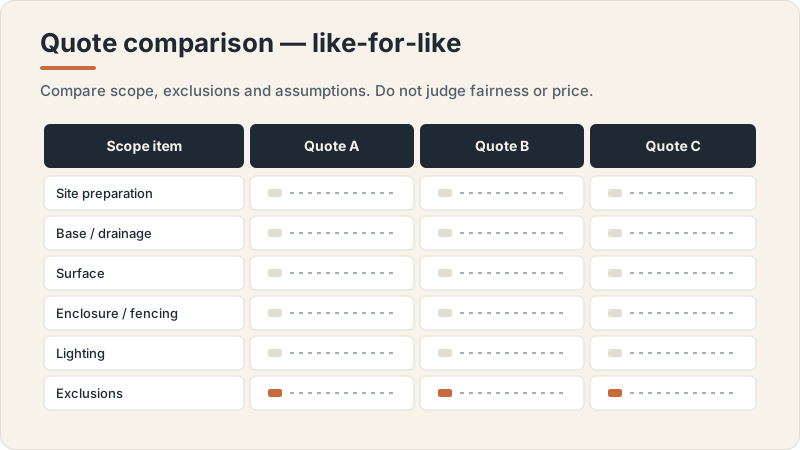
Quote comparison matrix concept
Conceptual editorial diagram — not a construction drawing, specification or to-scale plan. Official court dimensions, standards, drainage, structure and lighting requirements vary by sport, site and location and are confirmed with the relevant federation, supplier and qualified professionals.
What this research helps you prepare
This page helps you prepare a like-for-like comparison structure: a single framework into which you can transcribe what each quote includes, excludes and assumes. The goal is to make different documents readable against one another, not to decide which one represents better value. That assessment depends on your site, your scope and professional input you arrange separately.
By building a consistent comparison structure first, you reduce the risk of comparing a quote that includes groundworks against one that does not, or a quote that assumes you supply drainage against one that prices it in. You also create a clear record of the questions each quote leaves open, which you can then raise directly with the supplier, contractor or a qualified professional.
Nothing here is an estimate, a price check or procurement advice. Costs, scope boundaries, timelines and requirements vary by site, supplier and project, and must be confirmed with the parties issuing the quotes and with appropriate professionals.
- A consistent layout for placing several quotes side by side
- A way to surface exclusions and assumptions that are easy to miss
- A list of open questions to raise with each supplier or contractor
- A record you can share with qualified professionals you engage
Building a like-for-like comparison structure
Quotes become comparable only when you map them onto a common set of scope headings rather than reading each in its own format. Consider creating rows for the major work areas a court project can involve, then noting for each quote whether that item is included, excluded, marked as provisional, or simply absent. An item that is not mentioned is not the same as one that is confirmed as included, and the difference matters when you compare.
Where a quote groups several activities into one line, you may want to note that it is bundled and add a question asking the supplier to break it down, so you can see how it maps against more itemised quotes. The point is to translate every quote into the same language before you draw any conclusions, and to leave gaps visibly empty rather than guessing what they contain.
This structure is a worksheet you complete; it is not a judgement on completeness or correctness. Treat any blank or ambiguous cell as a question for the issuer or for a qualified professional, never as something to assume.
- Common scope headings, such as site preparation, base, surface, drainage, lighting, fencing or enclosure, line marking, and any court kit
- Inclusion status for each item: included, excluded, provisional, or not mentioned
- Whether items are itemised or bundled into combined lines
- Which party each quote assumes is responsible for supply, installation and connection
Reading exclusions, assumptions and documentation
Exclusions and assumptions are often where comparable-looking quotes actually diverge. A quote may assume a level, accessible, well-draining site; that utilities are already present; that planning or other approvals are someone else's responsibility; or that you handle removal of spoil and existing surfaces. Capturing these assumptions in your structure lets you see where two quotes are pricing genuinely different jobs.
It also helps to note what supporting documentation each quote references or omits, such as drawings, specifications, surface or product data, warranty terms and the basis of any allowances. Where a quote relies on a survey or condition not yet confirmed, record that as something to verify rather than accept. Requirements such as permits, approvals and technical specifications vary by location and project and should be confirmed with the relevant authority, supplier, federation or qualified professional.
Do not interpret an exclusion as a flaw or an inclusion as a benefit on your own; your task at this stage is simply to make the differences visible so the right people can review them.
- Site assumptions, such as ground condition, access, levels and existing surfaces
- Responsibility assumptions for approvals, utilities, spoil removal and reinstatement
- Documents referenced or missing, such as drawings, specifications and data sheets
- Conditions a quote depends on that have not yet been confirmed
Logistics, warranty and maintenance implications
Beyond the headline scope, quotes can differ in how they handle delivery and logistics, what warranty terms they describe, and what ongoing maintenance the chosen approach implies. For imported or shipped components in particular, it is worth noting what each quote says about delivery responsibility, handling, and who manages any customs, duties or taxes, and treating any figures or timelines as items to confirm directly rather than as stated facts.
Warranty wording also varies: what is covered, by whom, for how long, and under what conditions. Rather than judging which is stronger, record what each quote actually says so you can ask each issuer to clarify and so a qualified professional can review the terms. Similarly, different surfaces, systems and enclosures carry different maintenance implications over time, which you may want to note as questions rather than conclusions.
Any cost, duty, tax, delivery time or warranty period mentioned in a quote should be verified with the supplier and appropriate professionals. This page provides no figures and makes no claim about what any quote should contain.
- Delivery and logistics terms, including who is responsible at each stage
- How customs, duties or taxes are described for imported items, to confirm separately
- Warranty scope, duration, conditions and the party providing it, as stated in each quote
- Maintenance implications of the surface, system or enclosure each quote proposes
What to ask before comparing options
Before you place quotes side by side, it helps to confirm that each one is answering the same brief. If suppliers worked from different assumptions about your site, scope or intended use, their quotes are not yet comparable, and aligning the brief first saves you from drawing misleading conclusions. The questions below are prompts to take back to each issuer, not a script for negotiation or a way to judge value.
Use the answers to fill gaps in your comparison structure. Where an answer is unclear or a figure is given, note it as something to confirm in writing, and remember that requirements and costs vary by location, scope, supplier and conditions on site.
- Are all quotes based on the same scope, court type, dimensions and intended use?
- What exactly is excluded, and what is assumed about the site and responsibilities?
- Which lines are bundled, and can they be itemised for comparison?
- What documentation, drawings or specifications support each quote?
- How are delivery, logistics and any import handling described?
- What warranty terms and maintenance expectations are stated, and by whom?
Questions for qualified professionals
A structured comparison highlights questions that often need professional input rather than a supplier answer. Engineers, surveyors, designers, and legal, tax or customs advisers can each review parts of a quote that fall within their expertise. Use your comparison worksheet to point them to the specific assumptions, exclusions and documents you want examined.
The prompts below are starting points for those conversations. They are not advice, and they do not substitute for the review a qualified professional provides. Bring your filled-in structure so the professional can see how the quotes differ and where the open questions sit.
- Which scope assumptions in these quotes warrant independent verification for my site?
- How should I interpret exclusions or missing items that are unclear to me?
- What documentation or specifications should I expect before relying on a quote?
- How should warranty, delivery, customs or tax wording be reviewed for my situation?
- Which requirements, approvals or technical specifications must I confirm with authorities or a federation?
What this does not replace
This page is an educational, self-completed preparation resource and nothing more. It is not a supplier or contractor recommendation, not contractor matching, and not an endorsement, ranking, rating or verification of anyone. It does not assess whether any quote is fair, complete, competitive or correctly priced, and it provides no estimate of cost, time or scope.
It is not procurement, legal, tax, customs, engineering, design or construction advice, and it does not stand in for the review of a qualified professional. Requirements and costs vary by location, site, scope, supplier, access, drainage, lighting, surface, shipping and local conditions, and must be confirmed with the relevant authorities, federations, suppliers and qualified professionals.
Build Design Hub does not recommend, rank, verify or introduce suppliers or contractors. HELPERG LLC is the publisher and operator only. Use this structure to organise your own research, then make project, legal, tax, customs, engineering, construction and procurement decisions with appropriate professional input.
Quote comparison worksheet prompts
- 1List the same scope headings as rows for every quote you have received
- 2For each item, mark whether it is included, excluded, provisional or not mentioned
- 3Flag bundled lines and note a request to have them itemised
- 4Record the site and responsibility assumptions each quote relies on
- 5Note which documents, drawings or specifications each quote references or omits
- 6Capture how delivery, logistics and any import handling are described in each quote
- 7Write down the warranty scope, duration, conditions and provider as stated
- 8Note the maintenance implications each proposed surface or system suggests, as questions
- 9Mark every unclear cell as a question for the issuer or a qualified professional
- 10Confirm all quotes were prepared against the same brief and intended use
- 11Record any figures, timelines or requirements as items to verify in writing
- 12Keep the completed structure to share with the professionals you engage
Common mistakes to avoid
- Comparing a quote that includes preparation or groundworks against one that excludes them, without aligning scope first
- Treating an item that is simply not mentioned as if it were confirmed to be included
- Overlooking assumptions about site condition, access, utilities or responsibilities buried in the wording
- Reading bundled lines as comparable to itemised ones instead of asking for a breakdown
- Drawing conclusions about value or fairness from the structure, which it is not designed to support
- Accepting figures, delivery timelines, duties or warranty periods as facts rather than confirming them in writing
- Comparing quotes built from different briefs, court types or intended uses as though they answered the same question
- Skipping qualified professional review of exclusions, documentation and terms before making a decision
When to involve a professional
- When exclusions or assumptions in a quote could materially change what the project actually involves on your site
- When you need someone to interpret technical specifications, drawings or documentation referenced in a quote
- When warranty, delivery, customs or tax wording needs review against your specific circumstances
- When approvals, permits or federation requirements may apply and must be confirmed with the relevant authority
- When the comparison surfaces conflicts between quotes that you cannot resolve from supplier answers alone
- Before relying on any quote to make procurement, legal, tax, customs, engineering or construction decisions
Frequently asked questions
Questions readers ask about this topic
Does this page tell me which quote is best?
No. It helps you organise quotes into a like-for-like structure so you can see how they differ. It does not assess fairness, completeness or value, and it does not recommend, rank or verify any supplier, contractor or quote. Those judgements are yours to make with qualified professionals.
Can it tell me whether a quote is priced correctly?
No. This resource contains no figures and makes no claim about what any quote should cost or include. Costs vary by site, scope, supplier and conditions, and any prices, allowances or timelines in a quote must be confirmed directly with the issuer and reviewed with appropriate professionals.
How do I compare a turnkey quote against separate contractor quotes?
Map both onto the same scope headings and note who is responsible for each item in each arrangement, since responsibilities are divided differently. Record the differences as questions rather than conclusions, and have a qualified professional review how the scope boundaries affect your project.
What should I do about items a quote excludes or assumes?
Record each exclusion and assumption in your worksheet and raise it with the issuer for clarification. Treat anything unclear as a question, not a flaw or a benefit. Requirements vary by location and project, so confirm them with the relevant authority, supplier, federation or qualified professional.
Is this procurement or legal advice?
No. It is an educational preparation worksheet only. It is not procurement, legal, tax, customs, engineering or construction advice and does not replace qualified professional review. Build Design Hub does not introduce or recommend suppliers or contractors, and HELPERG LLC is publisher and operator only.
Keep reading