
Who this guide is for
- Homeowners researching surface, kit and component suppliers before reaching out for quotes
- Clubs and facility operators gathering supplier information for a new or replacement court
- Project sponsors who need an organised supplier picture before briefing a board or partners
- Owners comparing court types who want a neutral way to capture what each supplier offers
- Anyone assembling documentation and questions ahead of supplier and contractor conversations
- Buyers who want to separate what a supplier states from what still needs independent confirmation
Planning diagram
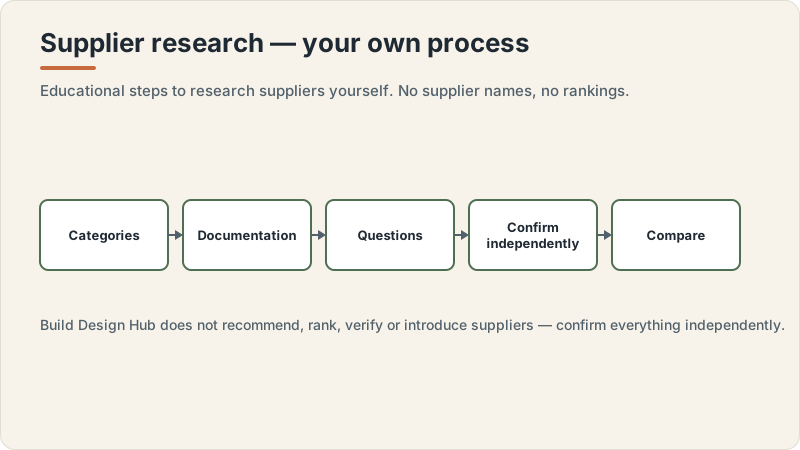
Supplier research process concept
Conceptual editorial diagram — not a construction drawing, specification or to-scale plan. Official court dimensions, standards, drainage, structure and lighting requirements vary by sport, site and location and are confirmed with the relevant federation, supplier and qualified professionals.
What this research helps you prepare
This resource helps you research sports-court suppliers in an organised way: which categories of supplier exist, what documentation to request from each, what to ask, and which claims you should confirm independently rather than take at face value. It is designed to be used before you request formal quotes or engage professionals, so your early enquiries are consistent and the answers are comparable.
Good supplier research does not try to settle technical or commercial questions. It frames them clearly and captures each supplier's own answers in writing. By separating what a supplier states from what you have independently verified, you build a picture you can hand to qualified professionals for review. Costs, lead times, availability and requirements are deliberately left as questions here, because they vary by sport, site, scope, supplier, access, drainage, lighting, surface, shipping and local conditions, and must be confirmed directly with the supplier and qualified professionals.
- A map of the supplier categories relevant to your court and sport
- A consistent list of documentation to request from each supplier
- A shared set of questions so answers can be compared like-for-like
- A record of which claims you have confirmed independently and which you have not
- A list of open risks and gaps to take to qualified professionals
Supplier categories worth researching
Sports-court projects usually draw on several different kinds of supplier, and it helps to research them as distinct categories rather than assuming one party covers everything. Depending on the sport and your scope, you might be looking at surface and material suppliers, court kit or system suppliers, structural and glazing component suppliers, fencing and enclosure suppliers, and lighting and drainage component suppliers. Some suppliers offer a broad package and others a single element, so understanding where one supplier's responsibility ends and another's begins is part of the research.
For each category, note what the supplier actually provides versus what they expect others to provide, and where the handover sits. The boundaries between supply and installation, and between one component and the next, are common sources of confusion, so it is worth recording them carefully rather than assuming. Treat any statement about who is responsible for what as something to confirm in writing, because arrangements vary by supplier and project.
- Surface and material suppliers for the playing surface and its build-up
- Court kit or system suppliers for the structures, nets, posts and fittings of the sport
- Structural and glazing component suppliers where the sport uses walls or enclosures
- Fencing, enclosure and perimeter suppliers
- Lighting and drainage component suppliers where these are supplied separately
- Suppliers offering a combined package versus single-element suppliers
Documentation and information to request
A large part of supplier research is gathering documentation rather than relying on conversation alone. For each supplier, it is reasonable to ask for written information describing exactly what is and is not included, any product or material data sheets they can provide, written terms, and any warranty wording that applies to what they supply. Asking for everything in writing makes claims easier to compare and gives qualified professionals something concrete to review.
Record what each supplier actually sends, and note where information is missing, generic or inconsistent. If a supplier states that a product meets a particular standard, suits a particular sport or is appropriate for your conditions, treat that as a claim to confirm with the relevant authority, federation or qualified professional rather than as a settled fact. Requirements and suitability vary by location, sport and project, and confirming them is not something this resource or any general checklist can do for you.
- A written, itemised description of what is included and excluded
- Any product, material or component data sheets the supplier can provide
- Written terms, conditions and any warranty wording
- Clarity on what the supplier expects others to supply or do
- Notes on any claim of suitability or standard that needs independent confirmation
What to ask before comparing options
Before you line suppliers up side by side, make sure each is answering the same questions, because otherwise you are comparing different things. The goal is to put every supplier on a common footing: the same scope description, the same documentation requests and the same open questions. Where a supplier cannot or will not answer in writing, that is itself useful information to record.
Keep cost, time and availability as questions rather than figures. Ask what drives them, what could change them and what is assumed, rather than seeking a single number you might treat as fixed. These vary by site, scope, supplier, access, drainage, lighting, surface, shipping and local conditions, and any figure a supplier gives should be confirmed and reviewed with qualified professionals rather than relied on as a quote.
- Is each supplier describing the same scope, or different scopes that only look alike?
- What exactly is included, excluded and assumed in what each supplier states?
- What does the supplier say drives cost, time and availability, and what could change them?
- What does the supplier expect you, or others, to arrange separately?
- What evidence or documentation backs each claim, and what is unconfirmed?
- Where do answers conflict between suppliers, and which conflicts need a professional's view?
Risks and what not to assume
Supplier research is as much about spotting gaps as collecting answers. Common risk areas include unclear boundaries between supply and installation, vague or missing documentation, claims of suitability that are not backed by anything you can check, and assumptions that one supplier covers something another also assumes someone else covers. Recording these openly is more useful than papering over them.
Avoid assuming that a confident answer is a confirmed one, that two suppliers mean the same thing by similar words, or that any product is automatically right for your sport, site or local requirements. Avoid assuming that because something is supplied it is also installed, certified or guaranteed in the way you expect. Each of these is a question to confirm directly with the supplier and to review with qualified professionals, because requirements and suitability vary by location and project.
- Gaps where no supplier clearly owns a component or interface
- Documentation that is missing, generic, or inconsistent between suppliers
- Suitability or standards claims with nothing you can independently check
- Overlapping assumptions about who supplies or does what
- Confident verbal answers treated as confirmed facts
- Cost, time or availability figures treated as fixed rather than as questions
Questions for qualified professionals
This research helps you arrive at professional conversations organised, but it does not replace them. Qualified professionals can review the supplier information you have gathered, tell you where claims need verifying, and advise on suitability, requirements and risk in a way that no general framework can. The questions below are prompts to take to them, using the documentation and notes you have collected.
Be open about what is still unconfirmed. The most useful thing you can bring a professional is an honest record of what each supplier states and where you are unsure, so they can focus their input where it matters. Decisions about specification, suitability, procurement and compliance should rest on qualified professional review, not on a self-fill checklist.
- Which supplier claims should be independently verified, and how?
- Are the products and components described suitable for this sport, site and use?
- Where are the gaps or overlaps between suppliers that could create problems?
- Which official requirements, standards or approvals apply, and who confirms them?
- What documentation is missing that a professional would want to see?
- How should supplier information feed into specification and procurement decisions?
What this does not replace
This is an educational, project-preparation research resource only. It is not a supplier or contractor recommendation, ranking, rating or directory, and it does not match, introduce, broker, verify, endorse or certify anyone. Build Design Hub does not recommend, rank, verify or introduce suppliers or contractors, and HELPERG LLC is the publisher and operator only.
It is not an estimate, a quote, a specification, or procurement, legal, tax, customs, engineering, design or construction advice. It does not tell you who to use, what anything should cost, how long it should take, or what your local requirements are. Requirements and costs vary by location, sport, site, scope, supplier and conditions, and must be confirmed with the relevant authorities, federations and suppliers. Decisions about your project should rest on review by qualified professionals you engage directly.
- Not a supplier or contractor recommendation, ranking or directory
- Not contractor or supplier matching, brokering or introduction
- Not an estimate, quote or specification
- Not procurement, legal, tax, customs, engineering, design or construction advice
- Requirements and costs vary and must be confirmed with the relevant parties
- Qualified professional review is required before project decisions
Supplier research worksheet
- 1List the supplier categories your court and sport actually require
- 2For each category, note candidate suppliers to research and where you found them
- 3Send every supplier the same scope description so answers are comparable
- 4Request a written, itemised statement of what is included and excluded
- 5Request product or material data sheets and any applicable warranty wording
- 6Record what each supplier states drives cost, time and availability, with no figures
- 7Mark each suitability or standards claim as confirmed or still to verify
- 8Note where one supplier expects you or others to supply or do something
- 9Flag gaps and overlaps where no supplier clearly owns a component or interface
- 10Capture conflicting answers between suppliers as questions for professionals
- 11List the documentation that is missing, generic or inconsistent
- 12Compile your open questions and unconfirmed points for qualified professional review
Common mistakes to avoid
- Treating a confident verbal answer as if it were a confirmed, documented fact
- Comparing suppliers who are actually describing different scopes that only look alike
- Assuming one supplier covers everything when responsibilities are split across several
- Accepting suitability or standards claims without anything you can independently check
- Taking a supplier's cost, time or availability figure as fixed rather than as a question
- Skipping written documentation and relying on conversation or memory
- Assuming that because something is supplied it is also installed, certified or guaranteed
- Treating research notes as a decision instead of input for qualified professional review
When to involve a professional
- When you need to verify supplier claims about suitability, standards or performance
- When supplier answers conflict and you cannot tell which view to rely on
- When boundaries between supply, installation and components are unclear or overlapping
- When official requirements, approvals or federation rules may apply and must be confirmed
- When you are ready to turn research into specification or procurement decisions
- When documentation is missing and you need expert eyes on what a supplier should provide
Frequently asked questions
Questions readers ask about this topic
Does this page tell me which suppliers to use?
No. This is an educational research framework, not a directory or recommendation. It does not name, rank, rate or introduce any supplier. It helps you research and compare options yourself, then take your findings to qualified professionals who can advise on suitability and selection.
Can I find out what court suppliers typically charge here?
No. This resource gives no prices, ranges or averages, because cost varies by site, scope, supplier, access, drainage, lighting, surface, shipping and local conditions. It helps you ask what drives cost and capture each supplier's own answers in writing, which you should then confirm and review with qualified professionals.
How do I know if a supplier's product is suitable for my sport and site?
Treat any suitability or standards claim as something to confirm with the relevant authority, federation, the supplier and a qualified professional. Requirements and suitability vary by location and project, and this resource cannot confirm them for you. It helps you record the claims so a professional can verify them.
Is the documentation I gather here enough to make a decision?
No. The research helps you arrive organised, but decisions about specification, suitability and procurement should rest on review by qualified professionals you engage directly. Your notes are input for that review, not a substitute for it, and Build Design Hub does not verify or recommend suppliers.
Keep reading