
Who this guide is for
- Facility owners who want a structured operations plan they can hand to an operator, board or funding partner
- Operators and facility managers assembling the sections, roles and provider questions an operations plan depends on
- Schools and colleges coordinating a sports-facility operations plan across departments, governors and budgets
- Clubs and committees mapping owner-side governance, maintenance planning and lifecycle questions before signing providers
- Municipalities and developers handing a facility over and needing an operations-plan brief that survives the transition
- Project sponsors who must show a board or council how a venue will be run, maintained and reviewed once open
Planning diagram
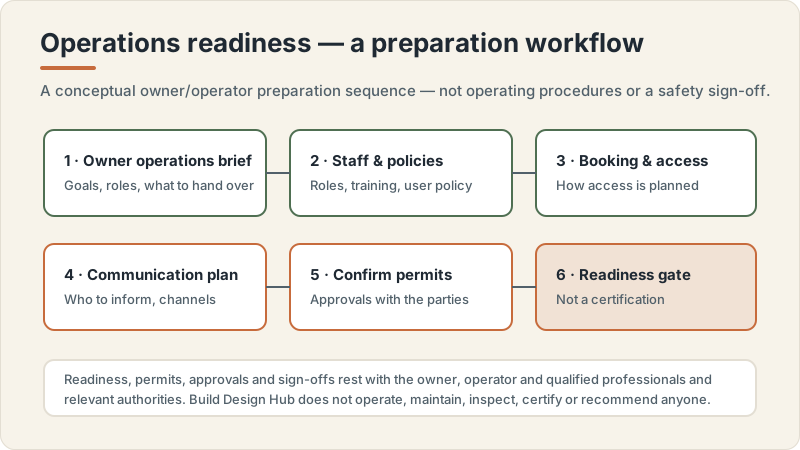
Operations readiness workflow concept
Conceptual editorial diagram — not a construction drawing, specification, to-scale plan or proof of a real project. It is not engineering, structural, fire/life-safety, crowd-safety or accessibility-compliance guidance. Capacities, dimensions, standards, requirements and costs vary by facility type, audience, site, use case and governing body, and are confirmed with qualified professionals, relevant authorities and governing bodies. Build Design Hub does not design, build, inspect, certify, recommend or match anyone.
What this guide helps you prepare
This guide helps you prepare the skeleton of an operations plan for a sports facility: a structured outline of the sections such a plan usually contains, the parts you can reasonably draft yourself, and the parts that must be defined with qualified providers and professionals. It is meant for the planning window, when you are deciding how the facility will be run, maintained, governed and reviewed, and when getting the structure right makes later conversations with operators, suppliers, contractors and governing bodies far clearer. The output is an organised document you can populate over time, not a finished operating manual.
Drafting an operations-plan outline does not settle operational, maintenance, safety or compliance questions, and it does not produce procedures or schedules. It frames those areas so the right party can fill them in, and it captures what each one tells you in writing. Maintenance requirements, intervals, lifespans, capacities, roles, approvals and conditions are deliberately left as questions here, because they vary by facility type, use intensity, surface, system, climate, season, governing body, warranty terms, supplier documentation, contractor scope and local professional requirements, and must be confirmed with qualified professionals. Separating what you have confirmed from what is still open is what makes the plan usable.
- A structured outline of the sections an operations plan typically contains
- A view of which sections you can draft yourself and which need provider or professional input
- A roles-and-responsibilities skeleton recorded for discussion, not for final assignment here
- A maintenance-planning framework expressed as questions, with no intervals or instructions stated
- A record of which plan items are confirmed in writing and which remain open assumptions
- A document you can share with an operator, board, council or funding partner and keep current
Sections of an operations plan and the roles to map
An operations plan is easier to build when you treat it as a set of named sections rather than a single narrative. At a planning level it often covers an overview of the facility and its intended uses, a roles-and-responsibilities section, a maintenance-planning section, a section on handover and warranty documentation, a risk-register section, a section on seasonal and periodic review, and a governance section describing how decisions, budgets and records are owned. Drafting the headings and the scope of each section yourself gives the document a backbone. What goes inside the maintenance, safety, compliance and approval sections is then defined with the relevant providers and professionals, not written as fact here.
Roles deserve their own structured treatment because an operations plan only works if every function has an owner. It helps to list the functions a plan needs covered, from day-to-day operation and booking, to coordinating maintenance and managing providers, to holding records, budgets and reporting, and to note which are in-house, shared, volunteer or contracted out. The point at this stage is to map functions and ownership, not to decide headcount, set duties or assume who is qualified. Any role tied to supervision, specialist systems, safeguarding or anything safety-related may carry requirements set by an authority, governing body, insurer or supplier, so record those as questions to confirm rather than details to finalise in the plan.
- Draft the section headings: overview, roles, maintenance planning, handover and warranty, risk register, review, governance
- Note for each section whether you can draft it yourself or it needs provider or professional input
- List the functions the plan must cover, separate from deciding headcount or duties
- Record whether each function is in-house, shared, volunteer or contracted out, and who owns it
- Flag any role tied to supervision, specialist systems, safeguarding or safety as a question for the relevant party
- Capture how decisions, budgets, records and reporting are owned in the governance section
Maintenance planning, handover, warranty, lifecycle and risk-register framework
The maintenance section of an operations plan is best built as a framework of questions rather than a schedule, because maintenance requirements vary by facility type, use intensity, surface, system, climate, season, governing body, warranty terms, supplier documentation, contractor scope and local professional requirements, and are defined with qualified providers. At a planning level you can list the surfaces, systems and equipment the facility includes, note which provider, supplier or contractor is the source of truth for each, and record where the maintenance documentation, manuals and warranty terms for each will come from. You do not set intervals, methods, chemicals, machinery settings or lifespans here; you organise the questions and capture the answers each provider gives in writing so the plan stays accurate and current.
Handover and warranty documentation feeds directly into the plan, so it helps to prepare the requests early: which manuals, as-built records, warranty certificates, defect-liability terms and provider contacts you expect to receive, and where each will be filed. A defect log and a risk register are owner-side records you can structure now, capturing how issues will be recorded, owned and escalated, and which risks the plan should track, without drawing conclusions about safety, compliance or warranty coverage yourself. Lifecycle and seasonal-review thinking rounds this out: noting that surfaces and systems will need periodic review and eventual renewal, that budgets and provider conversations should anticipate that, and that any specific timing, condition assessment or warranty interpretation is confirmed with the relevant provider, professional or authority rather than assumed from this document.
- List the surfaces, systems and equipment, and the provider or supplier that is the source of truth for each
- Record where maintenance documentation, manuals and warranty terms for each item will come from
- Frame maintenance as questions for providers, with no intervals, methods or settings stated as fact
- Prepare handover requests: manuals, as-built records, warranty certificates, defect-liability terms, contacts
- Structure a defect log and risk register as owner-side records, capturing ownership and escalation without drawing safety or coverage conclusions
- Note lifecycle and seasonal-review points to raise with providers, leaving timing and condition judgements to them
Planning questions before speaking with professionals
Before you bring in operators, suppliers, contractors, professionals or a governing body, it is worth getting your own draft of the operations plan into shape so those conversations are focused. Work through what you already know about the facility, its surfaces and systems, its intended uses and audiences, and which sections of the plan you can draft yourself versus which depend on someone else. The clearer you are about scope and open questions, the easier it is for each party to fill in their part accurately, and the less likely you are to leave a section of the plan empty until it becomes urgent.
Use the questions below to organise your own thinking first. They are prompts to help you assemble the plan's structure and identify gaps, not a substitute for input from the relevant parties. As you answer them, write down which items you can evidence, which are assumptions, and which you do not yet know. That honest record is what turns a blank operations-plan template into a structured draft you can take into provider and professional conversations.
- Which sections of the operations plan can I draft myself, and which need provider or professional input?
- Which functions and roles are still unassigned or unconfirmed in the plan?
- Which surfaces, systems and pieces of equipment need a named provider as their source of truth?
- Which handover, manual or warranty documents do I expect, and which are still missing?
- Which risks and recurring issues should the plan's risk register and defect log track?
- Which maintenance, lifecycle or review items am I treating as assumptions that need confirming?
Questions for qualified professionals
When you move into conversations with operators, suppliers, contractors, qualified professionals and governing bodies, a prepared list of questions helps you populate the operations plan with answers that are specific to your facility rather than assumptions. The questions below are framed to surface what each party actually requires, documents and signs off, so the maintenance, handover, warranty and review sections of your plan reflect their input rather than general guesses. Ask each party to be specific about what falls within their scope, what documentation they will provide, and what they expect from you, and record those answers in writing so the plan can be compared, followed up and kept current.
Remember that this guide does not operate, maintain, inspect, certify, audit, design, recommend, rank, verify, introduce, broker or match any operator, professional, supplier or contractor, and it cannot define your maintenance requirements or interpret your warranties. The questions are there to help you have better-informed conversations and to build the plan's sections on confirmed input. Anything a provider or professional tells you about requirements, intervals, lifespans, capacities, conditions or coverage is theirs to confirm for your specific facility, surfaces, systems, location and use, and should be documented in the plan as such.
- What maintenance documentation, manuals and warranty terms will you provide, and in what form?
- Which surface, system or equipment items fall within your scope, and which sit with another party?
- What do your warranty and defect-liability terms cover, and how should we record claims and issues?
- What periodic review, condition assessment or lifecycle planning do you advise we confirm, and with whom?
- Which requirements apply to our facility type, surfaces, use intensity, climate and intended use?
- What do you not maintain, inspect, certify or interpret, so we know where other parties are needed?
What this does not replace
This is an educational planning resource only. It is not a maintenance manual and not inspection, certification, engineering, architectural, structural, HVAC, electrical, safety-compliance, fire or life-safety, or accessibility-compliance advice, and it is not legal, tax, insurance or procurement advice. It does not maintain, operate, inspect, certify, audit or specify anything, gives no maintenance intervals or procedures as universal rules, and offers no warranty interpretation, estimate, price, ROI or capacity figure. Maintenance requirements and costs vary by facility type, use intensity, surface, system, climate, season, governing body, warranty terms, supplier documentation, contractor scope and local professional requirements, and are confirmed with qualified professionals, suppliers, contractors, relevant authorities and governing bodies.
Build Design Hub does not operate, maintain, inspect, certify, audit, design, build, recommend, rank, verify, introduce, broker or match suppliers, contractors, maintenance providers or facility managers, and HELPERG LLC is publisher/operator only. Use this resource to prepare your own thinking and records, then have qualified professionals you engage directly review your facility. Decisions about maintenance, inspection, safety, compliance, warranties, procurement and suitability must rest on those professionals, suppliers, the relevant authorities and the governing bodies for your sport and location.
- Not a maintenance manual and not maintenance instructions, intervals or procedures as universal rules
- Not inspection, certification, safety-compliance, fire/life-safety or accessibility-compliance advice
- Not engineering, architectural, warranty-interpretation, legal, tax, insurance or procurement advice
- Not a supplier, contractor, maintenance-provider or facility-manager recommendation, ranking, directory or matching service
- Not an estimate, price or cost figure — maintenance requirements and costs vary
- Qualified professional review is required before any operations or maintenance decision
Operations-plan structure and source-of-truth worksheet
- 1Record the facility overview: surfaces, systems, equipment, intended uses and audiences
- 2Draft the section headings for the operations plan and note the scope of each
- 3Mark which sections you can draft yourself and which need provider or professional input
- 4List the functions the plan must cover and record an owner for each, separate from headcount
- 5Flag any role tied to supervision, specialist systems, safeguarding or safety as a question for the relevant party
- 6List each surface, system and piece of equipment with its named provider or source of truth
- 7Record where the maintenance documentation, manuals and warranty terms for each item will come from
- 8Prepare the handover document requests: as-built records, manuals, warranty certificates, defect-liability terms, contacts
- 9Structure a defect log: how issues are recorded, owned and escalated, without drawing safety conclusions
- 10Structure a risk register listing the risks the plan should track and who owns each
- 11Note lifecycle and seasonal-review items to raise with providers, leaving timing and condition judgements to them
- 12Capture the governance section: how decisions, budgets, records and reporting are owned
- 13Note which plan items are confirmed in writing and which remain open assumptions
- 14Assemble the draft into a single operations-plan document you can share with an operator, board or partner
Common mistakes to avoid
- Treating an operations plan as an approval or safety sign-off rather than as an owner-side planning document
- Writing maintenance intervals, frequencies or methods into the plan as fact instead of confirming them with each provider
- Assuming a warranty covers an item or outcome rather than asking the provider what the terms actually say
- Mapping headcount before mapping the functions and ownership the plan needs covered
- Leaving the handover, defect-log and risk-register sections empty because they feel like paperwork until something goes wrong
- Taking a lifespan, capacity or requirement as universal rather than confirming it for your facility, surface and use
- Recording provider and professional answers from memory instead of capturing them in writing in the plan
- Treating the plan as finished at opening rather than as a living document kept current through review
When to involve a professional
- When the maintenance section needs intervals, methods or requirements defined for a specific surface, system or piece of equipment
- When handover, warranty or defect-liability terms need interpreting rather than simply filing
- When a role in the plan may carry qualification, training, supervision or safeguarding requirements
- When any section touches safety, life-safety, crowd management, accessibility or compliance
- When a governing body, federation, insurer or authority may set conditions the plan must reflect
- When a facility is handed from a developer to an operator and operations-plan responsibilities must be confirmed
Frequently asked questions
Questions readers ask about this topic
Does this guide tell me how to maintain my sports facility or how often?
No. This is an educational planning guide that helps you structure an operations plan. It gives no maintenance instructions, intervals, frequencies, methods, chemicals or machinery settings, because those vary by facility type, use intensity, surface, system, climate, season, governing body, warranty terms, supplier documentation, contractor scope and local professional requirements. The maintenance section of your plan should be defined and confirmed with the qualified providers and professionals responsible for each item.
Does Build Design Hub maintain, inspect or certify facilities, or recommend operators, suppliers or contractors?
No. Build Design Hub does not operate, maintain, inspect, certify, audit, design or build anything, and it does not recommend, rank, verify, introduce, broker or match any operator, professional, supplier or contractor. It also gives no costs, intervals, lifespans, capacities or requirements. Those are confirmed directly with qualified professionals, suppliers, contractors and the relevant authorities for your specific facility. This guide only helps you prepare and structure your own operations plan.
Can I treat the maintenance framework or risk register here as my finished plan?
No. The framework and worksheet are preparation tools to help you build the structure and identify gaps. The maintenance, handover, warranty, defect-log and risk-register sections must be populated with input confirmed by your providers, contractors and qualified professionals for your specific surfaces, systems, location and use, and reviewed by them. Treat nothing here as a settled requirement, schedule or warranty interpretation.
Does this guide interpret my warranties or tell me what they cover?
No. This guide helps you prepare questions and document requests about warranties, such as what terms and defect-liability conditions to ask for and where to file them, but it does not interpret warranty coverage. What a warranty covers, and how a claim or defect should be handled, is for the issuing supplier, contractor or a qualified professional to confirm for your specific items and circumstances.
Keep reading