
Who this guide is for
- Facility owners preparing to hand day-to-day running to an operator or in-house facility manager
- Clubs and sports organisations setting out what they expect from whoever runs their venue
- Schools and colleges defining operations responsibilities before a facility opens or changes hands
- Municipalities and councils documenting owner intentions ahead of an operating arrangement
- Developers assembling handover documents to pass to an operator or facility-management team
- Operators and facility managers who want to understand what an incoming owner brief should contain
Planning diagram
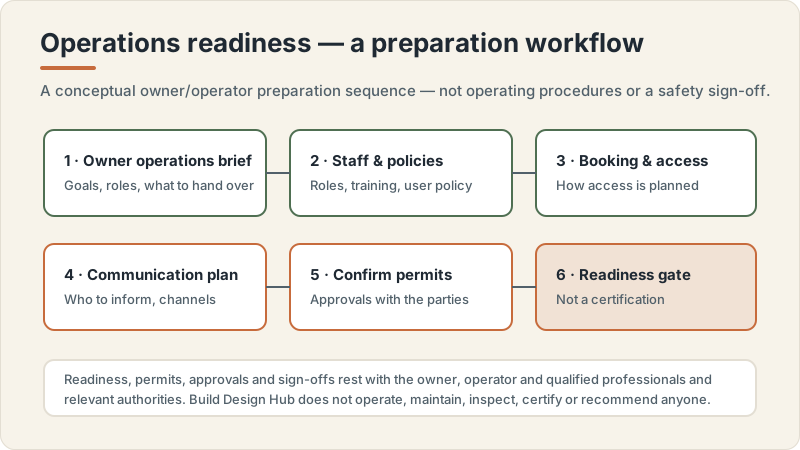
Operations readiness workflow concept
Conceptual editorial diagram — not a construction drawing, specification, to-scale plan or proof of a real project. It is not engineering, structural, fire/life-safety, crowd-safety or accessibility-compliance guidance. Capacities, dimensions, standards, requirements and costs vary by facility type, audience, site, use case and governing body, and are confirmed with qualified professionals, relevant authorities and governing bodies. Build Design Hub does not design, build, inspect, certify, recommend or match anyone.
What this guide helps you prepare
This guide helps you write an operations brief: a short, structured document that records what you, as the owner, want from the running of the facility, how you expect responsibilities to be split, and what should be handed over before an operator or facility manager takes control. It is designed to be filled in during the window before handover, so that intentions are captured deliberately rather than reconstructed from memory once someone else is already running the site. The output is a record of your expectations and an organised list of documents to request, not a set of instructions for how to operate or maintain anything.
A good operations brief frames questions rather than answering technical ones. It separates what you already know and intend from what still needs to be confirmed with suppliers, contractors, governing bodies and qualified professionals. Maintenance requirements, intervals, lifespans, capacities and costs are deliberately left out as settled facts here, because they vary by facility type, use intensity, surface, system, climate, season, governing body, warranty terms, supplier documentation, contractor scope and local professional requirements, and should be confirmed with qualified professionals. Your job in this document is to state intent and assemble questions, not to define how the facility will be run in detail.
- A plain-language statement of what you want from how the facility is run
- A first split of responsibilities between owner, operator and facility manager
- A list of handover documents to request, with who you believe holds each
- A record of warranties, guarantees and defect items to ask about, not interpret
- A register of open questions to take to suppliers, contractors and professionals
- A single owner-intentions view you can share with an incoming operator or board
Capture owner goals and intended split of responsibilities
Start by writing, in a few honest sentences, what you want from operations once the facility is in use: the experience you want for users, the standards you care about, the activities and audiences it is meant to support, and what would make you feel the facility is being run well. These are owner intentions, not operating procedures. Be explicit about ambitions and about anything you are unsure of, because an operator or facility manager will lean on this statement to understand what success looks like from your point of view rather than guessing at it later.
Then sketch a first split of responsibilities. Without writing a maintenance schedule or assigning specific tasks as fact, note which broad areas you expect the owner to retain, which you expect an operator or facility manager to take on, and which are genuinely undecided. Areas such as bookings, day-to-day upkeep, supplier relationships, record-keeping, incident handling and reordering are common sources of confusion at handover, so it helps to say where you currently stand on each. Treat every line as an intention to confirm, since who is actually responsible for what should be agreed in writing with the parties involved and may depend on warranty terms, contractor scope and professional requirements.
- A short statement of what good operations looks like from the owner's view
- Activities, audiences and standards the facility is meant to support
- Broad areas you expect to keep as the owner versus pass to an operator
- Areas you expect a facility manager to own, and which remain undecided
- Where supplier and contractor relationships are intended to sit after handover
- How incidents, complaints and escalation are intended to reach the owner
Assemble the handover documents and warranty questions to request
A handover is far smoother when the owner knows which documents should change hands and asks for them as a list rather than chasing them one by one later. Without trying to interpret any of them, record the documents you expect to receive or pass on: as-built information, supplier and contractor details, product and surface documentation, warranty and guarantee paperwork, any operation and maintenance information provided by suppliers, and records of what has been installed. For each item, note who you believe holds it and whether you have actually seen it. The goal is an organised request, so nothing important is assumed to exist when it does not.
Warranties, guarantees and defects deserve their own section, framed as questions rather than conclusions. Note which products, surfaces and systems you believe carry a warranty, who issued it, and what you have been told about it, then mark each as something to confirm with the issuer and to have reviewed by a qualified professional. Do not record what you assume a warranty covers or how long anything will last, because warranty terms, defect-liability arrangements and product lifespans vary by supplier, product, installation, use intensity and local conditions, and must be confirmed with the issuing party. A defect or snagging log is a record of open items to raise, not a judgement on cause or responsibility.
- A request list of handover documents, with who you believe holds each
- As-built, supplier, contractor and product documentation to gather
- Any operation and maintenance information provided by suppliers, kept as supplied
- Warranty and guarantee paperwork to request and have reviewed, not interpreted
- A defect or snagging log of open items to raise with the relevant party
- Which documents you have actually seen versus assume exist
Planning questions before speaking with professionals
Before you involve suppliers, contractors, an operator or qualified professionals, it helps to work through some questions on your own so you arrive organised. These are reflection prompts to clarify your own intentions and surface gaps, not technical questions to answer yourself. Resist the urge to fill in maintenance frequencies, lifespans or responsibilities as if they were settled; the point of this stage is to know what you want and what you do not yet know, so the later conversations are focused and comparable.
Use the prompts below to pressure-test your draft brief, and add your own as new uncertainties appear while you fill it in. Anything touching maintenance detail, warranty meaning, safety, accessibility or approvals belongs here as a question to confirm with the relevant party, never as an assumption to lock in. A brief that is honest about its open items is far more useful at handover than one that quietly guesses.
- Have I stated what I want from operations in plain language an operator could act on?
- Which responsibilities am I confident about, and which am I only assuming?
- Which handover documents do I actually have, and which am I taking on trust?
- Where have I written a maintenance detail or interval that should instead be a question?
- Which warranty or defect items have I assumed rather than confirmed with the issuer?
- Who, on the owner side, signs off the brief and receives escalations after handover?
Questions for qualified professionals
Your operations brief is also the place to gather the questions you will take to suppliers, contractors, an operator and qualified professionals. Capturing them now means you reach those conversations with a clear agenda rather than improvising. Keep the questions open and let the professionals supply the requirements, intervals, scope and methods; your role is to ask well, record the answers in writing and recognise where you still need expert confirmation.
Tailor these prompts to your facility and add to them as gaps surface. Maintenance requirements, warranty terms, responsibilities and any safety, accessibility or approval matters vary by facility type, use intensity, surface, system, climate, season, governing body, warranty terms, supplier documentation, contractor scope and local professional requirements, so they belong here as questions to confirm, not as figures to assume.
- What maintenance documentation should accompany this facility, and who defines the actual requirements for our type and use?
- Which warranties and guarantees apply, who issued them, and how should their terms be reviewed before we rely on them?
- What should a complete handover pack contain for a facility like ours, and what is commonly missing?
- Which operations and maintenance responsibilities are best held by the owner, an operator or a facility manager, and why?
- What records should we keep, and what evidence might a governing body, insurer or authority expect to see?
- Which specialists should review surfaces, systems or warranties, and at what point before handover?
What this does not replace
This is an educational planning resource only. It is not a maintenance manual and not inspection, certification, engineering, architectural, structural, HVAC, electrical, safety-compliance, fire or life-safety, or accessibility-compliance advice, and it is not legal, tax, insurance or procurement advice. It does not maintain, operate, inspect, certify, audit or specify anything, gives no maintenance intervals or procedures as universal rules, and offers no warranty interpretation, estimate, price, ROI or capacity figure. Maintenance requirements and costs vary by facility type, use intensity, surface, system, climate, season, governing body, warranty terms, supplier documentation, contractor scope and local professional requirements, and are confirmed with qualified professionals, suppliers, contractors, relevant authorities and governing bodies.
Build Design Hub does not operate, maintain, inspect, certify, audit, design, build, recommend, rank, verify, introduce, broker or match suppliers, contractors, maintenance providers or facility managers, and HELPERG LLC is publisher/operator only. Use this resource to prepare your own thinking and records, then have qualified professionals you engage directly review your facility. Decisions about maintenance, inspection, safety, compliance, warranties, procurement and suitability must rest on those professionals, suppliers, the relevant authorities and the governing bodies for your sport and location.
- Not a maintenance manual and not maintenance instructions, intervals or procedures as universal rules
- Not inspection, certification, safety-compliance, fire/life-safety or accessibility-compliance advice
- Not engineering, architectural, warranty-interpretation, legal, tax, insurance or procurement advice
- Not a supplier, contractor, maintenance-provider or facility-manager recommendation, ranking, directory or matching service
- Not an estimate, price or cost figure — maintenance requirements and costs vary
- Qualified professional review is required before any operations or maintenance decision
Owner operations brief and handover preparation worksheet
- 1Record, in plain language, what good operations looks like from the owner's point of view
- 2List the activities, audiences and standards the facility is meant to support
- 3Draft a first split of responsibilities between owner, operator and facility manager
- 4Mark each responsibility as confirmed in writing or still an owner assumption
- 5Build a request list of handover documents, noting who you believe holds each
- 6Note which documents you have actually seen versus assume exist
- 7Gather any operation and maintenance information provided by suppliers, kept as supplied
- 8Record warranties and guarantees you believe apply, and who issued each, as items to confirm
- 9Start a defect or snagging log of open items to raise with the relevant party
- 10Flag every maintenance detail, interval or warranty meaning as a question, not a recorded fact
- 11Capture how incidents, complaints and escalation are intended to reach the owner
- 12Prepare a question list for each supplier, contractor, professional and governing body
- 13Note which readiness and handover items remain open versus confirmed
- 14Assemble the owner intentions into one view you can share with an incoming operator or board
Common mistakes to avoid
- Treating a maintenance interval or frequency heard somewhere as a universal rule rather than a question to confirm
- Assuming a warranty covers an item, or lasts a certain time, without confirming the terms with the issuer
- Handing over operations without writing down what the owner actually wants from how the facility is run
- Assigning responsibilities verbally and assuming they are agreed, instead of recording them in writing
- Assuming handover documents exist because someone mentioned them, without requesting and checking each
- Recording owner intentions from memory after handover instead of capturing them deliberately beforehand
- Skipping professional review of warranties, defects or maintenance documentation before relying on them
- Confusing an owner operations brief with an operations manual or an approval that the facility is ready to run
When to involve a professional
- When warranty, guarantee or defect-liability paperwork needs to be reviewed before you rely on its terms
- When you need to confirm what maintenance documentation should accompany the facility for your type and use
- When responsibilities for upkeep, records or incidents touch safety, life-safety or accessibility matters
- When a governing body, federation, insurer or authority may set conditions for the facility or its operation
- When a facility is being handed from a developer or owner to an operator and responsibilities must be confirmed
- When you are unsure who holds a required document or what evidence a professional or authority expects to see
Frequently asked questions
Questions readers ask about this topic
Does Build Design Hub maintain, inspect or certify my facility, or recommend operators, suppliers or contractors?
No. Build Design Hub does not maintain, inspect, certify, audit, operate or run any facility, and it does not recommend, rank, verify, introduce, broker or match any operator, facility manager, supplier or contractor. This guide also gives no costs, intervals, lifespans, capacities or requirements, because those vary by facility type, use intensity, surface, system, climate, season, governing body, warranty terms, supplier documentation, contractor scope and local professional requirements, and must be confirmed directly with qualified professionals. This guide only helps you prepare your own intentions, documents and questions.
Is this an operations or maintenance manual I can follow to run the facility?
No. It is an educational planning worksheet for capturing owner intentions and organising a handover, not a manual and not a set of instructions. It does not tell you how to maintain anything, how often tasks should happen, what chemicals or settings to use, or how to run day-to-day operations. The actual operating and maintenance approach is defined with qualified providers, suppliers and contractors and varies by facility, so confirm all of it with the relevant parties.
How do I know what my warranties cover or how long surfaces and systems will last?
This guide cannot tell you that, and you should not record it as a fact in your brief. Warranty terms, defect-liability arrangements and product lifespans vary by supplier, product, installation, use intensity and local conditions. The intended approach is to note what you believe applies and who issued it, then confirm the actual terms with the issuing party and have the paperwork reviewed by a qualified professional before you rely on it.
Can I use this worksheet instead of speaking to professionals, suppliers and the operator?
No. The worksheet is a preparation tool to help you organise what you want and identify gaps before those conversations. It does not replace confirmation from qualified professionals, suppliers, contractors, governing bodies or insurers, and any maintenance, warranty, responsibility or approval item you record should be verified with the relevant party for your specific facility, location and intended use.
Keep reading