
Who this guide is for
- Owners and developers preparing to commission a new or upgraded sports facility
- Sports clubs and committees defining what they want before approaching designers
- Schools and universities scoping a facility for students, staff and community use
- Municipal and parks staff structuring a brief for a public sports facility
- Facility managers gathering goals and constraints ahead of a design engagement
- Project sponsors who need a shared written reference for stakeholders and professionals
Planning diagram
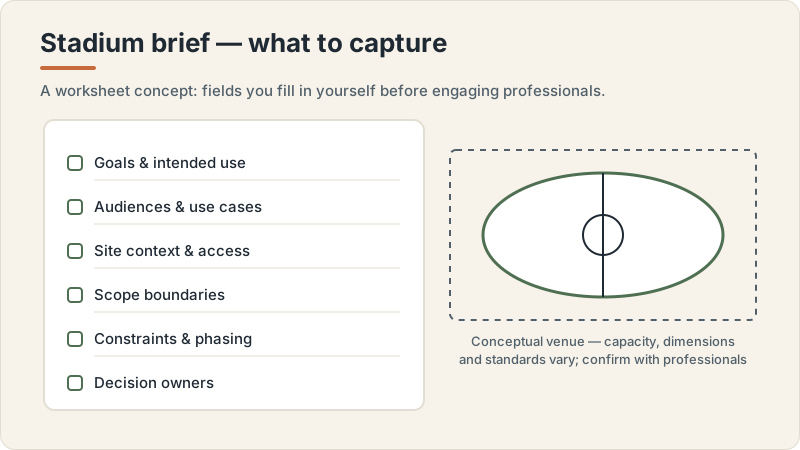
Stadium project brief worksheet concept
Conceptual editorial diagram — not a construction drawing, specification, to-scale plan or proof of a real project. It is not engineering, structural, fire/life-safety, crowd-safety or accessibility-compliance guidance. Capacities, dimensions, standards, requirements and costs vary by facility type, audience, site, use case and governing body, and are confirmed with qualified professionals, relevant authorities and governing bodies. Build Design Hub does not design, build, inspect, certify, recommend or match anyone.
What this guide helps you prepare
This guide helps you assemble a written project brief before you engage a design team. A brief is not a design, a specification or a contract; it is a structured statement of intent. It records why you want the facility, what success would look like, who the intended users are, what the project does and does not cover, what constraints surround it, and who is authorised to make decisions. Capturing these things in advance turns a collection of opinions and hopes into a document professionals can read, question and respond to.
The point of preparing a brief yourself is not to pre-empt expert judgement but to make that judgement more useful. When a designer, planner or other qualified professional understands your goals, audience and constraints from the outset, their questions become sharper and their proposals more relevant. This guide stays at the level of intentions and decisions. It does not tell you what your facility should contain, how big anything should be, what it should cost or how long it should take. Those depend on your location, facility type, audience, site, use case and governing body, and belong to the professionals and authorities you consult.
- Frame the brief as a statement of intent, not a design or specification
- Separate what you want to achieve from how it might be achieved
- Record decisions and assumptions so they can be questioned later
- Keep technical, regulatory and safety judgements with qualified professionals
- Treat the brief as a living document you refine as you learn more
- Confirm that requirements vary by location, facility type, audience, site, use case and governing body
Capturing goals, use cases and intended users
The heart of a brief is a clear account of purpose. Start by writing, in plain language, why the facility is being considered and what would make it a success in your eyes. A facility built primarily for a single club's training reads very differently from one intended for community access, school programmes, competitive events or a mix of all of these. Be honest about priorities, because a brief that tries to be everything to everyone gives professionals little to work with. Where goals compete, note which take precedence, and record the reasoning so future readers understand the trade-off.
From goals flow use cases and intended users. Describe the activities you expect the facility to host, the seasons and hours of likely use, and the different groups who would use it, from players and coaches to spectators, staff, officials and neighbours. Distinguish the people you are designing for from those merely affected by the project. This guide does not tell you what provision any user group needs; that is for qualified professionals and the relevant governing bodies to advise. Your job in the brief is to describe the users and uses accurately so that the right questions can be asked on your behalf.
- Why is this facility being considered, and what would success look like?
- Which activities, sports or programmes is it intended to host?
- Who are the primary intended users, and who is secondary or affected?
- What patterns of use do you expect across days, seasons and events?
- Where goals compete, which take priority and why?
- What existing facilities or gaps prompted this project?
Defining scope, constraints and decision owners
Scope draws the boundary around what the project includes and, just as importantly, what it excludes. A brief that names only the obvious centrepiece often hides assumptions about access, parking, surrounding works, support spaces, services and phasing that surface later as surprises. Write down what you believe is in scope and what you are deliberately leaving out, then flag the areas you are unsure about so professionals can help you resolve them. Clear inclusions and exclusions also let you compare later proposals fairly, since differences in price or approach frequently come down to differences in what each party assumed was covered.
Constraints and decision owners complete the picture. Constraints are the fixed or strongly preferred conditions the project must work within, such as the site you already hold, the timeframe a season or grant imposes, stakeholder commitments or regulatory and planning factors you have been told about. Record these as things to confirm rather than as settled facts, because what actually applies varies by location, site and governing body and must be checked with qualified professionals and the relevant authorities. Decision owners are the people or bodies with authority to approve, fund, veto or change the project. Naming them now, and noting how decisions get made, prevents the common stall where no one is sure who can say yes.
- What is clearly in scope, and what is explicitly excluded?
- Which support elements, such as access, parking or storage, need a decision?
- What constraints, such as site, timing or stakeholder commitments, apply?
- Which constraints are fixed versus strongly preferred but negotiable?
- Who can approve, fund, veto or change the project, and at which stages?
- How will decisions and changes be recorded and communicated?
Planning questions before speaking with professionals
Before you sit down with a design team, it helps to resolve as much as you can internally so that professional time is spent on judgement rather than on basic fact-finding. Work through your goals, users, scope and constraints with the people who hold a stake in the project, and write down where you agree, where you disagree and where you simply do not yet know. The gaps and disagreements are not failures; they are exactly the items to raise with professionals, and listing them shows you have thought the project through. A brief that openly marks its uncertainties is more useful than one that papers over them.
Use this stage to gather the background a professional will reasonably ask for, such as what you know about the site, who your stakeholders are, and any prior studies or correspondence. Avoid the temptation to answer technical, regulatory or safety questions yourselves. Where a question touches requirements, capacities, standards, costs or timelines, the honest internal answer is usually that it must be confirmed with qualified professionals, relevant authorities and the governing body for your sport. Recording the question, rather than guessing the answer, keeps your brief credible.
- Have stakeholders agreed on the facility's main goals and priorities?
- Have you written down what you do not yet know and need to ask?
- Have you gathered any existing site information and prior studies?
- Have you identified the authorities and governing bodies likely to be involved?
- Have you noted which assumptions must be confirmed rather than treated as fact?
- Have you agreed who will speak for the project in professional conversations?
Questions for qualified professionals
When you do engage professionals, your brief becomes the agenda. Bring it as a shared reference and invite the design team to challenge it, since experienced professionals often spot missing scope, unrealistic constraints or unstated assumptions quickly. Ask them to identify which of your goals are straightforward, which involve trade-offs and which may run into requirements you were unaware of. Frame your questions around their judgement and their reasoning, not around getting a single number, because the value of an early conversation is understanding the landscape rather than locking in answers.
Direct any question about requirements, capacities, dimensions, standards, approvals, costs or timelines to the appropriate professional and authority, and treat their answers as specific to your situation rather than as general rules. Ask who else needs to be involved, in what order, and what would help them advise you better. Remember that Build Design Hub does not select, verify or introduce professionals or suppliers; identifying and engaging suitably qualified people is your responsibility, ideally with independent checks of their relevant experience.
- Which of our goals and constraints look realistic, and which need rethinking?
- What scope are we likely to be missing or underestimating?
- Which requirements, standards or approvals apply to a facility like ours?
- Who else should be involved, and in what sequence?
- What information would help you advise us more precisely?
- How do you suggest we structure decisions and record changes as the project develops?
What this does not replace
This is an educational project-preparation resource only. It is not a construction manual and not engineering, architectural, structural, civil, fire or life-safety, crowd-safety, accessibility-compliance, permit, zoning, legal, tax or procurement advice. It does not design, specify, certify, inspect or approve anything, and it is not an estimate, quote, price or capacity recommendation. Requirements, standards, capacities and costs vary by location, facility type, audience, site, use case, design team, supplier, contractor and governing body, and are confirmed with qualified professionals, relevant authorities and governing bodies.
Build Design Hub does not design, build, engineer, inspect, certify, recommend, rank, verify, introduce, broker or match suppliers or contractors, and HELPERG LLC is publisher/operator only. Use this resource to prepare your own thinking, then have qualified professionals you engage directly review your project. Decisions about engineering, safety, compliance, procurement and suitability must rest on those professionals, the relevant authorities and the governing bodies for your sport and location.
- Not a construction manual and not engineering, structural or civil design
- Not fire/life-safety, crowd-safety, evacuation or accessibility-compliance advice
- Not permit, zoning, legal, tax or procurement advice
- Not a supplier or contractor recommendation, ranking, directory or matching service
- Not an estimate, quote, price or capacity recommendation — requirements and costs vary
- Qualified professional review is required before any project decision
Sports facility project brief worksheet
- 1Write a plain-language statement of why the facility is being considered
- 2Record what success would look like and how priorities rank when they compete
- 3List the activities, sports or programmes the facility is intended to host
- 4Describe primary intended users, plus secondary and affected groups
- 5Note expected patterns of use across days, seasons and events
- 6State clearly what is in scope and what is explicitly excluded
- 7Flag support elements such as access, parking, storage and services that need a decision
- 8List constraints, marking each as fixed or negotiable and as a fact to confirm
- 9Name the decision owners who can approve, fund, veto or change the project
- 10Record how decisions and changes will be documented and communicated
- 11Capture any existing site information, prior studies or relevant correspondence
- 12List open questions and assumptions to confirm with qualified professionals
- 13Identify the authorities and governing bodies likely to be involved
- 14Agree who will represent the project in conversations with the design team
Common mistakes to avoid
- Writing a brief that lists features but never states the underlying goals
- Trying to serve every possible user equally, leaving professionals no priorities to work with
- Naming only the centrepiece and omitting access, support spaces, services and phasing from scope
- Recording constraints, capacities or standards as settled facts instead of items to confirm
- Leaving decision owners undefined, so the project stalls when an approval is needed
- Guessing at requirements, costs or timelines rather than flagging them for professionals
- Treating the brief as final, then never updating it as new information emerges
- Hiding disagreements and uncertainties instead of listing them as questions to resolve
When to involve a professional
- When goals or use cases need translating into a buildable concept, involve a qualified design professional
- When questions touch requirements, capacities, dimensions, standards or approvals, confirm them with qualified professionals and the relevant authorities
- When governing-body rules for a sport may apply, consult that governing body directly
- When site, planning, regulatory or safety constraints are unclear, seek qualified local advice before assuming what applies
- When stakeholders cannot agree on scope or priorities, an experienced facility consultant can help structure the decision
- When you are ready to compare proposals, rely on professional judgement and your own independent checks rather than on this guide
Frequently asked questions
Questions readers ask about this topic
What exactly is a project brief, and how is it different from a design?
A brief is a structured statement of intent that you prepare before engaging a design team. It records goals, intended users, scope, constraints and decision owners. It is not a design, specification or contract; a design translates the brief into a buildable concept and is produced by qualified professionals.
Does Build Design Hub recommend or match suppliers, contractors or designers?
No. Build Design Hub publishes educational planning material only. It does not design, build, verify, recommend, rank, introduce or match any supplier, contractor or professional, and it gives no costs, capacities or requirements. Identifying and engaging suitably qualified people, and checking their experience, is your responsibility.
Can this guide tell me what my facility should include or how big it should be?
No. What a facility needs depends on your location, facility type, audience, site, use case and governing body. This guide helps you describe your intentions so professionals can advise; specific requirements, dimensions and standards must be confirmed with qualified professionals, relevant authorities and the governing body for your sport.
How detailed should the brief be before I approach professionals?
Detailed enough to state your goals, users, scope, constraints and decision owners clearly, and honest about what you do not yet know. Open questions and assumptions are useful to bring to professionals; you do not need to resolve technical, regulatory or safety matters yourself, and you should not guess at them.
Who should own and update the brief?
A named project sponsor or representative usually keeps the brief, gathers stakeholder input and records changes. Treat it as a living document that you refine as professionals and authorities clarify what applies to your situation, so it stays an accurate shared reference.
Keep reading