
Who this guide is for
- Facility owners and developers scoping a new or upgraded sports venue who want to organise spectator considerations before engaging specialists
- Sports clubs and committees preparing to brief professionals about how supporters might arrive, gather and leave
- Municipalities and public bodies coordinating a facility used by the wider community and multiple stakeholders
- Schools and colleges planning a sports facility expected to host spectators at events and fixtures
- Facility and operations managers gathering context and open questions ahead of crowd-safety conversations
- Project sponsors who need to brief a board, council or partners before commissioning specialist work
Planning diagram
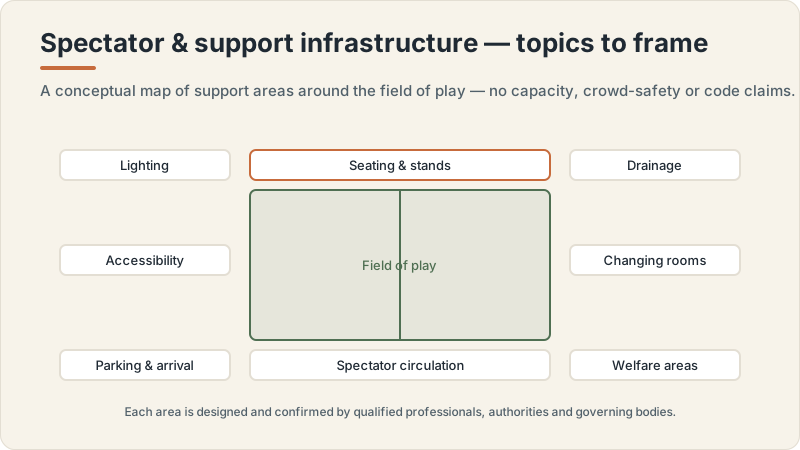
Spectator and support infrastructure concept
Conceptual editorial diagram — not a construction drawing, specification, to-scale plan or proof of a real project. It is not engineering, structural, fire/life-safety, crowd-safety or accessibility-compliance guidance. Capacities, dimensions, standards, requirements and costs vary by facility type, audience, site, use case and governing body, and are confirmed with qualified professionals, relevant authorities and governing bodies. Build Design Hub does not design, build, inspect, certify, recommend or match anyone.
What this guide helps you prepare
This guide helps you prepare the inputs a crowd-safety or design professional will need from you, and the questions you will need from them. It walks through the kinds of spectator circulation considerations worth thinking about at planning stage: how people might reach the facility, how they could move between entrances, seating, concessions, facilities and exits, and how the experience might differ across event types and audiences. The aim is to arrive at specialist conversations with clear context and good questions, not with a finished plan.
Crucially, this is preparation, not design. The guide does not tell you how many people a space can hold, how wide a route should be, how steep a ramp can be, where exits belong or how an emergency should be managed. Those are matters of professional analysis and regulation that vary by location, facility type, audience, site, use case and governing body, and they must be confirmed with qualified professionals and the relevant authorities. Here you are assembling intentions, observations and open questions so that specialists can do their work from a strong starting point.
- A plain-language description of who your spectators are and how they are likely to arrive
- Notes on the event types and audience sizes you are imagining, marked as assumptions to confirm
- A record of the site context that could shape circulation, gathered for professionals to assess
- A list of the spectator touchpoints you want considered, from arrival to departure
- The open questions and uncertainties to take to crowd-safety and design professionals
- A clear separation between what you know, what you assume and what only a specialist can determine
Spectator circulation touchpoints worth mapping at planning stage
Before any specialist is engaged, it helps to think through the spectator journey as a sequence of touchpoints rather than a single space. People typically arrive by some mix of transport, approach the facility, pass an entry point, find their way to a viewing area, may visit concessions or facilities during the event, and then leave, often all at once. Describing this journey in your own words, including where you expect people to pause, gather or make decisions, gives professionals a clear picture of your intentions. You are not deciding how any of it should be arranged; you are recording how you imagine it being used so specialists can evaluate it properly.
It also helps to notice that the same facility can behave very differently across event types. A quiet weekday session, a well-attended fixture and a one-off large event may each place different demands on the same routes and spaces. Capturing these scenarios as questions, rather than designing for them, lets a crowd-safety professional consider the range of conditions the facility might experience. Whether any particular arrangement is appropriate, and what capacities or provisions apply, varies by location, audience and governing body and must be confirmed with qualified professionals and relevant authorities.
- How spectators are likely to arrive, including walking, public transport, drop-off and parking
- The approach and entry experience, including where queues or gathering might naturally form
- The path from entry to viewing areas, and how wayfinding might work for first-time visitors
- Touchpoints during an event such as concessions, facilities, accessible spaces and rest areas
- How departure might differ from arrival, especially when many people leave at once
- Different event types and audiences that could change how the same spaces are used
Site, audience and operations context to gather for professionals
A crowd-safety or design professional can only give reliable guidance if they understand the context around your facility, so a large part of preparation is simply gathering and recording that context honestly. This includes the site itself and what surrounds it: nearby roads and footpaths, neighbouring uses, available approaches and anything that could influence how people reach and leave the facility. You are not assessing whether these are adequate; you are describing them so a qualified professional can carry out the assessment. Photographs, sketches and plain notes are usually more useful at this stage than any attempt at measurement or analysis.
Audience and operations context matters just as much. Who attends, how mixed the audience is, whether children, older spectators or people with accessibility needs are expected, and how the facility is staffed and run all shape the conversation a professional will want to have. Record what you know and flag what you are unsure of. Accessibility provision in particular is governed by requirements that vary by location and must be confirmed with the relevant authorities and qualified professionals rather than assumed, so capture it as a priority question rather than a planning decision.
- The surrounding site: approaches, roads, footpaths, neighbouring uses and shared spaces
- Expected audience makeup, including families, older spectators and people with accessibility needs
- How the facility is intended to be staffed, stewarded and operated during events
- Any existing structures, levels or constraints a professional should be aware of
- Accessibility considerations to raise as priority questions, not as decisions to make yourself
- Information gaps and uncertainties you want a specialist to investigate properly
Planning questions before speaking with professionals
Before you contact crowd-safety or design professionals, it is worth working through a set of questions you can answer yourself, because clear answers here make those later conversations far more productive. These questions are about intent and context, not technical conclusions. They help you understand your own assumptions, surface the gaps in your knowledge and decide who within your organisation owns each decision. Writing the answers down, and honestly marking the unknowns, turns a vague idea into a brief a professional can engage with.
Keep these questions framed as your own preparation rather than as design problems to solve. Anything touching capacity, route arrangement, sightlines, accessibility, signage or emergency provision should be noted as a question for specialists, because those depend on requirements that vary by location, facility type, audience, site, use case and governing body. The goal of this stage is clarity about what you want and what you do not yet know, not answers that only a qualified professional should provide.
- Who are our spectators, and what range of event sizes are we genuinely planning for?
- What do we already know about the site, and what context do we still need to gather?
- Which spectator touchpoints matter most to us, and where do we expect difficulty?
- What accessibility needs should we make sure are considered from the outset?
- Who in our organisation owns spectator-experience and safety-related decisions?
- Which questions are we not equipped to answer ourselves and must hand to specialists?
Questions for qualified professionals
When you do engage crowd-safety, design or other qualified professionals, the questions you bring will shape how useful the engagement is. Good questions are open and invite the professional to explain their analysis, the requirements that apply and the assumptions behind their guidance. Your role is to ask clearly, share your context fully and listen, while the professionals provide the capacities, arrangements, requirements and methods that fall within their expertise and the relevant regulations.
Tailor these prompts to your own facility and add to them as new uncertainties emerge during preparation. Resist the temptation to seek a single number or quick answer for anything involving capacity, circulation, accessibility or emergency provision, because those depend on a proper assessment of your specific facility, audience and site against requirements that vary by location and governing body and must be confirmed by the right professionals and authorities.
- What spectator-related assessments does our facility need, and who is qualified to carry them out?
- Which crowd-safety, accessibility and event regulations apply, and how do we confirm them?
- What information should we provide so you can give reliable, facility-specific guidance?
- Which governing bodies or authorities should be involved, and at what stage?
- How do spectator considerations interact with seating, access, signage and emergency provision?
- What questions should we be asking that we have not thought to ask?
What this does not replace
This is an educational project-preparation resource only. It is not a construction manual and not engineering, architectural, structural, civil, fire or life-safety, crowd-safety, accessibility-compliance, permit, zoning, legal, tax or procurement advice. It does not design, specify, certify, inspect or approve anything, and it is not an estimate, quote, price or capacity recommendation. Requirements, standards, capacities and costs vary by location, facility type, audience, site, use case, design team, supplier, contractor and governing body, and are confirmed with qualified professionals, relevant authorities and governing bodies.
Build Design Hub does not design, build, engineer, inspect, certify, recommend, rank, verify, introduce, broker or match suppliers or contractors, and HELPERG LLC is publisher/operator only. Use this resource to prepare your own thinking, then have qualified professionals you engage directly review your project. Decisions about engineering, safety, compliance, procurement and suitability must rest on those professionals, the relevant authorities and the governing bodies for your sport and location.
- Not a construction manual and not engineering, structural or civil design
- Not fire/life-safety, crowd-safety, evacuation or accessibility-compliance advice
- Not permit, zoning, legal, tax or procurement advice
- Not a supplier or contractor recommendation, ranking, directory or matching service
- Not an estimate, quote, price or capacity recommendation — requirements and costs vary
- Qualified professional review is required before any project decision
Spectator flow preparation worksheet
- 1Describe in plain language who your spectators are and how they are likely to arrive
- 2Record the event types and audience sizes you are imagining, marking each as an assumption to confirm
- 3Note any expected families, older spectators or people with accessibility needs in your audience
- 4Sketch the spectator journey from arrival through viewing to departure as a sequence of touchpoints
- 5Gather site context: approaches, roads, footpaths, neighbouring uses and shared spaces
- 6Collect photographs, sketches and plain notes rather than attempting measurements or analysis
- 7Capture existing structures, levels or constraints a professional should be aware of
- 8List the spectator touchpoints you most want professionals to consider
- 9Flag accessibility provision as a priority question for the relevant authorities and specialists
- 10Identify who in your organisation owns spectator-experience and safety-related decisions
- 11Write down the open questions and uncertainties to take to crowd-safety professionals
- 12Mark every capacity, dimension, route, gradient and emergency matter as something to confirm, not assume
- 13Note which specialists and governing bodies may need involvement and at what stage
- 14Review your notes for anything stated as fact that should instead be a question for professionals
Common mistakes to avoid
- Trying to design circulation routes, set capacities or sketch evacuation arrangements yourself instead of leaving those to qualified professionals
- Treating numbers found online or borrowed from another venue as facts that apply to your facility
- Planning around a single event type and overlooking how the same spaces behave under different audiences and conditions
- Leaving accessibility considerations until late rather than raising them as priority questions from the outset
- Engaging professionals with vague intentions and no recorded context, which weakens the guidance they can give
- Assuming arrival and departure are mirror images, when leaving often concentrates many people at once
- Confusing planning-level preparation with the specialist analysis and regulatory work that only professionals can perform
- Failing to name who owns spectator-experience and safety-related decisions within the organisation
When to involve a professional
- When any question touches spectator capacity, route arrangement, sightlines or how spaces handle crowds, involve qualified crowd-safety and design professionals
- When emergency, evacuation or life-safety provision arises in any form, this is specialist and regulated work for qualified professionals and relevant authorities
- When accessibility provision needs to be determined, confirm requirements with the relevant authorities and qualified professionals rather than assuming
- When event types or audience sizes could vary significantly, a crowd-safety professional should assess the range of conditions
- When governing-body, licensing or local-authority requirements may apply, engage the relevant bodies early to confirm what governs your facility
- When site conditions, levels or surroundings are complex or uncertain, qualified professionals should carry out proper assessment before any planning is relied upon
Frequently asked questions
Questions readers ask about this topic
Does this guide tell me how to design spectator flow or plan an evacuation?
No. This is educational preparation material only. It does not model crowd flow, design circulation, plan evacuation, set capacities or give any movement or life-safety instructions. Those are specialist, regulated disciplines that must be handled by qualified professionals working to requirements that vary by location, facility type, audience, site, use case and governing body.
Will Build Design Hub recommend or connect me with a crowd-safety consultant or contractor?
No. Build Design Hub does not recommend, rank, rate, verify, introduce, broker or match suppliers, contractors or consultants, and it does not provide costs, capacities or requirements. This guide helps you prepare your own questions and context; sourcing and selecting qualified professionals is something you do independently, and you should confirm their suitability yourself.
Can you tell me how many spectators my facility can safely hold?
No. Capacity is determined by qualified professionals through proper assessment against requirements that vary by location, facility type, audience, site, use case and governing body. This guide deliberately leaves capacity as a question to confirm with specialists and relevant authorities rather than stating any figure as fact.
Who should I actually speak to about spectator flow?
That depends on your facility and location, but the prompts in this guide are designed to help you prepare for conversations with qualified crowd-safety and design professionals, along with the relevant authorities and the governing bodies for your sport. Confirm who is appropriate and qualified for your specific situation before relying on any guidance.
Keep reading