
Who this guide is for
- Club or academy committees scoping an artificial-turf pitch before approaching anyone
- School and education estate teams capturing what a training surface needs to support
- Municipal and parks officers preparing a brief for a community football facility
- Property developers integrating a turf field into a wider site or scheme
- Facility managers documenting use intensity and operational expectations for a pitch
- Owners and trustees who want a shared written brief before engaging professionals
Planning diagram
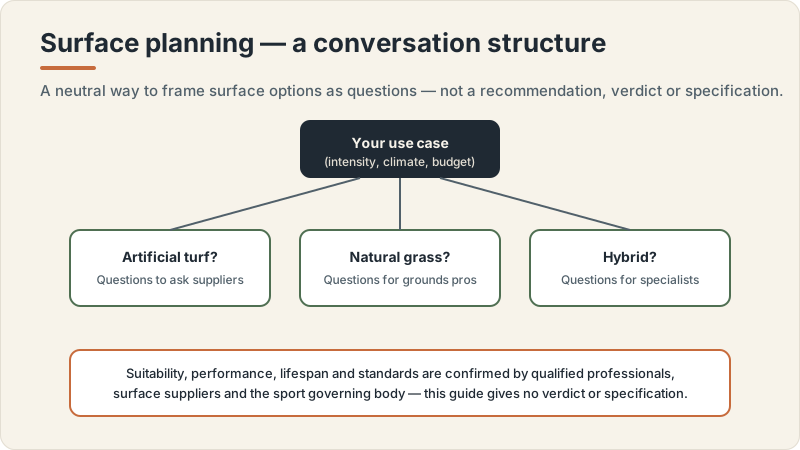
Football surface planning conversation concept
Conceptual editorial diagram — not a construction drawing, specification, to-scale plan or proof of a real project. It is not engineering, structural, fire/life-safety, crowd-safety or accessibility-compliance guidance. Capacities, dimensions, standards, requirements and costs vary by facility type, audience, site, use case and governing body, and are confirmed with qualified professionals, relevant authorities and governing bodies. Build Design Hub does not design, build, inspect, certify, recommend or match anyone.
What this guide helps you prepare
This guide helps you build a high-level project brief for an artificial-turf football field: a written record of your goals, the people and uses the surface must serve, the questions you still need answered, and the points you intend to confirm with others. It is organised around purpose and outcomes, use intensity and demand, site and operational context, and the questions to take to professionals, so you cover ground that an early enthusiasm for a particular surface can skip over.
Everything here stays at a brief and question level. The prompts help you describe what you want a pitch to achieve and how heavily it will be used, not how to specify, engineer or install it. Requirements vary by location, use case, governing body, owner, site, surface system, maintenance plan, climate, authority and professional team, so the aim is a clear, honest brief you can hand over, not a set of answers presented as fact.
- A structured way to write down goals, users and intended outcomes for the pitch
- Prompts to describe use intensity and demand in your own words
- A place to capture site, access and operational context to share with others
- Framing that keeps specifications, costs and timelines as questions, not figures
- A clear separation between what you have decided and what you still need to confirm
Defining goals, users and intended outcomes
The most useful first move is to write down why the field exists and who it is for, before any thought of a particular turf system. A community pitch open to casual bookings, an academy training surface used by structured age groups, a school field shared across the curriculum and a developer amenity within a larger scheme all carry different priorities. Naming the primary purpose, and being honest about secondary uses, gives every later conversation a stable reference point.
Capturing intended outcomes also means recording who the stakeholders are and what success looks like to each of them. Players, coaches, neighbours, governing bodies, funders and operators may value different things, and a brief that surfaces those differences early is more useful than one that papers over them. This guide does not tell you which purpose to choose or what any surface should deliver; it helps you describe your own intentions clearly enough to test them with qualified professionals and the relevant sport governing body.
- What is the single primary purpose of this field, in one or two sentences?
- Which secondary uses do you expect, and how important is each one?
- Who are the stakeholders, and what does a good outcome look like to each?
- Which playing levels, age groups or competitions do you hope it will serve?
- What sport governing body or association expectations might apply, to confirm with them?
- What would make this project a clear success, and what would make it a disappointment?
Capturing use intensity, demand and operating context
For an artificial-turf field, how hard and how often it will be used shapes almost every later discussion, so the brief should record demand as clearly as you can describe it. Think in terms of who plays, how many hours a typical week might involve, the spread across days and seasons, and whether use is steady or peaks heavily at certain times. You are not setting a specification here; you are giving professionals and suppliers an honest picture of the demand the surface and operation would need to handle.
Operating context belongs in the brief too. How the field would be booked, supervised, cleaned and maintained, who would run it day to day, and how it sits alongside changing rooms, parking, lighting and neighbours all affect what a realistic project looks like. This guide cannot state how intensity translates into any turf system, maintenance plan or other figure, because those vary by use case, climate, surface system and professional team and must be confirmed with qualified professionals; it can only help you describe demand and context so others can respond to them.
- Who would use the field, and roughly how many hours per week at peak and off-peak?
- How would use vary across days, terms, seasons and weather, in your description?
- Is demand steady, or concentrated into heavy peaks you should record?
- How would the field be booked, supervised and managed day to day?
- Who would be responsible for routine upkeep, and how does that fit your operation?
- How does the field relate to lighting, changing, parking and nearby residents?
Planning questions before speaking with professionals
Before you contact suppliers, governing bodies or professionals, it helps to work through the questions you can answer yourself and to mark the gaps you cannot. Doing this turns a vague idea into a brief that others can engage with quickly, and it stops you from anchoring on a surface, a layout or a figure before anyone qualified has looked at your site. The point is to arrive at conversations with a clear picture of intent and a clear list of open questions.
Use the prompts below to pressure-test your own brief. Where you find yourself assuming a specification, a dimension, a cost or a timeline, rewrite it as a question to confirm rather than a fact to carry forward. Requirements vary by location, use case, governing body, owner, site, surface system, maintenance plan, climate, authority and professional team; confirm them with qualified professionals.
- Have you written the primary purpose and intended users without referring to a specific turf system?
- Have you described use intensity and demand honestly, including peaks?
- Have you separated decisions you have made from questions still open?
- Have you listed the site, access and operational facts you can share?
- Have you noted which governing body or authority expectations you must confirm?
- Have you flagged every assumed specification, dimension, cost or timeline as a question?
Questions for qualified professionals
Some questions sit better with independent professionals, suppliers and governing bodies than with your own committee, because they involve site judgement, specialist knowledge or formal requirements. While you finalise the brief, it helps to plan who to involve and what to ask them, so that your goals and demand picture can be tested against the realities of your site, your locality and the relevant sport requirements.
Use the prompts below to plan those conversations. This guide cannot state requirements, specifications, costs or timelines for you, and it does not assess your site or any product. Requirements vary by location, use case, governing body, owner, site, surface system, maintenance plan, climate, authority and professional team; confirm them with qualified professionals, relevant authorities and sport governing bodies.
- Designer or engineer: is an artificial-turf field feasible for my site, intended use and demand?
- Site, ground and drainage specialists: what does my site mean for how this should be approached?
- Relevant sport governing body: what surface, layout and facility expectations apply here?
- Local authority or planning officer: what permissions, constraints or requirements would apply?
- Surface and maintenance specialists: how would my use intensity shape upkeep planning?
- Legal, funding or commercial advisor: do the operating and ownership assumptions hold up?
What this does not replace
This is an educational project-preparation resource only. It is not a construction manual and not engineering, architectural, turf-installation, drainage-engineering, sports-surface-specification, structural, fire or life-safety, crowd-safety, accessibility-compliance, permit, zoning, legal, tax or procurement advice. It does not design, specify, install, certify, inspect or approve anything, and it is not an estimate, quote, price, capacity recommendation or performance or lifespan guarantee. Requirements, standards, dimensions, surface systems and costs vary by location, use case, governing body, owner, site, climate, maintenance plan, authority and professional team, and are confirmed with qualified professionals, relevant authorities and the sport governing body.
Build Design Hub does not design, build, install, engineer, inspect, certify, recommend, rank, verify, introduce, broker or match suppliers or contractors, and HELPERG LLC is publisher/operator only. Use this resource to prepare your own thinking, then have qualified professionals you engage directly review your project. Decisions about engineering, surface specification, drainage, safety, compliance, procurement and suitability must rest on those professionals, the relevant authorities and the governing body for your sport and location.
- Not a construction manual and not engineering, turf-installation or drainage-engineering instructions
- Not sports-surface specification, structural, fire/life-safety, crowd-safety or accessibility-compliance advice
- Not permit, zoning, legal, tax or procurement advice
- Not a supplier or contractor recommendation, ranking, directory or matching service
- Not an estimate, price, capacity recommendation or performance/lifespan guarantee — requirements and costs vary
- Qualified professional review is required before any project decision
Artificial turf football field project brief worksheet
- 1Have you written the field's primary purpose in one or two plain sentences?
- 2Have you listed the intended users, playing levels and age groups it should serve?
- 3Have you recorded all the stakeholders and what success looks like to each?
- 4Have you described expected use intensity, including weekly hours and peaks?
- 5Have you noted how demand would vary across days, seasons and weather?
- 6Have you captured the site, access and surrounding context you can share?
- 7Have you recorded how the field would be booked, supervised and managed?
- 8Have you noted who would be responsible for routine upkeep day to day?
- 9Have you listed how lighting, changing, parking and neighbours relate to the field?
- 10Have you separated the decisions you have made from the questions still open?
- 11Have you flagged every assumed specification, dimension, cost or timeline as a question to confirm?
- 12Have you identified which governing body and authority expectations you must confirm?
- 13Have you planned which professionals to involve and what to ask each of them?
- 14Have you written the brief so others can respond to your intent rather than guess it?
Common mistakes to avoid
- Choosing a turf system or layout in the brief before any professional has seen the site
- Describing the field by one headline use while ignoring the secondary uses it must absorb
- Underestimating use intensity, or recording average hours while omitting heavy peaks
- Writing assumed dimensions, specifications, costs or timelines into the brief as if they were settled
- Leaving operations and maintenance responsibility undefined until late in the project
- Treating sport governing body and authority expectations as known rather than as things to confirm
- Letting stakeholders hold different unspoken definitions of success
- Skipping the gap between decisions already made and questions still open
When to involve a professional
- A qualified designer or engineer should assess whether an artificial-turf field is feasible for your site, intended use and demand.
- Site, ground and drainage specialists should advise on what your specific site means for the project.
- Surface, layout and facility expectations vary and should be confirmed with the relevant sport governing body or association.
- Permissions, constraints and any local requirements should be confirmed with the local authority or a planning professional.
- Maintenance and surface specialists should advise on how your use intensity would shape ongoing upkeep planning.
- Build Design Hub does not design, build, recommend, verify or match suppliers or contractors; assessing feasibility and selecting any professional remain your responsibility.
Frequently asked questions
Questions readers ask about this topic
What is an artificial-turf football field project brief, and why prepare one?
It is a written, high-level record of your goals, intended users, expected use intensity and the questions still open, captured before you engage suppliers or professionals. Preparing one gives every later conversation a shared reference point and helps you tell apart what you have decided from what you still need to confirm with qualified professionals.
Does this guide tell me what turf system, dimensions or costs to plan for?
No. It states no turf specifications, dimensions, drainage, lighting, costs, timelines or performance figures as facts. Those vary by location, use case, governing body, owner, site, surface system, maintenance plan, climate, authority and professional team, and must be confirmed with qualified professionals, relevant authorities and the sport governing body.
Does Build Design Hub recommend or match turf suppliers or contractors?
No. Build Design Hub does not recommend, rank, rate, verify, introduce, broker or match any supplier or contractor, and gives no costs, requirements or turf specifications. This is an educational preparation guide only; HELPERG LLC is the publisher and operator. Researching, verifying and selecting any supplier or professional remain your responsibility.
How should I describe use intensity if I do not have exact numbers yet?
Describe it honestly in your own words: who would play, roughly how many hours at peak and off-peak, and how demand might vary across days, seasons and weather. An honest picture, including heavy peaks, is more useful to professionals than a precise-looking figure. They can then advise on what your demand means for the project.
When should I involve a qualified professional?
Involve one as soon as feasibility, site conditions, governing body requirements, permissions or operating assumptions need testing, rather than after decisions are fixed. A clear brief lets professionals respond to your intent quickly. This guide helps you prepare the brief; it does not assess your site or any product for you.
Keep reading