
Who this guide is for
- School and college estates leads scoping a new or upgraded football field
- Heads, bursars and governors weighing curricular, extracurricular and community use of a field
- Facility managers coordinating timetabled, club and out-of-hours access on one surface
- Clubs and academies discussing shared or community use of a school or college field
- Municipalities and developers planning a field with a school or community access element
- Owners and project sponsors assembling a brief before engaging a design team or authorities
Planning diagram
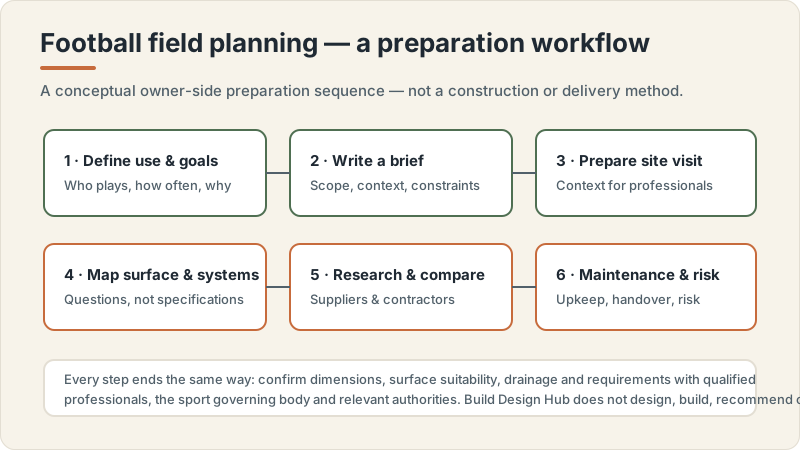
Football field planning workflow concept
Conceptual editorial diagram — not a construction drawing, specification, to-scale plan or proof of a real project. It is not engineering, structural, fire/life-safety, crowd-safety or accessibility-compliance guidance. Capacities, dimensions, standards, requirements and costs vary by facility type, audience, site, use case and governing body, and are confirmed with qualified professionals, relevant authorities and governing bodies. Build Design Hub does not design, build, inspect, certify, recommend or match anyone.
What this guide helps you prepare
This guide helps you organise the thinking behind a school or college football field before you brief a design team or approach any supplier or contractor. A school field typically has to balance curricular PE, extracurricular clubs and fixtures, and — for many institutions — some level of community or out-of-hours use, and most of the hard questions come from how those uses overlap on a single surface and site. The aim is to reach professional conversations with an organised brief, a clear map of who uses the field and when, and an honest record of what is still unknown, rather than to settle any technical, regulatory or safeguarding question here.
It deliberately stops short of design, engineering and policy direction. You will not find a surface specification, a drainage layout, a lighting level, a fencing height, an access-control design or any safeguarding rule presented as fact, because those depend on your site, your users, your institution's policies and the relevant authorities and governing bodies, and they are the work of qualified professionals and accountable policy owners to determine. What you will find is a way to structure your own preparation — what to record, what to ask, who to involve, and where the boundary sits between owner planning and specialist work.
- Map who uses the field and when: curricular, extracurricular and any community access
- Assemble a brief describing intended uses, user groups, hours and site context
- Separate what you know from what you assume and what needs professional input
- Identify which professionals and policy owners to involve, and at what stage
- Frame surface, drainage, lighting and access as questions to confirm, not specify
- Capture safeguarding-relevant access and supervision points as topics for the right owners
Balancing curricular, extracurricular and community use
The defining feature of a school or college field is shared use, and the most useful planning work is describing that sharing honestly. Curricular PE tends to drive daytime, term-time demand in fixed timetable blocks; extracurricular clubs, training and fixtures add evening, weekend and seasonal load; and community or out-of-hours access — where an institution chooses to allow it — introduces a different user group with different expectations and supervision needs. At the preparation stage your job is not to decide how these are scheduled or controlled, but to record what each use pattern looks like so the design team and relevant authorities can advise on what is feasible and appropriate. Treat usage intensity, peak overlaps and any sharing arrangement as a picture to capture, not a plan to fix.
These uses interact, and the overlaps are where confusion and competing expectations usually surface. A surface chosen mainly for daytime curricular use may face very different demand once evening clubs and community sessions are added, and questions of access, separation between user groups, and out-of-hours arrangements can affect almost every later decision. Record what each user group expects to do, when, and under whose supervision, and note where those expectations compete. Whether any particular mix of curricular, extracurricular and community use is workable, suitable or permitted on a given site is a matter for qualified professionals, the relevant authorities and your institution's accountable policy owners to confirm.
- Describe curricular demand: timetabled PE, year groups, term-time hours and peak blocks
- Describe extracurricular demand: clubs, training, fixtures, evenings, weekends and seasons
- Note whether and how community or out-of-hours access is being considered, and for whom
- Identify where curricular, extracurricular and community use overlap or compete for the surface
- Record who is responsible for supervision and access during each type of use
- Mark every usage assumption as something to confirm, not a scheduling decision made here
Safeguarding-aware stakeholder questions, framed for professionals
When a field is used by children and young people, and potentially by community users outside school hours, safeguarding-aware thinking belongs in the brief from the start — but as questions to route to the right owners, not as rules to write here. This guide does not provide safeguarding policy, supervision ratios, vetting requirements or access-control specifications, all of which sit with your institution's designated safeguarding leads, the relevant authorities and qualified professionals. What preparation can do is make sure the questions are visible early: how different user groups are kept appropriately separated, how access is managed at different times, and who is accountable for supervision when curricular, extracurricular and community use share the same site. Capturing these as open questions helps ensure they reach the people qualified to answer them rather than being assumed away.
It is worth being explicit that these are stakeholder and professional questions, not owner decisions to settle in a brief. Arrangements for managing mixed-age and mixed-group use, for out-of-hours access, and for movement around the wider site all carry safeguarding, policy and sometimes legal dimensions that only the accountable owners — designated safeguarding leads, relevant authorities, and qualified professionals — can confirm. The value of raising them at the preparation stage is that they can shape the brief and the questions you take to those owners, instead of emerging late when options are harder to change. Record what you need to ask, who should answer, and where you are currently assuming rather than confirming.
- Who are the institution's designated safeguarding leads, and how are they involved early?
- How should different user groups be appropriately separated across shared use of the site?
- How is access managed during curricular, extracurricular and any community or out-of-hours use?
- Who is accountable for supervision during each type of use, and how is that confirmed?
- Which safeguarding policies and authority requirements apply, and who owns confirming them?
- Where are you assuming safeguarding arrangements rather than having them confirmed by the right owners?
Planning questions before speaking with professionals
Before engaging a design team or any specialist, it helps to answer the questions that are genuinely yours to answer — the ones about purpose, users, hours, supervision and constraints. Being clear on who will use the field, when, under whose responsibility, and what your institution can realistically support turns a vague aspiration into a brief that a professional, an authority or a safeguarding lead can respond to. Working through these internally also surfaces disagreements among stakeholders early, while they are still cheap to resolve, rather than after professionals have been engaged on uncertain foundations.
These are planning prompts, not technical, regulatory or safeguarding answers. None of them ask you to decide a surface, a drainage design, an access-control system or a safeguarding rule; they ask you to describe your situation honestly and to mark clearly what is confirmed, what is assumed and what is unknown. Recording the answers in writing gives you a brief you can share, compare against quotes, and revisit as the project develops, and it keeps the eventual conversations focused on professional judgement, governing-body confirmation and authority and policy approval rather than on gathering basics.
- What is the field's purpose, and who are its curricular, extracurricular and community users?
- What uses, ages, hours and fixtures must it support, and on what assumptions?
- Is any community or out-of-hours access intended, and who would be responsible for it?
- What site, access, neighbour, ownership and existing-condition constraints are already known?
- Which safeguarding and supervision questions must be routed to the accountable owners?
- What is genuinely confirmed, and what is currently assumption that a professional should test?
Questions for qualified professionals
When you reach the point of engaging a design team, grounds and drainage specialists, the relevant authorities, the appropriate football and education governing bodies, and your institution's safeguarding leads, the value of your preparation shows in the quality of the questions you can ask. Rather than seeking a single recommendation, use these conversations to understand the trade-offs for your specific site and users: what a shared curricular, extracurricular and community field will demand, where the risks sit, and how surface, drainage, lighting, access and supervision arrangements depend on one another. Ask each professional and policy owner to be explicit about what their advice covers and what falls outside it, so nothing important sits in a gap between disciplines.
Treat every standard, dimension, figure, surface and safeguarding arrangement as something to confirm with the relevant professional, authority or governing body, not something to assume. Requirements vary by location, use case, governing body, owner, site, surface system, maintenance plan, climate, authority and professional team; confirm with qualified professionals. Bring your assumptions as well as your facts and ask the professionals to test them, and keep a written record of what each one confirms — it becomes the basis for comparing proposals and for understanding the commitment a shared school or college field involves.
- Given our users and hours, what surface and arrangement are feasible and appropriate for this site?
- Which football, education, regulatory and local-authority requirements apply, and who confirms them?
- What site investigations or assessments would you recommend before any design begins?
- How do shared curricular, extracurricular and community use affect the brief and the options?
- Which safeguarding, access and supervision questions should go to our designated leads and authorities?
- What does your advice cover, and which questions should go to another professional or policy owner?
What this does not replace
This is an educational project-preparation resource only. It is not a construction manual and not engineering, architectural, turf-installation, drainage-engineering, sports-surface-specification, structural, fire or life-safety, crowd-safety, accessibility-compliance, permit, zoning, legal, tax or procurement advice. It does not design, specify, install, certify, inspect or approve anything, and it is not an estimate, quote, price, capacity recommendation or performance or lifespan guarantee. Requirements, standards, dimensions, surface systems and costs vary by location, use case, governing body, owner, site, climate, maintenance plan, authority and professional team, and are confirmed with qualified professionals, relevant authorities and the sport governing body.
Build Design Hub does not design, build, install, engineer, inspect, certify, recommend, rank, verify, introduce, broker or match suppliers or contractors, and HELPERG LLC is publisher/operator only. Use this resource to prepare your own thinking, then have qualified professionals you engage directly review your project. Decisions about engineering, surface specification, drainage, safety, compliance, procurement and suitability must rest on those professionals, the relevant authorities and the governing body for your sport and location.
- Not a construction manual and not engineering, turf-installation or drainage-engineering instructions
- Not sports-surface specification, structural, fire/life-safety, crowd-safety or accessibility-compliance advice
- Not permit, zoning, legal, tax or procurement advice
- Not a supplier or contractor recommendation, ranking, directory or matching service
- Not an estimate, price, capacity recommendation or performance/lifespan guarantee — requirements and costs vary
- Qualified professional review is required before any project decision
School and college football field preparation worksheet
- 1Record the field's purpose and the curricular, extracurricular and community user groups it must serve
- 2Capture curricular demand: timetabled PE, year groups, term-time hours and peak blocks
- 3Capture extracurricular demand: clubs, training, fixtures, evenings, weekends and seasonal load
- 4Note whether community or out-of-hours access is intended, for whom, and under whose responsibility
- 5Map where curricular, extracurricular and community use overlap or compete for the surface
- 6List every stakeholder (staff, students, clubs, community users, governors, neighbours, funders) and what each needs
- 7Record who is accountable for supervision and access during each type of use
- 8Note the safeguarding and supervision questions to route to your designated leads and relevant authorities
- 9Gather what is known about the site: access, neighbours, ownership, environment and existing constraints
- 10Mark every surface, drainage, lighting, fencing, access, capacity, cost and timeline item as an assumption to confirm, not a fact
- 11Document where stakeholder needs compete and which trade-offs remain unresolved
- 12Identify open risks, gaps and unknowns to raise early with the design team and authorities
- 13Separate clearly what is confirmed from what is assumed throughout the brief
- 14Prepare the questions and documentation to take to qualified professionals, authorities and governing bodies
Common mistakes to avoid
- Briefing the field around curricular use alone and discovering extracurricular and community demand late
- Treating community or out-of-hours access as a detail rather than a question with its own users, supervision and policy owners
- Assuming surfaces, drainage, lighting or fencing from another field apply to your site and shared use
- Leaving safeguarding and supervision questions out of the early brief instead of routing them to the accountable owners
- Recording confident verbal answers about access or supervision as confirmed facts rather than claims to verify
- Carrying capacities, costs or timelines into the brief as fixed figures rather than open questions
- Overlooking how peak overlaps between user groups affect demand, access and the surface
- Assuming a mix of curricular, extracurricular and community use is permitted without confirming with authorities and governing bodies
When to involve a professional
- When you need to know what surface, drainage and field arrangement are feasible and appropriate for your site and shared use
- When safeguarding, supervision or access arrangements for mixed-age, extracurricular or community use need confirming with your designated leads and the relevant authorities
- When football, education, regulatory or local-authority requirements may apply to your facility type and users
- When site conditions, access, neighbours or environment could materially constrain what is possible
- When competing curricular, extracurricular and community needs require trade-offs with technical, policy or safety implications
- When you are ready to move from a prepared brief toward design, specification, procurement or approval
Frequently asked questions
Questions readers ask about this topic
Does Build Design Hub recommend suppliers, contractors or surfaces, or give costs and requirements for a school field?
No. Build Design Hub is an educational planning resource and does not recommend, rank, introduce, broker or match suppliers, contractors or professionals, and it does not design, build, engineer, inspect or certify anything. It gives no costs, dimensions, capacities, surface specifications or requirements as facts. Surfaces, drainage, lighting, access and requirements vary by location, use case, governing body, owner, site, surface system, maintenance plan, climate, authority and professional team, and must be confirmed with qualified professionals, the relevant authorities and the appropriate football and education governing bodies.
Does this guide tell me how to handle safeguarding for a field used by students and the community?
No. This guide does not provide safeguarding policy, supervision ratios, vetting requirements or access-control specifications. Those sit with your institution's designated safeguarding leads, the relevant authorities and qualified professionals. The guide only helps you raise safeguarding-aware questions early and route them to the accountable owners, so they reach the people qualified to confirm what applies to your site and users.
Can we allow community use of a school or college field?
Whether community or out-of-hours access is appropriate and permitted depends on your site, users, institution policies, governing bodies and the relevant authorities, and only those accountable owners can confirm it. This guide helps you describe the intended use, the user groups, the hours and the supervision questions so you can take an organised brief to the right professionals and authorities, rather than offering a decision or recommendation.
How much will a school football field cost, and how long will it take?
This guide does not provide costs, budgets, return figures or timelines, because they depend on the site, scope, surface, shared-use pattern, supervision arrangements and local conditions, and any figure should be treated as a question to confirm. Use the preparation here to organise your brief and open questions so qualified professionals can advise on cost, programme and feasibility for your specific project.
Keep reading