
Who this guide is for
- Prospective padel court owners or operators who have received one or more kit quotes and want to read them more carefully
- Readers preparing to request quotes who want to understand what a complete-looking quote should clarify
- Facility planners assembling their own questions before talking to suppliers and qualified professionals
- Owners trying to compare quotes on a like-for-like basis rather than on headline figures alone
- Anyone wanting to separate what a kit supplier provides from what other contractors or trades must cover
Planning diagram
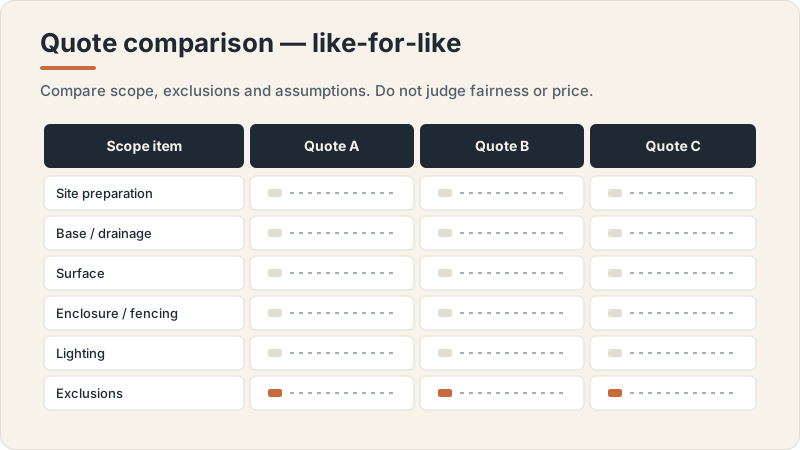
Quote comparison matrix concept
Conceptual editorial diagram — not a construction drawing, specification or to-scale plan. Official court dimensions, standards, drainage, structure and lighting requirements vary by sport, site and location and are confirmed with the relevant federation, supplier and qualified professionals.
What this research helps you prepare
This resource helps you turn a padel kit quote from a single document into a structured set of questions you can take back to the supplier and discuss with qualified professionals. It is preparation only: a way to read a quote line by line, note what is stated, what is assumed and what is missing, and record the points you still need to confirm.
Working through it, you can build your own comparison structure so that two or more quotes can be read against the same headings rather than against each other's formatting. You are not assessing value, fairness or correctness here. You are organising what each quote includes and excludes so that any later comparison or professional review starts from a clear, complete picture.
Treat every requirement, specification and figure in a quote as something to confirm with the supplier, the relevant authority or federation and a qualified professional. Requirements vary by location and project, and costs vary by site, scope, supplier, access, drainage, lighting, surface, shipping and local conditions.
- A heading-by-heading way to read what a quote does and does not cover
- A personal list of inclusions, exclusions and assumptions to confirm
- A neutral structure for laying quotes side by side under the same topics
- A set of questions to raise with suppliers and qualified professionals
Reading what is included and excluded
A padel kit quote often groups items under broad descriptions, so the useful work is identifying what each line actually covers. Note which structural, surface, lighting, fixing and ancillary components appear by name, and which are referred to only in general terms. Where wording is broad, write down a question rather than an assumption.
Exclusions matter as much as inclusions. A quote may quietly assume that the base, drainage, foundations, electrical supply, groundworks, fencing beyond the kit, or local connection works are someone else's responsibility. Listing what is not mentioned helps you see where other contractors or trades may be needed, and where scope gaps could sit between separate parties.
Do not treat any component list as a complete technical specification. Whether a listed item meets the dimensions, materials or standards relevant to your sport, location and intended use is something to confirm with the supplier, the relevant federation and a qualified professional, not something to infer from the quote alone.
- Which components are named explicitly versus described in general terms
- What groundwork, base, drainage and foundation work is or is not included
- Whether electrical supply, connection and lighting works are inside or outside scope
- Which fixings, fittings, accessories and consumables are covered
- What is listed as excluded, optional, provisional or by others
Assumptions, documentation, logistics and warranty as questions
Many quotes rest on assumptions about your site that are never written down: that access suits delivery vehicles, that the prepared base will meet the supplier's needs, that there is somewhere to store and unload, and that conditions on site are as expected. Surfacing these assumptions as explicit questions helps you check whether they actually hold for your project.
Documentation is part of the picture too. Consider asking what drawings, layouts, component schedules, installation requirements and handover materials accompany the kit, and what the supplier expects to receive from you in return. For logistics, frame delivery, packaging, offloading, access and responsibility for damage in transit as questions to confirm directly, never as figures to assume. Where any timing comes up, treat it as something that varies and must be confirmed with the supplier.
Warranty is best approached as a list of things to clarify rather than a feature to take at face value. You might ask what is covered, what is excluded, what conditions or maintenance obligations apply, who you contact, and how warranty interacts with installation carried out by others. The maintenance implications of the surface and components also belong here, since upkeep expectations can affect how the kit performs over time.
- What site, access and base assumptions the quote depends on
- Which drawings, schedules and handover documents are included
- How delivery, packaging, offloading and transit responsibility are handled
- What the warranty covers, excludes and requires of you
- What ongoing maintenance the surface and components imply, to confirm with the supplier
What to ask before comparing options
Before placing two quotes side by side, give them a shared structure so you are reading like for like. Differences in layout, terminology and grouping can make one quote look more or less complete than another when the underlying scope is similar, or hide real gaps when it is not. A common set of headings keeps the comparison honest.
Ask each supplier the same clarifying questions and record the answers under the same topics: components, exclusions, assumptions, documentation, logistics, warranty and maintenance. Note where a quote is silent, because silence is a question, not a yes. The aim is a complete and consistent picture, not a verdict on which quote is better.
- Are both quotes covering the same scope, or do their exclusions differ?
- What does each quote assume about my site, base and access?
- Which documents, drawings and schedules come with each kit?
- How does each supplier describe delivery, logistics and transit responsibility?
- What does each warranty cover, exclude and require, and for how long should I ask?
- Where is a quote silent, and what question does that silence raise?
Questions for qualified professionals
Some questions sit beyond what a supplier can answer and belong with qualified professionals you engage independently. A quote may assume a base, drainage approach, electrical provision or layout that needs separate review against your site and intended use. Bringing your annotated quote to those conversations helps the professionals see the assumptions you are working with.
Use professionals to check the things this resource deliberately does not: whether scope gaps between the kit and other trades are covered, whether requirements that vary by location have been confirmed with the right authorities or federations, and whether the documentation supports a sound project. The questions below are prompts for those discussions, not answers in themselves.
- Does the assumed base, drainage and groundwork suit my site and use?
- Are there scope gaps between the kit and other contractors that need owning?
- Which requirements should be confirmed with authorities or a federation?
- Does the supplied documentation support proper planning and installation?
- What local conditions could affect logistics, installation or maintenance?
What this does not replace
This page is an educational project-preparation resource and nothing more. It is not a supplier or contractor recommendation, not contractor matching, and not an introduction to or endorsement of anyone. Build Design Hub does not recommend, rank, rate, verify or introduce suppliers or contractors, and naming or comparing specific companies is outside its purpose.
It is not an estimate, valuation or assessment of any quote, and it contains no prices, costs, ranges, timelines or other figures. Costs and requirements vary by site, scope, supplier, access, drainage, lighting, surface, shipping, local conditions and professional requirements, and any figure or requirement in a real quote must be confirmed directly with suppliers, the relevant authorities or federations and qualified professionals.
It is also not procurement, legal, tax, customs, engineering, design or construction advice, and it does not replace qualified professional review. Use it to prepare your own questions, then consult qualified professionals before making any project, legal, tax, customs, engineering, construction or procurement decisions. HELPERG LLC is the publisher and operator of this resource only.
Padel kit quote review worksheet
- 1List every component named in the quote and mark which are described only in general terms
- 2Note what is explicitly excluded, optional, provisional or stated as by others
- 3Record whether base, drainage, foundations and groundwork are inside or outside scope
- 4Capture whether electrical supply, connection and lighting works are included
- 5Write down the site, access and base assumptions the quote appears to rely on
- 6List the drawings, schedules and handover documents the quote includes
- 7Note the delivery, packaging, offloading and transit-responsibility points to confirm
- 8Record the warranty coverage, exclusions and conditions you need to clarify
- 9Add the maintenance implications of the surface and components to confirm with the supplier
- 10Prepare the same clarifying questions to ask each supplier under shared headings
- 11Mark every point that needs confirmation from a qualified professional or authority
- 12Keep all quotes in one common comparison structure rather than separate formats
Common mistakes to avoid
- Reading a quote's headline only and assuming the broad descriptions cover every component you need
- Treating silence in a quote as a yes, instead of noting it as a question to confirm
- Comparing two quotes on their own formats rather than under one shared set of headings
- Assuming the base, drainage or electrical works are included when they may be by others
- Taking listed components as a confirmed technical specification rather than something to verify
- Overlooking the assumptions a quote makes about site access, storage and conditions
- Accepting warranty wording at face value without asking what it excludes or requires of you
- Skipping qualified professional review of scope gaps between the kit and other trades
When to involve a professional
- When a quote assumes a base, drainage or groundwork approach that needs independent review against your site
- When electrical supply, connection or lighting provision sits outside the kit and must be planned separately
- When scope gaps between the kit supplier and other contractors need a clear owner
- When requirements that vary by location should be confirmed with the relevant authority or federation
- When documentation, layouts or schedules must be checked before any installation is planned
- Before making any project, procurement, legal, tax, customs, engineering or construction decision based on a quote
Frequently asked questions
Questions readers ask about this topic
Does this page tell me whether a padel kit quote is a good price?
No. It contains no prices, estimates, ranges or averages and does not assess whether any quote is fair or reasonable. It helps you understand what a quote includes, excludes and assumes so you can prepare questions. Costs vary by site, scope, supplier and many other factors, and must be confirmed directly with suppliers and qualified professionals.
Can Build Design Hub recommend a padel kit supplier or installer for me?
No. Build Design Hub does not recommend, rank, rate, verify, introduce or match suppliers or contractors, and it names no specific companies. This is an educational preparation resource only. You carry out your own supplier research and engage qualified professionals independently.
How should I treat technical specifications or requirements written in a quote?
Treat them as points to confirm rather than facts. Whether a component meets the dimensions, materials, standards or rules relevant to your sport, location and use should be confirmed with the supplier, the relevant federation and a qualified professional, since requirements vary by location and project.
What is the safest way to compare two padel kit quotes?
Put both into one shared structure and ask each supplier the same clarifying questions under the same headings, such as components, exclusions, assumptions, documentation, logistics, warranty and maintenance. Note where a quote is silent. This is preparation for your own review and any qualified professional review, not a verdict on which quote is better.
Is this page procurement, legal or engineering advice?
No. It is not procurement, legal, tax, customs, engineering, design or construction advice, and it does not replace qualified professional review. Use it to prepare questions, then consult qualified professionals before making any related decision. HELPERG LLC is the publisher and operator of this resource only.
Keep reading