
Who this guide is for
- Prospective padel court owners researching complete kit suppliers as a category
- Operators comparing several padel court kit packages before any commitment
- Project managers assembling a research framework for kit suppliers
- Clubs adding padel who want to understand what a kit does and does not include
- Anyone wanting to know what documentation to request and confirm independently
- Owners preparing questions to take to qualified professionals before deciding
Planning diagram
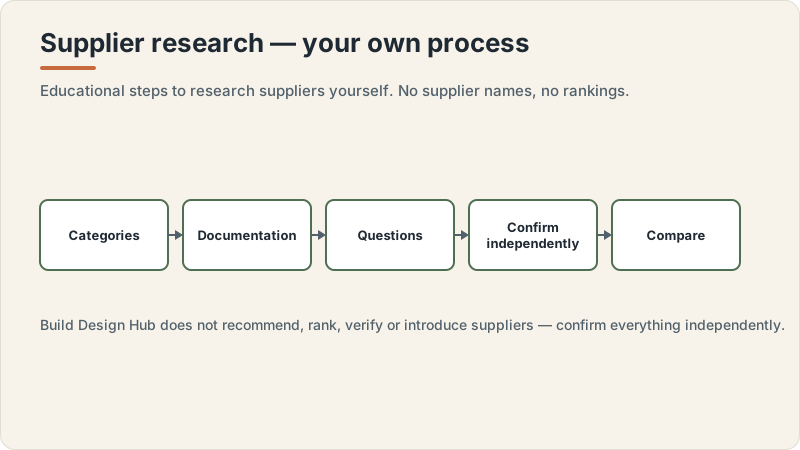
Supplier research process concept
Conceptual editorial diagram — not a construction drawing, specification or to-scale plan. Official court dimensions, standards, drainage, structure and lighting requirements vary by sport, site and location and are confirmed with the relevant federation, supplier and qualified professionals.
What this research helps you prepare
This resource helps you build your own structured research around suppliers of complete padel court kits, where the structure, glass, mesh and surface are offered together as a package. It organises that research into supplier categories to investigate, documentation to request, points you must confirm independently, and criteria for comparing options on a consistent basis.
Everything stays at a research and preparation level. It does not tell you which kit or supplier is suitable, and it does not provide technical specifications, dimensions or engineering detail. Requirements and costs vary by location, site, scope, supplier, access, drainage, lighting, surface, shipping and professional requirements, so the aim is informed research rather than fixed expectations.
Use it to prepare before you make contact, to record what each supplier provides against a common set of prompts, and to flag the questions that belong with qualified professionals rather than with a sales conversation.
- A map of the supplier categories worth researching around complete kits
- A list of documentation to request so you can compare on a like-for-like basis
- Prompts for what to confirm independently rather than assume
- Comparison criteria that keep cost, time and availability as drivers to verify, not figures
Supplier categories and documentation to research
Complete padel court kits can come from suppliers that position themselves very differently, even when the headline offer sounds similar. Some present a fully bundled package; others combine a core kit with elements they expect you or another party to source separately. Researching how a supplier defines the kit, and what falls inside or outside it, is more useful than assuming any standard composition.
As you research, note what documentation each supplier can provide, because consistent paperwork is what makes comparison possible. Treat any specification sheet, compliance claim or supporting document as something to read carefully and confirm with the relevant authority, federation or qualified professional, not as a fact to accept. This resource cannot state what any kit should contain, because there is no universal norm to quote.
- How the supplier defines a complete kit, and which of structure, glass, mesh and surface are included
- What is explicitly excluded and would need to be sourced or arranged separately
- What documentation describes the kit components and their stated characteristics
- What the supplier states about compliance with sport or federation requirements, to confirm independently
- What is provided in writing about packaging, delivery and what arrives on site
- What care, handling or maintenance documentation accompanies the kit
Risk areas and what not to assume
Researching a complete kit means watching for the gaps a bundled offer can hide. Because everything is presented together, it is easy to assume that base, groundwork, drainage, lighting and final installation are part of the package when they may not be. Identifying these interface points early is a core part of your research, since that is where scope often falls between parties.
Avoid treating any claim about dimensions, sport compliance, delivery, availability or condition on arrival as settled. Official padel court requirements vary and must be confirmed with the relevant federation, supplier or qualified designer. Cost, timing and availability vary by site, scope, supplier, access, shipping and local conditions, so record them as drivers to verify rather than assumptions to carry forward.
- Do not assume base, drainage, lighting or installation are inside the kit unless stated in writing
- Do not assume a kit meets sport or federation requirements without independent confirmation
- Do not assume delivery, customs and on-site handling are the supplier's responsibility
- Do not treat described timelines or availability as fixed; confirm what drives and could change them
- Do not assume two similarly described kits contain comparable components
- Do not rely on a brochure or sample alone in place of documentation and professional review
What to ask before comparing options
Before you place one kit alongside another, settle the questions that make a comparison meaningful. Researching the questions first means you gather the same information from each supplier, so differences reflect the offers rather than gaps in what you asked. These are research prompts, not requests for technical instruction.
Frame your questions around composition, exclusions, documentation, coordination with site and installation work, and how each supplier handles changes and support. Because requirements and costs vary by location and project, the useful questions concern what drives them and what must be confirmed, never the figures themselves.
- What exactly does the complete kit include, and what is outside it?
- What documentation can you provide for each component and any compliance claims?
- Which works, such as base, drainage, lighting and installation, do you expect others to handle?
- How do you describe coordination with whoever prepares the site and installs the kit?
- What factors most affect delivery, lead time and availability for a project like mine?
- How are scope, inclusions, exclusions and any changes recorded in writing?
Questions for qualified professionals
Some questions belong with independent professionals rather than with a supplier, because they call for judgement, verification or specialist knowledge. As you research kits, line up the people who can give neutral input on site suitability, base and drainage, lighting, enclosure, sport compliance and any legal, tax or customs matters that an imported kit might raise.
Use the prompts below to plan who to involve and what to ask. Requirements vary by location and project and must be confirmed with the relevant authority, federation and qualified professionals; this resource cannot state them as fact, and nothing here is engineering, legal, tax or customs advice.
- Designer or engineer: is a kit of this type suitable for my site and intended use?
- Site, base and drainage specialists: is the groundwork that the kit relies on being planned soundly?
- Lighting and enclosure specialists: how should these coordinate with the kit components?
- Local authority and relevant federation: what permit, zoning, noise and sport requirements apply here?
- Legal, tax or customs advisor: what should I confirm if a kit is imported from another country?
- Independent reviewer: do the kit composition, documentation and exclusions hold up under scrutiny?
What this does not replace
This is an educational project-preparation resource, not a supplier or contractor recommendation, not contractor matching, not an estimate, and not procurement, legal, tax or customs advice. It does not provide engineering, design, architecture, inspection or construction advice, and it does not tell you which kit or supplier to choose.
Requirements and costs vary by location, site, scope, supplier, access, drainage, lighting, surface, shipping and local conditions, and official sport or federation requirements must be confirmed with the relevant bodies. Consult qualified designers, engineers, contractors, lighting and drainage specialists, local authorities and legal, tax or customs advisors where appropriate before making any decision.
Build Design Hub does not recommend, rank, verify or introduce suppliers or contractors, and does not name any specific company. HELPERG LLC is the publisher and operator only. Researching, verifying and selecting any supplier remain your responsibility.
Padel court kit supplier research checklist
- 1Have you recorded how each supplier defines the complete kit and its components?
- 2Have you noted exactly what each kit includes and what is excluded?
- 3Have you requested documentation for the structure, glass, mesh and surface elements?
- 4Have you noted any sport or federation compliance claims to confirm independently?
- 5Have you identified whether base, drainage, lighting and installation sit inside or outside the kit?
- 6Have you asked what drives delivery, lead time and availability rather than expecting fixed figures?
- 7Have you recorded what each supplier provides in writing about packaging and on-site handling?
- 8Have you captured the same comparison points across every supplier you research?
- 9Have you flagged any imported-kit questions for a legal, tax or customs advisor?
- 10Have you listed which questions belong with qualified professionals rather than suppliers?
- 11Have you planned to verify every key claim independently before committing?
Common mistakes to avoid
- Assuming a complete kit covers base, drainage, lighting and installation when it may not
- Comparing kits on headline price without comparing what each one actually contains
- Treating supplier compliance or dimension claims as confirmed rather than as points to verify
- Accepting described delivery times or availability as fixed instead of asking what drives them
- Overlooking customs, tax and logistics questions when a kit is imported from abroad
- Failing to request and compare the same documentation from every supplier
- Relying on a sample or brochure rather than written specification and professional review
- Recording different information for each supplier, making any comparison unreliable
When to involve a professional
- Specialist site, base, drainage, lighting and enclosure work should be carried out by qualified professionals in each trade.
- A qualified designer or engineer can assess whether a complete kit of a given type suits your site and intended use.
- Official padel court dimensions and sport requirements vary and should be confirmed with the relevant federation, supplier or qualified designer.
- Permit, zoning, noise, accessibility and other requirements vary by location and must be confirmed with the relevant authority and qualified professionals.
- Imported kits can raise customs, tax and logistics questions that should be confirmed with a qualified legal, tax or customs advisor.
- Build Design Hub does not recommend, rank, verify or introduce suppliers; researching, verifying and selecting any supplier remain your responsibility.
Frequently asked questions
Questions readers ask about this topic
What does researching a complete padel court kit involve?
It means understanding what the kit bundles together, such as structure, glass, mesh and surface, and what it leaves out. The useful research is mapping inclusions, exclusions and documentation across suppliers so you can compare consistently, rather than assuming any standard composition or relying on a single brochure.
Does this resource recommend or name padel court kit suppliers?
No. It gives you a framework for your own research. Build Design Hub does not name, rank, rate, verify or endorse suppliers or contractors, and HELPERG LLC is the publisher and operator only. Researching, verifying and selecting any supplier remain your responsibility.
How should I handle claims about cost, delivery or availability?
Treat them as drivers to confirm, not as figures to rely on. Cost, lead time and availability vary by site, scope, supplier, access, shipping and local conditions, so research what affects them and confirm specifics in writing with the supplier and qualified professionals before deciding.
What if the kit is imported from another country?
Note that customs, tax and logistics questions may arise and confirm them with a qualified legal, tax or customs advisor for your location. This resource does not state customs, tax or duty treatment, because these vary by jurisdiction and must be checked with the relevant authority and professionals.
Can I rely on a supplier's documentation about sport requirements?
Treat it as a starting point, not as fact. Official padel dimensions and sport requirements vary and should be confirmed with the relevant federation, supplier or qualified designer. Use the documentation to inform your research and verify the key points independently.
Keep reading