
Who this guide is for
- Owners and operators comparing quotes that each include different warranty language
- Project sponsors who want warranty terms captured in writing before deciding
- Buyers separating product warranties from workmanship or installation warranties
- Anyone unsure which exclusions and assumptions sit behind a headline guarantee
- Project managers assembling questions for suppliers, contractors and their own advisers
- People preparing for a qualified professional or legal review of warranty terms
Planning diagram
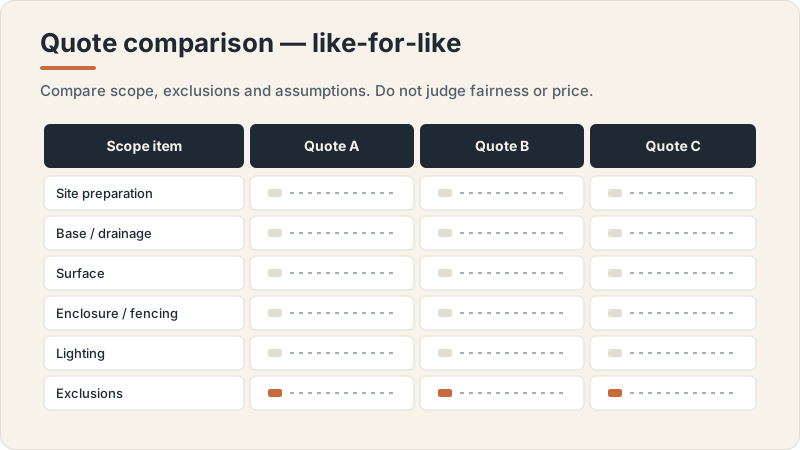
Quote comparison matrix concept
Conceptual editorial diagram — not a construction drawing, specification or to-scale plan. Official court dimensions, standards, drainage, structure and lighting requirements vary by sport, site and location and are confirmed with the relevant federation, supplier and qualified professionals.
What this research helps you prepare
This page helps you prepare a structured set of warranty questions to use across the quotes you gather, so you can see how each supplier and contractor describes their product and workmanship cover in their own words. The goal is preparation and comparison structure, not a verdict on any term.
It does not tell you whether a warranty is good value or whether one offer is better than another. It simply helps you ask the same questions of everyone, record the answers, and notice where cover, exclusions and responsibilities differ so you can raise those points with the supplier and with a qualified professional before deciding.
- A consistent question set to apply across every quote
- A way to separate product cover from workmanship or installation cover
- Prompts to surface exclusions, assumptions and conditions early
- A reminder of what to request in writing rather than take on trust
Separating product, workmanship and other warranties
Quotes often bundle several distinct promises under the single word warranty, and they are not interchangeable. A product or material warranty typically comes from whoever manufactures the surface, kit or component, while a workmanship or installation warranty relates to how the work was carried out. There may also be separate cover on individual elements such as lighting, fencing, glass or drainage.
Ask each supplier and contractor to spell out which warranties exist, who stands behind each one, and how they relate to each other, so you understand who you would be dealing with on different kinds of issue. The structure and terminology vary, so capture how each party describes it rather than assuming a common standard.
- Which warranties are product or material based, and which are workmanship based?
- Who issues each warranty and who would you contact for a claim?
- Are lighting, fencing, glass, drainage or base covered separately?
- How do the different warranties interact if an issue spans more than one?
- Is any cover passed through from a third party rather than the party you are paying?
Exclusions, conditions and assumptions to ask about
The practical value of any warranty sits in its exclusions and conditions, so these deserve specific questions rather than a glance. Ask what is not covered, what conditions must be met to keep cover valid, and what assumptions about site, use, maintenance or installation the warranty depends on. Wording here varies widely between suppliers.
Avoid assuming that a longer-sounding promise is broader, or that an exclusion list is exhaustive. The aim is to understand the boundaries as questions, then confirm the actual terms with the supplier and a qualified professional rather than interpreting the document yourself.
- What does each warranty explicitly exclude?
- What conditions or maintenance steps must be met to keep cover valid?
- What assumptions about site, base, drainage, usage or climate does it rely on?
- Does intensity of use, commercial operation or modification affect cover?
- How are claims assessed, and what evidence would you be expected to provide?
Documentation and maintenance implications
A warranty is only as useful as the paperwork behind it, so plan to get the terms in writing rather than relying on a verbal summary or a line in a brochure. Ask which documents you would receive, when, and in whose name, and how any transfer to a future owner or operator would work if that matters to you.
Warranties frequently carry maintenance obligations, so it helps to understand those implications before you commit, including any records you would need to keep. These conditions vary by product and supplier, so confirm them directly and reflect any ongoing obligations in your own maintenance planning.
- Will you receive the full warranty terms in writing before committing?
- What documents, dates and serial or batch details would be provided?
- Are there maintenance, cleaning or inspection obligations tied to cover?
- What records would you need to keep to support a future claim?
- Is the warranty transferable, and under what conditions?
What to ask before comparing options
Before you line warranties up side by side, make sure you are comparing the same things. Ask each party to describe cover in consistent terms so that differences in wording do not look like differences in substance, and note where a quote is silent on a point others address.
Build a simple comparison structure of your own, using identical questions for each option, and record answers in writing. This is a worksheet you fill in, not a ranking this resource produces; it does not tell you which warranty to prefer.
- Are you asking every supplier the same warranty questions?
- Have you noted where a quote is silent rather than assuming cover exists?
- Are you comparing like with like across product and workmanship cover?
- Have you separated the warranty terms from price so each is assessed clearly?
- Have you flagged anything you do not understand for professional review?
Questions for qualified professionals
Warranty terms can carry legal and financial weight, so several questions are better directed to qualified professionals than answered by reading the document alone. A suitably qualified adviser can help you understand obligations, limitations and how terms interact with your contract and local requirements.
Use these prompts to prepare for that conversation. Build Design Hub does not interpret warranty terms, give legal or contractual advice, or tell you whether a warranty is adequate; those judgements belong with your own qualified advisers.
- How do these warranty terms sit alongside the wider contract?
- Which obligations or exclusions could affect us in practice?
- Are there local legal requirements that interact with these terms?
- What should be clarified or confirmed in writing before signing?
- How would responsibility be divided if an issue spans several warranties?
What this does not replace
This is an educational project-preparation resource only. It is not a supplier or contractor recommendation, not contractor matching, and not an estimate. It does not assess whether any warranty is fair, sufficient or competitively priced, and it provides no figures, durations or timelines.
It is not procurement, legal, tax, customs, engineering, design or construction advice, and it is not a substitute for qualified professional review. Warranty terms, requirements and costs vary by location, supplier, product and project, and must be confirmed directly with the relevant suppliers, authorities and qualified professionals. Build Design Hub does not recommend, rank, verify, endorse or introduce suppliers or contractors; HELPERG LLC is publisher and operator only.
- Not a recommendation, ranking or verification of any warranty, supplier or contractor
- Not contractor matching, brokerage or introduction
- Not an estimate and not procurement, legal, tax or customs advice
- Not engineering, design or construction advice
- Requirements and costs vary and must be confirmed with the relevant parties
- Qualified professional review is required before decisions
Warranty question and documentation worksheet
- 1List which warranties each quote includes and who issues each one
- 2Note for each whether it covers product or material, or workmanship and installation
- 3Record the exclusions each party states for every warranty
- 4Capture the conditions and assumptions cover depends on
- 5Ask whether lighting, fencing, glass, drainage and base are covered separately
- 6Confirm what documentation you would receive and in whose name
- 7Note any maintenance, cleaning or inspection obligations tied to cover
- 8Record whether and how each warranty is transferable
- 9Check whether you would receive full terms in writing before committing
- 10Mark any wording you do not understand for professional review
- 11Apply the same questions to every option to keep comparison consistent
- 12List the points to confirm directly with suppliers and qualified professionals
Common mistakes to avoid
- Treating product and workmanship warranties as one and the same promise
- Assuming a longer-sounding term means broader cover
- Skipping the exclusions and conditions where the real boundaries sit
- Relying on a verbal summary instead of getting the terms in writing
- Overlooking maintenance obligations that cover depends on
- Comparing warranties without asking every supplier the same questions
- Interpreting contractual or legal wording without qualified professional review
- Assuming separate elements like lighting or fencing share the surface warranty
When to involve a professional
- When warranty terms interact with your contract, involve a qualified professional to help you understand the combined obligations.
- When you are unsure what an exclusion, condition or assumption means in practice, seek qualified professional interpretation rather than guessing.
- When local legal requirements may affect warranty terms, confirm with a suitably qualified adviser for your location.
- Before signing anything, have qualified professionals review the terms you intend to rely on.
- Build Design Hub does not interpret warranties, give legal advice or assess adequacy; HELPERG LLC is publisher and operator only.
Frequently asked questions
Questions readers ask about this topic
Does this page tell me whether a warranty is good or fair?
No. It helps you prepare questions and a comparison structure so you can understand and record what each warranty covers. It does not assess fairness, adequacy or value, and it contains no figures. Confirm terms directly with the supplier and a qualified professional.
What is the difference between a product and a workmanship warranty?
Broadly, a product or material warranty relates to the item itself and usually comes from its manufacturer, while a workmanship or installation warranty relates to how the work was carried out. Terminology and structure vary, so ask each party to describe their cover in their own words and confirm the actual terms.
What should I get in writing?
Aim to receive the full warranty terms in writing before committing, including who issues each warranty, what is excluded, any conditions, and which documents and details you would hold. What is provided varies by supplier, so ask each one directly and review the terms with a qualified professional.
Does Build Design Hub check or recommend any warranty or supplier?
No. This is educational preparation only. Build Design Hub does not recommend, rank, verify, endorse or introduce suppliers or contractors, and HELPERG LLC is publisher and operator only. Verification and decisions are your responsibility with qualified professional support.
Why does this page avoid durations and figures?
Warranty periods, conditions and costs vary by product, supplier, installer and location, so any number here could mislead. The page gives you factors to ask about instead, so you can confirm the actual terms directly with suppliers and qualified professionals.
Keep reading