
Who this guide is for
- Prospective padel court owners researching glass and steel structure suppliers
- Operators comparing component offerings from several suppliers
- Project managers assembling a question set for structure conversations
- Clubs adding padel courts who want consistent supplier research
- Owners unsure what documentation to request beyond a headline quote
- Anyone wanting to understand what must be confirmed independently
Planning diagram
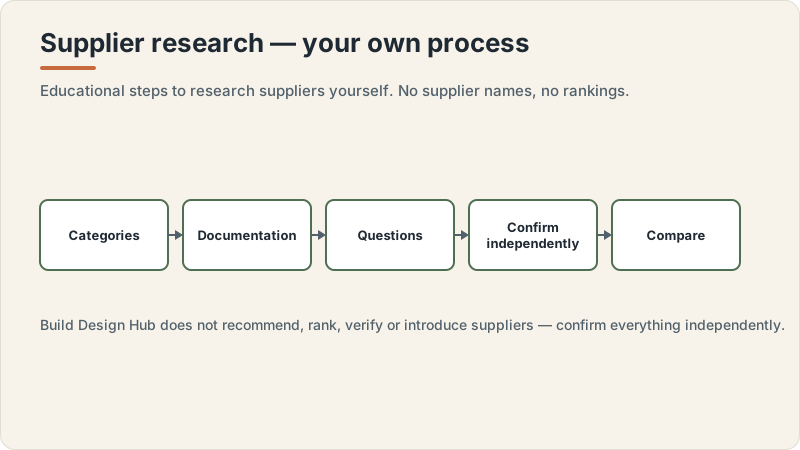
Supplier research process concept
Conceptual editorial diagram — not a construction drawing, specification or to-scale plan. Official court dimensions, standards, drainage, structure and lighting requirements vary by sport, site and location and are confirmed with the relevant federation, supplier and qualified professionals.
What this research helps you prepare
This resource helps you build a structured set of questions to take into research conversations with suppliers of padel court glass panels and steel enclosure structures. It is organised around the component categories to research, the documentation to request, the questions worth asking, and the things you must confirm independently, so you can cover ground that a polished proposal can skip over.
Everything here stays at a planning and question level. The questions help you listen for clarity, consistency and completeness, not to provide technical specifications or to tell you what any supplier should say. Glass thickness, tempering, framing, steel sections, coatings, fixings, dimensions and sport requirements vary and must be confirmed with the relevant federation, supplier and qualified professionals; this resource cannot state them as fact.
Use it to prepare before contacting suppliers, to compare offerings on a like-for-like basis, and to record where answers differ or are vague so you can follow up with qualified professionals where appropriate.
- A question set covering glass, steel, fixings, coatings and supporting components
- Prompts for the documentation worth requesting from each supplier
- A way to notice where component scope or answers differ between suppliers
- Framing that keeps cost, lead time and availability as drivers to confirm, never figures
Component categories to research and document to request
Padel enclosures combine several component categories, and suppliers describe and divide them differently. It helps to research each category separately rather than treating the structure as a single item. Glass panels, the steel frame and posts, mesh or fencing elements, fixings and fittings, surface-interface details, and any coatings or finishes can all come from different sources or carry different responsibilities, so ask how a supplier defines each part of what they offer.
Rather than asking a supplier to state specifications you then take as fact, ask what documentation they can provide so a qualified professional can review it. Useful documentation to request might include component descriptions, material and treatment information, any certificates or test references the supplier holds, installation and handling guidance, and the terms attached to any guarantee. Listen for whether a supplier can supply this readily and refers requirements to the relevant standards or authorities rather than asserting fixed certainties.
- How do you define and divide the glass, steel, mesh, fixings and coating components?
- What documentation can you provide for each component for my own professional review?
- What material, treatment or certificate information do you hold and can you share?
- How do you describe coatings, finishes and corrosion considerations in your documentation?
- Which components do you supply directly, and which come from other sources?
- What installation, handling and storage guidance accompanies the components?
Coordination, interfaces and what to confirm independently
The glass and steel structure does not sit in isolation; it meets the base, surface, drainage and any lighting or supporting works, and those interfaces are where misunderstandings and gaps commonly arise. Ask how a supplier expects their components to connect to groundwork and surface that others may carry out, and how responsibility is divided at each interface, rather than assuming the supplier manages everything.
These are coordination and research questions, not requests for engineering or construction instructions. You are listening for whether a supplier understands how their part connects to specialist site, base, drainage and enclosure work, and whether they refer dimensions, loadings, fixings and sport requirements to qualified professionals and the relevant federation. Anything stated about suitability for your site, your conditions or official requirements should be confirmed independently, not accepted on the supplier's word.
- How do your components interface with the base, surface and any supporting works?
- Which parts of the installation and fixing do you carry out, and which do others?
- How do you expect court dimensions and sport requirements to be confirmed, and with whom?
- What do you need to be confirmed about my site before your components are suitable?
- How are changes to component scope identified, agreed and documented?
- Which of your statements should I have verified by a qualified professional?
Comparison criteria and what not to assume
When you research several suppliers, it helps to compare them on a consistent set of criteria rather than on overall impression. A comparison structure you fill in yourself, covering component scope, documentation provided, coordination approach, written inclusions and exclusions, and aftercare, lets you see real differences instead of being swayed by presentation. Record where answers are clear, vague or missing for each supplier.
Be deliberate about what you do not assume. Do not assume two suppliers include the same components, that quoted timelines or availability are fixed, that any guarantee follows a standard, or that a supplier's view of sport or regulatory requirements is authoritative. Costs, lead times and availability vary by location, scope, supplier, access, shipping, surface, drainage, lighting and local conditions, so treat them as drivers to confirm in writing rather than as figures to rely on.
- Compare component scope category by category, not as a single package
- Compare what documentation each supplier will actually provide
- Note coordination and interface responsibilities for each option
- Record inclusions, exclusions and how each is put in writing
- Flag where availability, timing or suitability is stated rather than confirmed
- Avoid assuming a standard guarantee, specification or sport-requirement position
What to ask before comparing options
Before you line up suppliers against each other, make sure you are comparing like with like. Differences in how each supplier defines components, divides responsibility and documents their offering can make a tidy comparison misleading if you have not first established a common basis. Asking the same foundational questions of each supplier, and recording the answers, gives your comparison meaning.
Use these prompts to set that common basis. They are research questions, not requests for specifications you take as fact. Requirements, costs, lead times and availability vary by location and project and must be confirmed with the relevant authorities, federation, suppliers and qualified professionals.
- What exactly is included in your offering, and what is explicitly excluded?
- Which components are yours, and which are sourced from or installed by others?
- What documentation will you provide for independent professional review?
- What drives your lead time and availability, and what could change them?
- How do you put component scope, inclusions and exclusions in writing?
- What would you need confirmed about my site before your components apply?
Questions for qualified professionals
Some questions sit better with independent professionals than with a supplier, because they involve judgement, verification or specialist knowledge that a supplier cannot impartially provide about their own products. Before and during your supplier research, line up the people who can give neutral input on structure, fixings, site, base, drainage and any legal or regulatory matters.
Use the prompts below to plan who to involve and what to ask them. Requirements vary by location and project and must be confirmed with the relevant authority, federation and qualified professionals; this resource cannot state them as fact.
- Structural engineer: is the proposed glass and steel approach suitable for my site, use and conditions?
- Designer or engineer: do the supplier's components and fixings suit how the court will be used?
- Site, base and drainage specialists: are the interfaces with groundwork being planned soundly?
- Local authority and relevant federation: what permit, zoning, safety, noise and sport requirements apply here?
- Independent reviewer: does the supplier's component scope, documentation and aftercare hold up under scrutiny?
- Legal advisor: what do the guarantee, warranty and supply terms actually commit each party to?
What this does not replace
This is an educational project-preparation resource, not a supplier or contractor recommendation, not contractor matching, not an estimate, and not procurement, legal, tax, customs, engineering, design or construction advice. It does not provide technical specifications, does not tell you which supplier to choose, and is not a substitute for qualified professional review.
Requirements and costs vary by location, site, scope, supplier, access, shipping, surface, drainage, lighting and local conditions, and official sport, safety or federation requirements must be confirmed with the relevant bodies. Consult qualified structural engineers, designers, contractors, site and drainage specialists, local authorities and legal or professional advisors where appropriate.
Build Design Hub does not provide contractor matching or professional recommendations and does not verify, rank, rate or endorse any supplier. HELPERG LLC is the publisher and operator only. Verification and selection of any supplier remain your responsibility.
Padel glass and steel supplier research checklist
- 1Have you asked how the supplier defines and divides the glass, steel, mesh and fixing components?
- 2Have you asked what documentation they can provide for independent professional review?
- 3Have you asked what material, treatment or certificate information they hold and can share?
- 4Have you asked how their components interface with the base, surface and supporting works?
- 5Have you asked which parts they install and which they leave to others?
- 6Have you asked how court dimensions and sport requirements are confirmed and with whom?
- 7Have you asked what drives lead time and availability and what could change them?
- 8Have you recorded inclusions, exclusions and how each is put in writing?
- 9Have you compared suppliers on a consistent set of criteria rather than impression?
- 10Have you flagged any statements that need independent verification?
- 11Have you planned which questions to take to qualified professionals?
Common mistakes to avoid
- Treating the glass and steel structure as one item instead of researching each component category
- Accepting stated specifications as fact rather than requesting documentation for professional review
- Assuming two suppliers include the same components in their offering
- Treating quoted lead times or availability as fixed instead of asking what drives them
- Overlooking how components interface with base, surface and drainage carried out by others
- Assuming a standard guarantee or warranty rather than reading the actual terms
- Relying on a supplier's view of sport or regulatory requirements without independent confirmation
- Comparing suppliers on overall impression instead of a consistent, recorded criteria set
When to involve a professional
- A qualified structural engineer can review whether a glass and steel enclosure approach suits your site, intended use and conditions.
- Fixings, loadings and interfaces with the base and surface should be assessed by qualified professionals, not inferred from a supplier's documentation alone.
- Official padel court dimensions, safety and sport requirements vary and should be confirmed with the relevant federation, supplier or qualified designer.
- Permit, zoning, safety, noise and other requirements vary by location and must be confirmed with the relevant authority and qualified professionals.
- Guarantee, warranty and supply terms should be reviewed, with legal or professional advice taken where the wording carries weight.
- Build Design Hub does not verify, rank or endorse suppliers; selection and verification remain your responsibility.
Frequently asked questions
Questions readers ask about this topic
What should I research first with a padel glass and steel supplier?
Start with component scope: how the supplier defines and divides the glass, steel, mesh, fixings and coatings, and what they supply directly versus through others. Understanding where their responsibility starts and ends matters more than any headline figure, because suppliers divide these components very differently.
How should I handle questions about specifications and certificates?
Ask what documentation the supplier can provide so a qualified professional can review it, rather than taking stated specifications as fact. Material, treatment and certificate details vary and should be confirmed against the relevant standards and with qualified professionals; a supplier cannot impartially verify their own products.
How should I treat lead times, availability and cost?
Treat them as drivers to confirm, not as figures to rely on. They vary by location, scope, supplier, access, shipping, surface, drainage, lighting and local conditions. Ask what drives lead time and availability and what could change them, and confirm specifics in writing with the supplier and qualified professionals.
Does this resource recommend or match glass and steel suppliers?
No. It provides a research question set to frame your own conversations. Build Design Hub does not match, rank, rate, verify or endorse suppliers, and HELPERG LLC is the publisher and operator only. Verification and selection of any supplier remain your responsibility.
Can I rely on a supplier's answers about sport and safety requirements?
Treat them as a starting point, not as fact. Official padel dimensions, safety and sport requirements vary and should be confirmed with the relevant federation, authority or qualified designer. Listen for whether a supplier refers to those bodies rather than stating fixed certainties about your project.
Keep reading