
Who this guide is for
- Football and soccer clubs weighing surface options for a new or replacement pitch
- Academies and youth-development programmes scoping a training or match surface
- Schools and colleges deciding how a single pitch must serve mixed daily use
- Municipalities and parks departments balancing community demand against upkeep capacity
- Developers and facility managers including a pitch within a wider scheme
- Sports trusts and boards preparing a surface brief for funders or decision-makers
Planning diagram
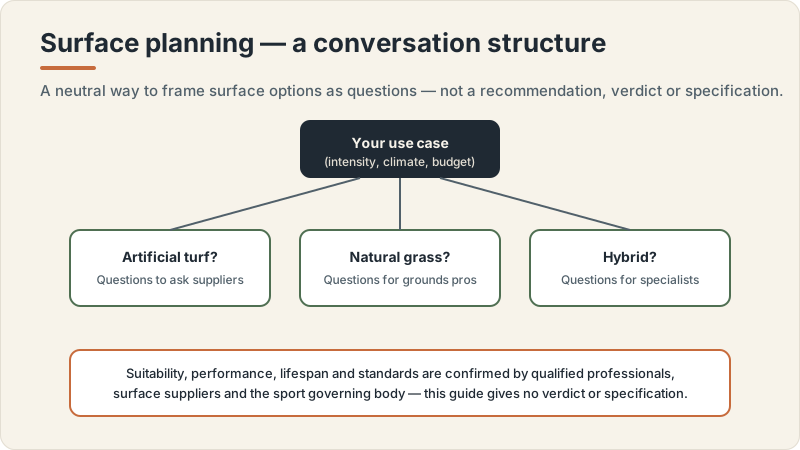
Football surface planning conversation concept
Conceptual editorial diagram — not a construction drawing, specification, to-scale plan or proof of a real project. It is not engineering, structural, fire/life-safety, crowd-safety or accessibility-compliance guidance. Capacities, dimensions, standards, requirements and costs vary by facility type, audience, site, use case and governing body, and are confirmed with qualified professionals, relevant authorities and governing bodies. Build Design Hub does not design, build, inspect, certify, recommend or match anyone.
What this guide helps you prepare
This guide helps you build a structured way to discuss the football surface choice before you ask anyone for a design or a quote. It assumes you are weighing artificial turf, natural grass and hybrid systems at a high level, and that you want to compare them on the things that actually matter to your situation rather than on appearance or a single sales pitch. The work here is to clarify your priorities, understand that each surface family carries distinct trade-offs, and assemble a consistent set of questions you can put to professionals, suppliers and a governing body so the answers come back comparable.
It deliberately stops short of telling you which surface to choose. It does not state which system suits your sport, what any option should cost, how long a surface should last, or which standards apply, because those depend on the level of play, the governing body, the site, the climate, the intended users and the maintenance you can sustain, and requirements vary by location, use case, governing body, owner, site, surface system, maintenance plan, climate, authority and professional team; confirm with qualified professionals. What it does is help you separate the decisions you can make now from the ones that belong to qualified professionals and governing bodies.
- A clear statement of your priorities, constraints and how the pitch must be used
- An understanding that turf, grass and hybrid are distinct families with different trade-offs
- A consistent question set to put to each surface option for a like-for-like comparison
- A record of which suitability and standards claims still need professional confirmation
- A realistic view of the maintenance and operating commitment each option implies
- A list of open assumptions and unknowns to carry into professional conversations
Framing the surface choice as trade-offs, not a verdict
The most useful mental model is that artificial turf, natural grass and hybrid systems are not better or worse in the abstract; they trade off differently against the demands you place on them. Use intensity, available maintenance staff and equipment, climate and weather, the level of play, governing-body expectations and how many user groups share the pitch all pull the choice in different directions. A surface that suits heavy, year-round community hire may differ from one chosen for a particular standard of competitive football, and what works for a well-resourced grounds team may not suit an organisation relying on external upkeep. Rather than seek a single right answer, it helps to map how each option performs against your specific demands and where the tension points lie.
Treat every claim that one surface is right for your project as a question to confirm, not as a settled fact, and ask each supplier or professional to explain their reasoning rather than simply state a conclusion. The honest comparisons are the ones where you have asked turf, grass and hybrid the same questions and can see clearly where each gains and gives up something. Holding the decision open while you gather that input, and resisting the urge to commit to a surface before you understand its full operating implications, is usually what makes the eventual choice defensible to the people who fund, run and use the facility.
- List the demands on the pitch first: use intensity, weather, level of play, user mix
- Map how turf, grass and hybrid each trade off against those demands, not in the abstract
- Ask each option the same questions so gains and compromises are visible side by side
- Treat any "this surface is best for you" claim as a prompt to ask why, with evidence
- Note where governing-body expectations may narrow or shape the realistic options
- Keep the decision open until maintenance and operating implications are understood
The operating and maintenance reality behind each option
Surface choice is really a long-term operating decision, and the differences in upkeep between turf, grass and hybrid are among the most important things to surface early. Each family asks for a different routine, different equipment and different skills, and a surface that looks appealing at the planning stage can become a burden if the organisation cannot sustain what it needs. Before comparing options on anything else, it is worth asking what each one is intended to require day to day and season to season, who would carry out that work, and whether the staff, equipment, time and access exist to do it. The honest answer to "can we actually maintain this?" often does more to shape the choice than any feature comparison.
It is equally important to plan for renewal and end of life rather than treating them as surprises, and to keep figures out of your own assumptions. How long a surface lasts, how often it needs intervention and what renewal involves all vary with the system, the intensity of use, the climate, the maintenance and the site, so no fixed figure applies and any expectation should be confirmed with the supplier and reviewed by a qualified professional. Asking each option to describe its intended maintenance routine and renewal pathway lets you compare them on operating reality, and to plan budgets and staffing on a realistic footing rather than on optimistic assumptions.
- Ask what routine each surface is intended to require, and how often, with no figures
- Establish who would do the upkeep: in-house grounds staff or an external arrangement
- Confirm what equipment, skills and access each maintenance routine assumes
- Compare options on "can we sustain this?" before comparing them on anything else
- Treat any stated surface life or renewal interval as a question to confirm, not a promise
- Ask what end-of-life renewal involves for each option so it can be planned, not improvised
Planning questions before speaking with professionals
Before you approach designers, suppliers or installers, settle the questions only you and your stakeholders can answer, because they shape every comparison that follows. Who will use the pitch, at what level, how often and in what climate all influence which trade-offs matter most, as does whether the pitch must satisfy a particular football governing body or serve mixed community and school use. Getting agreement among the people who will fund, run and use the facility, and writing the brief down once, gives suppliers and professionals a stable basis to respond to and reduces the risk of proposals that solve the wrong problem or compare surfaces on different terms.
Be honest about what you do not yet know, and record it as open questions rather than guesses. Budget, programme, surface life and standards are common places where it is tempting to assume a figure or a requirement; resist that and capture them as things to confirm, because they vary by location, use case, governing body, owner, site, surface system, maintenance plan, climate, authority and professional team; confirm with qualified professionals. A clear internal brief plus an honest list of unknowns is the most useful thing you can bring to a professional conversation about surface choice.
- Who are the intended users, at what level of play, and how frequently will the pitch run?
- Must the surface satisfy a specific football governing body, competition or grading?
- Is the pitch for training, matches, community hire, school use, or a combination?
- What maintenance capacity, in staff, equipment and budget, can you genuinely sustain?
- Who within your organisation must agree the surface brief before you proceed?
- Which questions about cost, programme, surface life and standards are you leaving open?
Questions for qualified professionals
The brief and questions you prepare are the starting point for conversations with qualified professionals, not a substitute for them. Designers, agronomists, surface suppliers, installers and your sport's governing body can advise on suitability, requirements, site conditions, maintenance reality and the trade-offs between turf, grass and hybrid in ways no general guide can. The prompts below are designed to be taken into those conversations using the notes you have gathered, so professional input lands where it matters and you can capture each answer in writing for a like-for-like comparison across the surface options.
Be open about what is still unconfirmed, and ask each party to explain their reasoning and the conditions behind their advice rather than to hand you a verdict. The most valuable outcome is clarity about what applies to your specific project: which surfaces are realistically suitable for your users, level and site, what each would demand to maintain, what your governing body expects, and where responsibilities sit between the parties involved. Decisions about specification, suitability, certification and construction should rest on that qualified review, not on a self-prepared brief alone.
- Which surface options do you consider realistically suitable for our users, level and site, and why?
- How do turf, grass and hybrid trade off for our specific use intensity and climate?
- What maintenance routine, equipment and skills would each option you propose depend on?
- Which official standards or football governing-body requirements apply, and who confirms them?
- What renewal pathway and end-of-life considerations come with each surface you propose?
- Where do the responsibilities of each party begin and end, set out in writing?
What this does not replace
This is an educational project-preparation resource only. It is not a construction manual and not engineering, architectural, turf-installation, drainage-engineering, sports-surface-specification, structural, fire or life-safety, crowd-safety, accessibility-compliance, permit, zoning, legal, tax or procurement advice. It does not design, specify, install, certify, inspect or approve anything, and it is not an estimate, quote, price, capacity recommendation or performance or lifespan guarantee. Requirements, standards, dimensions, surface systems and costs vary by location, use case, governing body, owner, site, climate, maintenance plan, authority and professional team, and are confirmed with qualified professionals, relevant authorities and the sport governing body.
Build Design Hub does not design, build, install, engineer, inspect, certify, recommend, rank, verify, introduce, broker or match suppliers or contractors, and HELPERG LLC is publisher/operator only. Use this resource to prepare your own thinking, then have qualified professionals you engage directly review your project. Decisions about engineering, surface specification, drainage, safety, compliance, procurement and suitability must rest on those professionals, the relevant authorities and the governing body for your sport and location.
- Not a construction manual and not engineering, turf-installation or drainage-engineering instructions
- Not sports-surface specification, structural, fire/life-safety, crowd-safety or accessibility-compliance advice
- Not permit, zoning, legal, tax or procurement advice
- Not a supplier or contractor recommendation, ranking, directory or matching service
- Not an estimate, price, capacity recommendation or performance/lifespan guarantee — requirements and costs vary
- Qualified professional review is required before any project decision
Football surface selection planning worksheet
- 1Record who will use the pitch, at what level of play, and how often it must run
- 2Note whether the surface must satisfy a specific football governing body or competition
- 3Describe whether the pitch is for training, matches, community hire, school use or a mix
- 4Write down the climate and weather conditions the surface will have to cope with
- 5List turf, grass and hybrid as the families you want each professional to compare
- 6Prepare one consistent question set to put to every surface option, with no figures
- 7Record the maintenance routine each option is intended to require, captured as questions
- 8Note the staff, equipment, time and budget you can realistically sustain for upkeep
- 9Decide whether maintenance would be in-house or arranged externally for each option
- 10Capture each suitability or standards claim as confirmed or still to verify
- 11Mark cost, programme, surface life and renewal as open questions, not assumptions
- 12List where the responsibilities of suppliers, installers and professionals meet
- 13Compile the official requirements you still need a governing body to confirm
- 14Gather all open questions and unconfirmed points for qualified professional review
Common mistakes to avoid
- Choosing a surface on appearance or one persuasive proposal without comparing options
- Treating the decision as a verdict to be handed down rather than trade-offs to weigh
- Comparing turf, grass and hybrid on different terms so the options are not truly comparable
- Underestimating maintenance and picking a surface the organisation cannot realistically sustain
- Assuming a stated surface life is guaranteed rather than dependent on use, climate and care
- Treating an assumed cost, programme or standard as a fact instead of an open question
- Skipping confirmation of governing-body expectations with the relevant authority
- Committing to a surface before understanding its full operating and renewal implications
When to involve a professional
- When you need the realistic suitability of turf, grass or hybrid assessed for your users and site
- When suppliers' claims about suitability or standards need independent verification
- When official or football governing-body requirements may apply and must be confirmed
- When proposals conflict and you cannot tell which surface view to rely on
- When you are ready to turn a surface brief into specification, certification or construction decisions
- When maintenance capacity is uncertain and you need help judging what each option demands
Frequently asked questions
Questions readers ask about this topic
Does this guide tell me whether to choose artificial turf, natural grass or a hybrid?
No. It deliberately gives no verdict. The aim is to help you frame the choice as comparable questions for qualified professionals, suppliers and your sport's governing body, who can advise on what is suitable for your specific users, site and level of play. The decision rests on that qualified input, not on this guide.
Will this guide recommend a surface supplier or installer, or tell me what a pitch costs?
No. Build Design Hub does not recommend, rank, verify, introduce or match suppliers or contractors, and this guide names none. It also gives no prices, surface lifespans, dimensions or standards, because those vary by location, use case, governing body, site and surface system. It helps you research and compare options yourself, then take your findings to qualified professionals.
Which surface is best for football?
There is no single answer this guide can give. Suitability depends on the level of play, the governing body, the intended users, the climate, the site and the maintenance you can sustain. Treat any claim that a surface is right for your project as a question to confirm with the supplier, the relevant football governing body and a qualified professional.
How do I compare the surface options fairly?
Ask turf, grass and hybrid the same questions, using one consistent brief, and capture each answer in writing. Focusing on use intensity, maintenance reality, governing-body expectations and renewal helps you see where each option gains and gives something up. Review those comparisons with qualified professionals before committing.
Keep reading