
Who this guide is for
- Owners and developers scoping an indoor sports hall, gym, or multi-purpose training space and its storage needs
- Schools, colleges, and education estate teams planning a sports hall or indoor court store
- Sports clubs and community groups preparing a brief for a shared or multi-use indoor venue
- Municipalities and public-sector project teams gathering storage requirements before appointing professionals
- Facility and operations managers documenting equipment, access, and handling needs for a project team
- Project managers and client-side representatives assembling stakeholder input ahead of design conversations
Planning diagram
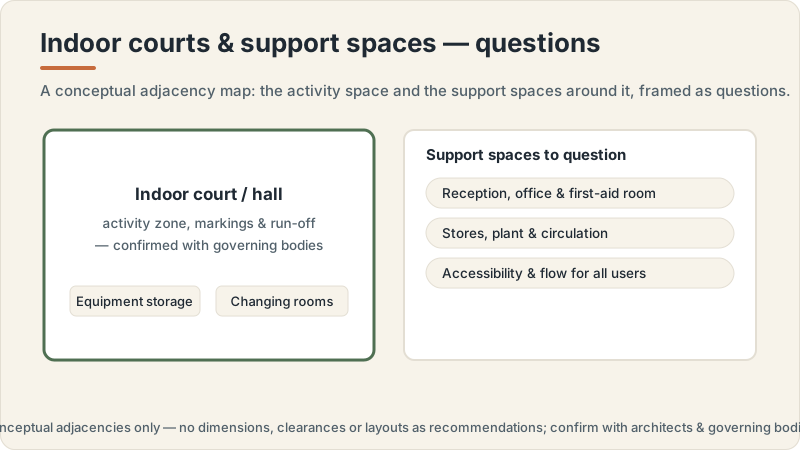
Indoor court and support-space planning concept
Conceptual editorial diagram — not a construction drawing, specification, to-scale plan or proof of a real project. It is not engineering, structural, fire/life-safety, crowd-safety or accessibility-compliance guidance. Capacities, dimensions, standards, requirements and costs vary by facility type, audience, site, use case and governing body, and are confirmed with qualified professionals, relevant authorities and governing bodies. Build Design Hub does not design, build, inspect, certify, recommend or match anyone.
What this guide helps you prepare
Equipment storage is easy to leave until late in an indoor facility project, yet it shapes how usable and safe a hall feels every session. This guide helps you build the storage part of your project brief: an inventory of what your programme actually needs to store, a picture of how that equipment is retrieved and returned during a typical day, and a clear list of the questions you want your architect and other qualified professionals to resolve. The aim is preparation and organisation of your own thinking, not a design and not a set of answers.
Working through the material below should help you describe your storage needs in the language of use — who moves what, when, from where, and to where — rather than in numbers you are not positioned to set. It deliberately avoids stating any dimensions, clearances, door sizes, capacities, or loadings, because those depend on your equipment, activities, facility type, governing body expectations, site, authorities, and professional team. Everything here is framed so you can hand a richer brief to the people qualified to design, size, and confirm the store.
- A programme-level inventory of activities the facility will host and the equipment each one relies on
- A plain-language description of how equipment is retrieved, used, and returned across a typical operating day
- A list of storage questions to raise in stakeholder and project-brief discussions before design begins
- A structured set of questions to put to your architect, designers, and other qualified professionals
- A record of assumptions and open items to confirm with the professional team and relevant authorities
- Clarity on which decisions belong to qualified professionals rather than to the owner or operator
Cataloguing what needs storing and how it is handled
A useful storage brief starts with an honest catalogue of what the facility is expected to hold, grounded in the activities the programme will actually run rather than a generic wish list. Group items by how they behave in practice: large mobile items that roll or are wheeled in and out, bulky items that are lifted or carried, awkward or long items, smaller loose kit, and anything with seasonal, occasional, or shared-club ownership. Note items that arrive and leave with visiting teams or hirers versus those that live permanently on site, because handling patterns differ. This catalogue is descriptive — it captures what you have and how people interact with it, not how much space it needs or how it should be racked, which are questions for qualified professionals.
Alongside the catalogue, describe the handling story for each group: who moves it, how often, how many people are typically involved, and whether it is moved by hand or with wheels, trolleys, or other aids. Record how equipment behaves during a fast changeover between activities, and whether some items are set up and struck down repeatedly through the day. Capturing this pattern of movement — including who is doing the moving, such as staff, coaches, students, or hirers — gives your professional team the real-world context they need. Avoid recording any weights, sizes, or handling limits as facts; instead flag them as items to confirm with suppliers, governing bodies, and qualified professionals, since safe handling considerations vary by item, setting, and use case.
- Which activities the facility will host, and what equipment each one depends on to run
- How each group of items is typically moved: by hand, wheeled, carried, or with handling aids, and by how many people
- Which items live on site permanently versus those brought and removed by visiting teams or hirers
- Which items are set up and struck down repeatedly during changeovers between activities
- What seasonal, occasional, or shared-club equipment needs a home even when rarely used
- What handling, weight, or manual-handling considerations should be confirmed with qualified professionals and governing bodies
Access, movement routes, and adjacency to activity zones
Where a store sits relative to the activity it serves affects how smoothly the facility runs, so it is worth describing the relationships you want before any layout is drawn. Think about which activity zones each group of equipment serves and how far and by what route it travels between store and zone during a session. Consider how equipment crosses paths with people — participants, spectators, staff — and whether retrieval and return happen during busy transitions. Describe these as adjacency and flow preferences in your brief; do not attempt to set door widths, corridor sizes, thresholds, or turning space, all of which are matters for qualified professionals working to the relevant requirements for your facility.
Access also spans the whole journey of equipment, not just the store door: delivery and drop-off when new kit arrives, routes from any goods entrance to the store, and the daily in-session path between store and activity zone. Note where level changes, thresholds, or shared circulation might complicate movement, and flag them as questions rather than solving them. Capturing how equipment access interacts with participant flow, changing and support rooms, and any spectator areas helps your professional team weigh the trade-offs. Keep the emphasis on describing desired relationships and constraints to confirm — the store adjacent to the courts it serves, the goods route separated from the participant route where possible — while leaving sizing, clearances, and compliance questions to the professionals and authorities responsible for them.
- Which activity zones each group of stored equipment primarily serves, and how directly it needs to reach them
- The typical in-session route between store and activity zone, and whether it crosses participant or spectator flow
- How new equipment is delivered, dropped off, and routed from any goods entrance to the store
- Where thresholds, level changes, or shared circulation might affect equipment movement and should be reviewed by professionals
- How storage access relates to changing rooms, support rooms, and spectator areas in the wider layout
- Which access, clearance, and route questions must be confirmed with qualified professionals and relevant authorities
Planning questions before speaking with professionals
Before your first design conversation, it helps to resolve as much as you can among your own stakeholders so the brief reflects genuine operational needs rather than guesses. Gather input from the people who will run the facility day to day — coaching staff, caretakers or facilities teams, teachers, club officials, or duty managers — because they understand the real handling and changeover patterns better than anyone. The questions below are prompts to align your own team; they are not decisions to finalise without professional input, and none of them should be answered with a dimension, capacity, or requirement you have simply assumed.
Use this stage to surface disagreements and gaps early: differing views on how many activities share the space, whether hirers store their own kit, or how much occasional equipment truly needs a home. Recording where your stakeholders are unsure is as valuable as recording where they agree, because it tells the professional team what still needs resolving. Keep everything at the level of needs, priorities, and open questions, and carry the unresolved items forward as explicit questions for qualified professionals rather than trying to close them internally.
- Have we listed every activity the facility will host, and confirmed the equipment each one needs?
- Do our operational staff agree on how equipment is moved, and who moves it, during a typical day?
- Which storage adjacencies matter most to us, and where are we willing to accept compromises?
- What do we still not know about our own future programme, and how might that change storage needs?
- Which items belong to hirers or visiting teams, and how does that change what we plan to store?
- Which of our internal assumptions need checking with qualified professionals, suppliers, or governing bodies before design begins?
Questions for qualified professionals
When you meet your architect, designers, and other qualified advisers, a well-organised set of questions turns your brief into productive discussion and helps you compare responses consistently. The prompts below are framed to draw out professional judgement and documentation rather than to extract numbers you would then treat as settled. Ask professionals to explain how they will interpret your storage brief, what requirements and standards apply to your facility type and location, and which authorities or governing bodies they will confirm details with. The goal is to understand their reasoning and the evidence behind it, so you can plan operations, risk, and handover with confidence.
Requirements vary by location, facility type, use case, governing body, owner, site, authority, professional team, and project scope, so ask what applies specifically to your project and request that it be confirmed rather than assumed. Ask what documentation you will receive — drawings, specifications, and any confirmations relevant to storage access and handling — and how storage is coordinated with building systems, changing and support rooms, and the activity zones. Keep the emphasis on what to ask and what to request, and let the professionals carry responsibility for sizing, clearances, compliance, and any structural, loading, or building-systems matters connected to the store.
- How will you interpret our storage brief, and which requirements and standards apply to our facility type and location?
- Which authorities, governing bodies, or standards will you confirm storage-related details against, and when?
- How will storage access, adjacency, and handling be coordinated with the activity zones and support rooms?
- What documentation will we receive covering the store, its access, and how it integrates with the building?
- Which storage decisions are yours to determine as professionals, and which need input from us as the owner or operator?
- What assumptions in our brief would you challenge, and what should we confirm before the design progresses?
What this does not replace
This is an educational planning resource only. It is not an indoor sports facility construction manual and not structural or architectural design, HVAC/ventilation, lighting or acoustic engineering, fire or life-safety, or accessibility-compliance advice, and it is not permit, zoning, inspection, certification, legal, tax, insurance or procurement advice. It does not design, build, engineer, specify, size, certify, inspect or approve anything, gives no capacities, dimensions, clearances, lux, air-change rates, acoustic or temperature thresholds, revenue, ROI or costs, and offers no warranty interpretation or estimate. Requirements, standards, capacities and costs vary by location, facility type, use case, governing body, owner, site, authority, professional team and project scope, and are confirmed with qualified professionals, relevant authorities and governing bodies.
Build Design Hub does not design, build, engineer, inspect, certify, recommend, rank, verify, introduce, broker or match suppliers, contractors, consultants or professionals, and HELPERG LLC is publisher/operator only. Use this resource to prepare your own thinking and briefs, then have the qualified professionals you engage directly — architects, structural and building-services engineers, lighting, acoustic, accessibility and fire/life-safety specialists, and legal or procurement advisors where appropriate — review your project. Decisions about design, engineering, systems, safety, accessibility, compliance, capacity, procurement and cost must rest on those professionals, the relevant authorities and the governing bodies for your sport and location.
- Not an indoor sports facility construction manual and not structural or architectural design
- Not HVAC/ventilation, lighting or acoustic engineering, fire/life-safety or accessibility-compliance advice
- Not permit/zoning, inspection, certification, warranty-interpretation, legal, tax, insurance or procurement advice
- Not a supplier, contractor, consultant or professional recommendation, ranking, directory or matching service
- Not an estimate and gives no capacity, dimension, system-performance, revenue, ROI or cost figures — requirements and costs vary
- Qualified professional review is required before any indoor sports facility project decision
Indoor storage preparation worksheet: what to record, ask, and confirm
- 1Record every activity the facility will host and the equipment each one relies on to run
- 2List stored items grouped by how they are handled: mobile/wheeled, bulky, long/awkward, loose kit, and occasional or shared
- 3Note for each group who moves it, how often, and whether by hand or with wheels, trolleys, or handling aids
- 4Record which items live on site permanently versus those brought and removed by visiting teams or hirers
- 5Capture how equipment is set up and struck down during changeovers between activities
- 6Describe which activity zones each equipment group serves and the desired adjacency between store and zone
- 7Map the typical in-session route between store and activity zone, noting where it crosses participant or spectator flow
- 8Note how new equipment is delivered and routed from any goods entrance to the store
- 9Record thresholds, level changes, or shared circulation to flag for professional review
- 10Gather input from operational staff, coaches, caretakers, teachers, or club officials on real handling patterns
- 11Log every assumption made and mark it as an item to confirm with qualified professionals or governing bodies
- 12List open questions and disagreements among stakeholders to carry into design conversations
- 13Prepare the documentation you want to request from professionals covering storage access and integration
- 14Note which decisions you have identified as belonging to professionals rather than the owner or operator
Common mistakes to avoid
- Stating a store size, door width, capacity, or clearance as fixed, when these are matters for qualified professionals to determine and authorities to confirm
- Assuming your facility must meet particular storage requirements without confirming what actually applies to your type, location, and governing body
- Treating storage sizing, layout, or handling limits as owner decisions rather than questions for the professional team
- Cataloguing equipment by name only, without describing how it is moved, by whom, and how often
- Planning storage as an afterthought once the layout is fixed, instead of describing adjacency needs early in the brief
- Overlooking equipment owned by hirers or visiting teams when scoping what actually needs storing on site
- Skipping input from the staff who run the facility day to day, so the brief misses real changeover and handling patterns
- Progressing to design without recording open questions and assumptions to confirm with qualified professionals
When to involve a professional
- When any storage decision touches structural elements, loadings, dimensions, or clearances — these belong to qualified professionals and relevant authorities
- When storage access, routes, or adjacency raise fire-safety, means-of-escape, or accessibility questions, which require appropriately qualified advisers
- When you need to confirm which requirements, standards, or governing-body expectations apply to your specific facility type and location
- When storage integrates with building systems, changing and support rooms, or activity zones in ways that affect the overall layout
- When handling, weight, or manual-handling considerations for equipment need to be assessed against your setting and use case
- When you are ready to translate your storage brief into a design, or to review a professional's proposals against your recorded needs
Frequently asked questions
Questions readers ask about this topic
Does Build Design Hub design my storage, size the room, or recommend a supplier or contractor?
No. Build Design Hub is an educational resource. It does not design, build, engineer, inspect, or certify facilities, does not design building systems such as ventilation, lighting, or acoustics, and does not recommend, rank, verify, or match suppliers, contractors, or professionals. It provides no dimensions, capacities, clearances, or costs. Sizing, layout, and specification of a store are for qualified professionals working to the requirements that apply to your project.
How much space or how big a store will I need?
This guide cannot and does not give a size, capacity, or any dimension. What a store needs depends on your equipment, activities, facility type, use case, governing body, site, authority, professional team, and project scope. Use the worksheet to describe what you store and how it is handled, then ask qualified professionals to determine and confirm the space and layout for your specific project.
Can I use this guide to decide storage requirements myself?
Use it to prepare and organise your own thinking — an equipment catalogue, handling patterns, and adjacency preferences — not to set requirements. Requirements, standards, and compliance matters vary by location, facility type, and governing body, and must be confirmed with qualified professionals and relevant authorities. Treat the prompts here as questions to raise, not answers to finalise on your own.
When should I bring in a qualified professional for storage planning?
As early as it is useful. Involve professionals whenever a decision touches sizing, clearances, structure, loadings, access routes, fire safety, accessibility, or how storage integrates with the wider layout and building systems. The preparation in this guide is designed to make those conversations more productive, not to replace them.
Keep reading