
Who this guide is for
- Owners, clubs, and community organisations planning a new or refurbished indoor sports facility who need to prepare for safety conversations
- Schools, colleges, and municipalities scoping a sports hall or multi-purpose space and organising stakeholder input
- Developers and project sponsors assembling a brief before engaging fire and life-safety professionals
- Facility managers preparing operational and handover questions around safety and life-safety systems
- Project coordinators structuring quote comparisons and documentation requests across professional teams
- Trustees, committees, or governance groups reviewing a project scope and wanting informed questions to ask
Planning diagram
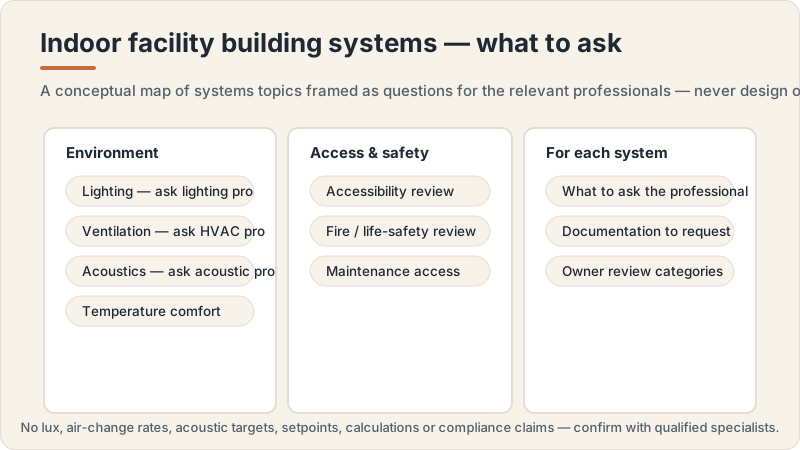
Indoor facility building-systems questions concept
Conceptual editorial diagram — not a construction drawing, specification, to-scale plan or proof of a real project. It is not engineering, structural, fire/life-safety, crowd-safety or accessibility-compliance guidance. Capacities, dimensions, standards, requirements and costs vary by facility type, audience, site, use case and governing body, and are confirmed with qualified professionals, relevant authorities and governing bodies. Build Design Hub does not design, build, inspect, certify, recommend or match anyone.
What this guide helps you prepare
This guide helps you turn a broad intention such as "we want an indoor sports facility that is safe" into a structured set of questions, notes, and documentation requests you can bring to qualified professionals. Indoor sports spaces combine assembly-style use, active participants, spectators, equipment storage, and support rooms, which is exactly why fire and life-safety considerations are handled by specialists and the authorities with jurisdiction rather than resolved from a template. Your role as owner or project team is to describe your intended use clearly, surface the questions that matter, and keep an organised record, not to determine safety outcomes yourself.
Everything in this guide stays at the level of what to ask and what to request. It does not tell you how many people a space holds, how exits should be arranged, how detection or alarm systems should be designed, or how any life-safety element should be configured. Those are professional and regulatory determinations that depend on your specific building, use case, occupancy profile, and jurisdiction. Use these prompts to prepare, then let qualified fire and life-safety professionals and the relevant authorities confirm what applies to your project.
- Write a plain-language description of how each space will be used, by whom, and when, as context for professionals
- List every distinct space (hall, courts, gym, spectator areas, changing rooms, stores) so nothing is reviewed in isolation
- Collect any existing drawings, surveys, or prior reports that a professional may want to see
- Note open questions and uncertainties rather than trying to answer safety questions yourself
- Record which decisions you believe belong to professionals or authorities, so they are not made informally
- Prepare a single shared file where notes, questions, and documentation requests are kept together
Framing the intended use and occupancy context
A fire and life-safety professional can only assess a facility once they understand how it will actually be used, so preparing an honest, detailed picture of intended activities is one of the most useful things an owner can do. Indoor sports facilities are rarely single-purpose: a hall may host training, matches, community events, examinations, or performances, and each pattern of use may raise different questions for the professionals who review it. Rather than guessing what occupancy or arrangement is acceptable, describe the range of uses you anticipate and let the professional and the authority determine what that means for the design and operation of the space.
Support and ancillary spaces deserve the same care in description as the main playing area. Changing rooms, equipment stores, plant rooms, kitchens or serveries, offices, and circulation routes all form part of how people move through and occupy the building. Capturing how these connect, who uses them, and when they are occupied gives professionals the context they need. Avoid stating any figure for how many people will be present or how spaces relate to one another as a settled fact; present these as your current expectations to be confirmed.
- Describe the primary and secondary activities each space is intended to host, including one-off or seasonal events
- Note whether spectators are anticipated, and in which areas, without assuming any figure or arrangement
- Capture times and patterns of use, including out-of-hours, community, or lettings scenarios
- List ancillary spaces and how they connect to the main facility and to escape routes
- Flag any change of use or refurbishment history if the building already exists
- Record any mixed occupancy (for example school plus community use) as a question for professionals
Organising documentation and roles for a safety review
A productive safety review depends on having the right information available and knowing who is responsible for what. Before engaging professionals, it helps to gather existing documentation such as site plans, floor layouts, prior surveys, previous fire or safety assessments, and any operational records if the facility is being refurbished rather than newly built. Having these organised does not mean interpreting them; it means being ready to share them so a qualified professional can assess your situation on the basis of accurate information rather than assumptions.
Clarity about roles prevents safety decisions from being made informally by the wrong people. Owners, project managers, designers, contractors, and specialist fire and life-safety professionals each have distinct responsibilities, and the authorities with jurisdiction have the final say on many matters. Preparing a simple map of who is expected to do what, and where the boundaries lie, helps you avoid treating a professional's determination as an owner's choice. This guide does not assign those responsibilities; it prompts you to confirm them with the relevant professionals and authorities.
- Assemble existing drawings, surveys, and any prior safety or fire assessments in one place
- Note who currently holds each document and whether it is current or superseded
- List the professional roles you expect to involve and what each is being asked to confirm
- Identify which authorities may have jurisdiction and record them as parties to confirm with
- Prepare questions about how findings, reports, and recommendations will be documented and handed over
- Keep a log of decisions and who made them, distinguishing owner choices from professional determinations
Planning questions before speaking with professionals
Before you sit down with a fire or life-safety professional, it is worth working through the questions you can answer yourself: what the facility is for, who will use it, how it connects to the wider site, and what information you already hold. These are scoping and preparation questions, not safety determinations. Answering them clearly lets the professional spend time on the specialist assessment rather than gathering basic context, and it helps you compare the scope of different professional proposals on a like-for-like basis.
The questions below are prompts to organise your own thinking and your project brief. They are deliberately about your intentions, your documentation, and your open uncertainties, not about thresholds, capacities, or system design. Anything that touches on what is required, permitted, or safe should be carried into the professional conversation rather than resolved in advance. If a question feels like it needs a technical or regulatory answer, that is a signal to route it to a qualified professional or the relevant authority.
- Have we described every space and its intended use clearly enough for a professional to understand?
- What documentation do we already hold, and what might a professional or authority ask us to provide?
- Which uncertainties are we treating as questions for professionals rather than trying to resolve internally?
- Have we identified which authorities may have jurisdiction over this facility and its uses?
- What is the scope of the safety review we are asking each professional to carry out?
- How do we want findings and recommendations documented so they support handover and operation?
Questions for qualified professionals
When you meet with fire and life-safety professionals, the value of preparation shows in the quality of the questions you can ask. The prompts below are framed to draw out professional judgement and documentation rather than to extract a number or a specification from this guide. They ask what the professional would assess, what information they need, what standards or authorities they will refer to, and how their findings will be recorded. This keeps the responsibility for safety determinations firmly with qualified people and the authorities with jurisdiction.
Use these questions as a starting point and expand them for your specific facility and jurisdiction. Requirements and expectations vary by location, facility type, use case, governing body, owner, site, authority, professional team, and project scope, so a professional's answers for your project may differ from any general description. Record the answers, the reasoning, and any documentation provided, and confirm anything that will affect operation, handover, or future changes of use with the appropriate professionals and authorities.
- What information do you need from us to assess this facility, and in what form?
- Which authorities or governing bodies will your assessment need to be confirmed against for our uses?
- How will your findings, assumptions, and any limitations be documented for our records and handover?
- What ongoing responsibilities or reviews should we plan for as owners once the facility is in use?
- How might different or future uses of the space change what needs to be reviewed?
- What should we ask other members of the project team to confirm so that your assessment stays valid?
What this does not replace
This is an educational planning resource only. It is not an indoor sports facility construction manual and not structural or architectural design, HVAC/ventilation, lighting or acoustic engineering, fire or life-safety, or accessibility-compliance advice, and it is not permit, zoning, inspection, certification, legal, tax, insurance or procurement advice. It does not design, build, engineer, specify, size, certify, inspect or approve anything, gives no capacities, dimensions, clearances, lux, air-change rates, acoustic or temperature thresholds, revenue, ROI or costs, and offers no warranty interpretation or estimate. Requirements, standards, capacities and costs vary by location, facility type, use case, governing body, owner, site, authority, professional team and project scope, and are confirmed with qualified professionals, relevant authorities and governing bodies.
Build Design Hub does not design, build, engineer, inspect, certify, recommend, rank, verify, introduce, broker or match suppliers, contractors, consultants or professionals, and HELPERG LLC is publisher/operator only. Use this resource to prepare your own thinking and briefs, then have the qualified professionals you engage directly — architects, structural and building-services engineers, lighting, acoustic, accessibility and fire/life-safety specialists, and legal or procurement advisors where appropriate — review your project. Decisions about design, engineering, systems, safety, accessibility, compliance, capacity, procurement and cost must rest on those professionals, the relevant authorities and the governing bodies for your sport and location.
- Not an indoor sports facility construction manual and not structural or architectural design
- Not HVAC/ventilation, lighting or acoustic engineering, fire/life-safety or accessibility-compliance advice
- Not permit/zoning, inspection, certification, warranty-interpretation, legal, tax, insurance or procurement advice
- Not a supplier, contractor, consultant or professional recommendation, ranking, directory or matching service
- Not an estimate and gives no capacity, dimension, system-performance, revenue, ROI or cost figures — requirements and costs vary
- Qualified professional review is required before any indoor sports facility project decision
Indoor sports facility safety-review preparation worksheet
- 1Record a plain-language description of each space and its intended primary and secondary uses
- 2List all ancillary and support spaces (changing rooms, stores, plant, offices, serveries) and how they connect
- 3Note anticipated patterns of use, including events, lettings, and out-of-hours activity, as expectations to confirm
- 4Gather existing drawings, floor plans, and site surveys in one accessible location
- 5Collect any prior fire, safety, or condition reports and note whether each is current
- 6Identify the professional roles you expect to involve and what each is being asked to confirm
- 7List the authorities you believe may have jurisdiction and mark them as parties to confirm with
- 8Write down every open question or uncertainty rather than answering safety questions yourself
- 9Record which decisions you believe belong to professionals or authorities, not to the owner
- 10Prepare questions about how findings and recommendations will be documented and handed over
- 11Note any change-of-use or refurbishment history relevant to the building
- 12Log who holds each document and who has made or will make each decision
- 13Draft the scope of the safety review you are requesting, for like-for-like comparison of proposals
- 14Keep a shared file that consolidates notes, questions, and documentation requests for the project team
Common mistakes to avoid
- Stating a capacity, occupancy figure, or dimension as fixed instead of treating it as something professionals and authorities confirm
- Assuming a safety requirement applies (or does not apply) without confirming it for your specific facility and jurisdiction
- Treating a life-safety or system decision as an owner's choice when it is a professional or regulatory determination
- Describing only the main playing area and overlooking changing rooms, stores, plant, and circulation routes
- Bringing incomplete or outdated documentation to a professional review, leading to assessment on wrong assumptions
- Skipping professional review for a change of use or refurbishment because the building already exists
- Interpreting a prior report yourself rather than asking a qualified professional to confirm what still applies
- Comparing professional proposals without a clearly defined review scope, so quotes are not like-for-like
When to involve a professional
- When you need any assessment of fire, life-safety, evacuation, or occupancy matters for the facility or its intended uses
- When the building is changing use, being refurbished, or hosting activities different from its original design intent
- When you are unsure which authorities have jurisdiction or what documentation they may require
- When existing reports, drawings, or surveys need to be interpreted or confirmed as still valid
- When a decision could affect how people occupy, move through, or leave the building, or how it is operated
- When findings must be formally documented for handover, insurance discussions, or ongoing facility management
Frequently asked questions
Questions readers ask about this topic
Does this guide tell me how many people my sports hall can hold or how exits should be arranged?
No. This guide does not state any capacity, occupancy, dimension, clearance, or arrangement, and it is not fire or life-safety advice. Occupancy and life-safety matters are determined by qualified professionals and the authorities with jurisdiction, based on your specific facility, uses, and location. Use this guide only to prepare questions and documentation for those professionals.
Does Build Design Hub design, inspect, certify, or arrange safety systems for my facility?
No. Build Design Hub is an educational resource. It does not design, build, engineer, inspect, certify, or verify anything, and it does not design fire, HVAC, lighting, or acoustic systems. It also does not recommend, rank, introduce, or match suppliers, contractors, or professionals, and it provides no capacities, dimensions, costs, or requirements. All safety decisions rest with qualified professionals and the relevant authorities.
Can I use this guide instead of a fire or life-safety professional?
No. This guide only helps you prepare for conversations with qualified professionals; it does not replace them. Requirements vary by location, facility type, use case, governing body, owner, site, authority, professional team, and project scope, so anything touching on what is required, permitted, or safe must be confirmed with appropriately qualified people and the authorities with jurisdiction.
What is the best thing I can do to make a safety review go smoothly?
Prepare a clear, honest description of how each space will be used, organise your existing documentation, write down your open questions, and keep a record of who is responsible for what. Bringing accurate context lets professionals focus their assessment where it matters, but the safety determinations themselves always remain theirs and the authorities'.
Keep reading