
Who this guide is for
- Owners and operators arranging service or maintenance cover for an indoor sports hall or gym
- Clubs and community organisations comparing draft maintenance agreements
- Schools and academy teams scoping upkeep for shared sports and support spaces
- Municipal and public-sector project teams preparing procurement questions
- Developers and project managers handing a facility over to an operating team
- Facility managers organising planned and reactive maintenance conversations
Planning diagram
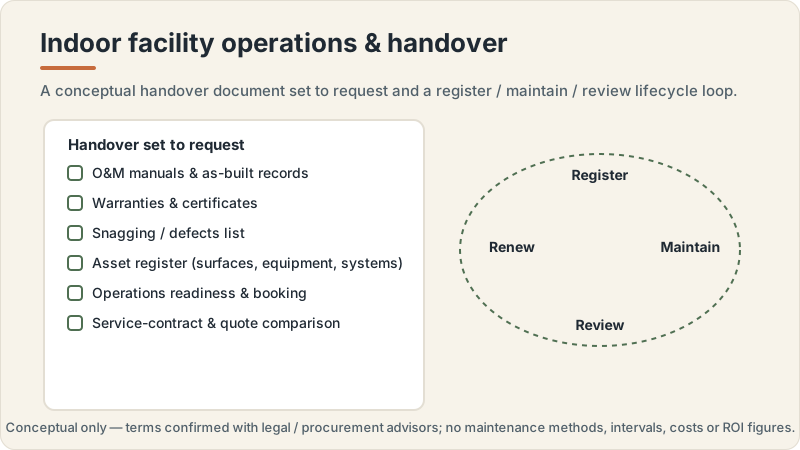
Indoor facility operations and handover concept
Conceptual editorial diagram — not a construction drawing, specification, to-scale plan or proof of a real project. It is not engineering, structural, fire/life-safety, crowd-safety or accessibility-compliance guidance. Capacities, dimensions, standards, requirements and costs vary by facility type, audience, site, use case and governing body, and are confirmed with qualified professionals, relevant authorities and governing bodies. Build Design Hub does not design, build, inspect, certify, recommend or match anyone.
What this guide helps you prepare
This guide helps you prepare for conversations about service and maintenance contracts for an indoor sports facility by clarifying what a contract might cover, what it might exclude and which terms typically need explaining. It supports you in building a question list, gathering the documentation an advisor or provider will ask for, and organising your priorities before you compare draft agreements. The aim is readiness, not a ready-made contract: you leave better able to describe your facility, its spaces and its operating pattern to the qualified professionals who will do the drafting and interpretation.
It deliberately stops short of any advice. It does not tell you what a fair scope is, what a response time should be, what a clause means or whether a term protects you, because those are matters for your legal, procurement and technical advisors who can see your actual documents and circumstances. Treat every prompt here as something to raise with a qualified professional, and confirm all terms, obligations and service expectations with your advisors and any relevant governing body before making decisions.
- A structured list of scope and exclusion questions to raise with providers and advisors
- Prompts for describing your halls, courts, changing areas and support rooms accurately
- A way to organise documentation providers and advisors are likely to request
- Question sets that help you compare draft agreements on a consistent basis
- Reminders of where legal, procurement and technical review must take over
Scope, exclusions and boundaries to clarify
The heart of any service or maintenance conversation is what is included, what is excluded and where responsibility shifts. For an indoor sports facility this can span building systems, sports surfaces, fixed equipment, changing and support rooms, and shared or externally-served spaces, and it is rarely obvious from a summary alone which of these a draft agreement actually covers. Preparing questions about scope boundaries, what falls outside the agreement, and how grey areas are handled helps you have a clearer discussion, but the meaning and adequacy of any scope wording is for your advisors to interpret against your documents.
Exclusions deserve as much attention as inclusions. A draft may exclude particular systems, consumables, specialist surfaces, or damage from certain causes, and it may treat planned maintenance and reactive repairs differently. Rather than assuming what is or is not covered, prepare to ask for each boundary to be explained and shown in writing, and to confirm with qualified professionals how any excluded item would then be maintained. Do not treat any scope or exclusion described to you verbally as settled until it is confirmed in the documents your advisors review.
- Which spaces, systems, surfaces and equipment are named as in scope, and which are not?
- How are planned maintenance and reactive or emergency repairs distinguished in the agreement?
- What consumables, parts or specialist items are excluded, and who then handles them?
- How are shared, externally-served or landlord-controlled areas treated?
- Which causes of damage or failure are excluded, and how is that documented?
- Where scope is unclear, who confirms the boundary and how is it recorded?
Service levels, terms and provider obligations to have explained
Beyond scope, service and maintenance agreements set out how the arrangement operates: how work is requested and prioritised, how performance is measured, how the contract runs over time and how either party can end or change it. For an indoor sports facility with a demanding schedule of sessions, the practical questions are about how quickly issues are addressed, how records are kept, and how the term, renewal and exit are structured. These are questions to prepare, not standards to set yourself, because appropriate service levels depend on your facility, use case, governing body and advisors.
It also helps to prepare questions about the softer edges of an agreement: how the provider communicates, what reporting you receive, how variations and additional work are priced and approved, and how disputes or under-performance are handled. Ask for these to be explained and evidenced rather than assuming them from a headline description. Any interpretation of what an obligation legally means, or whether a term is reasonable, belongs with your legal and procurement advisors and should be confirmed before signing.
- How are service requests logged, prioritised and tracked, and what records are provided?
- What reporting, records and documentation will you receive, and how often?
- How are the contract term, renewal, notice and exit arrangements structured?
- How are variations, additional work and out-of-scope requests priced and approved?
- How is under-performance, dispute or escalation handled under the agreement?
- What ongoing obligations sit with the owner or operator rather than the provider?
Planning questions before speaking with professionals
Before you approach providers or your advisors, it helps to gather a clear internal picture of the facility and how it is used, so the questions you ask are grounded in your own situation. Note the spaces you operate, the systems and surfaces you are responsible for, the documentation you already hold from handover, and the operating pattern that a maintenance arrangement needs to fit around. This preparation is descriptive: you are recording what you know and where the gaps are, not deciding what any contract must contain.
Equally, take stock of your decision-making and review process. Identify who signs off contracts, who holds procurement and legal responsibility, and what internal approvals apply, so that professional review is built in from the start rather than bolted on at the end. Keep every technical, legal or commercial judgement as an open question for the relevant qualified professional, and resist forming conclusions about terms or service levels before those advisors have been involved.
- Which spaces, systems and surfaces are you responsible for, and which are not?
- What handover documentation, manuals and records do you already hold?
- What operating pattern and access constraints must a maintenance arrangement fit around?
- Who owns the contract decision, and who provides legal and procurement review?
- Which questions are you unsure about and should route to a qualified professional?
- What internal approvals apply before any agreement can be signed?
Questions for qualified professionals
When you speak with qualified professionals and your advisors, use your prepared notes to ask focused questions rather than seeking reassurance in general terms. Legal and procurement advisors can explain what draft terms mean, how obligations and exclusions are framed, and how the term, liability and exit provisions fit your circumstances. Technical professionals can advise on how particular systems, surfaces or equipment should be maintained and what documentation supports that. Ask each to explain their reasoning and to point to the specific wording or evidence behind it.
Keep the boundaries clear: this guide and Build Design Hub do not draft, interpret or advise on contracts, and cannot tell you whether a term is acceptable. Bring your questions and documents to the professionals who can. Confirm every point of scope, service level, obligation and exclusion with your advisors and any relevant governing body, and treat their written guidance, not this guide, as the basis for any decision.
- Can you explain what this scope and these exclusions mean for our facility?
- How do the term, renewal, notice and exit provisions apply to our situation?
- How are liability, indemnity and insurance-related terms framed in this draft?
- What documentation should we request or retain to support this arrangement?
- Where do you see gaps, risks or unclear wording we should clarify with the provider?
- What should we confirm with a relevant authority or governing body before signing?
What this does not replace
This is an educational planning resource only. It is not an indoor sports facility construction manual and not structural or architectural design, HVAC/ventilation, lighting or acoustic engineering, fire or life-safety, or accessibility-compliance advice, and it is not permit, zoning, inspection, certification, legal, tax, insurance or procurement advice. It does not design, build, engineer, specify, size, certify, inspect or approve anything, gives no capacities, dimensions, clearances, lux, air-change rates, acoustic or temperature thresholds, revenue, ROI or costs, and offers no warranty interpretation or estimate. Requirements, standards, capacities and costs vary by location, facility type, use case, governing body, owner, site, authority, professional team and project scope, and are confirmed with qualified professionals, relevant authorities and governing bodies.
Build Design Hub does not design, build, engineer, inspect, certify, recommend, rank, verify, introduce, broker or match suppliers, contractors, consultants or professionals, and HELPERG LLC is publisher/operator only. Use this resource to prepare your own thinking and briefs, then have the qualified professionals you engage directly — architects, structural and building-services engineers, lighting, acoustic, accessibility and fire/life-safety specialists, and legal or procurement advisors where appropriate — review your project. Decisions about design, engineering, systems, safety, accessibility, compliance, capacity, procurement and cost must rest on those professionals, the relevant authorities and the governing bodies for your sport and location.
- Not an indoor sports facility construction manual and not structural or architectural design
- Not HVAC/ventilation, lighting or acoustic engineering, fire/life-safety or accessibility-compliance advice
- Not permit/zoning, inspection, certification, warranty-interpretation, legal, tax, insurance or procurement advice
- Not a supplier, contractor, consultant or professional recommendation, ranking, directory or matching service
- Not an estimate and gives no capacity, dimension, system-performance, revenue, ROI or cost figures — requirements and costs vary
- Qualified professional review is required before any indoor sports facility project decision
Service and maintenance contract preparation worksheet
- 1Record each indoor space you operate: halls, courts, changing areas and support rooms
- 2List the building systems, surfaces and fixed equipment you are responsible for
- 3Note which areas are shared, externally-served or outside your control
- 4Gather handover manuals, warranties and records already in your possession
- 5Write down your operating pattern and any access or scheduling constraints
- 6Draft your scope questions: what should be included and what excluded
- 7Draft your exclusion questions: consumables, specialist items and damage causes
- 8List service-level questions: how requests are logged, prioritised and reported
- 9Note term questions: duration, renewal, notice, variation and exit
- 10Record who owns the decision and who provides legal and procurement review
- 11Capture questions you are unsure about to route to a qualified professional
- 12List documentation providers and advisors are likely to request
- 13Prepare a consistent set of questions for comparing draft agreements
- 14Confirm which points must be verified with advisors or a governing body
Common mistakes to avoid
- Assuming a system, surface or space is covered without confirming it appears in the agreement
- Treating a verbally described scope or exclusion as settled before it is in the reviewed documents
- Stating a response time, service level or term as fixed rather than a question for advisors
- Deciding a clause is acceptable without legal or procurement review
- Overlooking exclusions and focusing only on what is included
- Assuming shared or externally-served areas are handled without checking who is responsible
- Signing before internal approvals and professional review are complete
- Treating this guide as contract advice rather than preparation for professional conversations
When to involve a professional
- Before signing, renewing or varying any service or maintenance agreement
- When you need any contract term, obligation or exclusion interpreted
- When liability, indemnity, insurance or exit provisions are involved
- When technical questions arise about how a specific system or surface should be maintained
- When procurement rules, public-sector requirements or governing-body expectations apply
- Whenever you are uncertain what a draft actually covers or means
Frequently asked questions
Questions readers ask about this topic
Does Build Design Hub draft, review or interpret service contracts?
No. Build Design Hub is educational and does not draft, review, interpret or advise on contracts, and it does not design, build, engineer, inspect or certify facilities or systems, or design HVAC, lighting or acoustic systems. It also does not recommend, rank, verify or match suppliers or contractors, and gives no capacities, dimensions, service levels, costs or requirements. This guide only helps you prepare questions to raise with qualified professionals and your legal and procurement advisors.
Can this guide tell me whether a contract term or exclusion is fair?
No. Whether a term, service level or exclusion is appropriate depends on your facility, use case, advisors and any governing body, and only qualified legal and procurement professionals reviewing your actual documents can advise on that. Use this guide to prepare the questions to bring to them.
What documentation should I gather before speaking with a provider or advisor?
As a starting point for your own list, many teams gather handover manuals, warranties, records of the spaces and systems they are responsible for, and notes on their operating pattern. Confirm with your advisors and any provider exactly what documentation they need, as this varies by facility and arrangement.
How do I compare draft agreements fairly?
Prepare a consistent set of questions about scope, exclusions, service levels and terms, and ask each provider to answer them in writing. Do not reach conclusions yourself about which is better; bring the responses to your legal and procurement advisors to interpret against your circumstances.
Keep reading