
Who this guide is for
- Facility owners arranging or anticipating a professional inspection who want their paperwork in order first
- Operators and facility managers responsible for keeping operations and maintenance records up to date
- Schools and colleges preparing site documentation before a scheduled professional visit
- Sports clubs and community organisations organising handover, warranty and defect records for an inspection
- Municipalities and developers assembling governance and lifecycle documentation across multiple facilities
- Project sponsors who need to brief a board or committee on inspection readiness before professionals attend
Planning diagram
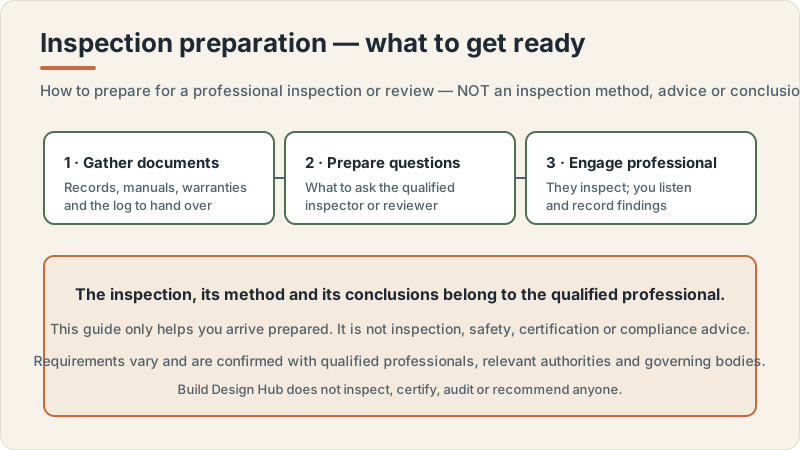
Inspection preparation workflow concept
Conceptual editorial diagram — not a construction drawing, specification, to-scale plan or proof of a real project. It is not engineering, structural, fire/life-safety, crowd-safety or accessibility-compliance guidance. Capacities, dimensions, standards, requirements and costs vary by facility type, audience, site, use case and governing body, and are confirmed with qualified professionals, relevant authorities and governing bodies. Build Design Hub does not design, build, inspect, certify, recommend or match anyone.
What this guide helps you prepare
This guide helps you get ready for a professional inspection by assembling the documents, operations history and questions that are commonly useful to have on hand. The aim is readiness, not analysis: a tidy, well-organised record set and a clear agenda so that when qualified inspectors attend, they can work efficiently and you can understand and act on what they tell you. It treats the inspection itself, and every finding that comes from it, as the work of the qualified professional you engage.
Nothing here tells you how to inspect, what to look for, what condition your facility is in, or whether anything passes, fails or complies. Those are conclusions only a suitably qualified professional can reach, and the requirements behind them vary by facility type, use intensity, surface, system, climate, season, governing body, warranty terms, supplier documentation, contractor scope and local professional requirements. This guide stays on the owner side of that line: gathering, organising and questioning, so that the professional's assessment rests on complete and accurate information.
- A consolidated record set covering handover, warranty, maintenance history and prior reports
- A short summary of how the facility is used and any concerns you have noticed
- A list of systems, surfaces and areas you want the inspector to be aware of
- An agenda of questions to ask the inspector about scope, method and follow-up
- A note of who owns each document and who should attend or be informed
- A clear separation between what you know, what you assume and what needs professional confirmation
Organising the documents to have ready
Inspections tend to go more smoothly when the relevant paperwork is gathered in one place rather than hunted for on the day. Useful material commonly includes the original handover and as-built documents, warranty and guarantee paperwork, supplier and contractor documentation, the maintenance log or service history kept since the facility opened, any prior reports or correspondence, and records of incidents, repairs or alterations. Having these organised lets the inspector focus on their assessment rather than on chasing missing context, and it helps you follow any references they make to earlier work.
Organise the records so they are easy to navigate: grouped by system or area, dated, and with a simple index noting what exists and what is missing. Gaps are worth flagging honestly rather than hiding, because an inspector can only work with the information available. Do not try to interpret the documents or draw conclusions from them yourself; what warranty terms cover, what a record implies and what any requirement means should be confirmed with the supplier, contractor, manufacturer or qualified professional, as these vary by product, scope and location.
- Handover, as-built and commissioning documents from the original project
- Warranty, guarantee and defect-liability paperwork, with the issuer noted
- Supplier, manufacturer and contractor documentation for surfaces and systems
- The maintenance log or service history kept since handover, however informal
- Prior inspection reports, correspondence and any outstanding-action lists
- An index marking which documents exist, which are missing and who holds them
Preparing the operations and maintenance record
Beyond formal documents, inspectors often benefit from a clear picture of how the facility is actually run. Preparing a short operations summary, covering how the facility is used, how heavily, by whom and in what seasons, alongside the maintenance activities that have been carried out, gives helpful context. The goal is to record what has happened in plain terms, not to schedule maintenance or judge whether it was adequate. Whether any past activity was sufficient, and what any future programme should involve, are matters for qualified providers, because requirements vary by surface, system, use intensity, climate and warranty terms.
It also helps to keep a simple register of concerns and open questions: things you or users have noticed, repairs that are pending, areas you are unsure about, and items you want the inspector to be aware of. Recording these as observations and questions, not as diagnoses, keeps you on the owner side of the work and ensures nothing important is overlooked during the visit. Where a maintenance interval, frequency or method has been suggested to you, note it as something to confirm with the relevant supplier or contractor rather than as an established rule, since these are defined with qualified providers and differ between facilities.
- A plain summary of usage: who, how often, which seasons and any peak periods
- A factual record of maintenance activities carried out, without judging adequacy
- A register of noticed concerns, pending repairs and uncertain areas
- Any intervals or methods previously suggested, marked as items to confirm with providers
- Notes on changes, alterations or upgrades made since handover
- Contact details for the suppliers and contractors involved, so questions can be routed correctly
Planning questions before speaking with professionals
Before the inspection, it helps to work through your own questions so you arrive clear about what you want from the visit and what you still need to learn. These are questions to ask yourself and your team: what prompted the inspection, what outcome would be useful, which records are complete and which are not, and who needs to attend or be told the result. Thinking this through in advance turns the inspection from a passive event into a planned one, and helps you brief whoever attends.
Keep these planning questions focused on readiness and governance, not on technical judgement. You are deciding what to gather, who to involve and what to ask, not what the answers should be. Anything touching on condition, compliance, requirements, intervals or costs should be left as an open question for the qualified professional, because those vary by facility, system, governing body and local requirements and cannot be assumed in advance.
- Why is this inspection happening now, and what would a useful outcome look like for us?
- Which documents and records are complete, and where are the known gaps?
- Who should attend on the day, and who needs to receive the findings afterwards?
- What concerns or recurring issues do we want to make sure are raised?
- How will we record and track any follow-up actions the inspector identifies?
- Which of our assumptions about the facility actually need professional confirmation?
Questions for qualified professionals
The inspection visit is also an opportunity to ask the inspector clear, open questions, both before they attend and on the day. Useful questions cover the scope of their visit, what documentation they need from you, how their findings will be reported, and what the sensible next steps tend to be. Asking well, then listening, lets the professional provide the scope, method and conclusions while you concentrate on understanding and acting on them. Let the inspector define their own approach rather than suggesting one.
Tailor the prompts below to your facility and add to them as your preparation surfaces new uncertainties. Treat any requirement, interval, frequency, lifespan, capacity or cost mentioned as something to confirm in writing afterwards, and route maintenance questions to the relevant supplier or contractor, since these vary by surface, system, use intensity, climate, season, governing body, warranty terms and local professional requirements.
- What is the scope of your inspection, and what falls outside it for this visit?
- Which documents, records or access arrangements do you need from us beforehand?
- How will your findings be reported, and in what timescale should we expect them?
- Which findings, if any, would warrant involving a further specialist, and who?
- How should we interpret references to warranty, manufacturer or governing-body requirements?
- What is the recommended way to record and follow up on any actions you identify?
What this does not replace
This is an educational planning resource only. It is not a maintenance manual and not inspection, certification, engineering, architectural, structural, HVAC, electrical, safety-compliance, fire or life-safety, or accessibility-compliance advice, and it is not legal, tax, insurance or procurement advice. It does not maintain, operate, inspect, certify, audit or specify anything, gives no maintenance intervals or procedures as universal rules, and offers no warranty interpretation, estimate, price, ROI or capacity figure. Maintenance requirements and costs vary by facility type, use intensity, surface, system, climate, season, governing body, warranty terms, supplier documentation, contractor scope and local professional requirements, and are confirmed with qualified professionals, suppliers, contractors, relevant authorities and governing bodies.
Build Design Hub does not operate, maintain, inspect, certify, audit, design, build, recommend, rank, verify, introduce, broker or match suppliers, contractors, maintenance providers or facility managers, and HELPERG LLC is publisher/operator only. Use this resource to prepare your own thinking and records, then have qualified professionals you engage directly review your facility. Decisions about maintenance, inspection, safety, compliance, warranties, procurement and suitability must rest on those professionals, suppliers, the relevant authorities and the governing bodies for your sport and location.
- Not a maintenance manual and not maintenance instructions, intervals or procedures as universal rules
- Not inspection, certification, safety-compliance, fire/life-safety or accessibility-compliance advice
- Not engineering, architectural, warranty-interpretation, legal, tax, insurance or procurement advice
- Not a supplier, contractor, maintenance-provider or facility-manager recommendation, ranking, directory or matching service
- Not an estimate, price or cost figure — maintenance requirements and costs vary
- Qualified professional review is required before any operations or maintenance decision
Inspection-readiness preparation worksheet
- 1Note why the inspection is taking place and what outcome would be useful
- 2Gather the handover, as-built and commissioning documents in one place
- 3Collect warranty, guarantee and defect-liability paperwork and note who issued each
- 4Assemble supplier, manufacturer and contractor documentation for surfaces and systems
- 5Pull together the maintenance log or service history kept since handover
- 6Locate any prior inspection reports, correspondence and outstanding-action lists
- 7Build a simple index marking which documents exist, which are missing and who holds them
- 8Write a plain summary of how the facility is used, by whom and in which seasons
- 9Compile a register of noticed concerns, pending repairs and uncertain areas
- 10Mark any suggested intervals or methods as items to confirm with suppliers or contractors
- 11List who should attend the inspection and who must receive the findings
- 12Prepare your questions for the inspector on scope, records needed and reporting
- 13Decide how follow-up actions will be recorded and tracked afterwards
- 14Review everything for anything stated as fact that should instead be a question for professionals
Common mistakes to avoid
- Treating a suggested maintenance interval or frequency as a universal rule rather than something to confirm with the supplier or contractor
- Assuming a warranty covers a particular issue without checking the actual terms with the issuer
- Hiding or omitting missing records instead of flagging gaps honestly for the inspector
- Trying to interpret documents or judge condition yourself rather than leaving conclusions to the qualified professional
- Arriving with paperwork scattered across people and files, so the visit is spent hunting for context
- Skipping professional review by assuming the facility is fine because nothing obvious has gone wrong
- Confusing inspection readiness with the inspection itself, and expecting this preparation to produce findings or a verdict
- Failing to plan how follow-up actions will be recorded, so the inspector's findings are not acted on
When to involve a professional
- When an inspection is being arranged and you are unsure what documentation a qualified inspector will need
- When warranty, defect-liability or manufacturer terms are unclear and only the issuer or a professional can interpret them
- When records reveal recurring concerns, alterations or pending repairs that may need specialist assessment
- When any question moves from organising paperwork into condition, compliance, safety or engineering territory
- When governing-body, certification or local requirements may apply and must be verified with the relevant authority
- When findings from a visit point toward further specialist input and you need help identifying who to involve
Frequently asked questions
Questions readers ask about this topic
What does inspection preparation actually involve?
It involves gathering and organising your documents, operations history and maintenance records, and preparing the questions you want to ask the inspector. It is owner-side readiness work. It does not include carrying out an inspection, judging condition or producing findings, all of which are the qualified professional's role.
Does this guide tell me what the inspection will find or whether my facility passes?
No. This guide gives no inspection conclusions, no condition assessments and no pass or fail judgements. Those depend on the qualified professional's own scope and method, and on requirements that vary by facility, system, governing body and location. The guide only helps you prepare and ask better questions.
Does Build Design Hub inspect, certify or maintain my facility, or recommend providers?
No. Build Design Hub publishes educational planning resources only. It does not inspect, certify, audit, maintain, operate or design facilities, and it does not recommend, rank, verify or match inspectors, suppliers, contractors or facility managers. It gives no costs, intervals or requirements. HELPERG LLC is the publisher and operator of this resource only.
How do I know which maintenance intervals or requirements apply to my facility?
You confirm them with the right people, not from this guide. Maintenance and inspection requirements vary by facility type, use intensity, surface, system, climate, season, governing body, warranty terms, supplier documentation, contractor scope and local professional requirements, and should be defined with qualified professionals, suppliers, contractors and the relevant authorities.
What should I prioritise if I have limited time before the visit?
Focus on assembling the core records in one place, the handover and warranty paperwork, the maintenance history and any prior reports, and on noting gaps honestly. Then prepare a short list of concerns and questions for the inspector. Complete, well-organised information helps the professional more than any attempt to pre-judge the facility yourself.
Keep reading