
Who this guide is for
- Owners and developers researching maintenance providers before issuing a brief or inviting quotes
- Operators and facility managers who will run, monitor and coordinate upkeep day to day
- Schools and colleges preparing to discuss facility maintenance with qualified professionals
- Clubs, academies and committees needing an organised way to evaluate who will maintain their facility
- Municipal and parks teams assembling due-diligence questions across multiple sites
- Project sponsors and trustees wanting a neutral way to capture and compare what each provider states
Planning diagram
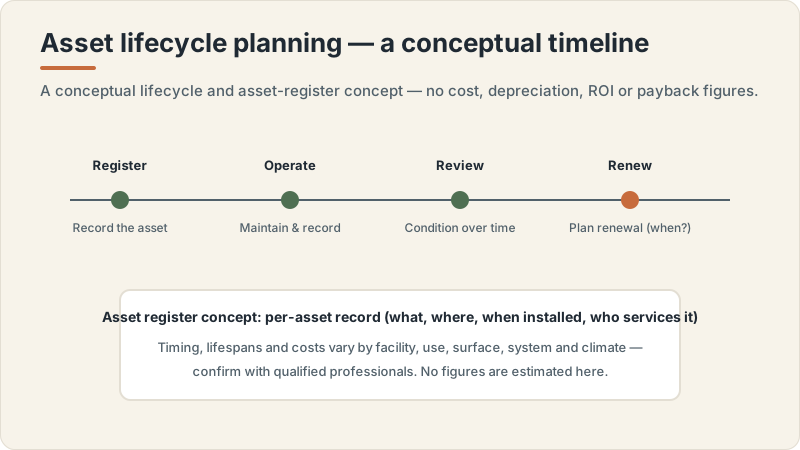
Asset lifecycle planning concept
Conceptual editorial diagram — not a construction drawing, specification, to-scale plan or proof of a real project. It is not engineering, structural, fire/life-safety, crowd-safety or accessibility-compliance guidance. Capacities, dimensions, standards, requirements and costs vary by facility type, audience, site, use case and governing body, and are confirmed with qualified professionals, relevant authorities and governing bodies. Build Design Hub does not design, build, inspect, certify, recommend or match anyone.
What this guide helps you prepare
This guide helps you build a repeatable process for researching and shortlisting maintenance providers yourself, before any quote is requested or any agreement is signed. It covers the kinds of experience worth examining, the references worth following up, the maintenance scope you need to define so providers answer the same question, and the documentation and coordination points that often determine whether upkeep runs smoothly across a season and over years. The goal is consistent, comparable information rather than a verdict, so that the provider picture you assemble can be handed to qualified professionals and, where relevant, the original surface or system supplier for review.
Good provider research does not try to settle technical, contractual or commercial questions on its own. It frames them clearly and records each provider's own answers in writing, separating what a provider states from what you have independently confirmed. This guide deliberately leaves intervals, methods, chemicals, machinery settings, costs, lifespans and requirements as questions, because maintenance requirements vary by facility type, use intensity, surface, system, climate, season, governing body, warranty terms, supplier documentation, contractor scope and local professional requirements; confirm with qualified professionals. Build Design Hub does not recommend, rank, verify, introduce or match maintenance providers and names none.
- A plain-language brief describing the facility, its surfaces and systems, intended use, use intensity and your goals for its condition
- A consistent experience question set so every provider answers the same things
- A reference-checking structure you can apply to every provider the same way
- A maintenance scope and documentation map showing where responsibilities meet and overlap
- A record separating which provider claims you have confirmed independently from which remain open
- A list of questions and risks to take to qualified professionals and any original supplier for review
Researching maintenance-provider experience and references
Experience is easy to claim and harder to examine, so it helps to define what relevant experience would actually mean for your facility before you start asking. A provider that maintains many facilities of a different kind, or facilities used very differently from yours, may or may not be a fit, and that is a question to explore rather than assume. You might want to understand the facility types, surfaces and systems a provider has worked with, the roles they played, how recent that work was, the insurances they describe holding, any training or accreditations they reference, and how their work was overseen and recorded. Record what each provider states, note where descriptions are vague, dated or hard to verify, and mark those as points to confirm rather than facts you have established.
References are most useful when you treat them as a structured enquiry rather than a formality. Decide in advance what you want to learn, ask every provider's references comparable questions, and capture the answers consistently. Bear in mind that references a provider offers are self-selected, so it is reasonable to ask open questions about how problems, missed visits, scope changes and disputes were handled, not only whether the facility stayed in use. Anything a reference tells you about reliability, quality, responsiveness or value is information to weigh and confirm with qualified professionals, not a guarantee, and this guide does not assess, score or vouch for any provider.
- What facility types, surfaces and systems has the provider described maintaining, and how similar are they to yours?
- What was the provider's actual role, and what oversight, insurance, training or accreditations do they describe?
- What documentation, records or evidence can the provider offer to support what they describe?
- What do you specifically want to learn from each reference, and are you asking everyone the same questions?
- How were missed visits, scope changes, problems and disagreements handled, in the reference's own words?
- Which experience or reference claims are unconfirmed and need independent checking with professionals?
Defining maintenance scope and documentation before you compare
Most provider comparisons go wrong because providers are quietly answering different questions about what their service includes. Before you line anyone up, write down the maintenance scope as you understand it: what condition you want the facility kept in, what activities you think are involved, what you expect the provider to cover, what you assume you or others will arrange, and how access and scheduling would work around play, training and events. Then ask each provider to describe, in writing, what they include, exclude and assume against that same scope. Where a provider will not or cannot answer a scope question in writing, that itself is information worth recording. The point is to put every provider on a common footing so differences reflect real distinctions rather than mismatched assumptions, and to keep any specific interval, method, chemical, machinery setting or material as a question to confirm with qualified professionals and the original supplier.
Documentation is the other half of the picture, because facility upkeep touches handover records, warranties, defect logs, the original surface or system supplier, equipment, consumables, record-keeping and the people who run the facility day to day. It helps to map where the provider's responsibility ends and another party's begins, who manages those interfaces, how reactive issues outside the routine programme would be handled, and how work would be recorded so warranty and asset obligations stay intact. Keep cost, frequency and lifespan as questions about what drives them and what could change them, rather than as fixed figures, and confirm anything a provider states about requirements, suitability, warranty conditions or standards with qualified professionals, the original supplier, relevant authorities and the governing body, because these vary by facility type, surface, system, climate, season and location.
- Is each provider describing the same maintenance scope, or different scopes that only look alike?
- What does each provider include, exclude and assume, stated in writing against your brief?
- How would access, scheduling and disruption around play, training and events be handled?
- Where do responsibilities hand over between the provider, the original supplier, other parties and you?
- How would routine work, reactive issues and records be documented so warranty and asset obligations are protected?
- Which scope, frequency, method or warranty questions need a qualified professional's or the supplier's view?
Planning questions before speaking with professionals
Before you involve qualified professionals, it pays to get your own thinking in order, because clearer questions tend to produce clearer guidance. Start with what you actually know about the facility, its surfaces, its systems and how it is used, what you are unsure of, and what you have only assumed. Writing these down as plain questions, rather than half-formed conclusions, makes it easier for a professional or the original supplier to help, and for you to recognise when an answer is solid versus provisional. This is also the moment to decide what a sound provider-selection process would look like for your situation, so you can describe it rather than improvise it under sales pressure.
Use this stage to organise the provider information you have already gathered into a form a professional can review quickly: the brief, the experience and reference notes, the scope and documentation map, and the list of open questions. Keep intervals, methods, costs, lifespans, requirements and standards framed as things to confirm, not as positions you have adopted, since maintenance requirements vary by facility type, use intensity, surface, system, climate, season, governing body, warranty terms, supplier documentation, contractor scope and local professional requirements. The better organised this material is, the more useful the professional conversations that follow are likely to be.
- What do I know, what am I unsure of, and what have I only assumed about this facility, its surfaces, systems and use?
- What would a sound provider research and selection process look like for my situation?
- Which decisions am I trying to inform, and what information would actually help me make them?
- Have I captured each provider's claims in writing and flagged what is still unconfirmed?
- What questions about requirements, warranty conditions, suitability or standards do I need a professional or supplier to address?
- Is my brief, reference and scope material organised enough for someone to review efficiently?
Questions for qualified professionals
Once your own preparation is in order, a structured set of questions for qualified professionals helps you make the most of their time and avoid treating general information as facility-specific advice. Useful contacts may include professionals with relevant expertise in your facility type, surfaces and systems, the original surface or system supplier where a warranty is in place, and procurement or legal advisers as appropriate. Ask them to review the provider research you have gathered, to identify what is missing, and to tell you which of your assumptions need confirming with the supplier, relevant authorities or the governing body. Their role is to apply judgement to your specific facility, surfaces, systems, site and use, which no general framework can do.
Frame your questions so that requirements, suitability, scope, documentation, warranty conditions, frequency and cost come back to you as things confirmed for your facility rather than as generalities. Ask what would need to be true for a given maintenance approach to be appropriate, what evidence would support it, and what risks they would watch for. Record their guidance alongside your provider notes, and revisit your shortlist in light of it. Build Design Hub does not recommend, rank, verify, introduce or match maintenance providers, and none of this guide substitutes for the professional review that your facility requires.
- Looking at my provider research, what is missing or insufficient for a sound decision?
- Which of my scope, frequency or suitability assumptions need confirming, and with whom?
- What would need to be true for a particular maintenance approach to suit my facility, surfaces, climate and use?
- Which warranty conditions or requirements must be confirmed with the original supplier, authorities or governing body?
- What provider-related risks would you watch for given my specific facility, systems and use intensity?
- What evidence, records or documentation should I ask each provider for before going further?
What this does not replace
This is an educational planning resource only. It is not a maintenance manual and not inspection, certification, engineering, architectural, structural, HVAC, electrical, safety-compliance, fire or life-safety, or accessibility-compliance advice, and it is not legal, tax, insurance or procurement advice. It does not maintain, operate, inspect, certify, audit or specify anything, gives no maintenance intervals or procedures as universal rules, and offers no warranty interpretation, estimate, price, ROI or capacity figure. Maintenance requirements and costs vary by facility type, use intensity, surface, system, climate, season, governing body, warranty terms, supplier documentation, contractor scope and local professional requirements, and are confirmed with qualified professionals, suppliers, contractors, relevant authorities and governing bodies.
Build Design Hub does not operate, maintain, inspect, certify, audit, design, build, recommend, rank, verify, introduce, broker or match suppliers, contractors, maintenance providers or facility managers, and HELPERG LLC is publisher/operator only. Use this resource to prepare your own thinking and records, then have qualified professionals you engage directly review your facility. Decisions about maintenance, inspection, safety, compliance, warranties, procurement and suitability must rest on those professionals, suppliers, the relevant authorities and the governing bodies for your sport and location.
- Not a maintenance manual and not maintenance instructions, intervals or procedures as universal rules
- Not inspection, certification, safety-compliance, fire/life-safety or accessibility-compliance advice
- Not engineering, architectural, warranty-interpretation, legal, tax, insurance or procurement advice
- Not a supplier, contractor, maintenance-provider or facility-manager recommendation, ranking, directory or matching service
- Not an estimate, price or cost figure — maintenance requirements and costs vary
- Qualified professional review is required before any operations or maintenance decision
Maintenance-provider research and selection preparation worksheet
- 1Write a plain-language brief describing the facility, its surfaces and systems, intended use, use intensity and your goals for its condition
- 2Record the maintenance scope as you see it: what activities you think are involved, what you expect a provider to cover, what you or others arrange
- 3List the categories of experience that would be relevant to your specific facility type, surfaces and systems
- 4For each provider, record the facility types, surfaces, systems, recency and roles they describe
- 5Note what insurances, training, accreditations or oversight each provider states they hold
- 6Note what documentation, records or evidence each provider can offer to support their claims
- 7Decide in advance what you want to learn from references, and ask every provider's references the same questions
- 8Capture reference answers consistently, including how missed visits, scope changes and problems were handled
- 9Map where responsibilities hand over between the provider, original supplier, other parties and you
- 10Record how access, scheduling, reactive issues and record-keeping around play, events and warranties would work
- 11Ask each provider what is included, excluded and assumed, in writing against the same brief
- 12Note what each provider says drives frequency, cost and lifespan, framed as questions not fixed figures
- 13Mark every claim about requirements, intervals, warranty conditions, suitability or standards as something to confirm with professionals, the supplier and the governing body
- 14Keep a running log separating what each provider states from what you have independently confirmed
Common mistakes to avoid
- Comparing providers who are quietly answering different scope questions, so the comparison is not like-for-like
- Treating a confident verbal answer as a confirmed fact rather than recording it as a claim to verify
- Treating a maintenance interval or method a provider mentions as a universal rule rather than a question to confirm
- Accepting self-selected references at face value and asking only whether the facility stayed in use
- Assuming broad maintenance experience automatically means relevant experience for your specific facility, surfaces and systems
- Assuming a warranty covers something without confirming the terms with the original supplier and a professional
- Leaving documentation, access and record-keeping responsibilities undefined until problems surface later
- Expecting any website, including this one, to introduce, rank or vouch for a maintenance provider on your behalf
When to involve a professional
- When you need requirements, intervals, warranty conditions or standards confirmed for your specific facility, surfaces, systems, climate or governing body
- When the maintenance arrangement could affect an existing surface or system warranty and needs the original supplier's input
- When a provider's suitability, experience or reference claims need independent, expert evaluation
- When contractual terms, service levels or procurement processes need legal or procurement review before you commit
- When scope, documentation or coordination boundaries between the provider and other parties are unclear
- When any technical, surface-condition, system or safety question arises that a general framework cannot resolve
Frequently asked questions
Questions readers ask about this topic
Does Build Design Hub recommend, rank or introduce maintenance providers for a sports facility?
No. Build Design Hub does not recommend, rank, verify, introduce, broker or match maintenance providers, and it names none. It does not maintain, inspect or certify any facility. This guide is an educational framework for researching and evaluating providers yourself. It gives no costs, intervals or requirements, and any decision about who to engage is yours to make with qualified professionals.
Can this guide tell me what maintenance should cost or how often each task should happen?
No. Maintenance requirements vary by facility type, use intensity, surface, system, climate, season, governing body, warranty terms, supplier documentation, contractor scope and local professional requirements, and this guide states none of them as facts. It frames intervals, methods, costs and lifespans as questions to confirm directly with the provider, the original supplier and qualified professionals who can assess your specific facility.
How should I treat the references a provider gives me?
Treat them as a structured enquiry, not a formality. References are self-selected, so ask every provider's references comparable, open questions, including how missed visits, scope changes and problems were handled. Record the answers as information to weigh and confirm with qualified professionals, not as a guarantee. This guide does not assess or vouch for any provider.
Will a maintenance arrangement affect my surface or system warranty?
That depends entirely on your surface or system, its supplier and the warranty terms, which vary and are not stated here. Warranty conditions are a common reason to involve the original supplier and a qualified professional before committing to any provider. This guide only helps you organise the questions to raise with them; it does not interpret warranties or give requirements.
Is this guide a substitute for hiring qualified professionals?
No. It is preparation only. It helps you organise your brief, questions and provider research so that conversations with qualified professionals, the original supplier, relevant authorities and the governing body are more productive. Decisions about suitability, warranty conditions, scope, intervals and contracts require those professionals, not a general framework.
Keep reading