
Who this guide is for
- Owners and developers preparing a new or refurbished sports facility for handover and ongoing operation
- Facility managers and operators who will inherit records and run day-to-day operations
- Schools and education estates teams planning record-keeping for shared sports spaces
- Sports clubs and community groups organising their own governance and warranty documentation
- Municipalities and public-sector teams structuring records across multiple sites
- Project teams assembling handover document requests before practical completion
Planning diagram
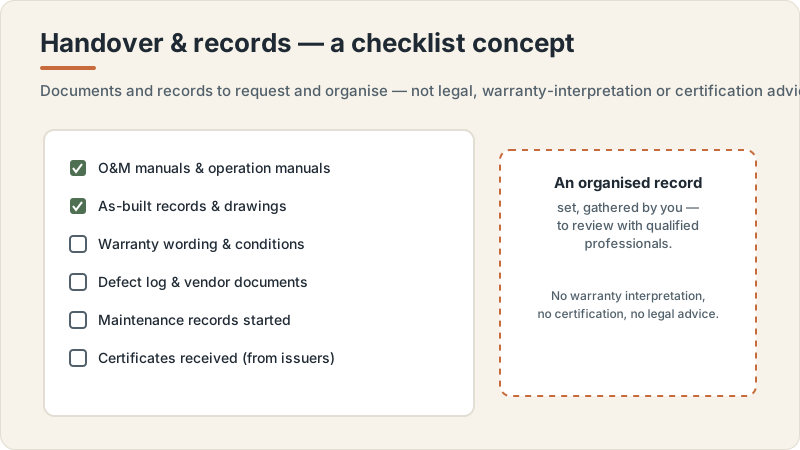
Handover and records checklist concept
Conceptual editorial diagram — not a construction drawing, specification, to-scale plan or proof of a real project. It is not engineering, structural, fire/life-safety, crowd-safety or accessibility-compliance guidance. Capacities, dimensions, standards, requirements and costs vary by facility type, audience, site, use case and governing body, and are confirmed with qualified professionals, relevant authorities and governing bodies. Build Design Hub does not design, build, inspect, certify, recommend or match anyone.
What this guide helps you prepare
This guide helps you prepare the structure of a maintenance record system rather than the maintenance itself. It walks through the kinds of information an owner or operator might decide to capture, the way those categories could be grouped so they stay usable over years of operation, and the planning conversations that surround records at handover. The aim is to arrive at supplier, contractor and professional discussions already knowing what you want to be able to record, retrieve and review, so that the documentation you receive and build over time is coherent rather than scattered.
It is important to be clear about the boundary. This is not a maintenance schedule, a list of tasks, or a statement of how often anything should be done. What needs to be maintained, how, by whom and how frequently is defined with qualified providers and varies by facility type, use intensity, surface, system, climate, season, governing body, warranty terms, supplier documentation, contractor scope and local professional requirements. This guide simply helps you organise the framework that those decisions can later be recorded inside, and helps you ask better questions of the people who hold the real answers.
- A view of what categories of information a maintenance record might be expected to hold
- Prompts for deciding how records could be organised so they remain findable later
- Handover document requests to raise with the project team before completion
- Questions to confirm with suppliers and contractors about the documentation they will provide
- A way to separate owner-side governance records from provider-held technical records
- Preparation for seasonal reviews and warranty conversations rather than the conversations themselves
Deciding what a maintenance record might capture
A useful first step is to map the categories of information you may want to be able to look up later, without yet deciding any task, interval or method. Owners often find it helps to think in terms of assets and systems rather than activities: a record can hold what was installed, who supplied and installed it, what documentation came with it, and where the warranty and operating information lives. Around that, operators frequently want a way to note when work took place, who carried it out, and what was reported, so that a history accumulates that someone reviewing the facility months or years later can actually follow. None of this defines what work should happen; it defines what a record of work could contain.
Because the right content varies so much between a synthetic pitch, an indoor court, a swimming facility, lighting, drainage or mechanical plant, the safest planning posture is to treat your list of categories as a draft to confirm with the people who supply, install and service each element. A supplier may specify exactly what their warranty expects to be documented, and a contractor may describe what their service records will look like. Your job at the planning stage is to know what you want to be able to find later and to ask whether the documentation you will receive supports that, rather than to assert what the record must say.
- Asset and system categories you may want each record entry tied to, drafted for confirmation
- Where supplier, installer and warranty documentation will live and how it is referenced
- What identifying detail an entry might hold so an item can be traced back to its source documents
- What an entry could note about who carried out work and what was reported, as defined by providers
- Which records are owner-held governance versus provider-held technical documentation
- Questions on whether supplier and contractor documentation will support the categories you want
Organising records so warranties and reviews are supportable
Once you have a sense of what a record might capture, the organising question is how to keep it coherent over the life of the facility. Records tend to lose value when they are spread across emails, individual memories and loose files, so owners often plan for a single agreed home, a consistent way of naming and grouping entries, and a clear understanding of who can add to and retrieve from it. This is a governance and structure exercise, not a technical one: you are deciding how the documentation will be ordered, version-controlled and handed on if operators or contractors change, so that continuity does not depend on any one person.
Records also sit close to warranties and reviews, which is a large part of why structure matters, though the structure itself does not interpret either. Warranty terms commonly reference documentation, but what a warranty actually covers, what it expects to be recorded and what could affect it are matters to confirm with the supplier, manufacturer or relevant professional, not to assume from a general guide. Similarly, a record can make a seasonal review easier to prepare for by gathering history in one place, but it does not constitute an inspection, a conclusion or a certification. Treat good organisation as something that supports those activities while leaving the activities themselves to qualified people.
- Where the single agreed home for records will be and who is responsible for it
- How entries are named and grouped so they stay retrievable as the volume grows
- Who may add to, change and retrieve records, and how that is governed
- How records transfer if an operator, contractor or maintenance provider changes
- What documentation warranty terms reference, to confirm with the supplier or manufacturer
- How history is gathered to prepare for a seasonal review, without drawing the review's conclusions
Planning questions before speaking with professionals
Before you sit down with suppliers, contractors, facility managers or other professionals, it helps to work through your own position so the conversation is productive. That means being clear about which assets and systems your facility includes, what you already expect to receive at handover, where you intend records to live, and who on your side will own the documentation once the facility is operational. Going in with these decisions drafted lets you ask whether what a provider offers fits your structure, rather than discovering gaps after the fact.
These questions are for your own preparation and do not replace professional advice. The answers that determine actual maintenance, intervals, warranty conditions and record requirements come from the qualified people and organisations involved with your specific facility, and they vary by facility type, use intensity, surface, system, climate, season, governing body, warranty terms, supplier documentation, contractor scope and local professional requirements. Use this preparation to identify what you do not yet know, then take those gaps to the right professionals.
- Which assets and systems will the record system need to cover across this facility?
- What documents do we expect to receive at handover, and from whom?
- Where will records live, and who on our side will own and govern them?
- How do we want to be able to retrieve history when a review or warranty question arises?
- What is owner-side governance documentation versus provider-held technical documentation here?
- Which decisions are we not equipped to make ourselves and must take to qualified professionals?
Questions for qualified professionals
When you do speak with suppliers, contractors, facility managers and other qualified professionals, your records framework gives you a structured set of things to confirm. Rather than asking how to maintain something, you can ask what documentation each provider will supply, what their service records contain, what their warranty terms expect to be recorded, and how their information should be filed so it fits your single record system. This keeps the technical decisions with the people qualified to make them while ensuring the documentation you accumulate is usable.
Remember that these are prompts to open a conversation, not a script that produces guaranteed answers, and nothing a general guide says overrides what a qualified professional, supplier, contractor or relevant authority tells you about your facility. Maintenance requirements, intervals, warranty conditions, inspection needs and compliance matters vary widely and must be confirmed with the appropriate professionals and bodies for your specific situation.
- What documentation will you provide at handover, and in what format?
- What do your service or maintenance records typically contain and how are they delivered?
- What does the warranty for this asset or system expect to be documented, and by whom?
- How should your records be filed so they integrate with our single record system?
- Who should be involved when a seasonal review, inspection or certification is being prepared?
- Which record-keeping or compliance matters should we confirm with a governing body or authority?
What this does not replace
This is an educational planning resource only. It is not a maintenance manual and not inspection, certification, engineering, architectural, structural, HVAC, electrical, safety-compliance, fire or life-safety, or accessibility-compliance advice, and it is not legal, tax, insurance or procurement advice. It does not maintain, operate, inspect, certify, audit or specify anything, gives no maintenance intervals or procedures as universal rules, and offers no warranty interpretation, estimate, price, ROI or capacity figure. Maintenance requirements and costs vary by facility type, use intensity, surface, system, climate, season, governing body, warranty terms, supplier documentation, contractor scope and local professional requirements, and are confirmed with qualified professionals, suppliers, contractors, relevant authorities and governing bodies.
Build Design Hub does not operate, maintain, inspect, certify, audit, design, build, recommend, rank, verify, introduce, broker or match suppliers, contractors, maintenance providers or facility managers, and HELPERG LLC is publisher/operator only. Use this resource to prepare your own thinking and records, then have qualified professionals you engage directly review your facility. Decisions about maintenance, inspection, safety, compliance, warranties, procurement and suitability must rest on those professionals, suppliers, the relevant authorities and the governing bodies for your sport and location.
- Not a maintenance manual and not maintenance instructions, intervals or procedures as universal rules
- Not inspection, certification, safety-compliance, fire/life-safety or accessibility-compliance advice
- Not engineering, architectural, warranty-interpretation, legal, tax, insurance or procurement advice
- Not a supplier, contractor, maintenance-provider or facility-manager recommendation, ranking, directory or matching service
- Not an estimate, price or cost figure — maintenance requirements and costs vary
- Qualified professional review is required before any operations or maintenance decision
Maintenance records planning worksheet
- 1List each asset, surface and system the facility will include, drafted for provider confirmation
- 2Record which supplier or installer is associated with each item and where their documents are
- 3Note where warranty and operating documentation for each item is expected to live
- 4Gather the handover document requests you intend to make before practical completion
- 5Decide and write down the single agreed home where records will be kept
- 6Define a consistent naming and grouping approach for record entries
- 7Record who may add to, change and retrieve records, and who owns the system overall
- 8Separate owner-side governance documents from provider-held technical documentation in your plan
- 9Note what each entry might capture about who did work and what was reported, as defined by providers
- 10Prepare questions on what each warranty references in documentation, to confirm with suppliers
- 11Plan how records transfer if an operator, contractor or maintenance provider changes
- 12Assemble the history you would want gathered to prepare for a seasonal review
- 13List the decisions you cannot make yourself and the professionals you must take them to
- 14Keep a running list of open questions to confirm with qualified professionals and authorities
Common mistakes to avoid
- Treating a maintenance interval or frequency found in a general source as a universal rule, rather than confirming it with the supplier, contractor and professionals for your specific facility
- Assuming a warranty covers a given item or scenario without confirming the actual terms and documentation expectations with the supplier or manufacturer
- Designing the record categories around tasks instead of assets and systems, which makes history hard to trace later
- Letting records live across emails, memories and loose files with no single agreed home or owner
- Skipping professional review and assuming a well-organised record is a substitute for inspection, certification or qualified advice
- Failing to ask suppliers and contractors what documentation they will actually provide before handover, then discovering gaps afterward
- Not planning how records transfer when an operator, contractor or maintenance provider changes, so continuity depends on one person
- Confusing owner-side governance documentation with provider-held technical records, leaving both incomplete
When to involve a professional
- When warranty terms reference documentation and you need to confirm what they actually cover and expect to be recorded
- When defining what maintenance, intervals or methods apply to a specific surface, system or piece of plant
- When preparing for a seasonal review, inspection or certification that requires qualified judgement or conclusions
- When a handover is approaching and you need to confirm the documents and records each provider will supply
- When record-keeping, safety, accessibility or compliance obligations may apply and must be confirmed with a governing body or authority
- When operators, contractors or maintenance providers change and responsibility for records needs to be formally transferred
Frequently asked questions
Questions readers ask about this topic
Does Build Design Hub maintain, inspect or certify sports facilities, or recommend providers?
No. Build Design Hub is an educational publisher and does not maintain, inspect, certify, audit or operate facilities. It does not recommend, rank, verify, broker or match suppliers, contractors, maintenance providers or facility managers, and it gives no costs, intervals, lifespans or requirements. This guide only helps you prepare a records framework and better questions; the technical and contractual answers come from qualified professionals, suppliers, contractors and relevant authorities for your specific facility.
Will this guide tell me how often to maintain my surface or equipment?
No. It deliberately gives no intervals, frequencies, schedules, procedures, chemicals or settings. What needs to be done, how and how often varies by facility type, use intensity, surface, system, climate, season, governing body, warranty terms, supplier documentation, contractor scope and local professional requirements, and is defined with the qualified providers who supplied, installed and will service each element. Use this guide to organise your records, then confirm the actual requirements with those professionals.
Why do maintenance records matter for warranties and reviews?
Warranty terms often reference documentation, and seasonal reviews are easier to prepare for when history sits in one organised place. That is why a coherent record structure is worth planning. However, this guide does not interpret warranties or draw review conclusions: what a warranty covers and what a review finds are matters for the supplier, manufacturer or qualified professional. Records support those activities; they do not replace the judgement of the people qualified to perform them.
What should I do with the framework once I have drafted it?
Take it to the people who can confirm the specifics. Use your drafted categories, handover requests and questions to check whether the documentation suppliers and contractors will provide fits your structure, and to identify the gaps you cannot fill yourself. Then confirm intervals, warranty conditions, inspection needs and any compliance matters with the appropriate qualified professionals, suppliers, contractors and authorities for your facility.
Keep reading