
Who this guide is for
- Owners and developers of new or refurbished sports facilities preparing for handover and the operational phase
- Facility managers and operators assembling an operations-readiness document set from project records
- Schools and education providers organising O&M records for sports halls, pitches and courts
- Sports clubs and community organisations planning who holds, updates and acts on maintenance documentation
- Municipalities and public-sector teams preparing governance and record-keeping expectations for handover
- Project sponsors and steering groups defining what completeness of documentation should look like before sign-off
Planning diagram
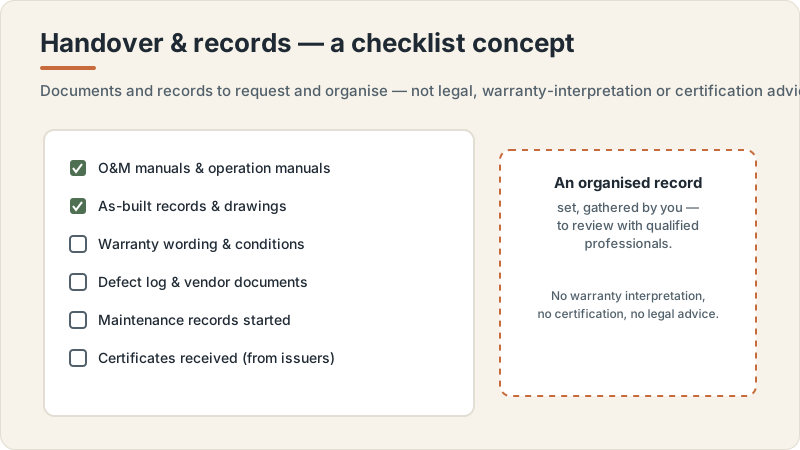
Handover and records checklist concept
Conceptual editorial diagram — not a construction drawing, specification, to-scale plan or proof of a real project. It is not engineering, structural, fire/life-safety, crowd-safety or accessibility-compliance guidance. Capacities, dimensions, standards, requirements and costs vary by facility type, audience, site, use case and governing body, and are confirmed with qualified professionals, relevant authorities and governing bodies. Build Design Hub does not design, build, inspect, certify, recommend or match anyone.
What this guide helps you prepare
This guide helps you build a structured set of questions and document requests around the operation and maintenance manual for a sports facility, so that handover hands over knowledge and not just keys. It is designed for the planning and preparation stage: deciding what you want the manual to cover, who should provide each part, how you will check that the contents are present and legible, and how the document set will be stored, owned and updated once the facility is in use. The aim is to turn vague expectations into specific, answerable questions you can put to suppliers, contractors and qualified professionals.
It does not tell you how to maintain anything, how often, with what products, or to what standard, because those depend on the specific surfaces, systems, governing-body guidance, warranty terms and supplier documentation involved, and they are defined with the qualified providers responsible. Instead it gives you frameworks for requesting documentation, logging what you receive, identifying gaps, and clarifying responsibilities. Build Design Hub does not maintain, inspect, certify or recommend providers; this guide simply helps you prepare your own questions and records.
- Clarify what an O&M manual is expected to cover for your facility type before you negotiate handover deliverables
- Frame document-request lists so each item has a named source, a format and an acceptance check
- Prepare questions that separate what the manual states from what must be confirmed with professionals
- Set up an owner-side record so received documents, gaps and follow-ups are tracked, not lost
- Distinguish planning questions you can answer internally from questions only suppliers or contractors can answer
- Plan how the document set will be stored, version-controlled and reviewed after the operational phase begins
What an operation and maintenance manual may be expected to contain
When you plan your questions, it helps to think in terms of the categories a comprehensive O&M manual often groups information into, while remembering that the actual contents, structure and depth vary by facility type, surface, system, supplier and contract scope, and should be confirmed with the parties producing it. Typical categories worth asking about include a description of the installed surfaces and systems, the components and products used, manufacturer literature, supplier and contractor contact details, warranty and guarantee documentation, the schedules of what was installed, and references to any governing-body or manufacturer guidance the facility relies on. Asking which categories are in scope, and which are explicitly excluded, prevents assumptions later.
Rather than asking for maintenance instructions to follow yourself, frame your questions around completeness, traceability and ownership: who authored each section, what it is based on, how it should be kept current, and where the underlying warranty or guidance documents live. The goal is to understand what the manual claims, what it references, and what it leaves to be defined by qualified professionals, so you can plan informed conversations rather than treat any single document as the final word. Whether a stated maintenance approach applies to your situation is always a question for the relevant supplier, contractor or qualified professional, not an instruction to adopt from a template.
- Which surfaces, systems and components are documented, and which are explicitly out of scope of the manual?
- Are manufacturer and supplier literature, product data and contact details included and current?
- Where are the warranty, guarantee and defect-liability documents held, and what do they reference?
- Does the manual identify the source for each maintenance-related statement so it can be confirmed with professionals?
- Are as-installed schedules, drawings and product registers included or referenced, and how are they accessed?
- Who authored each section, and how is the manual intended to be reviewed, updated and versioned?
Questions to take to suppliers and contractors at handover
Suppliers and contractors are the parties who can confirm what their documentation covers, what their warranties depend on, and what they expect the owner to record or arrange. Preparing your questions in advance helps you use handover meetings to clarify scope and responsibilities rather than to receive instructions you then apply blind. Useful questions ask who is responsible for each part of the manual, what conditions a warranty or guarantee is stated to depend on, what records the owner is expected to keep, and who to contact for defects, queries or further documentation during the defect-liability period and beyond. These are clarification questions, not requests for procedures to copy.
Because requirements vary by facility type, use intensity, surface, system, climate, season, governing body, warranty terms, supplier documentation, contractor scope and local professional requirements, treat any figure, interval or condition you are given as something to confirm in writing with the qualified party stating it, including any conditions that the relevant warranty documentation says must be met. Avoid assuming that one supplier's documentation applies to another supplier's product, or that a contractor's scope includes documentation they were never engaged to produce. Build Design Hub does not connect, broker or vet any of these parties; your project team identifies and engages them, and this guide only helps you arrive with organised questions.
- Who is responsible for compiling each section of the manual, and by when is it deliverable?
- What does each warranty or guarantee document state it depends on, and where is that recorded?
- What records does the supplier or contractor expect the owner to keep, and in what form?
- Who is the point of contact for defects, documentation queries and follow-up during and after the defect-liability period?
- Are there manufacturer or governing-body documents referenced that the owner should obtain and retain?
- Which statements in the documentation should be confirmed directly with a qualified professional before being relied upon?
Planning questions before speaking with professionals
Before you involve suppliers, contractors or qualified professionals, it is worth answering a set of internal questions so your requests are coherent and your project team speaks with one voice. These cover who in your organisation will own the document set, how completeness will be judged, what your facility actually consists of in broad terms, and what governance you want around updates and access. Working through these first means the questions you later put to professionals are sharper and your acceptance of handover documents is based on a defined expectation rather than on whatever happens to arrive.
This preparation also helps you separate the questions you can answer yourselves from those that genuinely require external expertise. Decisions about who holds the manual, how it is stored, and how follow-up actions are tracked are largely internal governance questions; decisions about what maintenance an installed surface or system requires, and to what standard, belong with the relevant suppliers, contractors and qualified professionals. Keeping that line clear avoids both under-asking and treating template content as instruction.
- Who in the organisation will own, store and keep the O&M document set current after handover?
- What does a complete and acceptable manual look like for this facility, in your own definition?
- Which document categories matter most for your facility type, use pattern and stakeholders?
- How will you record received documents, identify gaps, and track follow-up requests?
- What governance, access and version-control expectations do you want before the operational phase begins?
- Which questions are internal governance, and which can only be answered by qualified professionals or suppliers?
Questions for qualified professionals
Once your internal preparation is done, a defined set of questions for qualified professionals, suppliers and contractors keeps handover conversations productive and on the record. These questions ask the responsible parties to confirm scope, completeness, conditions and contacts, and to identify anything the documentation leaves to professional judgement. Because maintenance requirements and warranty conditions vary widely and change over time, the most valuable questions ask each party to state, in writing, what their documentation covers, what it depends on, and what they recommend you confirm separately.
Treat the answers as inputs to your own records and decisions, not as instructions issued by this guide. Build Design Hub does not maintain, inspect, certify, audit or recommend any party, and provides no intervals, requirements, costs or standards; those come only from the qualified professionals, suppliers, contractors, manufacturers, governing bodies and authorities engaged on your project. Use the questions below to gather what you need from them, then validate scope and responsibilities directly before relying on any answer.
- Can you confirm in writing which surfaces, systems and warranties your documentation covers and excludes?
- What conditions does each warranty or guarantee depend on, and how should they be evidenced?
- What documentation are you contractually responsible for delivering at handover, and when?
- Which statements should we confirm with a manufacturer, governing body or other qualified professional?
- Who should we contact for defects, documentation gaps and queries, and through which process?
- What records do you advise the owner to keep, and how do you suggest the manual be reviewed and updated over time?
What this does not replace
This is an educational planning resource only. It is not a maintenance manual and not inspection, certification, engineering, architectural, structural, HVAC, electrical, safety-compliance, fire or life-safety, or accessibility-compliance advice, and it is not legal, tax, insurance or procurement advice. It does not maintain, operate, inspect, certify, audit or specify anything, gives no maintenance intervals or procedures as universal rules, and offers no warranty interpretation, estimate, price, ROI or capacity figure. Maintenance requirements and costs vary by facility type, use intensity, surface, system, climate, season, governing body, warranty terms, supplier documentation, contractor scope and local professional requirements, and are confirmed with qualified professionals, suppliers, contractors, relevant authorities and governing bodies.
Build Design Hub does not operate, maintain, inspect, certify, audit, design, build, recommend, rank, verify, introduce, broker or match suppliers, contractors, maintenance providers or facility managers, and HELPERG LLC is publisher/operator only. Use this resource to prepare your own thinking and records, then have qualified professionals you engage directly review your facility. Decisions about maintenance, inspection, safety, compliance, warranties, procurement and suitability must rest on those professionals, suppliers, the relevant authorities and the governing bodies for your sport and location.
- Not a maintenance manual and not maintenance instructions, intervals or procedures as universal rules
- Not inspection, certification, safety-compliance, fire/life-safety or accessibility-compliance advice
- Not engineering, architectural, warranty-interpretation, legal, tax, insurance or procurement advice
- Not a supplier, contractor, maintenance-provider or facility-manager recommendation, ranking, directory or matching service
- Not an estimate, price or cost figure — maintenance requirements and costs vary
- Qualified professional review is required before any operations or maintenance decision
Handover documentation request and tracking register
- 1List each surface, system and component you expect to be documented, with the party responsible for documenting it
- 2Record, for each item, the expected document format and where it will be stored
- 3Note which document categories are confirmed in scope and which are explicitly excluded
- 4Capture the named source or author for each section of the manual
- 5Log warranty and guarantee documents received, with where the underlying conditions are recorded
- 6Track manufacturer, supplier and governing-body literature you have requested versus received
- 7Record the point of contact for defects, queries and documentation follow-up for each party
- 8Mark any maintenance-related statement that still needs confirmation with a qualified professional
- 9Note as-installed drawings, schedules and product registers requested and their access location
- 10Record who in your organisation owns, stores and updates the document set after handover
- 11Track outstanding gaps and follow-up requests with a date and a responsible person
- 12Note version, date and review expectation for each document so updates are not lost
- 13Flag any assumption you are making that should be replaced by a confirmed answer in writing
- 14List the questions still open for suppliers, contractors or professionals before sign-off
Common mistakes to avoid
- Treating an interval, frequency or condition found in a template or generic manual as a universal rule rather than confirming it with the responsible supplier or professional
- Assuming a warranty covers a situation without reading what its documentation states it depends on, and recording that in your register
- Accepting handover documents without checking which categories are present, which are excluded, and who authored them
- Applying one supplier's documentation to a different supplier's product or system
- Assuming a contractor's scope included producing documentation they were never engaged to produce
- Treating the operation and maintenance manual as final instruction instead of a referenced document to confirm with qualified professionals
- Failing to decide, before handover, who owns, stores and updates the document set during the operational phase
- Skipping professional review of maintenance-related statements and relying on the manual alone
When to involve a professional
- When a maintenance-related statement, interval or condition in the manual needs to be confirmed before anyone relies on it
- When warranty or guarantee conditions are unclear and you need their dependencies explained by the responsible party
- When documentation appears incomplete and you need a qualified party to confirm what should be present for your facility type
- When responsibilities for producing or updating documentation are disputed or undefined between parties
- When governing-body, manufacturer or authority guidance is referenced and you need confirmation of which version applies
- When you are about to sign off handover and want professional confirmation that the document set meets your defined expectations
Frequently asked questions
Questions readers ask about this topic
Does Build Design Hub maintain, inspect, certify or recommend maintenance providers, suppliers or contractors?
No. Build Design Hub does not operate, maintain, inspect, certify, audit, recommend, rank, verify, introduce, broker or match any supplier, contractor, maintenance provider or facility manager, and it provides no intervals, requirements, costs or standards. This guide only helps you prepare questions and document requests to take to the qualified professionals, suppliers and contractors engaged on your own project.
Will this guide tell me how often to maintain my surface or what products to use?
No. It contains no maintenance intervals, frequencies, chemicals, settings, procedures or universal rules. Maintenance requirements vary by facility type, use intensity, surface, system, climate, season, governing body, warranty terms, supplier documentation, contractor scope and local professional requirements; confirm all of that with qualified professionals and the relevant suppliers and contractors.
What should an operation and maintenance manual contain?
Contents vary by facility, surface, system, supplier and contract scope, so treat any list as questions to confirm rather than a fixed requirement. This guide groups common categories, such as descriptions of installed surfaces and systems, manufacturer literature, contacts, warranty documents and as-installed schedules, as prompts to ask the responsible parties what their manual covers and excludes.
Can I rely on a warranty document to tell me what is covered?
Treat warranty and guarantee documents as something to read carefully and confirm in writing with the party that issued them, since each states its own conditions and dependencies. This guide does not interpret warranties; it helps you prepare the questions that let qualified professionals and the issuing supplier or contractor clarify what is and is not covered.
Who should answer the questions in this guide?
Internal governance questions, such as who owns and stores the document set, can be answered by your own team. Anything about maintenance, warranties, scope or standards should be answered by the qualified professionals, suppliers, contractors, manufacturers, governing bodies or authorities engaged on your project, and confirmed directly before you rely on it.
Keep reading