
Who this guide is for
- Club owners and boards evaluating a new stadium or a major redevelopment of an existing venue.
- Municipalities, regional authorities, and public bodies scoping a community or civic stadium project.
- Schools, universities, and colleges planning a spectator sports facility for teams and events.
- Property developers and investors assessing a stadium as part of a wider mixed-use scheme.
- Project teams, project managers, and owner's representatives assembling an early project brief.
- Facility managers and operations leads preparing for future handover, events, and lifecycle care.
Planning diagram
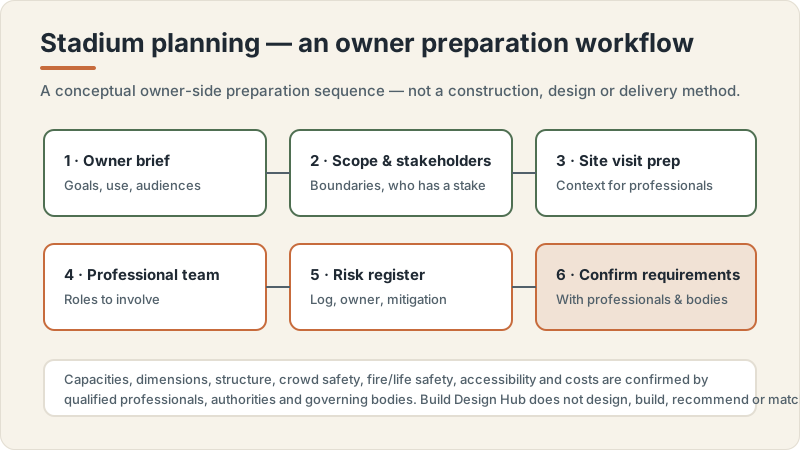
Stadium planning workflow concept
Conceptual editorial diagram — not a construction drawing, specification, to-scale plan or proof of a real project. It is not engineering, structural, fire/life-safety, crowd-safety or accessibility-compliance guidance. Capacities, dimensions, standards, requirements and costs vary by facility type, audience, site, use case and governing body, and are confirmed with qualified professionals, relevant authorities and governing bodies. Build Design Hub does not design, build, inspect, certify, recommend or match anyone.
What this guide helps you prepare
This guide helps you assemble the owner-side thinking that should exist before a professional team is engaged. That means articulating why the project is being considered, who it serves, what events and uses it must accommodate over time, and which constraints are non-negotiable. A clear, honest project brief lets qualified professionals give you useful, comparable input rather than guessing at your intent, and it gives your own stakeholders a shared reference point as the project evolves.
It also helps you prepare the conversations that follow: how you will describe your goals to architects and engineers, what you will ask governing bodies and local authorities to confirm, how you will structure supplier and contractor research, and how you will compare quotes and proposals on a like-for-like basis. Nothing here is a specification or an instruction to build; it is preparation so that the specialists you eventually hire can do their work against a well-organised, well-questioned brief.
- Record the purpose of the project: who it serves, what it is expected to host, and why now.
- Capture the range of intended uses and event types, and note which are core versus aspirational.
- List the known constraints (site, ownership, community, timing) you can confirm today.
- Note every assumption you are making so a professional can test it rather than inherit it.
- Draft the questions you want authorities and governing bodies to confirm, without pre-judging answers.
- Set up a structure for comparing professional and supplier inputs consistently later on.
Framing the stadium brief and its intended uses
A stadium is rarely a single-purpose building. Before engaging professionals, it helps to describe the full range of activities the venue might need to support over its life: the primary sport or sports, secondary sporting uses, concerts or non-sporting events, community access, hospitality, media and broadcast, and day-to-day operations between events. Being explicit about which of these are essential, which are desirable, and which are speculative gives a professional team the context to advise on feasibility. It is not for this guide to state what any venue can hold, span, or accommodate; those are questions for qualified professionals against your confirmed brief.
The brief should also capture the softer intentions that shape a stadium: the experience you want for spectators, players, and staff; the relationship with the surrounding community and neighbours; the ambitions around identity, sustainability, and long-term flexibility; and how the venue should feel on both a full event day and a quiet weekday. Writing these down as intentions, not requirements, keeps the door open for professional advice while still communicating what matters most to the owner. Requirements around capacity, layout, and use vary by governing body, authority, site, and scope, and must be confirmed with the appropriate specialists and bodies.
- Distinguish core sporting uses from secondary sporting and non-sporting event uses.
- Describe the intended spectator, player, and staff experience in plain language, not figures.
- Note any multi-use, community-access, or hospitality ambitions and their relative priority.
- Record identity, sustainability, and long-term flexibility goals as intentions to discuss.
- Flag any governing-body or competition context that a professional should confirm applies.
- Keep capacity, layout, and use expectations framed as questions, never as fixed numbers.
Mapping stakeholders, site context and early constraints
Stadiums involve an unusually broad set of stakeholders, and identifying them early prevents surprises later. Owners, boards, and investors sit alongside governing bodies, local authorities, community groups, neighbours, emergency services, transport operators, sponsors, tenants, and future operators. Mapping who has an interest, who has approval power, and who must simply be kept informed helps you plan engagement in the right order and prepare the questions each group will need answered. This guide does not advise on consultation obligations or approvals; those are matters to confirm with the relevant authorities and qualified professionals.
Site and location context is the other major early input. It helps to gather what you can factually establish about ownership, access, surroundings, existing conditions, and any constraints you already know about, while clearly separating confirmed facts from assumptions. Rather than concluding what a site can support, the goal is to organise information so professionals can investigate properly. Every constraint related to zoning, permits, environmental matters, transport, or safety should be treated as something for the appropriate authorities and specialists to assess and confirm, not something to decide in the brief.
- List all stakeholder groups and note their interest, influence, and approval role.
- Separate confirmed site facts from assumptions that a professional must still verify.
- Record known access, neighbouring, and surrounding-use considerations to raise with specialists.
- Identify which authorities and governing bodies you will need to consult and confirm with.
- Note community, transport, and operational concerns to prepare for early engagement.
- Frame all zoning, permit, environmental, and safety points as questions for the authorities.
Planning questions before speaking with professionals
Before the first professional conversation, it helps to work through the questions only the owner can answer. These clarify intent, governance, decision-making, and appetite for risk, and they turn a vague ambition into a brief a specialist can respond to. Working through them internally also surfaces disagreements among stakeholders while they are still cheap to resolve, and it prevents the project team from making decisions on the owner's behalf simply because the owner had not decided.
The prompts below are for internal preparation. They are deliberately open questions rather than answers, because the specifics depend on your organisation, your site, your intended uses, and the bodies you answer to. Requirements and constraints vary by location, facility type, use case, governing body, owner, site, authority, professional team, and project scope; confirm all of them with qualified professionals and relevant authorities rather than assuming them at this stage.
- What is the single clearest statement of why this stadium project is being considered now?
- Who holds decision-making authority, and how will major decisions be approved and recorded?
- Which uses and events are genuinely essential, and which could be dropped under pressure?
- What is our honest appetite for risk, phasing, and future change over the venue's life?
- What information can we gather ourselves before a professional's time is spent on it?
- How will we keep capacity, cost, timeline, and requirement expectations open rather than fixed?
Questions for qualified professionals
Once you engage architects, engineers, consultants, and other specialists, your prepared brief becomes the basis for a structured conversation. The most valuable questions ask professionals what they need to investigate, what they cannot yet confirm, and what assumptions in your brief they would challenge. This keeps the relationship collaborative and stops early enthusiasm hardening into commitments before proper assessment. It also helps you compare different professionals' inputs on a consistent basis when you review proposals.
Because Build Design Hub does not design, engineer, inspect, certify, or approve anything, and does not recommend or match professionals, the questions here are framed for you to put to the qualified people you choose to engage. They should confirm feasibility, requirements, approvals, safety matters, and lifecycle implications against your site and scope. Anything involving capacities, dimensions, loads, safety, accessibility, codes, permits, costs, or timelines belongs to those professionals and the relevant authorities and governing bodies, not to this guide.
- What further site investigation and information do you need before advising on feasibility?
- Which assumptions in our brief would you challenge or want independently confirmed?
- What approvals, governing-body requirements, and authority consultations apply to this scope?
- How would you structure the project team, and what disciplines are we missing?
- What matters of safety, accessibility, and compliance must be assessed by whom, and when?
- What lifecycle, operations, and handover implications should shape the brief from the outset?
What this does not replace
This is an educational planning resource only. It is not a stadium construction manual and not structural, architectural, seating or stand engineering, crowd-safety, crowd-flow, evacuation, fire or life-safety, or accessibility-compliance advice, and it is not permit, zoning, inspection, certification, legal, tax, insurance or procurement advice. It does not design, build, engineer, specify, certify, inspect or approve anything, gives no capacities, dimensions, loads, revenue, ROI or costs, and offers no warranty interpretation or estimate. Requirements, standards, capacities and costs vary by location, facility type, use case, governing body, owner, site, authority, professional team and project scope, and are confirmed with qualified professionals, relevant authorities and governing bodies.
Build Design Hub does not design, build, engineer, inspect, certify, recommend, rank, verify, introduce, broker or match suppliers, contractors, consultants or professionals, and HELPERG LLC is publisher/operator only. Use this resource to prepare your own thinking and briefs, then have qualified professionals you engage directly review your project. Decisions about design, engineering, structure, crowd safety, fire and life safety, accessibility, compliance, capacity, procurement and cost must rest on those professionals, the relevant authorities and the governing bodies for your sport and location.
- Not a stadium construction manual and not structural, architectural or seating/stand engineering
- Not crowd-safety, crowd-flow, evacuation, fire/life-safety or accessibility-compliance advice
- Not permit/zoning, inspection, certification, warranty-interpretation, legal, tax, insurance or procurement advice
- Not a supplier, contractor, consultant or professional recommendation, ranking, directory or matching service
- Not an estimate and gives no capacity, dimension, revenue, ROI or cost figures — requirements and costs vary
- Qualified professional review is required before any stadium project decision
Stadium project preparation worksheet
- 1Write a one-paragraph project purpose statement covering who the venue serves and why now.
- 2List all intended uses and events, marking each as essential, desirable, or speculative.
- 3Record the confirmed facts you hold about the site, ownership, and access today.
- 4Log every assumption separately so professionals can test rather than inherit them.
- 5Map stakeholders with their interest, influence, and approval role in a simple register.
- 6Note which authorities and governing bodies you expect to consult, without pre-judging outcomes.
- 7Draft the questions you want authorities and governing bodies to confirm.
- 8Capture spectator, player, staff, and community experience intentions in plain language.
- 9Document your appetite for risk, phasing, and future flexibility over the venue's life.
- 10Identify who holds decision-making authority and how approvals will be recorded.
- 11Prepare a consistent structure for comparing professional and supplier inputs later.
- 12Draft the questions you will put to qualified professionals about investigation and assumptions.
- 13List open items on capacity, cost, timeline, and requirements to confirm, never to fix now.
- 14Note operations, handover, and lifecycle considerations to raise from the earliest brief.
Common mistakes to avoid
- Treating a capacity, dimension, or seating figure as fixed before any professional has assessed the site.
- Assuming requirements, codes, or governing-body rules apply without confirming them with the relevant authorities.
- Locking in a budget, cost, or timeline in the brief and then treating professional advice as negotiation against it.
- Skipping stakeholder mapping and discovering approval or community concerns late in the process.
- Letting the project team make owner-level decisions because the owner had not clarified intent.
- Blurring confirmed site facts with hopeful assumptions so specialists cannot tell them apart.
- Deferring all thought about operations, handover, and lifecycle until construction is already underway.
- Comparing professional or supplier proposals on inconsistent terms because no comparison structure was prepared.
When to involve a professional
- When you need feasibility, site suitability, or ground conditions assessed for your intended uses.
- When capacity, layout, structural, safety, accessibility, or crowd-related matters must be determined.
- When approvals, permits, zoning, environmental, or governing-body requirements need confirming with authorities.
- When you are ready to translate the brief into design, engineering, or costed proposals.
- When comparing supplier, contractor, or consultant proposals that involve technical scope or interfaces.
- When operations, handover, inspection-readiness, warranty, or lifecycle planning must be validated by specialists.
Frequently asked questions
Questions readers ask about this topic
Does Build Design Hub design, build, engineer, inspect, or certify stadiums, or recommend suppliers and contractors?
No. Build Design Hub is an educational publisher only. It does not design, build, engineer, inspect, certify, or approve stadiums, and it does not recommend, rank, verify, introduce, or match suppliers, contractors, consultants, or professionals. It also provides no capacities, dimensions, loads, costs, budgets, timelines, codes, or requirements as facts. Those all belong to qualified professionals and the relevant authorities and governing bodies, and this guide simply helps you prepare to work with them.
Will this guide tell me how big my stadium can be or what it will cost?
No. Capacity, dimensions, loads, lighting, gradients, costs, budgets, revenue, and timelines vary by location, facility type, use case, governing body, owner, site, authority, professional team, and project scope. This guide deliberately frames all of these as questions to confirm with qualified professionals and the appropriate authorities rather than stating any of them, so nothing here should be treated as a figure or a specification.
When should I stop planning on my own and bring in professionals?
Use this guide to prepare your brief, questions, and information, then involve qualified professionals as soon as decisions depend on feasibility, site conditions, safety, capacity, approvals, or technical scope. The preparation you do first makes those engagements more productive; it does not replace the professional assessment, design, engineering, or approvals that only appropriately qualified people and authorities can provide.
Can I use this guide to compare contractors or suppliers?
You can use it to prepare a consistent structure for organising your own research and comparing proposals on a like-for-like basis. However, Build Design Hub does not evaluate, endorse, rank, verify, or match any supplier, contractor, or professional, and it makes no claims about any specific firm. The selection and verification of any professional is your responsibility, ideally supported by qualified advisors.
Keep reading