
Who this guide is for
- Club, franchise and venue owners considering a new or redeveloped stadium who want to prepare before commissioning professionals
- Municipalities and public bodies scoping a community, civic or multi-use stadium ahead of professional assessment
- Schools, colleges and universities planning a spectator sports venue as part of a wider estate or campus programme
- Property developers and consultants including a stadium or arena within a broader masterplan or mixed-use site
- Project teams, sponsors and committee members assembling a brief and questions before engaging qualified professionals
- Facility and operations managers gathering site context and operational needs ahead of a survey or engineering visit
Planning diagram
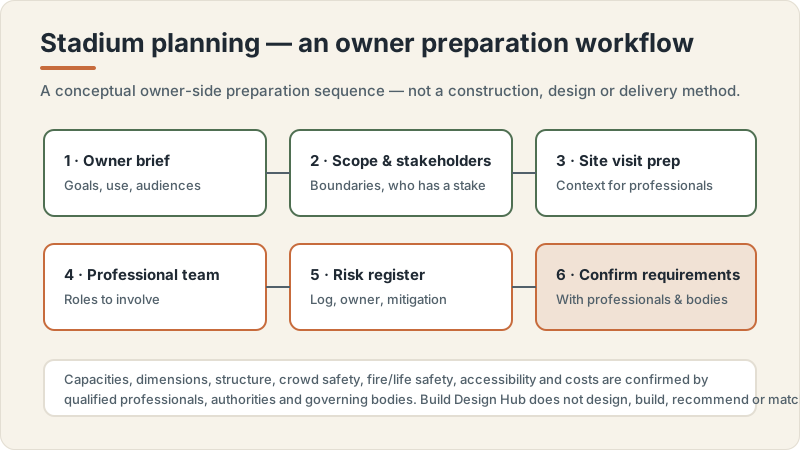
Stadium planning workflow concept
Conceptual editorial diagram — not a construction drawing, specification, to-scale plan or proof of a real project. It is not engineering, structural, fire/life-safety, crowd-safety or accessibility-compliance guidance. Capacities, dimensions, standards, requirements and costs vary by facility type, audience, site, use case and governing body, and are confirmed with qualified professionals, relevant authorities and governing bodies. Build Design Hub does not design, build, inspect, certify, recommend or match anyone.
What this guide helps you prepare
This guide helps you arrive at a stadium site visit organised rather than reactive. A surveyor or engineer walking a potential stadium site will form questions about access, ground conditions, surroundings, services, event operations and constraints, and you can save time and reduce misunderstandings by having relevant context, documents and a clear statement of intent ready in advance. The aim is not for you to pre-judge any technical matter such as structure, capacity, spectator flow or safety, but to make sure the professionals have the background they need and that you understand what they are looking at and why they may ask for further investigation.
It also helps you separate what you already know from what only a qualified professional can determine. A stadium touches many specialist disciplines, and most important questions about ground, structure, seating arrangements, crowd movement, life safety, accessibility and compliance cannot be answered by an owner or by a general guide; they require site-specific investigation by the right specialists and confirmation with authorities and governing bodies. By framing your preparation around questions to confirm, you keep the boundary clear: you bring the context and objectives, and the professionals bring the assessment. This guide stays strictly on the preparation side of that line.
- Clarify your objective for the visit: scoping a new stadium, assessing an existing venue, or comparing several candidate sites
- Decide who from your side should attend and who can speak to ownership, intended use, event profile and budget envelope
- Assemble background documents and context so professionals are not starting from zero
- Prepare questions that confirm scope, constraints and next steps rather than questions that ask for instant verdicts on capacity, structure or safety
- Record what you learn during and after the visit in a consistent, comparable format
- Understand which matters are owner decisions and which must be left to qualified professionals, authorities and governing bodies
Stadium site context to gather before the visit
Before any professional walks the site, it helps to gather the context that frames it. For a stadium this typically spans more than the footprint of the playing area: how the site is reached by spectators, staff, vehicles, deliveries and emergency services; the wider transport, parking and public-realm setting; the orientation of the usable land and how surrounding buildings, roads, watercourses, overhead lines or protected features might come up; and the neighbours and community context that a professional or authority may want to consider. You are not assessing any of these factors, only noting them so the visit covers them and so questions can be raised with the right specialists and authorities.
It also helps to note the history and current state of the site as far as you reasonably know it: previous uses, any existing structures, stands or surfaces, known utilities or service connections, and any documents a previous owner, authority or professional may have produced. Where you genuinely do not know something, recording that gap is itself useful, because it tells the professional team what may need investigation. Treat every observation as context to confirm, not as a finding; ground conditions, structural matters, capacity, spectator movement, drainage, boundaries and service locations all require qualified investigation and, where relevant, authority and governing-body confirmation rather than assumption.
- Note how the site is reached by spectators, staff, deliveries, vehicles and emergency services, and whether access appears constrained, to raise with professionals
- Record the wider transport, parking, public-realm and community setting as context for siting and operations questions
- List neighbouring uses (homes, schools, roads, businesses, protected features) that a professional or authority may consider
- Gather existing documents: site plans, ownership or boundary information, previous reports, and service or utility records
- Note the current state of the site, including any existing stands, structures, surfaces or evidence of past use, as context only
- Flag anything you do not know (boundaries, buried services, ground history, prior approvals) so professionals can advise what investigation may be needed
Event, operations and stakeholder context to have ready
A stadium is as much an operational asset as a structure, so the context you prepare should reach beyond the physical site into how the venue is meant to be used. It helps to describe, in plain non-technical terms, the intended events and users, roughly how often and at what scale you imagine the venue operating, and any secondary or off-season uses you hope it will support. This operational picture gives professionals the background they need to ask sharper questions about siting, access, servicing and phasing, but it should be framed as your intent to explore, not as a fixed capacity, attendance figure or event schedule, all of which are matters for qualified professionals, authorities and governing bodies to confirm.
The stakeholder and governance context matters just as much. Stadium projects often involve owners, operators, tenants such as clubs or event promoters, community bodies, funders and public authorities, and being clear about who these parties are and how decisions get made helps professionals understand how their input will be used. Preparing a concise brief, any existing plans, photographs and ownership information, and a note of known constraints and deadlines gives specialists something concrete to react to. None of this material should attempt to specify technical solutions, capacities, safety arrangements or standards; its job is to communicate intent, operations and governance clearly so the visit is efficient.
- Describe intended events, users and any secondary or off-season uses in non-technical terms, as intent to explore rather than fixed figures
- Note who the owner, operator, tenants, funders and relevant authorities are, and how decisions are made among them
- Record known operational constraints (site hours, neighbours, seasonal use, existing commitments) for professionals to consider
- Prepare a concise written brief plus plans, photographs, ownership records and any prior reports in an easy-to-share form
- Identify the single point of contact and who can speak to ownership, intended use, governance and budget envelope on the day
- Bring a simple template for capturing questions, answers, actions and follow-up owners during the visit
Planning questions before speaking with professionals
Before you bring in surveyors, engineers or other specialists, it is worth working through a set of internal questions so your own position is clear. These questions are about your objectives, constraints, operations and decision-making rather than about technical solutions. Being clear on what success looks like, who must approve decisions, what the venue is genuinely meant to support, and what your non-negotiables are will make every professional conversation more efficient, because the professionals are not left guessing at intent. For a stadium this internal clarity is especially valuable, because the number of stakeholders and disciplines involved makes vague objectives expensive to unpick later.
These internal questions also help you identify where you have gaps that only professionals or authorities can fill. If you find you cannot answer a question without making assumptions about ground, structure, capacity, spectator movement, safety, accessibility, compliance or cost, that is a signal to add it to the list of things to confirm with the right specialists, authorities and governing bodies rather than to resolve it yourself. The goal is to arrive at the visit knowing what you know, knowing what you do not, and knowing who should answer each open question.
- What is the primary intended use of the stadium, and which secondary or non-event uses, if any, must it also support?
- Who are the owners, operators, tenants and stakeholders, and who must be consulted or give approval before decisions are made?
- What constraints (site boundaries, access, neighbours, transport, operating hours, governance, funding) do we already know about?
- What outcomes would make this project a success, and what would make it unacceptable, in non-technical terms?
- Which questions can we genuinely not answer ourselves, and therefore must be confirmed with qualified professionals, authorities or governing bodies?
- What is our process and rough timescale for decisions, and who owns the next steps after the visit?
Questions for qualified professionals
When you meet surveyors, engineers and other specialists, the most useful questions are those that establish scope, clarify what further investigation may be needed, and explain what they would need from you next. Rather than asking a professional to confirm a capacity, dimension, structural approach, safety arrangement or cost on the spot, ask what would have to be investigated to answer such questions reliably, which authorities or governing bodies would need to be involved, and how site-specific and operational factors might shape the range of options. This keeps the conversation grounded in their expertise and avoids treating a first stadium visit as a final assessment.
It also helps to ask professionals how they would structure their own work and what comparable scopes you should request if you are speaking to more than one firm. Understanding what a typical scope of investigation includes, what assumptions they are making, and what could change their advice helps you compare proposals on a like-for-like basis later. Remember that all requirements, capacities, dimensions, loads, standards and figures vary by location, use case, governing body, event profile, owner, site, authority and professional team, and must be confirmed by the relevant qualified professionals, authorities and governing bodies rather than assumed from any guide.
- What further site investigation would you recommend before any conclusions about ground, structure or feasibility can be drawn?
- Which authorities, governing bodies or approvals would you expect to be relevant for a stadium of this type, use and location?
- How might site-specific and operational factors (access, surroundings, transport, event profile, existing conditions) shape the options to consider?
- What information or documents do you need from us to progress, and in what order should we provide them?
- If we consult more than one firm, what scope of work should we ask each to quote so proposals are comparable?
- What assumptions are you making at this stage, and what could change your advice as more is learned about the site and its intended use?
What this does not replace
This is an educational planning resource only. It is not a stadium construction manual and not structural, architectural, seating or stand engineering, crowd-safety, crowd-flow, evacuation, fire or life-safety, or accessibility-compliance advice, and it is not permit, zoning, inspection, certification, legal, tax, insurance or procurement advice. It does not design, build, engineer, specify, certify, inspect or approve anything, gives no capacities, dimensions, loads, revenue, ROI or costs, and offers no warranty interpretation or estimate. Requirements, standards, capacities and costs vary by location, facility type, use case, governing body, owner, site, authority, professional team and project scope, and are confirmed with qualified professionals, relevant authorities and governing bodies.
Build Design Hub does not design, build, engineer, inspect, certify, recommend, rank, verify, introduce, broker or match suppliers, contractors, consultants or professionals, and HELPERG LLC is publisher/operator only. Use this resource to prepare your own thinking and briefs, then have qualified professionals you engage directly review your project. Decisions about design, engineering, structure, crowd safety, fire and life safety, accessibility, compliance, capacity, procurement and cost must rest on those professionals, the relevant authorities and the governing bodies for your sport and location.
- Not a stadium construction manual and not structural, architectural or seating/stand engineering
- Not crowd-safety, crowd-flow, evacuation, fire/life-safety or accessibility-compliance advice
- Not permit/zoning, inspection, certification, warranty-interpretation, legal, tax, insurance or procurement advice
- Not a supplier, contractor, consultant or professional recommendation, ranking, directory or matching service
- Not an estimate and gives no capacity, dimension, revenue, ROI or cost figures — requirements and costs vary
- Qualified professional review is required before any stadium project decision
Stadium site visit preparation worksheet
- 1Record the primary intended use of the stadium and any secondary or non-event uses it must support
- 2List the owners, operators, tenants, funders, stakeholders and approval-givers who should be consulted before decisions
- 3Document how the site is reached by spectators, staff, deliveries, vehicles and emergency services, noting apparent constraints to raise with professionals
- 4Note the wider transport, parking, public-realm and community setting as context for the professional team
- 5Record the orientation of the usable land and surrounding features (buildings, roads, watercourses, overhead lines, protected features) as context
- 6Gather existing plans, photographs, boundary and ownership records, and any prior reports into one shared place
- 7Record what is known about the site's history, current condition and any existing stands, structures or surfaces
- 8List the gaps where you cannot answer a question without professional, authority or governing-body input
- 9Confirm site access permissions, keys, safety requirements and timing for the visiting professionals
- 10Prepare a concise written brief stating intended events, users, frequency and known constraints in non-technical terms
- 11Identify the single point of contact and who can speak to ownership, use, governance and budget envelope
- 12Prepare a note-capture template for questions, answers, actions and follow-up owners
- 13Draft questions for professionals that confirm scope, investigation needs, authorities and next steps rather than instant verdicts
- 14Note which authorities or governing bodies you believe may be relevant, to confirm with professionals
Common mistakes to avoid
- Treating the first site visit as a final assessment and expecting verdicts on capacity, structure, spectator flow or safety on the spot
- Arriving without a clear statement of intended use and event profile, leaving professionals to guess at objectives and constraints
- Assuming capacities, dimensions, loads, standards or costs from general sources instead of confirming them with qualified professionals and governing bodies
- Failing to gather existing plans, ownership records or prior reports, so the visit starts from incomplete context
- Not bringing anyone who can speak to ownership, governance, operators or budget, which stalls decisions and follow-up
- Overlooking access, transport, neighbours and the wider public-realm setting as context worth raising with the professional team
- Recording observations as findings rather than as questions to confirm, blurring the line between owner and professional roles
- Speaking to multiple firms without aligning the scope you ask each to address, making proposals hard to compare later
When to involve a professional
- When the site visit raises questions about ground conditions, existing structures or feasibility that require qualified investigation
- When boundaries, access rights, easements or buried services are uncertain and need to be established by the right specialists
- When any authority, permit, safety, accessibility or sport or event governing-body requirement may apply and must be confirmed by professionals
- When you need site-specific scope, capacity feasibility or operational input rather than general planning context
- When comparing proposals from more than one firm and you need help defining a like-for-like scope
- When intended use, event profile, stakeholders or constraints change in ways that could affect what professional input is required
Frequently asked questions
Questions readers ask about this topic
Does Build Design Hub recommend, rank or match surveyors, engineers, suppliers or contractors for my stadium?
No. Build Design Hub is an educational resource and does not design, build, engineer, inspect, certify, recommend, rank, verify, introduce, broker or match suppliers, contractors or professionals. It also does not provide capacities, costs, dimensions, loads or requirements. This guide only helps you prepare context and questions; you should source and engage qualified professionals independently and confirm all technical, safety and regulatory matters with them and the relevant authorities and governing bodies.
Will this guide tell me what capacity, dimensions or structure my stadium needs?
No. Capacities, dimensions, loads, spectator arrangements, safety provisions and standards vary by location, use case, governing body, event profile, owner, site, authority and professional team. This guide deliberately frames such matters as questions to confirm with qualified professionals, the relevant authorities and sport or event governing bodies rather than stating any of them as facts.
What should I have ready before a professional visits the site?
Aim to have a concise brief describing intended events, users and known constraints, any existing plans, photographs, boundary or ownership records and prior reports, confirmed site access arrangements, the right people to speak to ownership and operations, and a way to capture notes and actions. The sections above on site context and on event, operations and stakeholder context list practical items, all on the preparation side rather than the assessment side.
Is a stadium site visit the same as an assessment of whether my site is suitable?
No. A site visit is part of a wider process, and suitability, feasibility, capacity, safety and any technical conclusions are matters for qualified professionals using site-specific investigation and confirmation with authorities and governing bodies. This guide helps you prepare for and get value from such visits; it does not assess sites, and nothing here should be read as a substitute for professional judgement, regulatory approval or governing-body confirmation.
Keep reading