
Who this guide is for
- Stadium and venue owners weighing a renovation and wanting a clear brief before engaging a professional team
- Sports clubs and their operations staff who need to describe what they want changed without pre-empting engineering decisions
- Municipalities, councils and public bodies responsible for a community or civic stadium considering refurbishment
- Schools, colleges and universities preparing to upgrade an existing grandstand, pitch enclosure or spectator facility
- Developers and investors assessing an existing venue and gathering information before committing to a scheme
- Facility managers and project coordinators tasked with assembling background information for owners and consultants
Planning diagram
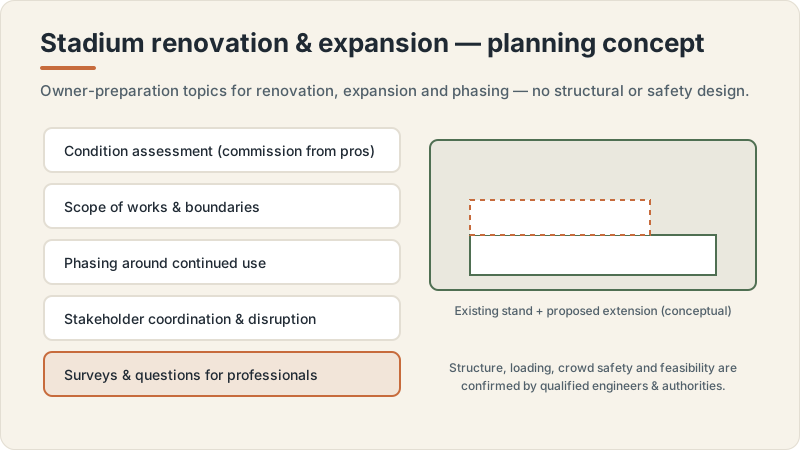
Stadium renovation and expansion concept
Conceptual editorial diagram — not a construction drawing, specification, to-scale plan or proof of a real project. It is not engineering, structural, fire/life-safety, crowd-safety or accessibility-compliance guidance. Capacities, dimensions, standards, requirements and costs vary by facility type, audience, site, use case and governing body, and are confirmed with qualified professionals, relevant authorities and governing bodies. Build Design Hub does not design, build, inspect, certify, recommend or match anyone.
What this guide helps you prepare
This guide helps you turn a vague intention to renovate an existing stadium into a written project brief that qualified professionals can respond to. A renovation brief is not a design and not a specification; it is a plain-language description of your objectives, constraints, unknowns and priorities, together with the background information you have gathered. Preparing it well means that when you do engage architects, engineers, surveyors and other specialists, they are reacting to a clear starting point rather than reconstructing your intentions from scratch. It also helps you notice, early, which of your assumptions are actually questions that only a professional or authority can answer.
The material here is organised around four preparation activities: getting ready for a professional condition assessment, framing a scope of works, thinking about phasing around continued use, and identifying the surveys and investigations you may want to discuss. None of these activities requires you to make technical judgements. Instead, each helps you assemble facts, articulate goals, and record open questions so that the professional team you appoint can advise on requirements, feasibility and sequencing. Nothing in this guide states what condition your venue is in, what works are needed, or what any requirement, capacity or cost might be.
- Write a short statement of why a renovation is being considered and what a successful outcome would look like for the owner or club
- Distinguish clearly between things you know, things you assume, and things that must be confirmed by professionals or authorities
- Gather existing drawings, past reports, maintenance records and prior permissions in one place before any professional visit
- List the events, seasons and operational commitments that any works would have to work around
- Note which stakeholders must be consulted and who holds decision-making authority for the venue
- Record every requirement, capacity, dimension or standard you are tempted to assume as an open question for the professional team
Preparing for a professional condition assessment and framing the scope of works
A professional condition assessment is something a qualified team carries out, not something you perform yourself. Your role in preparation is to make that assessment as useful as possible: to assemble the venue's history, describe how each part of the stadium is used, and flag any concerns or symptoms that owners, staff or spectators have reported over time. This might include gathering original and as-built drawings, previous survey or inspection reports, maintenance logs, records of past alterations, and any correspondence with authorities or governing bodies. You are not diagnosing anything; you are giving the professionals the context they need to plan their own investigation and to tell you what further information is required.
Framing a scope of works is similarly about description rather than decision. A helpful renovation brief separates outcomes you want (for example, refreshing spectator areas, addressing reported problems, or accommodating a change in how the venue is used) from the technical means of achieving them, which are for professionals to determine. Keeping the scope expressed as objectives and constraints, rather than as instructions about materials, structure or systems, leaves room for the professional team to advise on what is feasible, what triggers additional requirements, and what should be confirmed with the relevant authority. Resist the urge to state capacities, dimensions, loadings or standards in the brief itself; frame them as questions.
- Assemble the venue's document history: original and as-built drawings, prior reports, maintenance records and past permissions
- Describe how each area of the stadium is currently used and by whom, without judging its condition
- Record reported symptoms or concerns as observations to investigate, not as diagnoses or conclusions
- Express the scope as desired outcomes and constraints rather than as instructions about structure, materials or systems
- Note which parts of the venue are in scope, which are explicitly out of scope, and which are undecided
- List every technical figure you are tempted to fix (capacity, dimensions, loads) as a question for qualified professionals
Phasing around continued use and coordinating stakeholders
Many stadium renovations have to happen while the venue keeps operating, which makes phasing one of the most important things to describe in a brief, even though the actual sequencing is a professional and safety matter you must not design yourself. Your contribution is to map the operational reality: which events, fixtures, seasons or lettings are fixed, which areas must remain usable and when, and what the consequences would be if a particular space were unavailable for a period. This information lets the professional team advise on how works might be organised around use, and lets the relevant authorities and governing bodies advise on what is permissible during occupation. You are recording constraints, not deciding how or in what order any work occurs.
Coordinating stakeholders is the parallel task. A stadium typically has more interested parties than a smaller building: owners, operators, clubs, tenants, community users, local authorities, emergency services, governing bodies, sponsors and neighbours may all have a stake. Preparing a stakeholder map, noting who must be consulted, who must approve, and who simply needs to be informed, helps prevent late surprises and gives your professional team a realistic picture of the approvals and consultations that may be involved. This guide does not tell you what approvals apply; it helps you identify the people and bodies whose input a qualified professional will need to factor in.
- Map fixed commitments: events, fixtures, seasons, lettings and any dates the venue cannot be closed
- Record which areas must stay usable, and the operational impact if each becomes unavailable
- Identify all stakeholders and label each as consult, approve or inform, noting who holds final authority
- Note access, storage, parking and neighbour considerations that continued operation would raise
- List the governing bodies and authorities whose input the professional team may need to seek
- Capture any operational constraint that feels like a rule as a question to confirm, not a fixed requirement
Planning questions before speaking with professionals
Before you approach architects, engineers, surveyors or other specialists, it is worth working through a set of questions on your own or with your immediate team. These questions are not about arriving at technical answers; they are about clarifying your objectives, understanding your constraints, and identifying what you genuinely do not know. Doing this first tends to make early professional conversations far more productive, because you can present a coherent brief and a clear list of open items rather than an unformed idea. It also helps you notice where you have been assuming something is fixed when it is actually a matter for professional or regulatory confirmation.
Treat the questions below as prompts for internal discussion and record-keeping. The answers you can give become part of your brief; the answers you cannot give become the questions you carry into professional conversations. Nothing here should be treated as a checklist of requirements, and none of it substitutes for advice from qualified professionals or the relevant authorities and governing bodies about what actually applies to your venue, your location and your intended use.
- What outcome is driving the renovation, and how would the owner or club recognise success?
- What must remain unchanged, and what is genuinely open to change?
- What operational commitments and dates constrain when and how any works could take place?
- Which stakeholders, authorities and governing bodies are likely to have an interest or a say?
- What background documents do we already hold, and what is missing or out of date?
- Which of our assumptions about capacity, condition, requirements or timing are actually unconfirmed questions?
Questions for qualified professionals
Once you have a draft brief, the next step is to structure the questions you want to put to a qualified professional team. These questions should invite advice rather than presume answers: they ask what investigations are needed, what requirements might apply, what is feasible given your constraints, and what should be confirmed with authorities or governing bodies. Framing your questions this way keeps decision-making with the appropriately qualified people while ensuring the conversation is grounded in your actual objectives and the information you have gathered. It also helps you compare responses from different professionals on a like-for-like basis.
The prompts below are examples of the kinds of questions you might raise; they are not a complete or authoritative list, and the right questions depend on your venue, location, use case and scope. A professional team may reshape them entirely once they understand your situation. Use them to open a dialogue about condition assessment, scope, phasing and surveys, and expect the professionals to tell you which requirements, standards and approvals are relevant, rather than assuming any of that yourself.
- What condition assessment and surveys would you recommend, and what will each one tell us?
- Given our objectives and constraints, what appears feasible and what would you advise against assuming?
- Which requirements, standards, approvals or governing-body considerations might apply to a renovation of this kind?
- How might works realistically be organised around our continued operation, and what would that depend on?
- What information are we missing that you would need before advising on scope or phasing?
- How would you structure your fee, deliverables and the interfaces between the different specialists involved?
What this does not replace
This is an educational planning resource only. It is not a stadium construction manual and not structural, architectural, seating or stand engineering, crowd-safety, crowd-flow, evacuation, fire or life-safety, or accessibility-compliance advice, and it is not permit, zoning, inspection, certification, legal, tax, insurance or procurement advice. It does not design, build, engineer, specify, certify, inspect or approve anything, gives no capacities, dimensions, loads, revenue, ROI or costs, and offers no warranty interpretation or estimate. Requirements, standards, capacities and costs vary by location, facility type, use case, governing body, owner, site, authority, professional team and project scope, and are confirmed with qualified professionals, relevant authorities and governing bodies.
Build Design Hub does not design, build, engineer, inspect, certify, recommend, rank, verify, introduce, broker or match suppliers, contractors, consultants or professionals, and HELPERG LLC is publisher/operator only. Use this resource to prepare your own thinking and briefs, then have qualified professionals you engage directly review your project. Decisions about design, engineering, structure, crowd safety, fire and life safety, accessibility, compliance, capacity, procurement and cost must rest on those professionals, the relevant authorities and the governing bodies for your sport and location.
- Not a stadium construction manual and not structural, architectural or seating/stand engineering
- Not crowd-safety, crowd-flow, evacuation, fire/life-safety or accessibility-compliance advice
- Not permit/zoning, inspection, certification, warranty-interpretation, legal, tax, insurance or procurement advice
- Not a supplier, contractor, consultant or professional recommendation, ranking, directory or matching service
- Not an estimate and gives no capacity, dimension, revenue, ROI or cost figures — requirements and costs vary
- Qualified professional review is required before any stadium project decision
Stadium renovation brief preparation register
- 1Record the reason for considering a renovation and a plain-language description of the desired outcome
- 2Gather original drawings, as-built drawings and any records of past alterations in one accessible place
- 3Collect previous survey, inspection and condition reports, plus maintenance and defect logs
- 4Assemble prior permissions, correspondence with authorities and any governing-body communications
- 5Describe how each area of the stadium is currently used, by whom, and when
- 6List reported concerns or symptoms as observations to investigate, not as conclusions
- 7Map fixed operational commitments: events, fixtures, seasons, lettings and unclosable dates
- 8Note which areas must remain usable during any works and the impact if they cannot
- 9Build a stakeholder map labelling each party as consult, approve or inform
- 10Identify the authorities and governing bodies whose input the professional team may need
- 11Draft the scope as desired outcomes and constraints, marking items in scope, out of scope and undecided
- 12List every capacity, dimension, load, standard or cost you are tempted to assume as an open question
- 13Prepare a set of questions to raise with qualified professionals about assessment, scope and phasing
- 14Record which decisions are yours to make and which must rest with qualified professionals or authorities
Common mistakes to avoid
- Stating a fixed capacity, dimension, loading or standard in the brief instead of listing it as a question for professionals
- Assuming that because the venue operated at a certain level before, the same will apply after renovation without professional confirmation
- Writing the scope as instructions about structure, materials or systems rather than as outcomes and constraints
- Skipping or delaying a professional condition assessment and treating your own observations as a diagnosis
- Overlooking phasing around continued use and assuming the venue can simply close, or simply stay open, without advice
- Building an incomplete stakeholder map and discovering an authority or governing body's interest late in the process
- Assuming which permits, approvals or requirements apply instead of confirming them with the relevant authorities
- Committing to a timeline or budget figure before any qualified professional has assessed feasibility
When to involve a professional
- When you need any assessment of the stadium's condition, structure, seating, systems or safety, which only qualified professionals should carry out
- When you are unsure which surveys or investigations to commission, or how to interpret an existing report
- When your objectives touch on capacity, crowd movement, fire, accessibility or any safety-related matter
- When phasing works around continued use raises questions about what is permissible during occupation
- When you need to know which permits, codes, standards, approvals or governing-body requirements apply to your venue
- When stakeholders, authorities or governing bodies require formal input, sign-off or consultation before decisions
Frequently asked questions
Questions readers ask about this topic
Does Build Design Hub design, build, engineer, inspect or certify stadium renovations, or recommend suppliers and contractors?
No. Build Design Hub is an educational publisher operated by HELPERG LLC. It does not design, build, engineer, inspect, certify, or carry out any works, and it does not recommend, rank, verify, introduce, broker or match suppliers, contractors, consultants or professionals. It also gives no capacities, costs, dimensions, loads or requirements. This guide only helps you prepare a project brief; all technical decisions, assessments and approvals rest with qualified professionals and the relevant authorities.
Can this guide tell me what condition my stadium is in or what works it needs?
No. Assessing condition and determining what works are needed is the role of a qualified professional team carrying out a proper condition assessment. This guide helps you gather the background information and frame the questions that make such an assessment useful, but it makes no judgement about your venue and states no findings, requirements or recommendations.
How should I handle capacities, requirements, timelines and costs in my brief?
Treat all of them as open questions rather than facts. Requirements vary by location, facility type, use case, governing body, owner, site, authority, professional team and project scope. Record any figure you are tempted to assume as something to confirm with qualified professionals and the relevant authorities, and let your professional team advise on feasibility, sequencing and what applies to your venue.
Can I renovate the stadium while it stays in use?
That depends entirely on your venue, its use, and what qualified professionals and the relevant authorities and governing bodies advise. This guide helps you describe your operational constraints and fixed commitments so a professional team can consider how works might be organised around continued use, but it does not decide, design or sequence any phasing itself.
Keep reading