
Who this guide is for
- Stadium and arena owners weighing whether and where to invest in upgrades to a venue that is already operating
- Sports clubs and their operations teams planning facility, system or amenity improvements around a live fixture calendar
- Municipalities and public bodies preparing to scope upgrades to a council- or community-owned stadium
- Schools, colleges and universities considering staged improvements to a shared or multi-use sports venue
- Developers and project teams assembling an early brief and shortlist of questions before engaging designers, engineers or contractors
- Facility managers and estates leads organising priorities, records and stakeholder input ahead of professional review
Planning diagram
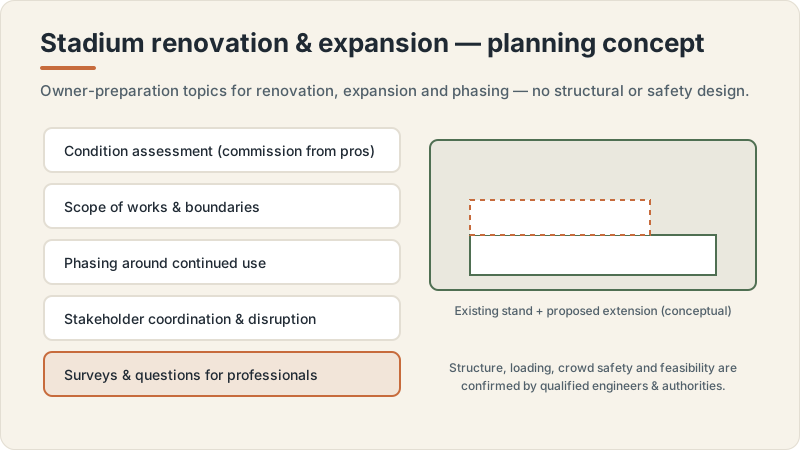
Stadium renovation and expansion concept
Conceptual editorial diagram — not a construction drawing, specification, to-scale plan or proof of a real project. It is not engineering, structural, fire/life-safety, crowd-safety or accessibility-compliance guidance. Capacities, dimensions, standards, requirements and costs vary by facility type, audience, site, use case and governing body, and are confirmed with qualified professionals, relevant authorities and governing bodies. Build Design Hub does not design, build, inspect, certify, recommend or match anyone.
What this guide helps you prepare
This guide helps you turn a vague sense that "the stadium needs upgrading" into an organised set of questions, priorities and records you can bring to a qualified professional team. Upgrading an operating venue usually touches several things at once — spectator amenities, back-of-house facilities, mechanical and electrical systems, connectivity, hospitality areas, accessibility considerations and the way the venue is run on event days. Before any of that can be designed or costed, someone has to describe the current situation, the outcomes being sought, the constraints of a live venue, and the boundaries of the project. That descriptive, preparatory work is what this guide supports.
The aim is a stronger starting brief: a document that states what you are trying to improve and why, what must keep working during any upgrade, who needs to be consulted, and which questions remain open for professionals and authorities to answer. Preparation reduces confusion later, makes conversations with designers, engineers, contractors and governing bodies more productive, and gives you a consistent basis for comparing options and quotes. It does not replace professional assessment, and it does not produce a design, a specification or a decision about what the venue can safely accommodate.
- Write a plain-language statement of what you want the upgrade to achieve and for whom
- Record which facilities, systems and amenities are in scope and which are explicitly out
- Capture the constraints of an operating venue: event calendar, tenants, community use and access
- List the stakeholders, authorities and governing bodies you believe should be consulted
- Note the open questions you cannot answer yourself and want a professional to address
- Assemble existing documents, records and prior reports so professionals start from what is known
Framing upgrade priorities in a live, operating venue
When a stadium is already in use, priorities compete. A comfort or amenity improvement may matter to spectators, while an ageing system may matter to the people who run the building, and a governing-body expectation may shape what a competition venue is expected to offer. Rather than trying to rank these yourself with fixed answers, this guide encourages you to frame each candidate upgrade as a question: what problem does it address, who feels the problem, what happens if it waits, and what does it depend on? Framing priorities as questions keeps the conversation open until professionals and stakeholders can weigh in with informed input specific to your venue.
Sequencing matters as much as selection. In an operating stadium, some upgrades may be easier to consider between seasons or events, some may interact with others, and some may depend on decisions that have not been made yet. Preparing a prioritisation view — grouping candidate upgrades by the outcome they serve and the dependencies they carry — helps a professional team advise on order, feasibility and interaction. It is a way of organising thinking, not a schedule, a phasing plan or a construction sequence, all of which are matters for qualified professionals to determine for your specific site and use case.
- For each candidate upgrade, ask: what problem does it solve and who experiences that problem?
- What is the consequence, in your own words, of deferring this upgrade to a later phase?
- Which upgrades appear to depend on, or interact with, other upgrades on your list?
- Which improvements relate to spectator experience versus back-of-house operations versus systems?
- How does the event calendar and tenant use shape when any of this could be considered?
- Which priorities are driven by owner goals versus governing-body or authority expectations you need to confirm?
Organising the scope: facilities, systems and amenities
Stadium upgrades tend to fall into loose groupings that are useful for organising a brief, even though the boundaries blur in practice. Facilities include areas people use — concourses, hospitality and function spaces, changing and player areas, media and staff spaces, and washrooms. Systems include the things that make the venue work — power, lighting, heating and ventilation, water, connectivity and audio-visual, security and access control. Amenities include the features that shape the experience — seating comfort, wayfinding, catering points, screens and signage. Sorting your wish-list into these groupings is a preparation exercise that helps everyone see the shape of the project before professionals assess what is actually feasible.
As you organise scope, separate what you know from what you assume. It is easy to assume a space "can" be repurposed, that a system "just needs replacing", or that an amenity change is minor — but each of these is a professional judgement about a specific building. Record your assumptions plainly and mark them as things to verify. This guide does not tell you what any space can accommodate, how any system should be configured, or what any amenity requires; it helps you present your intentions and open questions so qualified professionals, and the relevant authorities and governing bodies, can respond to your actual venue.
- Sort candidate upgrades into facilities, systems and amenities to see the overall shape of scope
- For each item, note what you know as fact versus what you are assuming and need to confirm
- Identify interdependencies where a facility change may rely on a system change or vice versa
- Record which areas remain in use during events and which have flexible or seasonal use
- List the documents, drawings or records you hold for each area, and the gaps you cannot fill
- Mark every capacity, dimension, condition or performance question as one for a professional, not a fixed input
Planning questions before speaking with professionals
Before you engage designers, engineers, contractors or consultants, it helps to have your own thinking in order so that professional time is spent well. The questions below are for you and your internal stakeholders — owners, operations teams, tenants and users — to work through first. They surface goals, constraints, tolerances and unknowns, and they help you notice where your team disagrees or where you simply do not have the information. Working through them does not commit you to anything; it prepares you to describe your project clearly and to recognise which decisions are genuinely yours to make and which belong to professionals or authorities.
Treat this as a conversation-shaping exercise rather than a decision-making one. The strongest preparation names the outcomes you care about, the constraints the operating venue imposes, and the boundaries you are not willing to cross, while leaving technical feasibility, safety, compliance and design entirely to the qualified professionals you will later engage. Keep a written record of your answers so that they can travel with your brief and be tested against professional input.
- What outcomes matter most to us, and how would we know an upgrade succeeded?
- What must continue to function throughout any upgrade, and what disruption could we tolerate?
- Who are the tenants, users, community stakeholders and authorities we must involve early?
- What budget envelope, decision process and approval steps exist on our side, in principle?
- Which questions can only be answered by qualified professionals, authorities or governing bodies?
- What records, prior reports and constraints should we hand over so professionals start informed?
Questions for qualified professionals
Once your brief and priorities are organised, the next step is a structured conversation with the qualified professionals appropriate to your project — which may include designers, architects, engineers of relevant disciplines, cost and project consultants, and specialists your venue and governing body require. This guide does not tell you who to appoint, and Build Design Hub does not recommend, rank, verify, introduce, broker or match any professional, supplier or contractor. The questions below are prompts to help you get clear, venue-specific advice; the answers depend on your site, use case, authorities and governing bodies, and only qualified professionals can provide them.
Ask professionals to explain not just what they would advise, but why, what it depends on, and what they would need to assess before being sure. Ask how any upgrade would interact with the operating venue, what approvals or reviews are involved, and where safety, accessibility, compliance and certification matters sit — recognising that these are for qualified professionals and the relevant authorities to determine, not for you or this guide to assume. Record answers consistently so you can compare input and understand the trade-offs being described.
- What would you need to assess about this specific venue before advising on any upgrade?
- How would each proposed upgrade interact with the venue's continued operation and event use?
- Which approvals, reviews, authorities or governing-body requirements apply to this scope?
- How should safety, accessibility and compliance considerations be handled, and by whom?
- What are the main risks, dependencies and unknowns you see in what we have described?
- How would you structure phasing, scope boundaries and interfaces so options can be compared fairly?
What this does not replace
This is an educational planning resource only. It is not a stadium construction manual and not structural, architectural, seating or stand engineering, crowd-safety, crowd-flow, evacuation, fire or life-safety, or accessibility-compliance advice, and it is not permit, zoning, inspection, certification, legal, tax, insurance or procurement advice. It does not design, build, engineer, specify, certify, inspect or approve anything, gives no capacities, dimensions, loads, revenue, ROI or costs, and offers no warranty interpretation or estimate. Requirements, standards, capacities and costs vary by location, facility type, use case, governing body, owner, site, authority, professional team and project scope, and are confirmed with qualified professionals, relevant authorities and governing bodies.
Build Design Hub does not design, build, engineer, inspect, certify, recommend, rank, verify, introduce, broker or match suppliers, contractors, consultants or professionals, and HELPERG LLC is publisher/operator only. Use this resource to prepare your own thinking and briefs, then have qualified professionals you engage directly review your project. Decisions about design, engineering, structure, crowd safety, fire and life safety, accessibility, compliance, capacity, procurement and cost must rest on those professionals, the relevant authorities and the governing bodies for your sport and location.
- Not a stadium construction manual and not structural, architectural or seating/stand engineering
- Not crowd-safety, crowd-flow, evacuation, fire/life-safety or accessibility-compliance advice
- Not permit/zoning, inspection, certification, warranty-interpretation, legal, tax, insurance or procurement advice
- Not a supplier, contractor, consultant or professional recommendation, ranking, directory or matching service
- Not an estimate and gives no capacity, dimension, revenue, ROI or cost figures — requirements and costs vary
- Qualified professional review is required before any stadium project decision
Stadium upgrade preparation worksheet
- 1Write a one-page statement of what the upgrade should achieve, for whom, and why now
- 2Record the current situation for each area or system in your own words, noting what is known versus assumed
- 3List every candidate upgrade and sort it into facilities, systems or amenities
- 4For each candidate upgrade, note the problem it addresses and who experiences that problem
- 5Record the event calendar, tenant use and community-access constraints that shape timing
- 6Capture what must keep functioning during any upgrade and what disruption you could tolerate
- 7List all stakeholders, authorities and governing bodies you believe should be consulted
- 8Gather existing drawings, prior reports, records and manuals, and note the gaps you cannot fill
- 9Mark every capacity, dimension, condition, cost and timeline as a question for professionals, not a fixed input
- 10Note the dependencies and interactions you can see between candidate upgrades
- 11Write down the open questions you want qualified professionals and authorities to answer
- 12Record your internal budget envelope, decision process and approval steps in principle only
- 13Prepare a consistent template for capturing and comparing professional input and quotes
- 14Keep a running list of assumptions to verify, so nothing untested carries into decisions
Common mistakes to avoid
- Treating a stadium's capacity, dimensions or system performance as fixed facts instead of questions to confirm with qualified professionals
- Assuming a space can be repurposed or a system simply replaced without professional assessment of the specific building
- Ranking upgrades by gut feel and locking in a sequence before professionals can advise on dependencies and interactions
- Skipping early involvement of tenants, community users, authorities and governing bodies, then discovering constraints late
- Confusing an internal wish-list with a professional design, specification or feasibility conclusion
- Overlooking how an operating venue's event calendar and continued use constrain what can be considered and when
- Assuming permit, code, accessibility, safety or certification outcomes rather than leaving them to professionals and authorities
- Failing to record assumptions and open questions, so untested guesses quietly become project inputs
When to involve a professional
- When you need to know what a specific space, stand, system or venue can actually accommodate — this is a professional assessment, not a planning assumption
- When any upgrade could affect structure, spectator areas, crowd movement, safety or evacuation — these require qualified professionals and relevant authorities
- When accessibility, permit, code, zoning, inspection or certification questions arise, which vary by location and authority and must be confirmed professionally
- When upgrades interact with each other or with the venue's continued operation, and phasing or feasibility needs expert judgement
- When governing-body or competition expectations may apply to the venue and need confirmation from the body itself and qualified professionals
- When you are ready to move from an organised brief toward design, costing, procurement or contracts and need professional and appropriate legal input
Frequently asked questions
Questions readers ask about this topic
Does Build Design Hub design, build, engineer, inspect or certify stadium upgrades, or recommend suppliers and contractors?
No. Build Design Hub is an educational publisher operated by HELPERG LLC. This guide does not design, build, engineer, inspect, certify or manage any project, and Build Design Hub does not recommend, rank, verify, introduce, broker or match suppliers, contractors, consultants or professionals. It also gives no capacities, dimensions, costs or requirements. It only helps you prepare questions, briefs and priorities to discuss with qualified professionals, the relevant authorities and governing bodies, who make those determinations for your specific venue.
Can this guide tell me what my stadium can safely hold or how big an upgrade should be?
No. Capacities, dimensions, loads, safety limits and similar matters depend on your specific site, facility type, use case, governing body, owner, authority and professional team, and they can only be determined by qualified professionals and relevant authorities. This guide frames those as questions to confirm, never as facts, and encourages you to record them as open items in your brief.
How is planning an upgrade to an operating stadium different from planning a new venue?
An operating stadium is live: it has scheduled events, tenants, community use, existing systems and people who run it day to day. Upgrades have to be considered against how the venue keeps working, and priorities and sequencing become central preparation questions. This guide helps you organise those constraints and open questions so a qualified professional team can assess feasibility and advise on order for your specific venue.
What should I have ready before I speak with professionals?
A clear statement of your goals, an organised list of candidate upgrades sorted into facilities, systems and amenities, the constraints of your operating venue, the stakeholders and authorities you think should be involved, any existing documents and records, and a written list of your assumptions and open questions. That preparation makes professional conversations more productive but does not substitute for professional assessment, design or approval.
Keep reading