
Who this guide is for
- Venue owners and operators considering renovating an ageing stand or grandstand
- Sports clubs and their boards scoping a refurbishment of existing spectator areas
- Municipalities and local authorities responsible for public stadium and ground assets
- Schools, colleges and universities with grandstands or seated sports facilities
- Developers and project teams assembling a brief before appointing professionals
- Facility managers preparing condition information and stakeholder discussions
Planning diagram
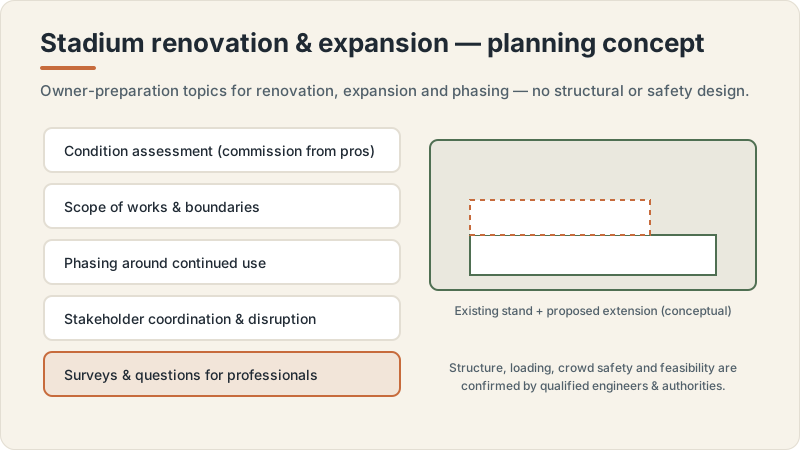
Stadium renovation and expansion concept
Conceptual editorial diagram — not a construction drawing, specification, to-scale plan or proof of a real project. It is not engineering, structural, fire/life-safety, crowd-safety or accessibility-compliance guidance. Capacities, dimensions, standards, requirements and costs vary by facility type, audience, site, use case and governing body, and are confirmed with qualified professionals, relevant authorities and governing bodies. Build Design Hub does not design, build, inspect, certify, recommend or match anyone.
What this guide helps you prepare
This guide helps you get to the starting line of a stand or grandstand renovation with your thinking, your paperwork and your stakeholders organised. Before anyone can advise you meaningfully, they need to understand what you have, how it is used, what is prompting the project, and what you hope the renovation achieves. The preparation work is largely about gathering and structuring information: existing drawings and records, event and usage patterns, known concerns raised by staff or the public, and the operational realities of a venue that must keep functioning. None of this replaces the professional assessment that follows; it simply makes that assessment more efficient and better informed.
It also helps you frame the project honestly. A renovation brief that begins with assumptions about what a stand can hold, what a refurbishment will cost, or how long it will take tends to steer every later conversation off course. This guide encourages you to write those items down as open questions to confirm with qualified professionals, relevant authorities and governing bodies rather than as fixed facts. By separating what you know from what you assume, you make it far easier for structural, crowd-safety and other specialists to correct, confirm or expand your understanding without unwinding decisions that were never yours to make.
- Assemble the existing record set: as-built drawings, prior surveys, maintenance logs and any past alteration history you can locate
- Write down what is prompting the renovation now, in plain terms, without pre-deciding the solution
- Note how the stand is used across your event calendar and who relies on it, without stating capacities as fixed
- List concerns already raised by staff, spectators, stewards or inspectors, and where you recorded them
- Separate confirmed information from assumptions, and mark assumptions as questions for qualified professionals
- Identify which decisions belong to appointed professionals and authorities rather than to your internal team
Preparing for a condition review of an existing stand
A condition review is the point where qualified professionals examine the stand as it actually is, and your job beforehand is to make that examination as unobstructed and well-documented as possible. That means locating whatever history exists, being candid about what is missing, and giving reviewers safe, practical access to the areas they need to see. Older stands often have incomplete records, undocumented past alterations, or changes in how spaces are used that were never captured on paper. Surfacing those gaps in advance is more useful than presenting a tidy but misleading picture, because the professionals you appoint will need to know where the uncertainties lie so they can decide what to investigate.
You should also prepare to describe how the stand behaves in use rather than to interpret it. Notes about where water collects, where surfaces feel different underfoot, where staff have flagged concerns, or where components have been repeatedly repaired are valuable observations to hand over, but they are observations, not diagnoses. Resist the urge to conclude what any of it means for the structure, its condition, its capacity or its safety; those conclusions belong to the reviewing professionals and, where relevant, the authorities and governing bodies for your facility. Your preparation makes their review faster and more targeted; it does not substitute for it.
- Gather all available drawings, specifications and records, and flag clearly where documentation is missing or uncertain
- Compile a history of past repairs, alterations, changes of use and any previous professional reports you hold
- Record observations of how the stand behaves in use as observations, not conclusions about condition or safety
- Note practical access constraints, event scheduling and any operational limits reviewers should know about upfront
- Prepare questions about scope: what a condition review will and will not cover, and what further investigation might follow
- Confirm who commissions and interprets the review, and avoid interpreting findings yourself
Framing phasing around an operational venue
Most stand renovations happen at venues that cannot simply close, and phasing is how the project is broken into stages that respect an event calendar, revenue cycles, community use and the practicalities of keeping the rest of the ground running. Preparing to discuss phasing is largely about mapping your own constraints clearly: when the venue must be usable, which periods offer the most room to work, how areas of the ground interact when one section is out of use, and what dependencies exist between the renovation and normal operations. These are planning inputs you can assemble; the actual sequencing, staging and any implications for how the venue operates during works are matters for your appointed professionals and the relevant authorities to determine.
It helps to think of phasing preparation as a set of well-organised questions rather than a plan you author yourself. You are not deciding construction sequence, temporary arrangements, occupancy during works, or anything touching structural, crowd-safety or life-safety matters, all of which sit firmly with qualified professionals. What you can do is give those professionals a clear picture of your calendar pressures, your tolerance for disruption, your stakeholder commitments and your decision timelines, so that whatever phasing they propose is grounded in how your venue genuinely runs. Keeping that boundary clean avoids the common trap of committing publicly to a timeline before anyone qualified has confirmed it is feasible.
- Map your event calendar and identify the windows that create the most and least operational pressure
- List which parts of the ground depend on the stand under renovation and how they interact operationally
- Record stakeholder and community commitments that could constrain when and how work is staged
- Note your decision-making timelines and approvals so professionals understand your internal cadence
- Prepare phasing as questions for professionals, not as a sequence, staging or occupancy plan you author
- Avoid publishing or committing to any timeline, stage or reopening date before qualified professionals confirm feasibility
Planning questions before speaking with professionals
Before you sit down with any specialist, it is worth working through a set of internal questions that clarify what you actually want, what you already know, and where your uncertainties lie. This is reflective preparation, not technical analysis. Good answers here are usually about intent, priorities, constraints and governance rather than about structures, numbers or standards. When your team can articulate why the renovation is being considered, what a successful outcome looks like in plain language, and who holds which decisions, every subsequent professional conversation becomes sharper and less prone to misunderstanding.
These questions also help you notice where you have quietly assumed something that should instead be confirmed. Assumptions about how much a stand can hold, what a refurbishment will cost, how long it will take, or what rules apply are exactly the items that need to be reframed as open questions for qualified professionals, relevant authorities and governing bodies. Working through them in advance means you arrive with a clear brief and a clear list of unknowns, rather than with conclusions that professionals then have to spend time gently dismantling.
- Why are we considering this renovation now, and what specifically prompted it?
- What outcome would count as success, described in plain terms rather than technical targets?
- What do we genuinely know about the stand, and what are we assuming that must be confirmed?
- Who owns each decision internally, and which decisions clearly belong to professionals or authorities?
- What are our real operational, calendar and stakeholder constraints, stated without pre-deciding solutions?
- Which of our current beliefs about capacity, cost, timeline or requirements need to be reframed as questions?
Questions for qualified professionals
Once you engage structural, crowd-safety and other relevant professionals, the goal is to understand the scope, sequence and boundaries of their advice, not to extract quick answers to complex questions. Well-framed questions help you learn what each specialist covers, what they do not, what they would need to investigate, and how their findings connect to the decisions ahead. Because requirements vary by location, facility type, use case, governing body, owner, site, authority, professional team and project scope, the most useful questions ask professionals to confirm what applies to your specific stand rather than to speak in generalities.
It is equally important to ask about the interfaces between disciplines and authorities. A stand renovation typically touches several areas of expertise and several approval bodies, and how those pieces connect is often where projects stumble. Asking each professional how their work relates to the others, what they would expect the relevant authorities and governing bodies to require, and how findings should be documented and interpreted helps you keep the project coherent. Throughout, remember that Build Design Hub does not provide any of this expertise, does not interpret findings, and does not connect you with anyone; these are questions to put to the qualified people you appoint.
- What exactly does your assessment cover, and what falls outside your scope for this stand?
- What further investigation would you recommend, and what would prompt it?
- Which authorities and governing bodies do you expect to be involved, and what confirmations do they control?
- How does your work interface with other disciplines involved in the renovation?
- How should your findings be documented, and who is responsible for interpreting them?
- What questions should we be asking that we have not thought to ask yet?
What this does not replace
This is an educational planning resource only. It is not a stadium construction manual and not structural, architectural, seating or stand engineering, crowd-safety, crowd-flow, evacuation, fire or life-safety, or accessibility-compliance advice, and it is not permit, zoning, inspection, certification, legal, tax, insurance or procurement advice. It does not design, build, engineer, specify, certify, inspect or approve anything, gives no capacities, dimensions, loads, revenue, ROI or costs, and offers no warranty interpretation or estimate. Requirements, standards, capacities and costs vary by location, facility type, use case, governing body, owner, site, authority, professional team and project scope, and are confirmed with qualified professionals, relevant authorities and governing bodies.
Build Design Hub does not design, build, engineer, inspect, certify, recommend, rank, verify, introduce, broker or match suppliers, contractors, consultants or professionals, and HELPERG LLC is publisher/operator only. Use this resource to prepare your own thinking and briefs, then have qualified professionals you engage directly review your project. Decisions about design, engineering, structure, crowd safety, fire and life safety, accessibility, compliance, capacity, procurement and cost must rest on those professionals, the relevant authorities and the governing bodies for your sport and location.
- Not a stadium construction manual and not structural, architectural or seating/stand engineering
- Not crowd-safety, crowd-flow, evacuation, fire/life-safety or accessibility-compliance advice
- Not permit/zoning, inspection, certification, warranty-interpretation, legal, tax, insurance or procurement advice
- Not a supplier, contractor, consultant or professional recommendation, ranking, directory or matching service
- Not an estimate and gives no capacity, dimension, revenue, ROI or cost figures — requirements and costs vary
- Qualified professional review is required before any stadium project decision
Stand renovation preparation register
- 1Record the trigger for the renovation and the outcome you hope to achieve, in plain language
- 2Locate and list all existing drawings, specifications and records, noting where documentation is missing
- 3Compile the stand's history of repairs, alterations, changes of use and prior professional reports
- 4Gather observations of how the stand behaves in use, kept as observations rather than conclusions
- 5Map how the stand is used across your event calendar without stating capacities as fixed facts
- 6List concerns previously raised by staff, spectators, stewards or inspectors and where they were logged
- 7Identify practical access constraints and operational limits professionals should know before a review
- 8Note stakeholder, community and commercial commitments that could constrain phasing
- 9Record your internal decision-making timelines, approvals and who owns each decision
- 10Mark every capacity, cost, dimension, gradient, timeline and requirement as a question to confirm, not a fact
- 11Prepare a scope-clarification list of what each professional's assessment will and will not cover
- 12Draft questions about which authorities and governing bodies you expect to be involved
- 13List the discipline interfaces where different professionals' work must connect
- 14Keep a running log of unknowns so nothing is quietly assumed as the project develops
Common mistakes to avoid
- Stating an existing stand's capacity as a fixed fact rather than something only qualified professionals and authorities can confirm
- Writing a project brief around an assumed cost, timeline or scope before any professional has been engaged
- Treating your own observations of the stand as a diagnosis of its condition or safety
- Committing publicly to a reopening date or phasing sequence before professionals confirm feasibility
- Presenting a tidy but incomplete record set instead of flagging where documentation is missing or uncertain
- Assuming requirements, codes or standards apply without confirming them with the relevant authorities and governing bodies
- Skipping or delaying professional condition review because the stand appears to be functioning normally
- Blurring the line between decisions your team owns and decisions that belong to professionals and authorities
When to involve a professional
- When you are considering any renovation of a stand or grandstand that spectators use, engage qualified structural professionals early
- When your record set is incomplete, uncertain, or predates alterations, involve professionals to determine what investigation is needed
- When the project touches how crowds use the stand, involve appropriate crowd-safety specialists rather than interpreting it internally
- When phasing must happen around live events at an operating venue, appointed professionals should determine sequence and feasibility
- When you are unsure which authorities or governing bodies control approvals, ask professionals to map the confirmations required
- Whenever a figure, capacity, requirement or standard is about to inform a decision, confirm it with the qualified professionals involved
Frequently asked questions
Questions readers ask about this topic
Does Build Design Hub assess my stand, design the renovation, or connect me with engineers or contractors?
No. Build Design Hub is an educational resource only. It does not design, build, engineer, inspect, certify, recommend, rank, verify, introduce, broker or match suppliers, contractors, consultants or professionals, and it provides no capacities, costs, requirements or standards. This guide helps you prepare information and questions; the assessment, design and sign-off all belong to qualified professionals you appoint and the relevant authorities and governing bodies for your facility.
Can this guide tell me what my stand can safely hold or how to phase the work?
No. Anything touching capacity, loading, structural condition, crowd safety, evacuation or construction sequence is outside the scope of this guide and belongs to qualified professionals. Requirements vary by location, facility type, use case, governing body, owner, site, authority, professional team and project scope, so treat every such item as a question to confirm with the appropriate professionals and authorities, never as a fact stated here.
What should I have ready before commissioning a condition review?
Focus on gathering rather than concluding: existing drawings and records, a history of repairs and alterations, observations of how the stand behaves in use, access and operational constraints, and a clear note of where information is missing. Present these to the professionals you appoint and let them decide what the findings mean and what further investigation is warranted.
How should I handle numbers like cost or timeline in my planning brief?
Write them as open questions to confirm rather than as commitments. A brief that fixes a cost or reopening date before professionals have assessed the stand tends to distort every later decision. Recording these items as unknowns keeps your project honest and gives professionals room to advise without having to unwind assumptions.
Keep reading