
Who this guide is for
- Owners and clubs planning to refurbish concourses, hospitality or back-of-house areas
- Municipalities and public bodies scoping a renovation of a civic or community venue
- Schools, colleges and universities upgrading support spaces in an existing stadium
- Developers evaluating a support-building renovation within a wider venue scheme
- Facility managers preparing a renovation brief for professional advisers
- Project sponsors organising stakeholders and existing-condition information before design begins
Planning diagram
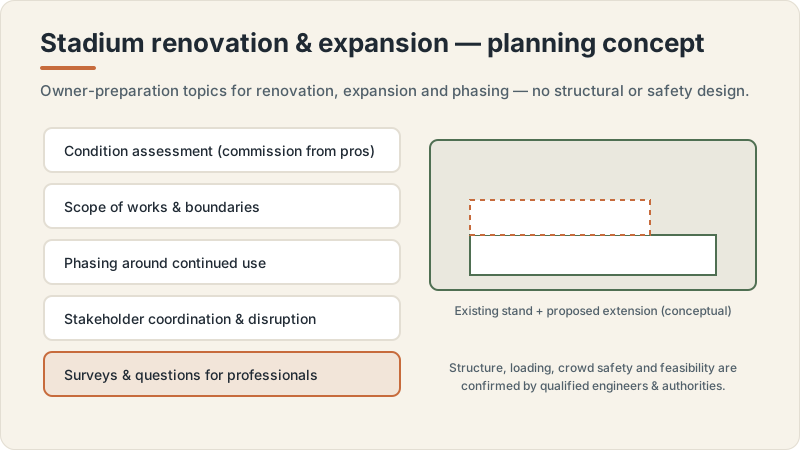
Stadium renovation and expansion concept
Conceptual editorial diagram — not a construction drawing, specification, to-scale plan or proof of a real project. It is not engineering, structural, fire/life-safety, crowd-safety or accessibility-compliance guidance. Capacities, dimensions, standards, requirements and costs vary by facility type, audience, site, use case and governing body, and are confirmed with qualified professionals, relevant authorities and governing bodies. Build Design Hub does not design, build, inspect, certify, recommend or match anyone.
What this guide helps you prepare
This guide helps you assemble the raw material an owner needs before engaging a professional team for a support-building renovation: a clear statement of why the renovation is being considered, an honest picture of how the existing concourses, hospitality and back-of-house spaces are used today, and a defined boundary around what the renovation does and does not include. Renovation adds a dimension that new-build planning does not — the constraints and unknowns of an existing structure — so gathering what you already know about the facility, and being candid about what you do not know, is central to preparing well. These are preparation artefacts you create and refine, not technical decisions you make alone.
It is equally important to be clear about what this guide does not do. It does not tell you how large a concourse should be, what a renovation should cost, how long it should take, what loads, gradients, sightlines or lighting levels apply, or how to satisfy any code, standard, crowd-safety measure or approval. All of those are determined by your professional team, the relevant authorities and the governing body for the sport or use in question, and they vary by location, facility type, use case, site and project scope. Your job at this stage is to prepare good questions and a good brief, not to supply answers that belong to qualified professionals.
- Write a plain statement of why the renovation is being considered and what success would look like
- Describe how the concourses, hospitality and back-of-house spaces are used today and by whom
- Record what you already know about the existing buildings, and note the gaps you cannot fill yourself
- List the constraints you are aware of, such as event calendars, tenancies, heritage status or ongoing operations
- Capture open questions you cannot answer and will need to route to qualified professionals
- State your assumptions explicitly so they can be tested rather than carried forward unchecked
Framing needs for concourses, hospitality and back-of-house
Support buildings serve very different functions, and a renovation brief is clearer when each is described separately. Concourses are the spaces people move through and gather in on event days; hospitality covers guest-facing areas that host visitors before, during and after events; back-of-house includes the operational spaces that keep the venue running, from storage and staff areas to service routes and plant. Each has its own users, its own daily and event-day rhythms, and its own frustrations under the current arrangement. Describing the intended experience and function of each — rather than jumping to a solution — gives professionals room to advise on how, or whether, a renovation can deliver it. Resist fixing figures such as areas, capacities, counts of facilities or spend at this stage; frame those as questions to confirm with qualified professionals once needs are clear.
Because these areas interact — a concourse feeds hospitality, hospitality depends on back-of-house service, and all three connect to circulation and the field of play — it helps to note where changes in one space would ripple into another. A renovation that alters how people move, gather or are served can touch matters of crowd safety, accessibility, fire and life safety, and licensing that are firmly the domain of qualified professionals and the relevant authorities. This guide does not address any of those as facts or offer any compliance position; it simply helps you write down the outcomes you are seeking so the right specialists can assess feasibility, requirements and constraints against your actual facility.
- What is not working today in the concourses, hospitality areas and back-of-house, described as experiences rather than solutions?
- Which user groups use each space — spectators, guests, staff, tenants, officials — and at what times?
- How do the three areas depend on one another, and where would a change in one affect the others?
- Which aspects of the intended experience are must-haves versus nice-to-haves for this renovation?
- What existing tenancies, contracts, brands or partners occupy or depend on these spaces?
- Which desired changes might touch crowd safety, accessibility, fire safety or licensing and therefore need professional and authority input?
Working with existing conditions, phasing and continued operations
The defining feature of a renovation is that you are changing a building that already exists, so understanding its current state is preparation work in its own right. Owners often find it useful to gather whatever documentation exists — drawings, past alteration records, surveys, condition information and asset registers — and to note honestly where records are missing, out of date or unverified. What lies behind finishes, how earlier alterations were made, and the condition of structure and services are all matters for qualified professionals to investigate and confirm; your role is to collect what is available and flag the unknowns, not to draw conclusions about the building's fabric or capacity yourself.
A support-building renovation at a stadium rarely happens on an empty site. Events, tenants, staff and neighbours often continue to depend on the venue while work is contemplated, so it helps to think early about how a renovation might interact with the event calendar and day-to-day operations. Thinking in phases — how areas might be handed over, isolated or kept running, and what decision points sit between stages — is a useful planning lens, but any sequence, duration, method or safety measure must be confirmed with your professional team and the relevant authorities. You are organising questions here, not scheduling, pricing or specifying how the work would be carried out.
- Gather existing drawings, alteration records, surveys and asset information, and note where records are missing or unverified
- List the questions about existing structure, services and hidden conditions that professionals will need to investigate
- Record the event calendar and operational commitments that a renovation would have to work around
- Note which tenants, staff functions and neighbours depend on these spaces during any works
- Sketch the phases and handover points you anticipate, framed as questions rather than fixed plans
- Identify which access, storage and service routes must remain usable, and confirm feasibility with professionals
Planning questions before speaking with professionals
Before you engage architects, engineers or advisers on a renovation, it pays to organise what you already know about the existing support buildings and what you still need to learn. Working through your own questions first means the professional conversations start further along and stay focused on substance. Capture your goals, the intended function of each space, the users, the existing-condition information you hold, and the open questions in writing, and be candid about the assumptions you are making so they can be tested rather than quietly accepted. This preparation also makes it far easier to compare proposals later, because everyone is responding to the same clearly stated brief.
These questions are prompts to clarify your own thinking, not a checklist to satisfy. None of them should be answered with a fixed figure, requirement or standard at this stage. Anything touching capacity, dimensions, structural condition, cost, programme, codes, crowd safety, accessibility, fire and life safety or approvals is something to confirm with qualified professionals, the relevant authorities and the governing body for your use case, all of which vary by location, facility type, use case, site and project scope.
- Can you state, in plain terms, why the renovation is being considered and what a good outcome looks like?
- Have you described the intended function of the concourses, hospitality and back-of-house separately?
- Have you gathered the existing documentation you hold and listed the gaps and unknowns?
- Have you defined what is in and out of scope, including interfaces with unchanged areas?
- Have you noted how the venue's events and operations would continue while any work is contemplated?
- Have you recorded which authorities and governing bodies you will need to consult, without assuming their answers?
Questions for qualified professionals
When you reach the point of engaging a professional team, the most valuable thing you can bring is good questions framed against a clear renovation brief and whatever existing-condition information you hold. The questions below are examples of what owners commonly need professionals, authorities and governing bodies to confirm; they are deliberately open, because the answers depend entirely on your specific facility, location, site, use case, users and the bodies that have jurisdiction. Asking them helps you understand what your renovation genuinely involves rather than guessing, and it surfaces existing-condition risks early, while they are still easier to plan around.
Use the responses to inform your planning, not as a substitute for formal advice, investigation or approval. This guide does not provide requirements, capacities, costs, standards or design, does not interpret the condition of any building, and does not recommend, rank, verify, introduce or match any supplier or contractor. Confirm everything that matters with qualified professionals and the relevant authorities and governing bodies for your project, and keep a record of what you are told so your brief stays accurate as the renovation develops.
- What investigations of the existing structure, services and concealed conditions would you advise before design?
- What approvals, consultations or governing-body engagements might a renovation of these spaces require?
- How would the desired changes interact with crowd safety, accessibility, fire safety and licensing considerations?
- How would you advise phasing a renovation around continued events, tenants and operations?
- Which professional disciplines should be involved for this kind of support-building renovation, and when?
- What information should we gather now so proposals can be compared on a consistent basis?
What this does not replace
This is an educational planning resource only. It is not a stadium construction manual and not structural, architectural, seating or stand engineering, crowd-safety, crowd-flow, evacuation, fire or life-safety, or accessibility-compliance advice, and it is not permit, zoning, inspection, certification, legal, tax, insurance or procurement advice. It does not design, build, engineer, specify, certify, inspect or approve anything, gives no capacities, dimensions, loads, revenue, ROI or costs, and offers no warranty interpretation or estimate. Requirements, standards, capacities and costs vary by location, facility type, use case, governing body, owner, site, authority, professional team and project scope, and are confirmed with qualified professionals, relevant authorities and governing bodies.
Build Design Hub does not design, build, engineer, inspect, certify, recommend, rank, verify, introduce, broker or match suppliers, contractors, consultants or professionals, and HELPERG LLC is publisher/operator only. Use this resource to prepare your own thinking and briefs, then have qualified professionals you engage directly review your project. Decisions about design, engineering, structure, crowd safety, fire and life safety, accessibility, compliance, capacity, procurement and cost must rest on those professionals, the relevant authorities and the governing bodies for your sport and location.
- Not a stadium construction manual and not structural, architectural or seating/stand engineering
- Not crowd-safety, crowd-flow, evacuation, fire/life-safety or accessibility-compliance advice
- Not permit/zoning, inspection, certification, warranty-interpretation, legal, tax, insurance or procurement advice
- Not a supplier, contractor, consultant or professional recommendation, ranking, directory or matching service
- Not an estimate and gives no capacity, dimension, revenue, ROI or cost figures — requirements and costs vary
- Qualified professional review is required before any stadium project decision
Stadium support-building renovation preparation worksheet
- 1Write a plain statement of why the renovation is being considered and what success would look like
- 2Describe the intended function of the concourses, hospitality and back-of-house spaces separately
- 3List the user groups for each space and the times they use them, on event days and other days
- 4Record what is not working today, described as experiences and frustrations rather than solutions
- 5Gather existing drawings, alteration records, surveys and asset information for the support buildings
- 6Note where existing records are missing, out of date or unverified, as questions for professionals
- 7Record the event calendar and operational commitments a renovation would have to work around
- 8List tenants, staff functions, sponsors and neighbours that depend on these spaces
- 9Define what is clearly in scope and what is explicitly excluded, including interfaces with unchanged areas
- 10Flag which desired changes may touch crowd safety, accessibility, fire safety or licensing for professional input
- 11Sketch the phases and handover points you anticipate, framed as questions rather than fixed plans
- 12Note the professional disciplines the renovation may involve and roughly when each is needed
- 13Record the authorities and governing bodies you anticipate consulting, without assuming their answers
- 14Capture assumptions and open questions to test with qualified professionals, and decide who coordinates the project
Common mistakes to avoid
- Treating a renovation like a new build and overlooking the constraints of the existing structure
- Assuming what lies behind finishes or the condition of structure and services instead of having it investigated
- Fixing capacity, area, facility counts, cost or timeline as facts before professionals have been consulted
- Writing needs as solutions rather than as the experiences and functions each space should deliver
- Planning concourse, hospitality and back-of-house changes in isolation and missing how they interact
- Ignoring how events, tenants and daily operations would continue while any work is contemplated
- Leaving scope edges vague so interfaces with unchanged areas fall through the cracks
- Assuming what an authority or governing body will require instead of confirming it directly
When to involve a professional
- Before assuming anything about the condition, structure or capacity of the existing support buildings
- When a desired change might affect how people move, gather or are served, and could touch crowd safety
- When accessibility, fire and life safety, or licensing could be affected by the renovation
- Before deciding how a renovation would be phased around continued events and operations
- When any permit, zoning, heritage or approval question arises for the existing facility
- Before committing to a scope, brief or proposal, so qualified professionals can review it against the real building
Frequently asked questions
Questions readers ask about this topic
Does Build Design Hub design, build, inspect or certify the renovation, or recommend suppliers and contractors?
No. Build Design Hub is an educational resource and HELPERG LLC is publisher and operator only. This guide does not design, build, engineer, inspect, certify, permit or approve anything, and it does not recommend, rank, verify, introduce, broker or match suppliers, contractors, consultants or professionals. It provides no capacities, dimensions, costs or requirements. It helps you prepare a brief and questions so qualified professionals you engage directly can advise on your specific facility.
Can this guide tell me how much a concourse or hospitality renovation should cost, or how big it should be?
No. Costs, capacities, areas, facility counts and timelines vary by location, facility type, use case, governing body, owner, site, authority, professional team and project scope, and none of them can be stated as fact here. Treat every such figure as a question to confirm with qualified professionals, the relevant authorities and the governing body for your use case.
How is preparing a renovation different from preparing a new-build project?
A renovation changes a building that already exists and is often still in use, so understanding existing conditions, working around events and operations, and mapping interfaces with unchanged areas matter far more. This guide helps you gather what you know about the current support buildings and flag the unknowns, but the actual condition of structure and services must be investigated and confirmed by qualified professionals.
Does this guide cover crowd safety, accessibility or fire and life safety for the renovated spaces?
No. Those are specialist matters for qualified professionals, the relevant authorities and the governing body for your venue and use case. This guide only helps you flag where a desired change might touch them, so you can raise the right questions with the right specialists — it offers no safety, accessibility or compliance advice or position.
Keep reading