
Who this guide is for
- Facility owners and operators planning phased upgrades to an indoor sports hall, gym or multi-purpose space already in use
- Sports clubs and community organisations preparing to improve courts, surfaces or support amenities
- Schools, colleges and academies scoping a sports hall refurbishment around a term timetable
- Municipalities and public bodies preparing a brief for an existing indoor leisure or sports asset
- Developers and project teams assessing an operating indoor facility before commissioning work
- Facility managers organising surface, lighting, systems and amenity questions for professional review
Planning diagram
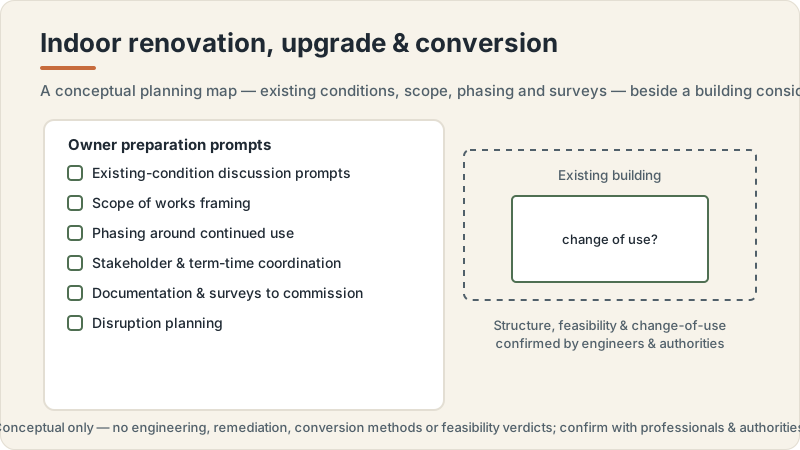
Indoor renovation, upgrade and conversion concept
Conceptual editorial diagram — not a construction drawing, specification, to-scale plan or proof of a real project. It is not engineering, structural, fire/life-safety, crowd-safety or accessibility-compliance guidance. Capacities, dimensions, standards, requirements and costs vary by facility type, audience, site, use case and governing body, and are confirmed with qualified professionals, relevant authorities and governing bodies. Build Design Hub does not design, build, inspect, certify, recommend or match anyone.
What this guide helps you prepare
This guide helps you turn a vague sense that your indoor facility needs improvement into an organised set of prioritised questions. Upgrading an operating hall, gym or court space usually means addressing several things at once, such as a tired playing surface, dated lighting, uncomfortable ventilation or heating, worn changing and support rooms, and general wear from continuous use. Rather than treating each as a shopping decision, this guide helps you record what you have, describe how it is used, note what is not working and separate the questions you can answer yourself from the ones that belong with qualified professionals, relevant authorities and governing bodies.
The aim is a clear, shareable project brief that a professional team can read and respond to. That means capturing your objectives, your constraints, your current arrangements and your priorities in plain language, without pretending to specify solutions. Because your facility is already operating, this guide also helps you think early about how work would be phased around existing users, how a facility stays usable during an upgrade, and what documentation you should gather before any technical assessment. It does not replace surveys, condition assessments, engineering, design, inspection or compliance review; it helps you be ready for them.
- Write down what you are trying to achieve with the upgrade in plain, non-technical terms (comfort, condition, usability, flexibility of use)
- Record what surfaces, lighting, systems and amenities you currently have and how heavily each is used
- List the specific problems users and staff report, separated from assumed causes you have not confirmed
- Note constraints that shape everything: operating schedule, term dates, existing bookings, access and available closure windows
- Separate questions you can answer internally from questions that require qualified professionals, authorities or governing bodies
- Gather existing documentation (as-built drawings, prior surveys, manuals, warranties, service records) to hand to a professional team
Prioritising surface, lighting, systems and amenity upgrades
An indoor facility upgrade rarely happens all at once, so a large part of preparation is deciding what to look at first and why. It helps to think in layers: the playing surface and its markings; lighting and how the space feels to use and play in; building systems such as ventilation, heating and acoustics that shape comfort and usability; and the amenities around the activity space such as changing rooms, storage, accessibility of entrances and spectator or waiting areas. Recording the current state and reported issues in each layer, alongside how each interacts with the others, gives you a structured picture rather than a list of complaints. A single symptom, such as a surface that feels wrong underfoot or a hall that feels stuffy, can have several possible causes that only a qualified professional should diagnose.
Prioritisation is about sequencing questions, not making technical calls. You might record that the surface is your most pressing concern, but note that a professional should confirm whether the sub-base, drainage, ventilation or lighting needs to be assessed at the same time, since changing one layer can affect the others. Avoid deciding in advance that a problem is 'just' a surface job or a lighting swap; capture the symptom, the usage context and the questions, and let the professional team advise on scope. This guide does not tell you which upgrades matter most for your facility, because that depends on your use case, condition, governing body expectations and professional assessment. It helps you present the trade-offs clearly so those decisions can be made with the right expertise.
- For each layer (surface, lighting, systems, amenities), record current condition, reported issues and how heavily it is used
- Note how layers interact, so a professional can advise whether related items should be assessed together rather than in isolation
- Capture the intended range of uses (training, competition, community hire, school PE, multi-sport) that any upgrade must support, as questions to confirm with governing bodies
- Ask what surveys or condition assessments a professional would want before advising on surface or system upgrades
- Avoid pre-deciding scope; record symptoms and usage context and let qualified professionals confirm what is actually involved
- Note which governing bodies or authorities may have expectations for your surface, markings or facility type, to raise with professionals and the bodies themselves
Planning an upgrade around an operating facility
Because your facility is already in use, an upgrade is as much an operational planning exercise as a technical one. Work on surfaces, lighting or systems may need the space, or parts of it, out of use for a period, and that has knock-on effects for members, teams, classes, hirers and revenue. Preparing well means mapping your current usage honestly, identifying realistic windows when parts of the facility could be handed over, and thinking about communication, temporary arrangements and phasing. None of this is construction sequencing, which belongs with your contractor and professional team; it is the operational context they will need from you to plan work responsibly and to give you realistic advice about disruption.
It also helps to think ahead about handover, records and the longer life of what you upgrade. When work finishes, you will want the right documentation, manuals and any warranty information handed over and stored, and you will want to understand how new surfaces, lighting or systems should be operated and maintained over time so their condition is protected. Preparing questions about handover, records and ongoing maintenance early, rather than at the end, tends to produce a smoother project. This guide does not interpret warranties, certify work or set maintenance schedules; it helps you know what to request and confirm with the qualified professionals, suppliers and authorities involved.
- Map current usage (bookings, classes, teams, community hire, term timetable) so phasing and disruption can be discussed realistically
- Identify possible closure or partial-closure windows and who is affected, as context for professionals rather than a sequencing plan
- Prepare a communication approach for users, members and hirers about anticipated disruption, without promising fixed dates
- Ask what documentation, manuals and warranty information should be handed over and stored at completion
- Note what ongoing maintenance and correct operation new surfaces or systems may need, as questions for suppliers and professionals
- Record how you will keep condition and service records after the upgrade, to protect the value of the work over time
Planning questions before speaking with professionals
Before you approach architects, engineers, surveyors, surface or lighting specialists or contractors, it helps to answer the questions you can answer yourself, so their time is spent on the technical assessment only they can provide. These are questions about your objectives, your users, your constraints and your existing arrangements. Being able to describe clearly what the facility is used for, what is not working, when the space can be made available and what documentation you hold makes every later conversation faster and more useful. It also helps you compare responses from different professionals or suppliers on a like-for-like basis, because you will have described the same brief to each.
Keep these internal questions strictly at the level of context and priorities, not technical answers. It is not your role to decide the surface build-up, the lighting design, the ventilation approach or whether a system is compliant; those are professional judgements. Your job in this phase is to be clear about the problem you are trying to solve and the constraints you are working within, and to gather everything a professional would need to see. Record your assumptions explicitly and flag them as things to confirm, so nothing you have guessed gets mistaken for an established fact later in the project.
- What are the main outcomes we want from this upgrade, described in plain language rather than solutions?
- Who uses the facility, for what, and how often, and which of those uses must any upgrade continue to support?
- What issues have users, staff and hirers actually reported, and which causes are we assuming rather than confirming?
- What operating, timetable, access and budget-approval constraints will shape what is realistic, and what documentation do we already hold?
- Which questions are genuinely ours to answer, and which must go to qualified professionals, authorities or governing bodies?
- What assumptions are we making that need to be explicitly flagged for professional confirmation?
Questions for qualified professionals
Once your brief is organised, the next step is to bring qualified professionals into the conversation and ask them the right things. The most useful questions are open ones that invite assessment: what would you need to survey or inspect before advising, what condition issues do you see, what options exist and what are their trade-offs, and what documentation, drawings or reports will you provide. Because requirements vary by location, facility type, use case, governing body, owner, site, authority, professional team and project scope, you should ask professionals to confirm what applies to your specific facility rather than relying on general expectations, including anything you have read here.
Use these conversations to understand scope, sequence and responsibility, not to extract a shortcut answer. Ask who is responsible for what, how surfaces, lighting and systems interact in your building, what authorities or governing bodies need to be involved, and how the work would be documented and handed over. Ask what could change once surveys are complete, so you understand where the uncertainty lies. This guide does not select professionals, verify their qualifications or interpret their advice; it helps you arrive prepared to ask clearly and to compare what different qualified professionals tell you about your own facility.
- What surveys, condition assessments or inspections would you carry out before advising on a surface, lighting or systems upgrade?
- How do the surface, lighting, ventilation, heating, acoustics and amenity decisions in this specific building interact, and what should be assessed together?
- What requirements, standards or governing-body expectations apply to a facility and use case like ours, and how would you confirm them?
- What documentation, drawings, reports, manuals and warranty information would you provide at handover, and in what form?
- Who is responsible for design, works, inspection, certification and sign-off, and where do those responsibilities divide?
- What could change once surveys are complete, and where should we expect the most uncertainty in scope, phasing or cost?
What this does not replace
This is an educational planning resource only. It is not an indoor sports facility construction manual and not structural or architectural design, HVAC/ventilation, lighting or acoustic engineering, fire or life-safety, or accessibility-compliance advice, and it is not permit, zoning, inspection, certification, legal, tax, insurance or procurement advice. It does not design, build, engineer, specify, size, certify, inspect or approve anything, gives no capacities, dimensions, clearances, lux, air-change rates, acoustic or temperature thresholds, revenue, ROI or costs, and offers no warranty interpretation or estimate. Requirements, standards, capacities and costs vary by location, facility type, use case, governing body, owner, site, authority, professional team and project scope, and are confirmed with qualified professionals, relevant authorities and governing bodies.
Build Design Hub does not design, build, engineer, inspect, certify, recommend, rank, verify, introduce, broker or match suppliers, contractors, consultants or professionals, and HELPERG LLC is publisher/operator only. Use this resource to prepare your own thinking and briefs, then have the qualified professionals you engage directly — architects, structural and building-services engineers, lighting, acoustic, accessibility and fire/life-safety specialists, and legal or procurement advisors where appropriate — review your project. Decisions about design, engineering, systems, safety, accessibility, compliance, capacity, procurement and cost must rest on those professionals, the relevant authorities and the governing bodies for your sport and location.
- Not an indoor sports facility construction manual and not structural or architectural design
- Not HVAC/ventilation, lighting or acoustic engineering, fire/life-safety or accessibility-compliance advice
- Not permit/zoning, inspection, certification, warranty-interpretation, legal, tax, insurance or procurement advice
- Not a supplier, contractor, consultant or professional recommendation, ranking, directory or matching service
- Not an estimate and gives no capacity, dimension, system-performance, revenue, ROI or cost figures — requirements and costs vary
- Qualified professional review is required before any indoor sports facility project decision
Indoor facility upgrade preparation worksheet
- 1Record the facility type and each activity space (main hall, courts, gym, multi-purpose areas, changing and support rooms) currently in use
- 2Write your upgrade objectives in plain language, describing outcomes rather than chosen solutions
- 3Log the current condition and reported issues for surfaces, markings, lighting, ventilation, heating, acoustics and amenities separately
- 4Capture how each space is used and how heavily, including training, competition, school use and community hire
- 5List the intended range of uses any upgrade must continue to support, marked as items to confirm with governing bodies
- 6Note operating constraints: term dates, existing bookings, access, security and realistic closure or partial-closure windows
- 7Gather existing documentation: as-built drawings, prior surveys, service records, manuals and warranty information
- 8Record every assumption you are making and flag it explicitly as unconfirmed, to be checked with professionals
- 9Prepare a communication approach for users, members and hirers about anticipated disruption, without committing to fixed dates
- 10Separate internal decisions from questions that require qualified professionals, relevant authorities or governing bodies
- 11Draft open questions for professionals about surveys, options, interactions between layers, responsibilities and handover
- 12List authorities and governing bodies that may need to be consulted, as items to confirm rather than assumed requirements
- 13Note what handover documentation, manuals and warranty records you will request and where they will be stored
- 14Record how ongoing maintenance and condition tracking will be handled after the upgrade to protect the work
Common mistakes to avoid
- Stating a dimension, clearance, run-off, lux level, capacity or acoustic target as fixed, when these vary by facility and must be confirmed by qualified professionals and governing bodies
- Assuming a reported symptom has an obvious single cause, such as treating a surface complaint as 'just' a resurfacing job before any assessment
- Deciding the scope or the solution in advance, rather than describing the problem and letting professionals advise on what is actually involved
- Treating a technical or systems decision, such as ventilation or lighting approach, as the owner's call rather than a qualified professional's
- Skipping surveys and condition assessments and going straight to comparing supplier options without professional input
- Underestimating operational disruption by not mapping existing usage, bookings and realistic closure windows before planning work
- Leaving handover, documentation and maintenance questions until the end instead of raising them during preparation
- Assuming general requirements or expectations apply to your facility without confirming them with the relevant authorities and governing bodies
When to involve a professional
- When any change to surfaces, lighting, ventilation, heating, acoustics or structure is being considered, so a qualified professional can assess the building before decisions are made
- When you need surveys, condition assessments or inspections to understand what is actually driving the issues you are seeing
- When requirements, standards or governing-body expectations for your facility type and use case need to be confirmed rather than assumed
- When work would affect accessibility, fire and life-safety arrangements, or any regulated aspect of the building, which must be handled by qualified professionals
- When responsibilities for design, works, inspection, certification and sign-off need to be defined across a professional and contractor team
- When warranties, handover documentation or maintenance obligations need to be understood, since these require professional and supplier interpretation, not owner assumption
Frequently asked questions
Questions readers ask about this topic
Does Build Design Hub design, build, engineer or inspect indoor sports facilities?
No. Build Design Hub is an educational publisher, operated by HELPERG LLC, and does not design, build, engineer, inspect, certify, project-manage or carry out any work. It does not design surfaces, lighting, HVAC, ventilation or acoustic systems, and it does not recommend, rank, verify, introduce or match suppliers, contractors or professionals. It does not provide capacities, dimensions, clearances, lux levels, costs, timelines or requirements. This guide only helps you prepare questions and documentation to discuss with qualified professionals, relevant authorities and governing bodies.
How do I know what surface, lighting or ventilation upgrade my facility needs?
This guide cannot tell you, because the right answer depends on your specific facility, its condition, how it is used, your location, the applicable governing bodies and authorities, and professional assessment. Requirements and suitable options vary by location, facility type, use case, governing body, owner, site, authority, professional team and project scope. Use this guide to describe your situation clearly, then ask qualified professionals to survey your facility and advise on options for your particular building.
Can I plan the upgrade around my existing schedule myself?
You can and should prepare the operational context, such as mapping current usage, bookings, term dates and possible closure windows, because that information is essential for any professional team. However, how work is actually phased and sequenced, and how long spaces need to be out of use, is something to confirm with your contractor and professional team. This guide helps you organise that context so those conversations are realistic; it does not provide construction sequencing or timelines.
Does this guide tell me what the rules and requirements are for my facility?
No. It deliberately avoids stating requirements, codes, standards, capacities or dimensions as facts, because these vary and can only be confirmed for your specific project by qualified professionals, the relevant authorities and the applicable governing bodies. The guide instead helps you identify which questions to ask and which bodies to consult, so you can confirm what genuinely applies to your facility rather than relying on general assumptions.
Keep reading